
Aldi grocery stores have a “twice as nice” guarantee on returns. If you are not satisfied with an item, you can return it for a replacement and a full refund. That is a solid return policy and you would expect that means they have great products. Many customers agree, and Aldi ranks highly in polls when compared with other chains. But what happens to the food you bring back to Aldi?
The official store policy does not explain what happens to returned items. However, users on Reddit claiming to be employees have given insight into the process. “Any food that has left the store (even canned food) is written off and thrown away,” said one Redditor. This should not be a surprise for perishable foods. Meat and produce could never be resold because there is no guarantee of their freshness or safety. But this policy may come as a surprise to some as it relates to sealed or canned items.
You may think a canned item could reasonably be resold, or at the very least, donated to a food bank. Even sealed in a can, there is no guarantee it is safe, and canned goods can also spoil. For instance, someone could have bought it and left it in their trunk for a week at the height of summer, where temperatures can reach 125 degrees Fahrenheit. Outwardly, you would have no way of knowing whether it’s still good or not. Exposure to high temperatures can cause spoilage and bacterial growth, even in cans. For that reason, Aldi appears to dispose of everything. That said, some other stores will restock canned items, so this is not an industry-wide standard.
Read more: 16 Aldi Breads, Ranked Worst To Best
Culling the cans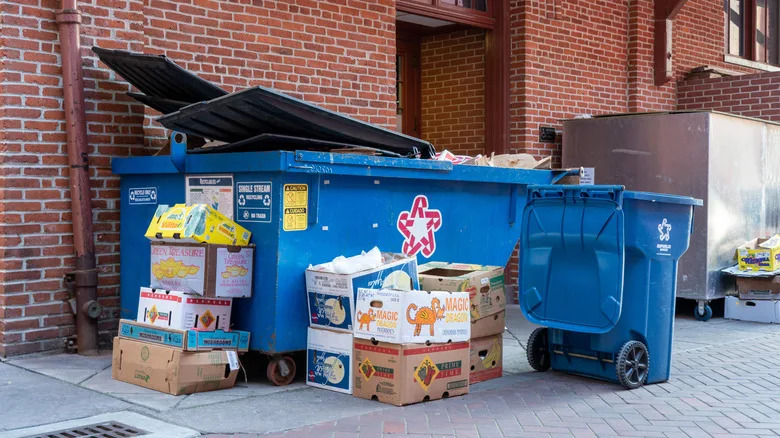
Blue dumpster and a blue trash can behind a brick building surrounded by boxes. – Weaver1234/Getty Images
Some employees point out that not only do they have to throw out canned goods, but they also have to open them first so that the items cannot be retrieved from the dumpster. This could stem from the store’s fear of liability. Not every store does this, but sealed items do still end up in the trash instead of being donated. “Unfortunately, some people tamper with food so stores don’t want to be liable,” one Redditor stated.
There is a perception that if a store donates returned items and they turn out to be spoiled or unfit, the store will be held liable, but that actually is not true. The U.S. Bill Emerson Good Samaritan Food Donation Act ensures that stores cannot face criminal or civil liability if they donate the items in good faith. Rather than worry about this and the need to store and catalog returned items, it is easier for many stores to simply throw this food in the garbage. This contributes to the reasons grocery stores have a serious problem with food waste.
If you have items that are still good and would like to return them but expect they will be trashed, save the trouble and donate them to a food bank or other service yourself. That way, you at least know where it is going. The downside here is you do not get to take advantage of that Aldi return policy if you do this, but it may ease your conscience a little.
Want more food knowledge? Sign up to our free newsletter where we’re helping thousands of foodies, like you, become culinary masters, one email at a time. You can also add us as a preferred search source on Google.
Read the original article on Tasting Table.
Dining and Cooking