
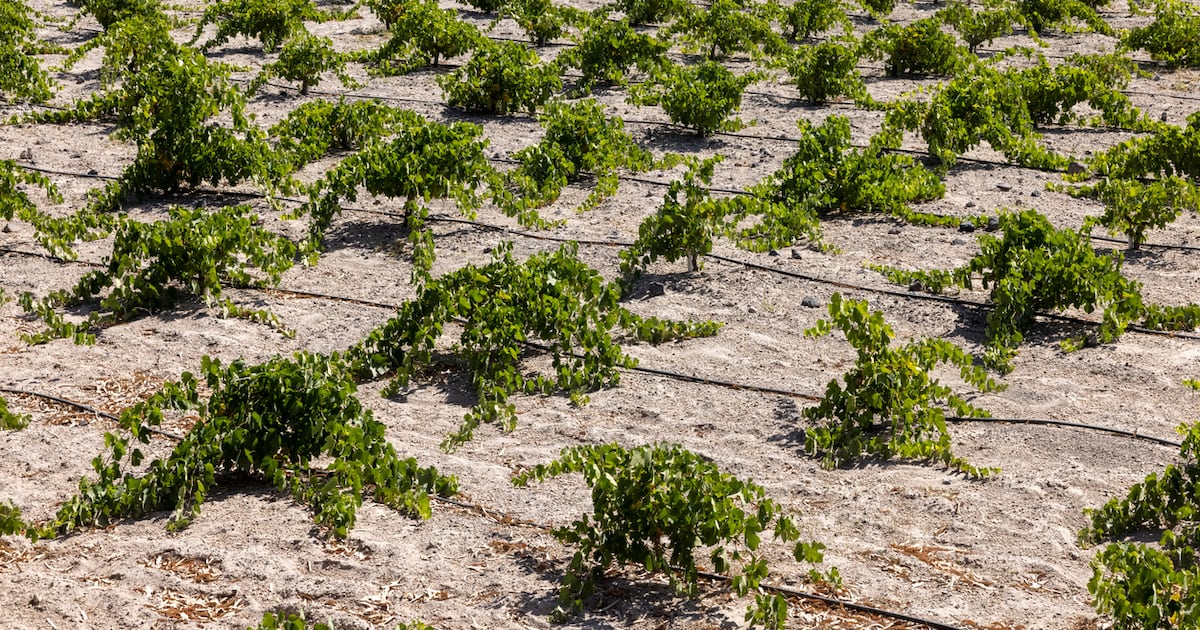
At a recent Australian tasting, the wines on show included a fiano and a greco, two lesser-known Italian grape varieties. A decade ago this would have been very unusual; nowadays it seems normal. It is partly driven by a demand for more interesting wines, but that is not the sole reason. All over the world of wine, producers are coming to terms with climate change. Where they once grew sauvignon blanc, pinot grigio, riesling and chardonnay, now interest lies in Mediterranean varieties that have adapted to tolerate heat and drought. Crucially they can produce ripe fruits while retaining acidity.
So what are the varietals we can expect to see appearing more on our wine labels?
Assyrtiko
I remember talking to Peter Barry of Jim Barry Wines in Australia a decade or so ago. He had been very impressed with some wines made from the assyrtiko grape variety while on holiday in Greece. He imported vines into Australia. As well as pleasing his palate, the assyrtiko was renowned for producing fresh, high acid wines on the island of Santorini.
Vermentino
Widely grown in Sardinia, vermentino has spread to Tuscany, Liguria, Piemonte and other parts of mainland Italy. It is also well known over the border in Provence in France where it is called rolle. We can expect to see lots more wine in the future. Vermentino/rolle has an ability to retain acidity, and can produce very high quality wines.
From the south of France, grenache blanc, Picpoul, bourboulenc and clairette are all tried and trusted warm weather varieties.
From Italy, keep an eye out for grillo, carricante, inzolia (all from Sicily) as well as greco, verdicchio and fiano.
Airén
Most of the white wines of Spain come from the cooler regions to the north and in Catalonia. The exception is airén, one of the most widely planted grapes in central Spain, where the summers can be very dry and baking hot. Once disregarded as a workhorse variety producing anonymous wines, opinions are now changing.
Xarel-lo
This grape is widely grown in Catalonia, where it produces high-acid wines, ideal for cava. It also produces some interesting still white wines and some argue it has potential elsewhere too.
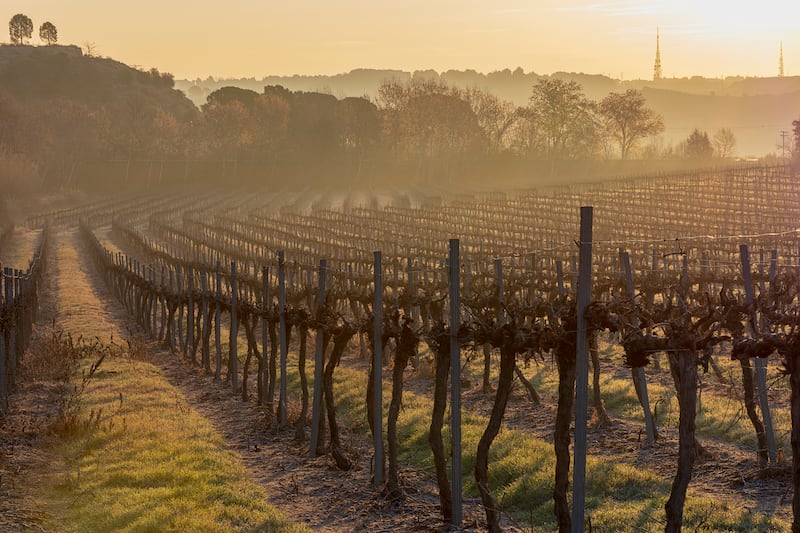 A vineyard in Catalonia growing xarel·lo grapes. Photograph: iStock
Elsewhere, arinto is an indigenous Portuguese variety grown all over the country including the hot Alentejo and Lisboa. The wines age well and have excellent acidity.
So, no shortage of exciting grape varieties to choose from. There are plenty more too. Many of these varieties were treated with disdain in the past, and often overcropped and grown in the worst vineyards. Given a little TLC, some will surely produce high-quality wines. While I have no doubt we will continue to enjoy chardonnay, sauvignon and pinot grigio, we should also have a new range of wines to enjoy.
Dining and Cooking