
Kitchn and Yahoo may earn commission from links in this article. Pricing and availability are subject to change.
Credit: Photo: Alex Lepe; Food Styling: Kaitlin Wayne
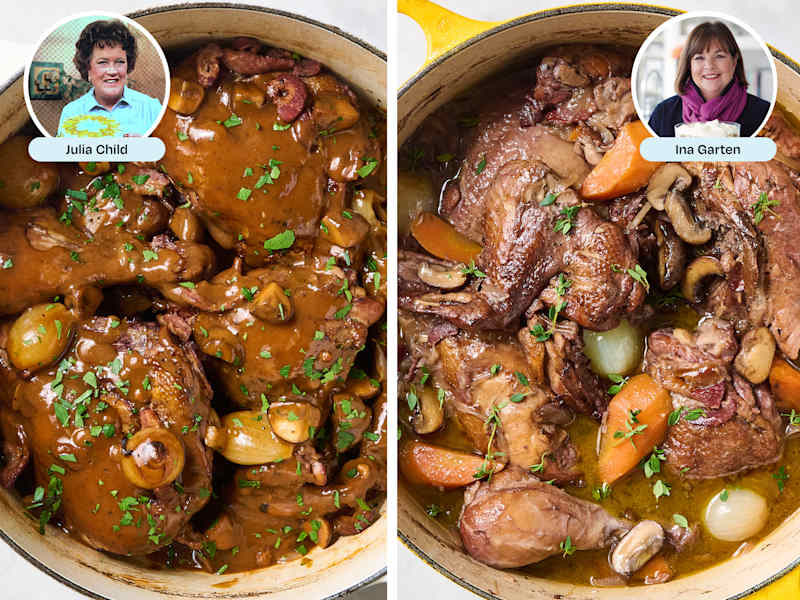
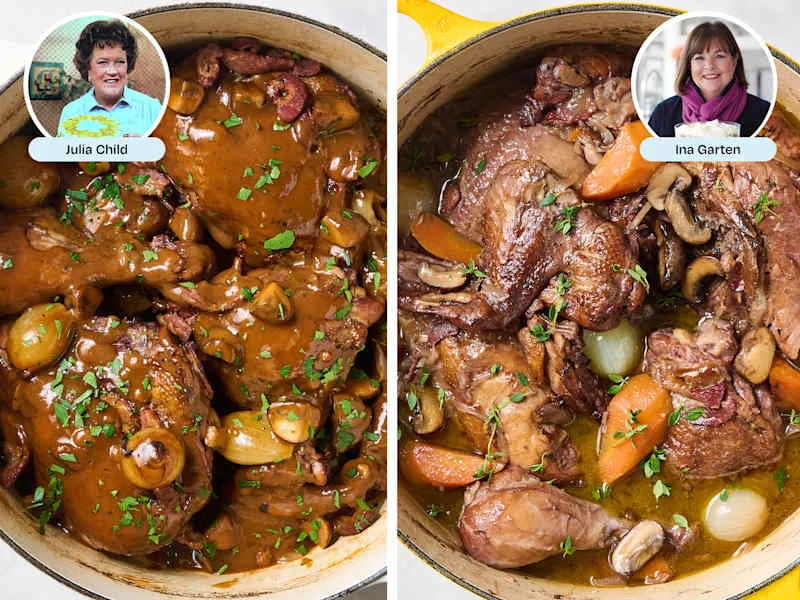
Coq au vin is one of those dishes that reveals as much about a cook’s philosophy as it does about technique. A cornerstone of classic French cooking, it was a dish we were formally evaluated on when I attended French culinary school, a lesson testing everything from proper browning and sauce construction to timing. To see how the heavy hitters stack up, I pitted two icons against each other in a side-by-side showdown: Julia Child and Ina Garten. While both recipes are rooted in comforting French flavors, they take different paths. Julia’s version is rigorous, a layered marathon that lends toward the traditional, while Ina’s is the “work smarter, not harder” rendition designed for the modern home cook, employing the simplicity that makes her so popular.
Before you grab your Dutch oven, I have two pro tips. Firstly, while both of these legends skip it, my culinary school training had us marinate the chicken in red wine overnight, as do many classic recipes. It is a “nice-to-have” step that deeply tenderizes the meat. Second, do yourself a favor and ask your butcher to break down the chicken into 8 or 10 pieces for you (see notes below for the number of pieces I ultimately preferred). It’s a total time-saver that removes the biggest barrier between you and a five-star dinner.
So, Whose Coq au Vin Recipe is Best?
Julia Child’s coq au vin is the clear winner. It came down to one thing: the sauce. While many of the traditional steps Ina streamlined were taking her recipe in the right direction for accessibility, Julia’s ingredient proportions and method for building the sauce sets her version apart. It produces a gravy that’s deeply flavored, silky, and cohesive, making the dish feel luxurious.
Meet our Coq au Vin Contenders
At a glance, these two coq au vin recipes share the same foundation, though they do wind up varying from one another significantly in methods. Both use similar amounts of chicken, bacon, mushrooms, Cognac, and broth; both brown the meat in rendered pork fat; and both call for a classic French thickening technique called beurre manié (a mixture of softened butter and flour whisked in at the end of cooking to give the sauce body and sheen).
Ina Garten’s Coq au Vin. Ina’s coq au vin is noticeably streamlined, keeping both the process and cleanup efficient. With the exception of the mushrooms, all of the cooking happens in one Dutch oven, including thickening the sauce. After browning the chicken in bacon fat, she builds a shallow braise with Cognac, half a bottle of red wine, chicken stock, garlic, and thyme. Ina also incorporates carrots and yellow onion, along with frozen pearl onions. Before serving, she adds a butter-and-flour mixture directly in the pot to help thicken the sauce.
Julia Child’s Coq au Vin. Julia’s recipe is a mini lesson in French cooking. She begins by boiling bacon before browning it and also crisps the chicken in its rendered fat. Julia flambés Cognac before fully submerging the chicken in a rich braising liquid made from a full bottle of red wine, beef broth, tomato paste, garlic, thyme, and a bay leaf. Once finished braising, Julia removes the cooking liquid to a separate saucepan, where it’s thickened into a gravy-like sauce with a butter-and-flour mixture. Fresh pearl onions and mushrooms are cooked separately and combined with the sauce and chicken just before serving.
Key Differences
Ina
Browns bacon (no boiling)
Adds Cognac with the other liquids
Shallow braises in half a bottle of red wine + chicken broth
Braises for 30 minutes in a 250°F oven
Simmers the chicken on the stovetop for 10 minutes after the oven
Adds carrots and yellow onions, along with frozen pearl onions
Adds thyme and skips tomato paste and bay leaf
5 main steps: Uses one Dutch oven and one skillet
Julia
Boils bacon, then browns it
Cooks chicken for 10 minutes, covered, after browning it
Flambes the cognac before adding the other liquids
Immerses chicken in a full bottle of red wine + beef broth
Braises the chicken on the stovetop
Uses tomato paste, fresh thyme, and bay leaf
11 main steps: Uses 2 frying pans, one large “casserole dish” (I tested in a Dutch oven), and 3 saucepans
How I Tested the Coq au Vin Recipes
Same ingredients, same day. All ingredients were purchased from the same store on the same day, and when both recipes called for the same item, I used the same brand. I also cooked both versions back-to-back.
Followed each recipe exactly. I measured precisely, and followed the recommended steps, oven temperatures, and cooking times. I followed the videos for both recipes for directions on how to cut the whole chicken into parts. I opted to cut it into 10 pieces. I found that keeping the breasts whole might have been advantageous, which would be an eight-piece cut for more tender chicken breasts.
Cross-checking with videos. Because both recipes leave certain techniques open to interpretation, I watched videos of each chef preparing their dish to confirm details.
Side-by-side tasting with tasters. I invited five tasters to sample the coq au vins with me. We tried each one on its own, making sure we assessed the texture of both the white and the dark meat. The tasters provided detailed notes on flavor, aroma, texture, and overall balance.
Why You Should Trust Me as a Tester
I’ve spent 15 years immersed in recipe development, testing, and food styling, and I trained at French Culinary School. This includes five years rigorously testing recipes in Martha Stewart’s Test Kitchen, followed by time at Food & Wine magazine. Experience teaches you to recognize when something works and when it doesn’t. That discernment, paired with my genuine interest in both classic cuisine and accessible weeknight cooking, shapes how I test and evaluate recipes. I also carefully selected a group of testers with varied culinary interests to broaden the perspective and ensure the feedback reflects different types of cooks.
Credit: Photo: Alex Lepe; Food Styling: Kaitlin Wayne
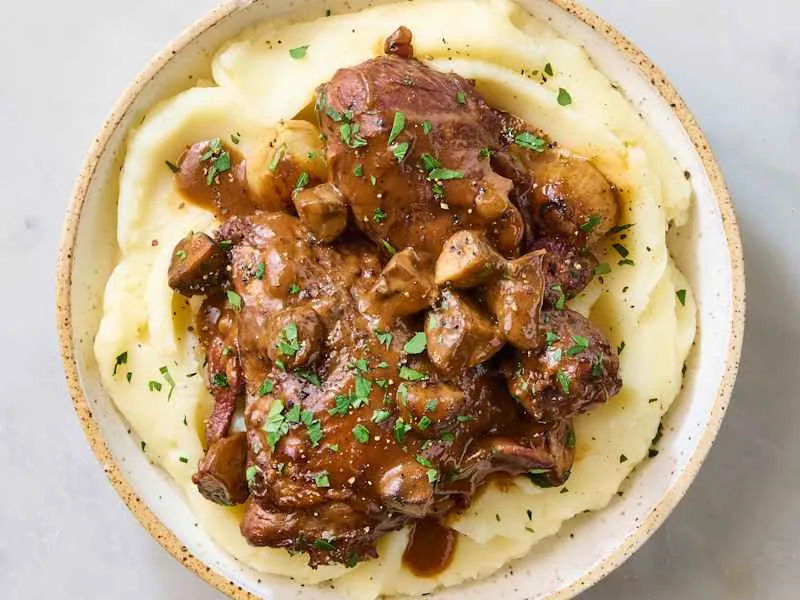
Julia Child’s Coq au Vin
Julia’s method is traditional and involved. It is the kind of recipe that has you second-guessing yourself mid-cook, but guides you through and delivers a payoff that makes every step worth it.
She starts by boiling bacon to remove its smoky flavor, a classic step that keeps the sauce clean and balanced. After browning the blanched bacon in a large Dutch oven and setting it aside, the rendered fat is used to brown a whole chicken cut up into 10 pieces. Once browned, the bacon is returned to the pot and the chicken cooks, covered, for 10 minutes.
Julia then pours Cognac over the chicken and lights it with a match, a dramatic but purposeful technique known as flambé. Next, she adds a full bottle of red wine, beef broth to fully cover the chicken, tomato paste, garlic, thyme, and bay leaf. While the chicken simmers for 30 minutes on the stovetop, you aren’t resting; the mushrooms are sautéed in a separate skillet, and fresh pearl onions are boiled, peeled, and braised in another saucepan.
Once the chicken is cooked, the cooking liquid is removed from the Dutch oven and transferred to a saucepan to reduce it by half, which takes about 20 minutes. A butter-and-flour mixture is whisked in to thicken the sauce. And that is married with the mushrooms and onions before everything is reunited in the Dutch oven. At this point, the coq au vin is ready to serve. Although, as Julia suggests, it’s even better made ahead and reheated the next day.
Results
All of this effort pays off in a richly satisfying, classic coq au vin. The chicken is tender, and the sauce develops a true stew-like body with layered flavor. The bacon adds richness without overpowering the dish, and the overall dish feels balanced.
What stands out most in Julia’s method is the time and attention devoted to building a proper sauce. From reducing the cooking liquid to finishing with a butter-and-flour thickener that is properly whisked in. This step reinforces depth and cohesion of the dish. It’s a reminder that great coq au vin isn’t just about the ingredients, but about patience and technique — and the payoff is unmistakable.
What I loved
This version feels especially cozy, the flavors are simple and classic, allowing the wine and chicken to shine. The sauce landed at exactly the right consistency — velvety, balanced, and deeply satisfying. Although subtle, the fresh pearl onions added a gentle sweetness you simply can’t get from frozen. I thought I might miss the smokiness of bacon, I ended up loving how clean and refined the final flavor was.
What I would tweak
The method for thickening the sauce is a must for me, though I’d make one change for easier execution. Draining the braising liquid from a heavy, hot Dutch oven was awkward and messy; instead, I’d either ladle out the sauce or remove the chicken with tongs to a plate and build the sauce directly in the Dutch oven before recombining everything.
I’d still take the time to prepare fresh pearl onions, though frozen could be swapped in without sacrificing too much overall flavor. There’s very little to tweak here, this recipe succeeds because it stays true to the fundamentals.
Credit: Photo: Alex Lepe; Food Styling: Kaitlin Wayne
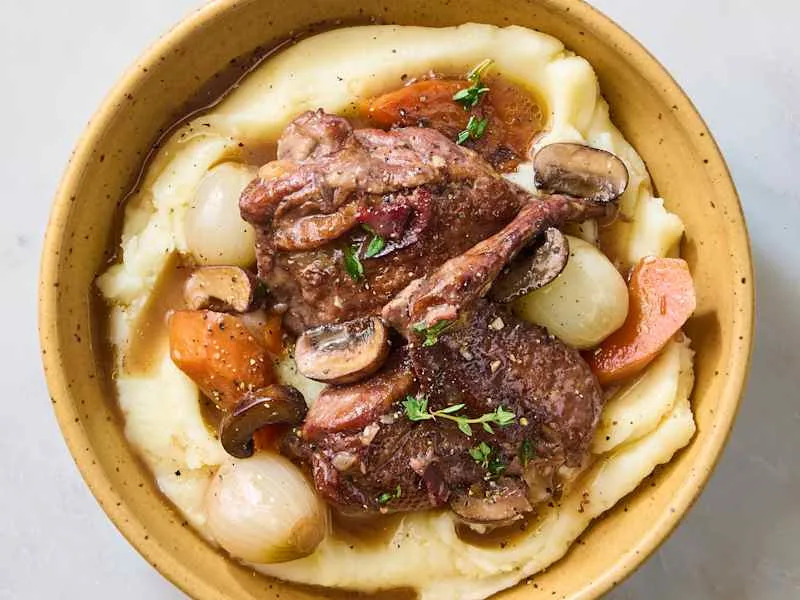
Ina Garten’s Coq au Vin
Ina’s version of coq au vin is streamlined for the modern home cook, with most of the cooking happening in a single pot (aside from the mushrooms). She begins by browning smoky bacon in a large Dutch Oven, then browns the chicken pieces in the flavorful fat before setting everything aside. Next, carrots, onion, and garlic go into the pot, followed by the return of the chicken and bacon, a splash of Cognac, and then dry red wine, chicken stock, and fresh thyme. The dish is covered and gently braised in a low 250°F oven until the chicken is just cooked through.
Once braising is complete, Ina finishes the sauce right in the pot, stirring in a butter-and-flour mixture without removing any of the pieces of the food or reducing the sauce. She cooks and adds the mushrooms along with frozen pearl onions, and the stew simmers briefly on the stovetop to bring everything together before serving.
Results: If this were the only coq au vin you had ever tried, you would find it absolutely delightful. In comparison to Julia’s, it feels like a different thing. The finished dish is flavorful, offering a lighter, more fluid consistency than Julia Child’s classically thickened stew. Because the Cognac isn’t flambéed, its spirit remains pronounced in the sauce, complemented by a subtle smokiness from the bacon. While the chicken breast was slightly drier than Julia’s version, the overall approach is both efficient and highly approachable for the home cook.
What I loved: What I appreciated most about Ina’s version is how achievable it feels. By requiring fewer cookware and less hands-on time, she transforms a complex classic into a realistic option for a regular dinner rotation. While it delivers that quintessential flavor, the consistency is thinner than I’d prefer. Ultimately, it lacks the depth and body found in Julia’s more traditional version.
What I would tweak: I’d make a few adjustments to improve depth and structure of the dish. I’d skip the extra yellow onion, which I felt diluted the sauce rather than enhancing it. I’d also cook off the Cognac, either by flambéing or reducing it by about three-quarters, to soften the alcohol’s edge. Most importantly, I’d increase the butter-and-flour mixture. Ina uses roughly half the amount Julia does, which isn’t quite enough to properly thicken the sauce. The unthickened sauce was perhaps the biggest misstep on Ina’s end, in my opinion.
Overall Key Takeaways
Both Julia and Ina are masters of their craft, and their distinct cooking philosophies shine through in every bite of their coq au vin recipes. While we all love a good shortcut to get dinner on the table faster, this side-by-side test proves that maybe it’s not shortcuts but technique and ingredients amounts that are nonnegotiable.
The secret to Julia’s win lies almost entirely in the sauce. Using the proper amount of thickener — specifically beurre manié (that magic little paste of softened butter and flour) — is the difference between a thinner broth and a luxurious gravy. It’s a powerful reminder that while speed is great, mastering the “how” and “why” of sauce construction is what truly elevates a home-cooked meal into a restaurant-quality masterpiece. Take the time, let Julia’s recipe guide you, and enjoy the process; it’s a dish you will be proud to serve.
Sign up for The Kitchn’s Daily newsletter to receive our best recipes, posts, and shopping tips in your inbox.
Dining and Cooking