
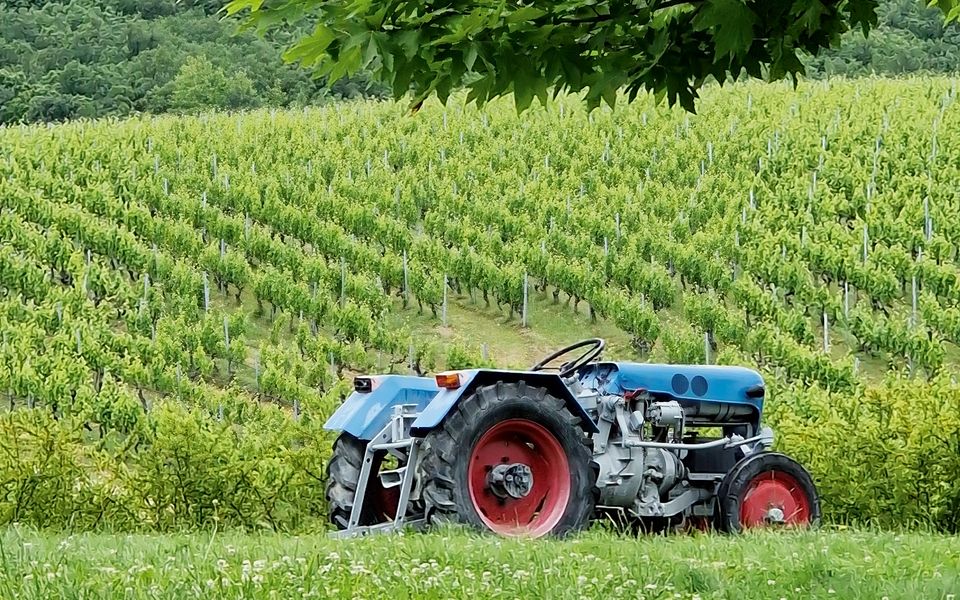
Reducing its environmental footprint is one of the biggest and most complex challenges for any modern winery. It is not just about changes in individual production stages, but about a holistic transition that touches the entire chain of production: from vineyard cultivation and water resource management to the operation of the facilities, the choice of bottle and the way the final product is distributed.
Everything must be reassessed through the lens of sustainability, with respect for the environment but also long-term planning. And while all this may once have sounded like a luxury or a foreign trend, today the shift toward “green” wine is not just a request – it is a duty.
In recent years – and especially after the Covid-19 pandemic – there has been a steady increase in Greek wineries investing in sustainable practices, following international trends in the sector, which seems to be dynamically entering the new era, with respect for the terroir, awareness of responsibility and strategic thinking for the future. “It is not possible for the whole world to talk about climate change and for us to brush it aside. It’s an ethical issue,” says Stellios Boutaris, winemaker at Ktima Kir-Yianni, and president of the Greek Wine Federation.
Kir-Yianni estate became the first Greek winery to join the International Wineries for Climate Action (IWCA) at the end of April 2024, an internationally recognized working group that aims to reduce the carbon footprint of the sector. “We joined as silver members from the beginning,” he says. “A basic requirement was to measure and verify our carbon footprint. And in the process we learned very interesting things. Did you know, for example, that when it comes to the vine training stakes, concrete ones have a smaller footprint compared to wooden ones? Unless you choose wood without any treatment.”
According to their measurements, in 2022, their base year, they produced 1.83 kilograms of carbon dioxide per liter of wine which a year later they reduced it to 1.58 kg. “We achieved the reduction with a combination of methods. We reduced the weight of some bottles, e.g. 90 grams for the Blue Tractor; we installed photovoltaics, and today we cover 35% of our energy needs; we reduced the use of nitrogen in fertilizers. Of course, the big difficulty is in transportation. When sales in Australia increase, our overall carbon footprint automatically increases,” Boutaris says, adding that next June he will upgrade the waste water treatment at the Amyntaion winery, implementing for the first time in Greece the treatment of wastewater with earthworms. He says wineries do not produce enough wastewater daily to feed conventional treatment plants, except during the harvest season, so they chose this innovative method, which is more environmentally friendly.
Water challenges
Water management is one of the most critical and complex factors for the sustainability of wineries and, in light of climate change, is now becoming a matter of survival. In the wine producing region of Mantineia, an area with steep slopes and an average annual rainfall of approximately 700 millimeters, irrigation has traditionally not been a common practice. However, in recent years, with the extreme temperatures during summer, the need for water has become increasingly urgent. “The borehole we had, and rarely used, no longer holds any water after June,” says Aris Tselepos, winemaker and president of the Peloponnese Vineyard Wine Producers Association. Reacting to this reality, the winery constructed an artificial reservoir with a capacity of 3,000 cubic meters, with the aim of collecting rainwater.
At the same time, a supplementary reservoir was created, which collects water from the roofs of the facilities. The case of Mantineia captures how water, once a given, is now becoming an element that requires strategic planning, that can determine the future of the vineyard and production. The Tselepos Estate, with a total area of 55 hectares, switched to organic farming six years ago, with the goals of reducing the use of pesticides in the vineyard, and improving the quality of the wine. It began experimentally in 2021 and the certification came before the 2024 harvest.
“The change from conventional to organic farming resulted in losses in production, with the drop in yield in some cases exceeding 30%. The main problem was not the herbicides, because we didn’t use them anyway, but the fungal diseases. For example, downy mildew attacks merlot,” says Tselepos, who intends to buy batteries to store the energy from his photovoltaic system.
Ktima Gerovassiliou in Epanomi, Thessaloniki, has also invested in rational water management and green energy, and measured its carbon footprint for the first time last year. Specifically, it use an underground drip irrigation system, which guarantees water savings, and utilizes rainwater by mainly applying cultivation techniques – such as furrowing, which improves water absorption. Its photovoltaic station, with a total capacity of 459.8 KWP, fully covers the energy needs of the winery. There are also two charging points for electric vehicles. Energy is also produced from the vines that are dumped after pruning, which are given to a specialized partner. Finally, the construction of a wastewater treatment plant has been launched, with an annual capacity of 750 tons.
Anticipating that water shortages will be a major threat to cultivation and respecting the natural environment, the Alpha Estate in Amyntaio, with 2,000 acres of vineyards, has invested in an underground irrigation system and uses drip irrigation. As a result, water evaporation is reduced and the minimum amount required is used. They also compost winemaking waste, use natural ways to combat insects, such as pheromone traps, and avoid weeding. “We mow the lawn, leaving the grass between the rows. This way, the soil is better aired, erosion is reduced, and the plants bind more carbon dioxide,” says oenologist Emorfili Mavridou.
Green facilities
At the new winery in Amyntaio, Amoenos Vineyards, located on the site of an old lignite mine, the building is underground, which means it has lower energy requirements, and natural air conditioning. It also uses gravity to move the grape pulp. This need for more environmentally friendly facilities is now taken into account in the new processing units.
One of the pioneers in bioclimatic wineries is Vassilis Papagiannakos in Attica, who completed his unit in 2007, a building awarded by the Hellenic Institute of Architecture a year later. Its operation has natural ventilation, natural lighting and very good insulation, which allows him to save 30% on energy. Papagiannakos, like the majority of his colleagues and growers in Attica, faces a water shortage. He cannot drill, as it is economically unprofitable and the water is brackish. In the 1.2 hectares he has set aside for viticulture, he will choose planting in a low cup, which retains more moisture in the plant.
Alternative cultivation methods are also applied by the Brintziki Estate in the village of Lantzoi in Ancient Olympia, which in 2012 was named the first green winery in Greece. In terms of cultivation, it has been producing exclusively organic wines since 1994. “Instead of fertilizers and herbicides, we cultivate annual plants, such as vetch. In this way, we protect the local microfauna, enhance the biodiversity of the area and maintain moisture in the soil,” explains Dionysia Brintziki, director of the estate. In addition to the holistic management of the vineyard, they ensure that the building has a zero environmental footprint. For its energy needs, they have utilized geothermal energy for the cooling and heating of the tanks and halls, as well as solar energy, with photovoltaic panels that supply the winery with electricity.
At their Atrium Vinea hotel, within the vineyard, they promote the philosophy of sustainability and holistic management. “Guests understand the process from vine to glass through an experiential approach,” says Brintziki. Indeed, in addition to bioclimatic buildings, holistic management of cultivation and the adoption of friendlier materials in packaging, consumer education plays an equally important role, because they are the ones who choose between products. And, it seems, their criteria now include, in addition to taste, how “green” each bottle is.
This article first appeared in Greek in Kathimerini’s food magazine Gastronomos.
Dining and Cooking