
An economist says consumers may be paying more as product quality changes.
HERSHEY, Pa. — A public dispute involving a descendant of the Reese’s founder is drawing attention to a broader consumer concern: whether companies are quietly changing ingredients while prices continue to rise.
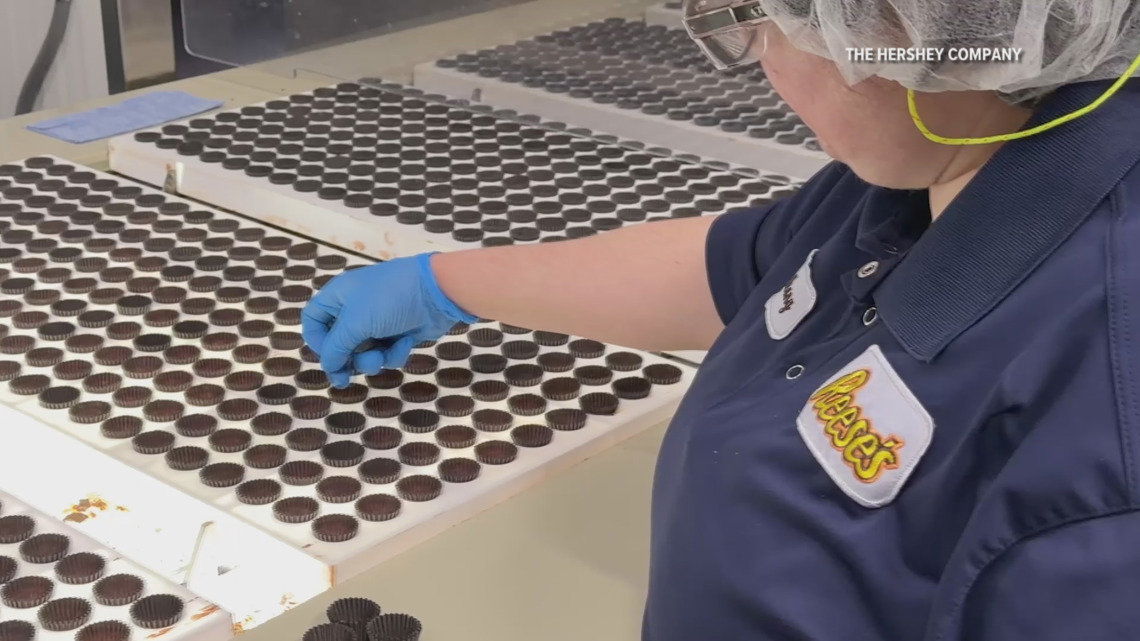
Brad Reese, grandson of H.B. Reese, has accused The Hershey Company of altering recipes across some Reese’s products — claiming in a public statement that certain items are replacing milk chocolate with “compound coatings” and traditional peanut butter with “peanut-butter-style crèmes.”
Hershey disputes that claim.
In a response, the company said its classic Reese’s Peanut Butter Cups are made the same way they have always been. Hershey acknowledged that as the product line expands into new shapes and varieties, recipe adjustments may be made. The company maintains its protection of what it calls the “perfect combination of chocolate and peanut butter.”
The exchange has amplified discussion around a term economists call “skimpflation.”
“Skimpflation is the practice of cutting corners on quality, really skimping on the ingredients or materials,” said Lindsay Owens, executive director of Groundwork Collaborative. “It’s tough to know when a company is reformulating or innovating and when they’re cutting corners.”
In chocolate products, Owens said labeling language can offer clues. Companies may use terms like “chocolatey coating” instead of chocolate if ingredients no longer meet federal standards.
The Food and Drug Administration sets strict requirements for products labeled “milk chocolate,” including minimum percentages of chocolate liquor, milk solids and milk fat. If those thresholds are not met, products cannot legally be marketed as chocolate.
FOX43 reviewed ingredient labels for standard Reese’s Peanut Butter Cups, which continue to list milk chocolate and meet federal labeling requirements.
However, Owens argues that even when products remain within legal definitions, subtle ingredient changes can still affect quality.
“In theory, if you’re the victim of skimpflation, you’d think at least it didn’t hit your wallet quite so hard,” Owens said. “But what we’re seeing time and time again is a real double whammy: quality degradation paired not with cost savings, but with price increases.”
Owens said skimpflation, and its cousin, shrinkflation — which involves reducing product size or quantity — tend to increase during periods of inflation, when companies may feel limited in how much more they can charge consumers.
“When retailers feel like they can’t raise prices anymore, they start trying to drive down costs,” Owens said.
She added that the practice is not limited to candy, but also appears in household staples such as paper products, where fewer sheets or lower-quality materials may be used.
Owens says consumers can urge lawmakers to require companies to disclose significant changes to product quantity or quality, arguing that clearer labeling would help consumers make informed decisions.
For some shoppers, the concern is personal.
Vladimir Dewyntyr, who visits Grandpa Joe’s Candy Shop in downtown York nearly every day, said longtime customers can detect even small changes.
“If it’s something like a Reese’s Peanut Butter Cup, you definitely notice a change because you’ve been eating it your whole life,” Dewyntyr said. “If you go from a creamy peanut butter to more of a chalky [kind], then I’m not going to buy it anymore.”
For now, he says the classic cups still taste consistent to him.
But as inflation continues to affect grocery bills nationwide, economists say consumers may need to pay closer attention, not just to prices on the shelf, but to what’s inside the package.
Dining and Cooking