
Viktoriya Skorikova / Getty Images
Key Points
A new study published in Neurology Open Access found that women who closely follow the Mediterranean diet have a significantly lower risk of stroke.
The research, which tracked more than 105,000 women over 21 years, linked higher consumption of whole grains, fruits, vegetables, legumes, olive oil, and fish with an 18% lower overall stroke risk.
Experts say the findings strengthen evidence that a largely plant-based diet—low in red meat and saturated fats—can support long-term cardiovascular health and stroke prevention.
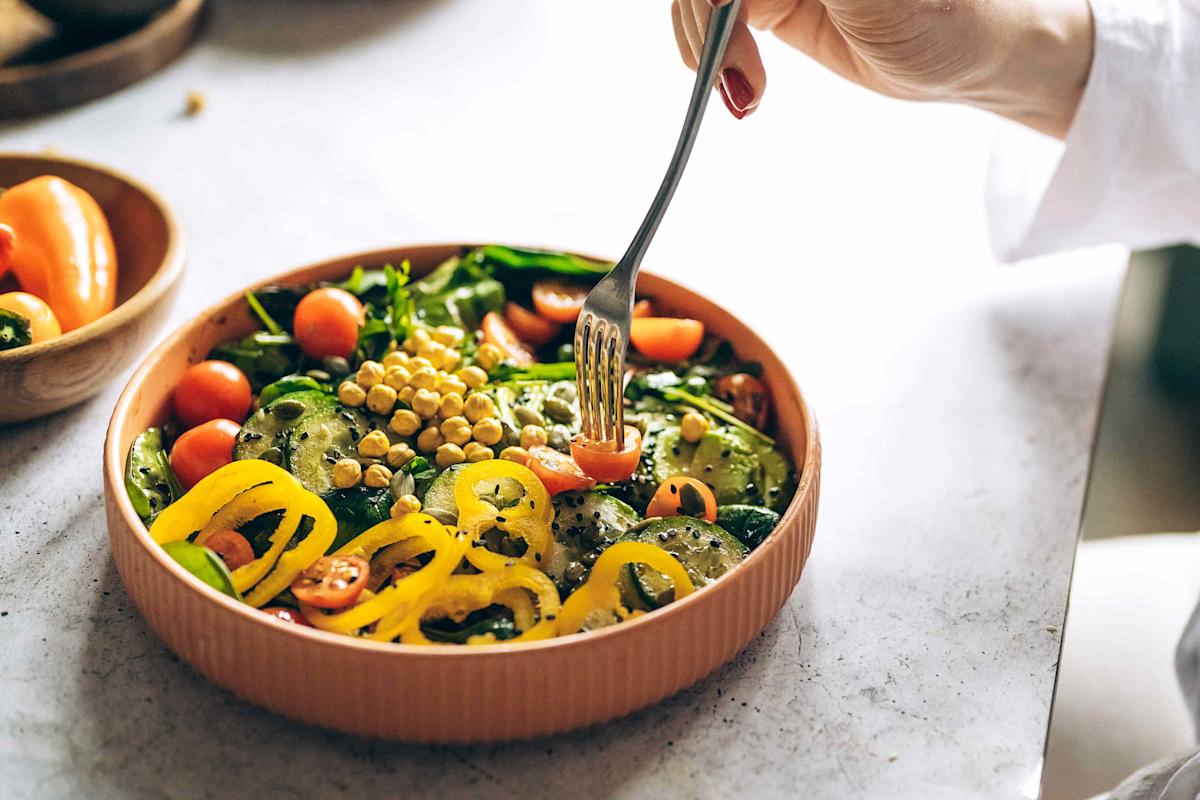
The Mediterranean diet has long been hailed as the “healthiest” way to eat. It consistently ranks No. 1 on U.S. News and World Report’s annual list of diet profiles, has been the subject of countless studies, including one showing it’s best for healthy longevity, and, frankly, it’s delicious. But just in case you needed one more reason to adopt this way of life, researchers are back with a new study showing that women who closely follow the Mediterranean diet have a far lower risk of stroke.
In February, researchers published their findings in Neurology Open Access, a journal of the American Academy of Neurology, highlighting the specific benefits women reap from eating a more plant-based diet, punctuated by a bit of fish, olive oil, and less red meat and saturated fat.
To understand the diet’s effects, the team followed more than 105,000 women with no history of stroke at the start of the study, with an average age of 53. The participants were asked to complete a detailed dietary questionnaire at the start of the study, which was then scored by researchers on a scale from zero to nine, based on how closely they followed the Mediterranean diet guidelines.
As the American Academy of Neurology explained in a statement, “Participants earned one point for consuming more than the population average of whole grain cereals, fruits, vegetables, legumes, olive oil, and fish, as well as for drinking a moderate amount of alcohol. They also earned a point for eating less red meat and dairy than average.” The organization added that about 30% of participants scored between six and nine, while 13% scored between zero and two.
These participants were then monitored for an average of 21 years, providing ample long-term data for the researchers to analyze. Over that period, the team recorded 4,083 strokes, including 3,358 ischemic and 725 hemorrhagic. After accounting for other risks, including smoking, physical activity, and high blood pressure, the researchers found that women with the highest Mediterranean diet scores were 18% less likely to experience any stroke than those with the lowest scores. “Their risk of ischemic stroke was 16% lower, and their risk of hemorrhagic stroke was 25% lower,” the academy noted in its statement.
Specifically, the researchers found that the women who ate more plant-based foods, fish, and olive oil, and less red meat and saturated fats, had the greatest benefits, with their risk dropping across all major stroke types. “Our findings support the mounting evidence that a healthy diet is critical to stroke prevention,” Sophia S. Wang, PhD, from City of Hope Comprehensive Cancer Center, and lead author of the study, said. “We were especially interested to see that this finding applies to hemorrhagic stroke, as few large studies have looked at this type of stroke.”
Related: Only 1 in 10 People Age Well — and They All Have This Eating Plan in Common
The one caveat to note here is that while the study showed a strong association with reduced stroke risk, it cannot establish a direct cause-and-effect relationship in preventing strokes. Rather, the academy explained, it “identifies an association between dietary habits and long-term health outcomes.” Still, it’s a major finding nonetheless.
“Stroke is a leading cause of death and disability, so it’s exciting to think that improving our diets could lessen our risk for this devastating disease,” Wang added. “Further studies are needed to confirm these findings and to help us understand the mechanisms behind them so we could identify new ways to prevent stroke.”
Read the original article on Food & Wine
Dining and Cooking