
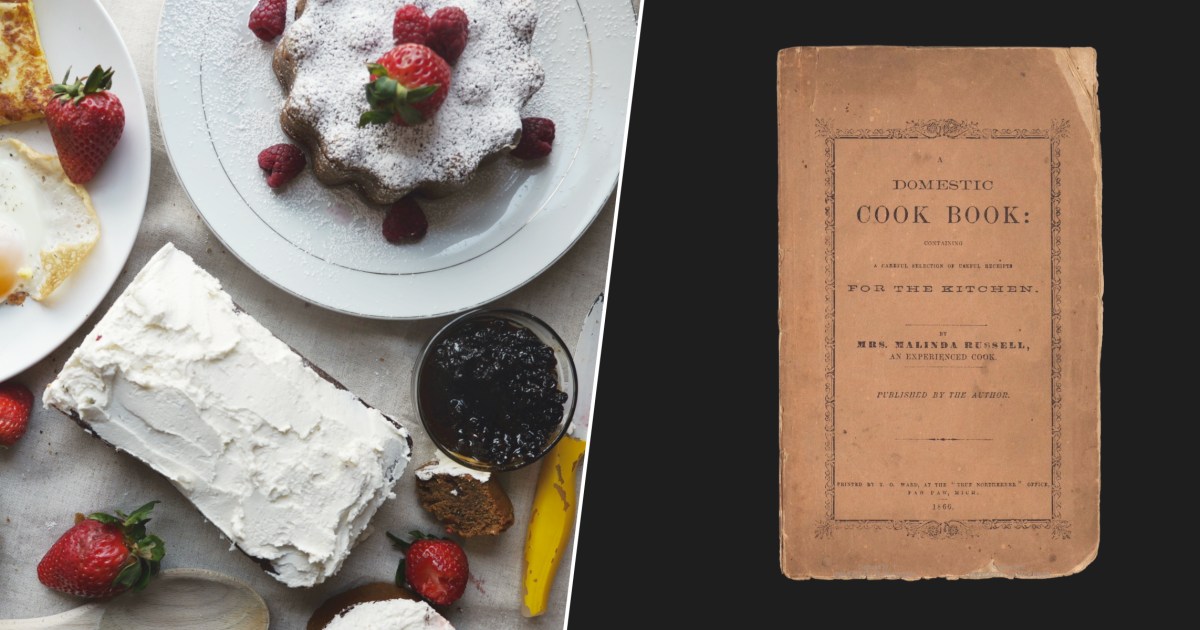
Malinda Russell’s book is a feast of information. In 1866, she published “A Domestic Cookbook: Containing a Careful Selection of Useful Receipts for the Kitchen,” the first known cookbook published by an African American.
A copy of her book was discovered at the bottom of a box of books in the early 2000s by culinary historian Janice Bluestein Longone, who donated an extensive archive of cookbooks now stored at the University of Michigan.
For over a century, her cookbook remained unread, her dishes unmade, until the University of Michigan Regional Imprint reprinted it, allowing people around the country — like me — to bake up some of her history.
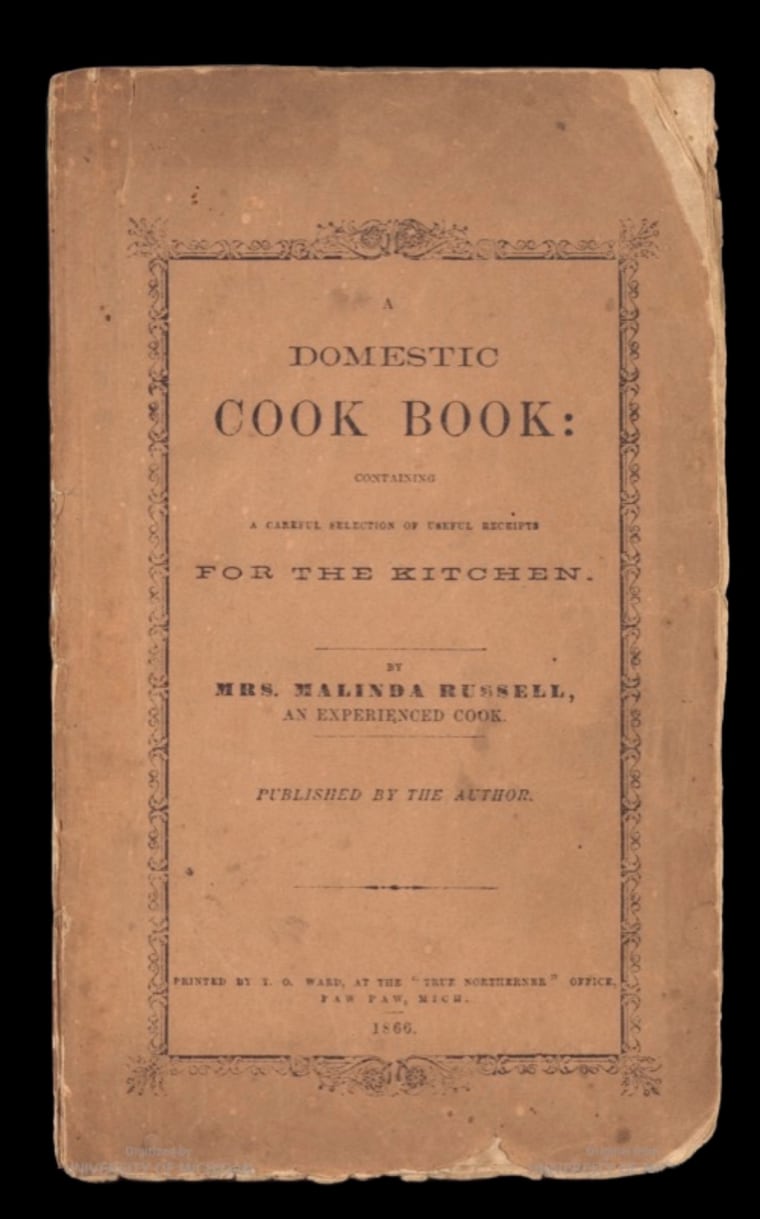 Cover of “A Domestic Cookbook: Containing a Careful Selection of Useful Receipts for the Kitchen” by Malinda Russell.University of MichiganRussell Tells Her Story
There isn’t much known about Russell other than what she wrote about herself in the opening section of her book. “A Short History of the Author” shows Russell was a descriptive writer, and in three pages, she shares her life story before presenting her “receipts,” or what recipes were called until around 1900.
At 19, Russell was robbed by a member of her traveling party, ending her journey towards Liberia, so she stopped in Lynchburg, Virginia, and became a cook and ladies’ companion.
Four years after they wed, her husband died, leaving Russell to solely care for their disabled child at a time when medical facilities were lacking.
A Successful Bakery Becomes a Target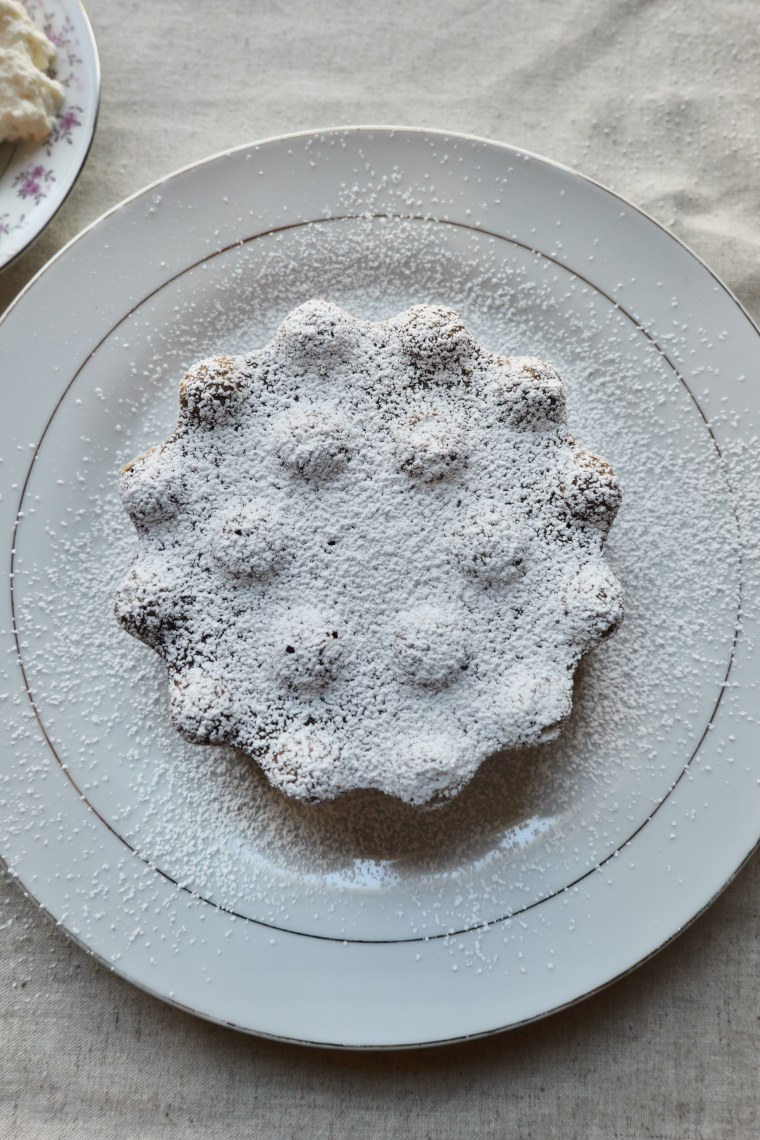 Malinda Russell’s Allspice Cake.Joseph Lamour
Russell owned a successful bakery for six years, specializing in breads, cakes and other baked goods, like a Sweet Potato Baked Pudding I endeavored to make. She has recipes for savory dishes, a section on preparing various meats and fish of the time and another on making tinctures and balms.
“I know my Receipts to be good, as they always have given satisfaction,” Russell wrote, adding that she had 20 years of experience.
On Jan. 17, 1865, Russell was run out of Greenville, Tennessee, by a group that stole all of her earnings and threatened her for her “Union” ideals the day after the Battle of Dandridge, miles from her town. She escaped to Paw, Paw, Michigan, where she published her book and hoped the profits would bring her home.
Russell acknowledged her teachers along the way, crediting “Fanny Steward, a colored cook, of Virginia,” and the 1824 housekeeping guide and cookbook, “The Virginia Housewife,” by Mary Randolph.
“This is one reason why I publish my Cook Book, hoping to receive enough from the sale of it to enable me to return home,” Russell wrote. “I know my book will sell well where I have cooked, and am sure those using my receipts will be well satisfied.”
Setting My Russell-Centric Menu
“One thing that’s interesting to me, in general, about the introduction to her cookbook is how much credit she gives to other people, because that was not really the norm for the time,” Kara Mae Harris, culinary historian and creator of foodways blog Old Line Plate, tells me. “I don’t think it was even necessarily a matter of ethics that people were thinking about it, but people would just copy entire recipes from other books.”
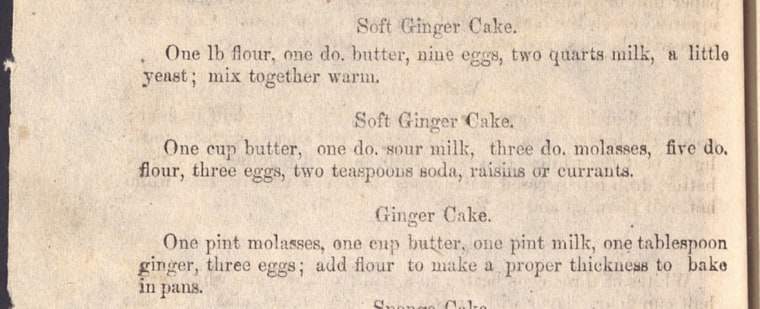 Three ginger cake recipes from “A Domestic Cookbook” by Malinda Russell.University of Michigan
When I first thumbed through “Domestic Cookbook,” I found myself wanting to know Russell better. I noticed patterns in the ingredients she used and was tickled by the repetition of rose water, nutmeg and ginger.
Familiar dishes like Chow Chow and Ginger Snaps are in the book, but I chose to make recipes less familiar to me: Allspice Cake, Ginger Cake, Stewed Currants, Mush Cake and Sweet Potato Baked Pudding.
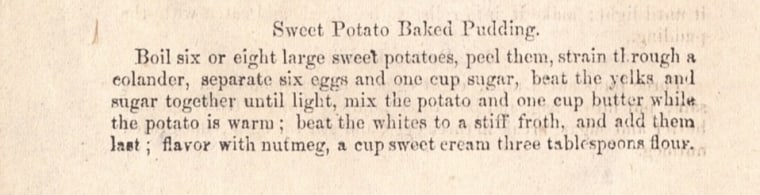 Sweet Potato Baked Pudding recipe from “A Domestic Cookbook” by Malinda Russell.University of Michigan
Recipes in her time were not written like they are today. They were short, listing ingredients and only sometimes instructions. These recipes may have been written with domestic staff in mind: A recipe for pound cake calls for one pound of flour, one pound of sugar and 12 eggs — which would surely make enough to feed a family.
“In the 1800s, there was just, like, this cookbook boom,” Harris says, adding that after the war, there were likely a lot of women who no longer had their domestic staff. “They don’t even know how to cook, so there’s a demand for a lot of books.”
What I attempted to make isn’t a typical feast but more a smorgasbord of Reconstruction-era foods, written by a woman whose life I’d been trying to understand better. What was it like to prepare these dishes day in and day out?
Cooking Is a Workout, Mrs. Russell
I cooked for two days, preparing for the second day on the night of the first.
The first day, I made her Allspice Cake. A group of food historians who aim to make Russel’s whole book translated her recipe into a modern, standardized version.
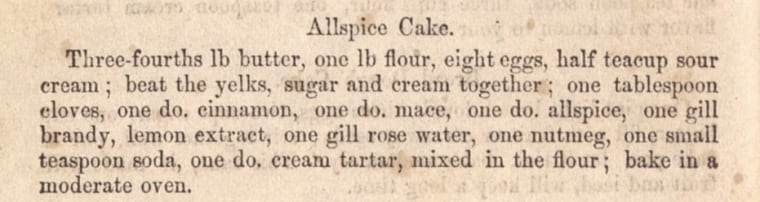 Allspice Cake recipe from “A Domestic Cookbook” by Malinda Russell.University of Michigan
The “allspice” doesn’t refer to the spice but may have been referring to “all the spices,” since there are eight flavorings in total: cinnamon, cloves, mace, nutmeg, allspice, lemon extract, rose water and brandy.
While that baked, I nursed a saucepan of Russell’s Stewed Currants, soaked in vinegar and sugar. This dish was a diva: If I stepped more than four feet away from the stove, it would bubble over, and her recipe says to stew them for two hours.
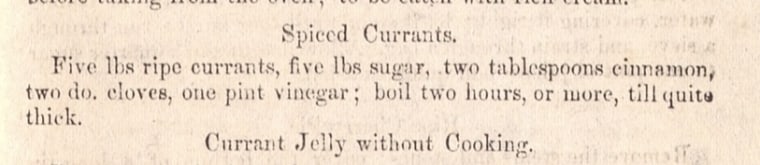 Spiced Currants recipe from “A Domestic Cookbook: Containing a Careful Selection of Useful Receipts for the Kitchen” by Malinda Russell.University of Michigan
“Everything we have when we go to the grocery store is a lot more standardized,” Harris says, pointing out the currants I toiled over may have been harder to get to a jammy consistency.
“A good example is the vinegar,” she continues. “When you buy white vinegar, it’s like 10% acidity, but back then, you would just get what you get, so you have to have a lot more understanding of what you’re working with so you can adjust the fruit and the sugar and everything accordingly.”
I already realized the amount of eggs (eight) was too many for the Allspice Cake. In Russell’s time, eggs weren’t as large and their sizes weren’t standardized. So, I used four, and the cake came out so well. Its eight flavors turned into something tutti-frutti-like in concept, but with spices.
The other item I made the first day, the Ginger Cake, required a pint of molasses — two jars’ worth — and had less ginger than I would have expected. It was more of a molasses cake. It also came out a little stodgy, probably because it had no leavener. (A home baker with more experience might have added baking powder despite it not being listed.)
 Mush Cake recipe from “A Domestic Cookbook” by Malinda Russell.University of Michigan
For the Sweet Potato Baked Pudding, I peeled all those potatoes, sliced, boiled, mashed, mixed, baked and, body sore, tasted the result, and even though I made it, was still was shocked at how sweet it was. Tastes back in Russell’s day clearly went for a lot more sugar.
I prepared the Mush Cake, and while the word “mush” might sound odd to modern ears, it’s what folks used to call cooked cornmeal. Her cake has a few more ingredients, like butter, fresh cream and eggs. How could you go wrong with that? It was stellar, especially when I fried them in oil and butter the next morning — a perfect breakfast.
Concluding With Appreciation
I’m no longer at the stove stirring sweet potatoes or currants, or beating egg whites to stiff peaks. I’m back at my metaphorical stove — the computer — thinking about Russell’s strength. Physically, yes, as whipping eggs for three minutes was a task for me, let alone 20 years for her.
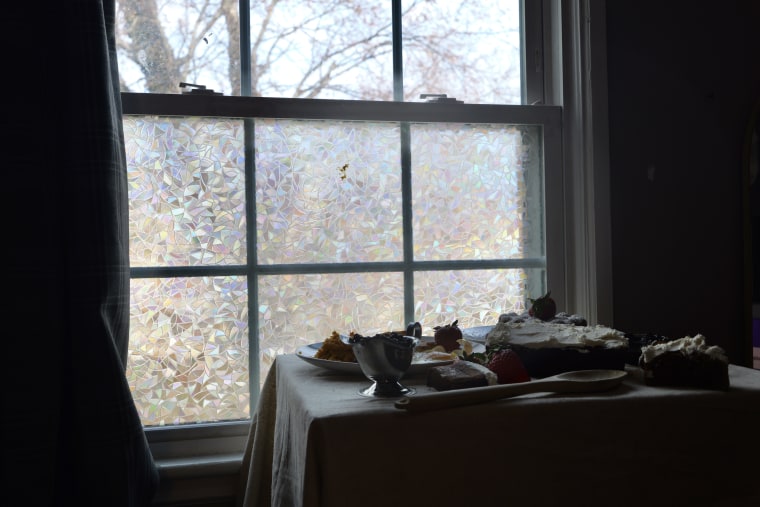 A feast of Malinda Russell’s recipes.Joseph Lamour
But her mental strength is also clear to me: She was robbed of her savings not once but twice in her life, yet she still kept going for her son. As the Confederate South crumbled, she held steadfast to her entrepreneurial spirit and work ethic, and kept her dreams alive in the pages of her book.
Dining and Cooking