
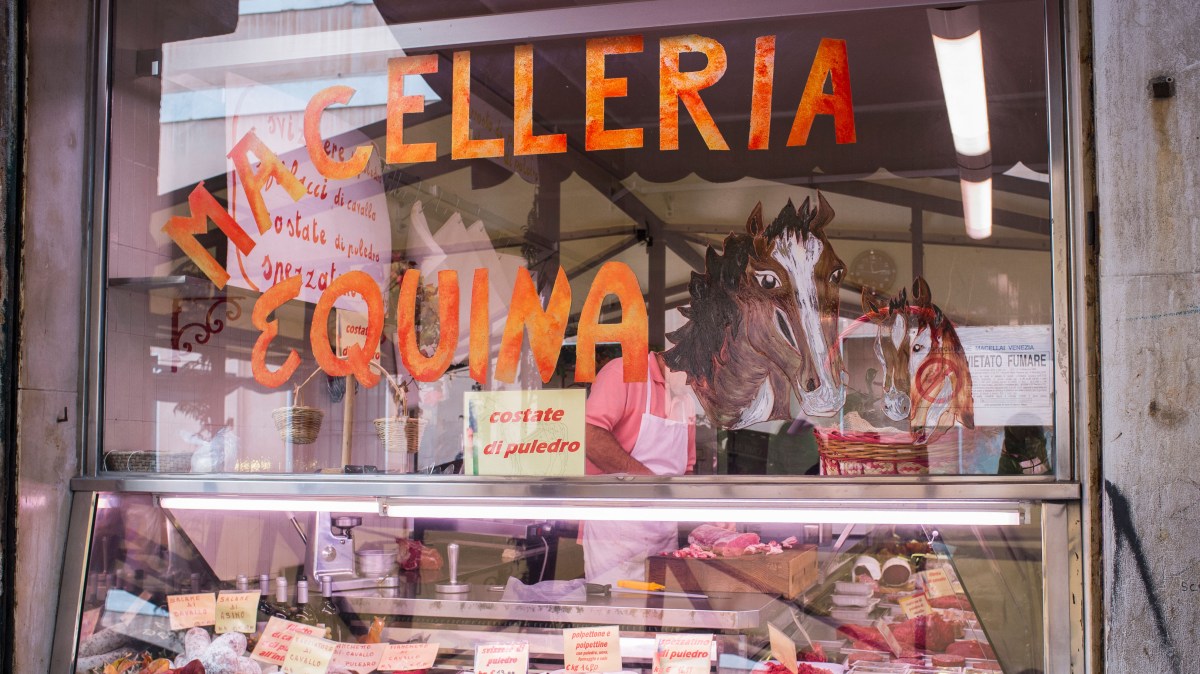
Served as tender chunks in wine-flavoured stews, in shreds scattered over salads or sliced into carpaccio so thin it melts on the tongue, horse meat has long been a staple on dinner tables across Italy, and especially in Puglia.
Now the country is divided over whether to continue the centuries-old culinary tradition after an alliance of bipartisan parliamentarians floated a proposal to ban horse meat.
• I returned to Puglia after 25 years — it’s still as lovely as ever
The law would classify horses, donkeys and mules as pets, imposing fines of up to €100,000 and jail sentences of up to three years for anyone who rears them for slaughter.
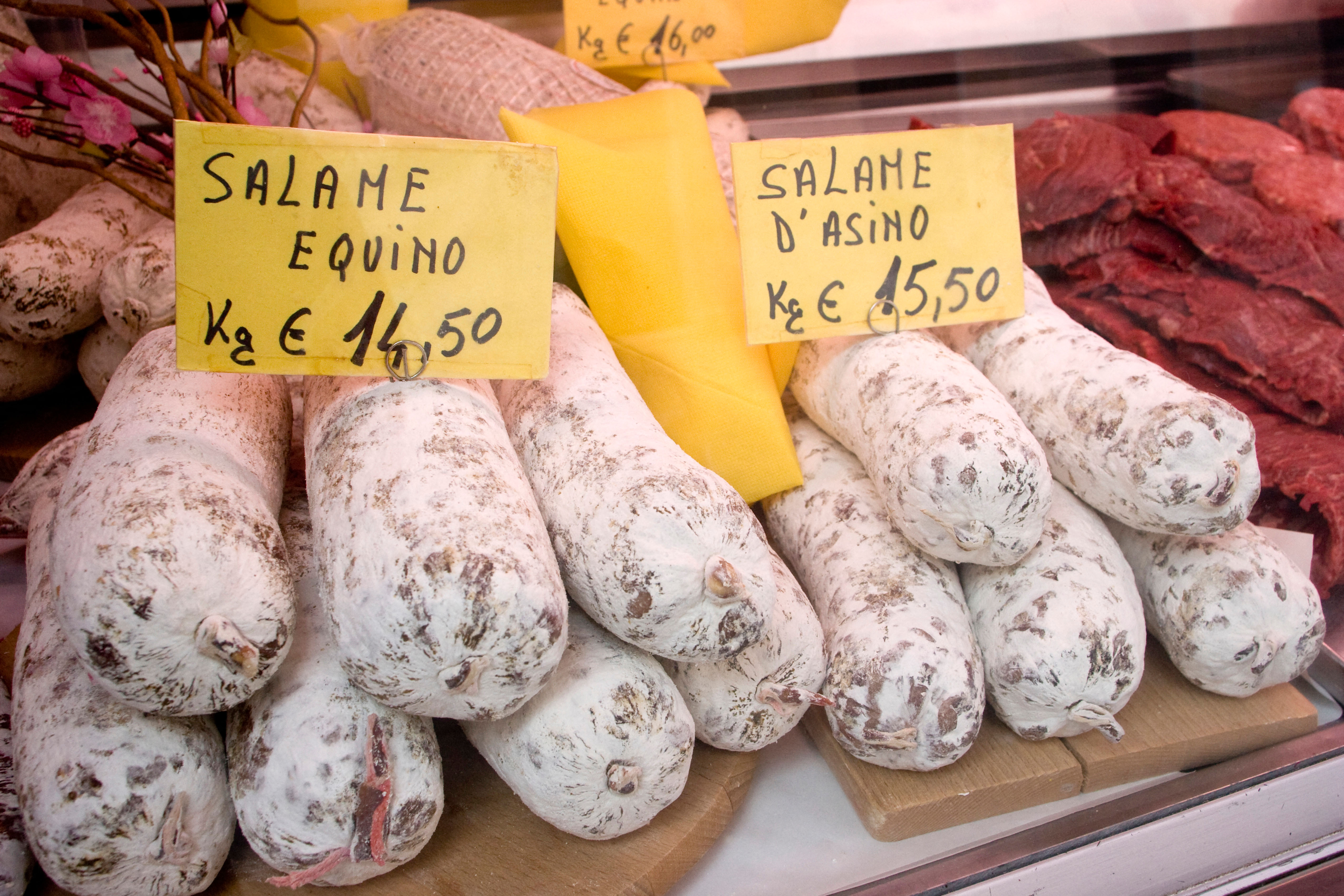
Products for sale in Venice
ALAMY
“This proposal is an extraordinary opportunity to bring about a cultural change that is already in the hearts of the majority of Italians,” said Michela Vittoria Brambilla, a parliamentarian for Noi Moderati, part of Giorgia Meloni’s ruling coalition, who has depicted the slaughter of horses as cruel.
The proposal, which also has the backing of centre-left parliamentarians, has prompted a lively public debate, and numerous petitions for and against the measure have emerged online.
Luigi Menduni, president of the youth wing of Confcommercio Bari-Bat, the business association, voiced concern for local workers, including those in tourism who rely on visitors eager to sample regional specialities. Italian cuisine was added to Unesco’s intangible cultural heritage list in December.
• Italian food enjoys a renaissance as Londoners seek la dolce vita
“This could affect the entire supply chain, meaning farms, logistics, lorries going back and forth, butchers and restaurants,” said Menduni, who founded a horse meat festival in the Pugliese town of Corato in 2024. “Behind every single person there is a mortgage to pay, a child to raise — there is an entire economy that depends on it.”
He noted that Puglia ranked first among Italian regions for horse-meat consumption, accounting for 13 per cent of the national total.
The proposal is under review by a senate commission. Gian Marco Centinaio, the senate’s vice-president and a vocal opponent of the move, said it would take months for the bill to pass through both parliamentary houses.
“Calling a horse a pet is against any logic,” Centinaio said. “From what I’ve heard in the past few weeks, there are more colleagues who are against it than for it.”
Dining and Cooking