
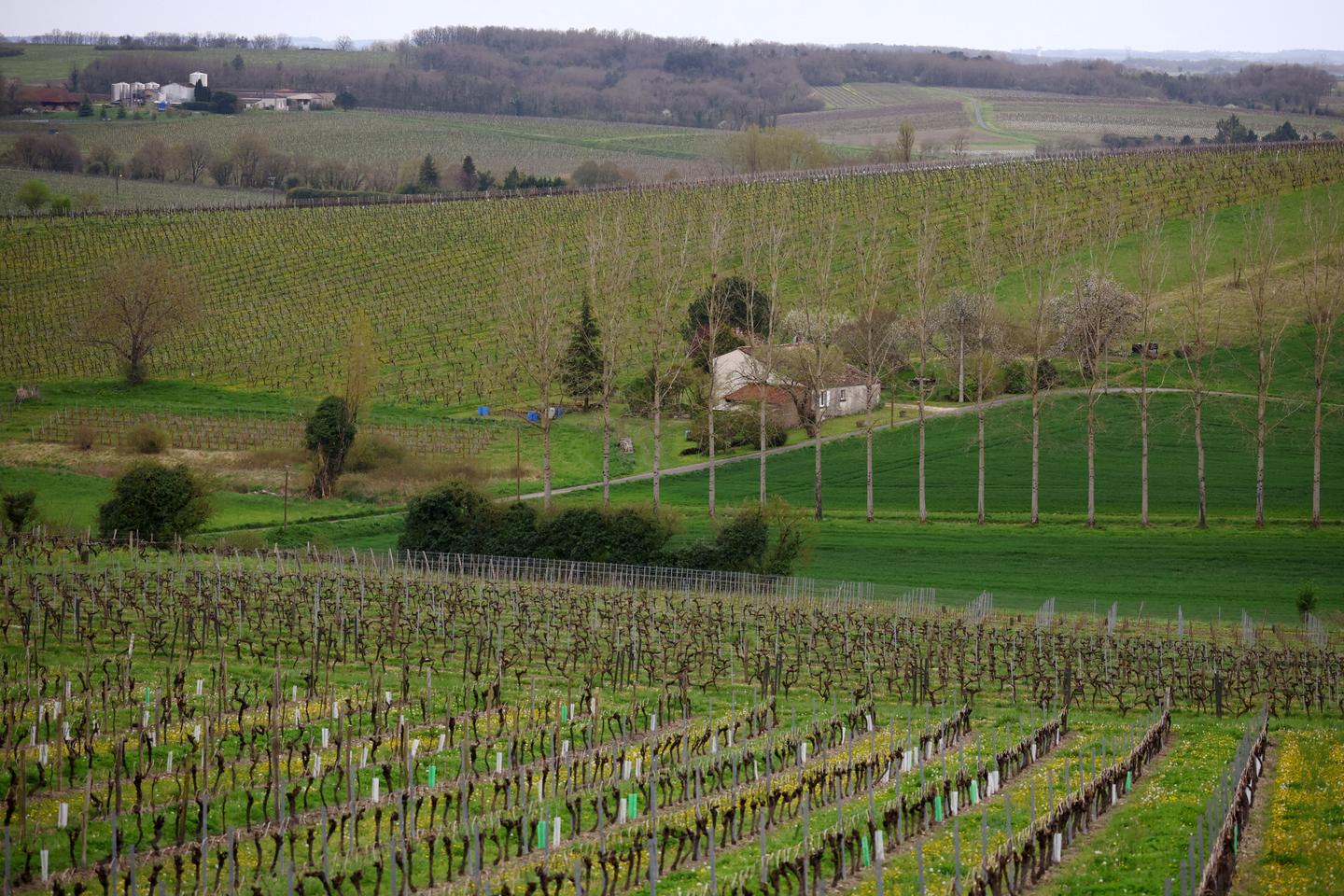
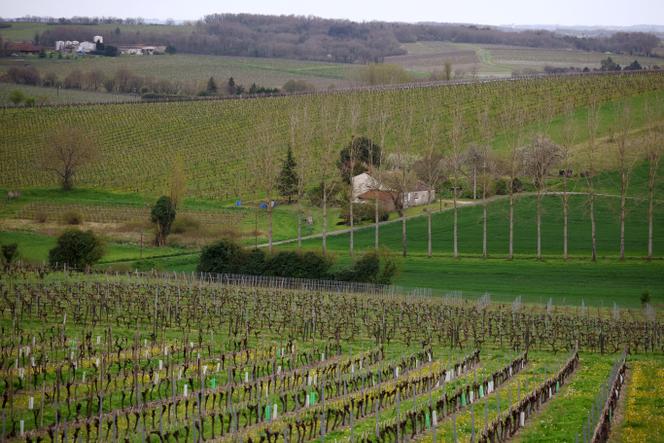
 Vineyards in Bellevigne near Cognac, France, April 3, 2025. STEPHANE MAHE / REUTERS
The EU will unlock €40 million to help French winemakers struggling with US tariffs and falling demand, the bloc’s farming chief said ahead of a major agricultural fair on Wednesday, February 25. Christophe Hansen announced the measure in an interview with Agence France-Presse in which he defended the European Commission’s work in support of farmers – long among Brussels’ most vociferous critics.
“The sector is under pressure for many reasons,” the EU commissioner for agriculture said, citing animal diseases, trade tensions and low prices affecting farmers across the 27-nation European Union. “The anger is understandable, but anger is not the solution,” he added, speaking ahead of an annual agricultural show in Paris.
As overproduction saddles France’s iconic but flagging wine industry, the emergency funding will support the distillation of unsold surplus, Hansen said. Excess wine is often turned into ethanol alcohol that can then be used for industrial purposes. “This will reduce market volume and stabilize prices,” he said.
Demand for alcoholic beverages is falling as young people drink less, seeking healthier lifestyles. This has been compounded by growing competition and tariffs on European wine exports imposed by US President Donald Trump.
The value of France’s wine and spirits exports dropped by 8% last year, a hard blow for one of the nation’s most cherished sectors. The European Union aid, which is yet to be formally put in place, adds to a €130-million fund set up by Paris offering loss-making owners subsidies to uproot their vines.
It also comes on top of a raft of measures the bloc adopted this week to support European winemakers. These included reducing labeling requirements, and harmonizing labeling terms with “alcohol-light” replaced by “reduced-alcohol” and drinks with less than 0.5% alcohol identified as “alcohol-free.”
Read more Subscribers only French people exposed to ‘concerning’ levels of cadmium, lead and aluminum through food
“Consumer behavior changed,” Hansen said, sitting in his Brussels office before departing for Paris. “The sector needs to adapt to this new demand.” European winemakers stood to gain from a recently struck trade deal with India that would significantly lower import duties, he added. “We will enjoy better conditions than competitors like Australia and the United Kingdom in that market.”
‘No silver bullet’
Hansen defended a separate trade accord with the South American bloc Mercosur, saying winemakers, dairy farmers and other European food producers stood to gain from it, and safeguards had been put in place to protect other sensitive sectors. The pact has been the target of tractor-mounted farmer protests over concerns it would result in an influx into Europe of cheaper goods including beef, poultry, sugar, rice, honey and soybeans.
Partner service
Learn French with Gymglish
Thanks to a daily lesson, an original story and a personalized correction, in 15 minutes per day.
Try for free
Help us improve Le Monde in English
Dear reader,
We’d love to hear your thoughts on Le Monde in English! Take this quick survey to help us improve it for you.
Take the survey
Newsletter
LE MONDE IN ENGLISH
Sign up to receive our daily selection of “Le Monde” articles translated into English.
Sign up
New
Le Monde’s app
Get the most out of your experience: download the app to enjoy Le Monde in English anywhere, anytime
Download
Newsletter
M International
Sign up to get the best of M le Magazine du Monde twice a month, straight to your inbox.
Sign up now
On Tuesday, Brussels announced a one-year suspension on tariffs on fertilizer imports from all countries bar Russia and Belarus, formalising a concession first aired last month amid heated negotiations to get the Mercosur deal over the finishing line.
Read more Subscribers only Paris agricultural fair opens without famed cows as French farmers face multiple crises
Farmer groups have also been calling for a pause in the application of the EU’s carbon border tax on fertilizers, which they say is set to send already high prices further up. The levy targets carbon-intensive imports to level the playing field for European industries subject to strict emissions rules.
Hansen said the commission was working on a strategy to help European fertilizer producers remain in business, without resulting in farmers having to pay more for the stuff. This could include using part of the border tax revenue as well as money from the EU’s emissions trading system to compensate farmers, he suggested before warning that there was “no silver bullet, no panacea for this problem.”
Dining and Cooking