
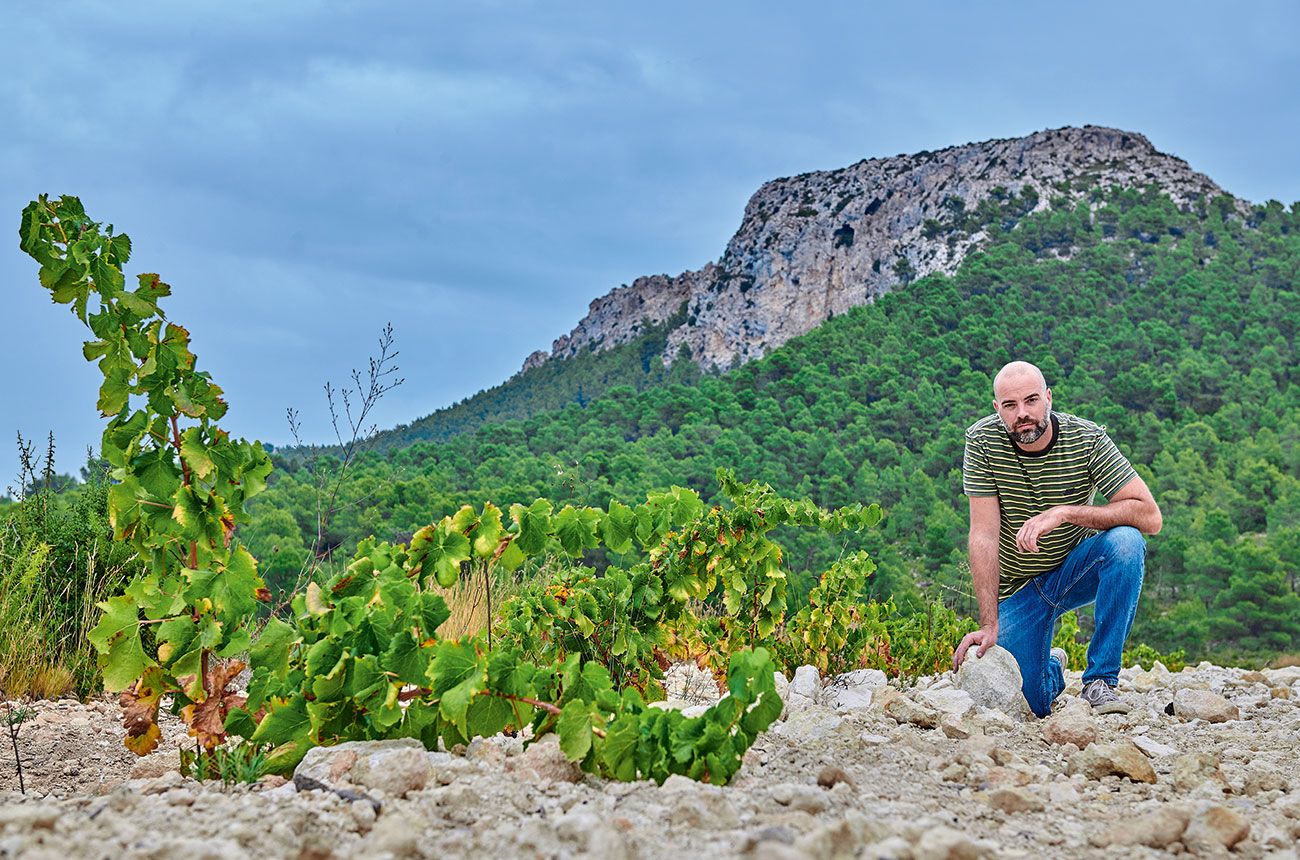
There is so much more to Spain’s red grape varieties than Tempranillo. Mencía, for instance, that crunchy, refreshing variety of the northwest. Garnacha, too, which has been brought back in from the cold winds of disapproval and is turning up all over, but especially in the Sierra de Gredos and the north.
Mediterranean Spain also has a cornucopia of reds – and whites. Yet these are still to achieve the recognition of those first three.
The best known is Monastrell, yet it is still widely regarded as a country cousin, despite making some exceptional wines. Dig beneath Monastrell, and you will find Arcos, Bobal, Bonicaire, Forcallà, Giró and more.
Change is in the air. There’s a dynamic movement to rejuvenate abandoned vineyards and return to local varieties. Importantly, there is an impressive cohort of growers and winemakers driving change. They have roots in wine – practically all the producers are from wine-growing families. What’s different is that they have started up new projects: some of the bodegas featured here are less than 10 years old.
Love for the local
We are at a significant moment for these Mediterranean wines, with local people working on local varieties, benefiting from their knowledge of terroir and traditions. It was not easy to narrow the list down to my top 10 producers (and, indeed, the presence of a father/daughter pairing means that there are actually 11 wines).
These producers work in Alicante, Valencia, Jumilla and Manchuela, although not all of them choose to belong to their local DOs. The significant omission in the region is Utiel- Requena, which has some very fine Bobal producers who just missed out. They would have made a top 20, as would Juan Gil, an established name in Jumilla – and Julia Casado of La del Terreno in Murcia, Altolandon in Manchuela, and Bodega Los Frailes, Valencian neighbour to Celler del Roure, would also certainly have joined the list.
What unites these producers is their enthusiasm and creativity. They don’t feel the need to follow the particular style of wine of their denomination. Each prefers to reflect their soil and climate. They aren’t afraid to work with apparently unknown and unpopular varieties.
Is there a Mediterranean wine style here? Are the wines linked by a philosophy? I would say yes. There’s another factor that unites the producers as people, as Pepe Mendoza points out: ‘Don’t forget that those of us by the Mediterranean are traders: we always have an eye to doing business with our neighbours and the outside world.
Pepe Mendoza, Casa Agrícola, Alicante
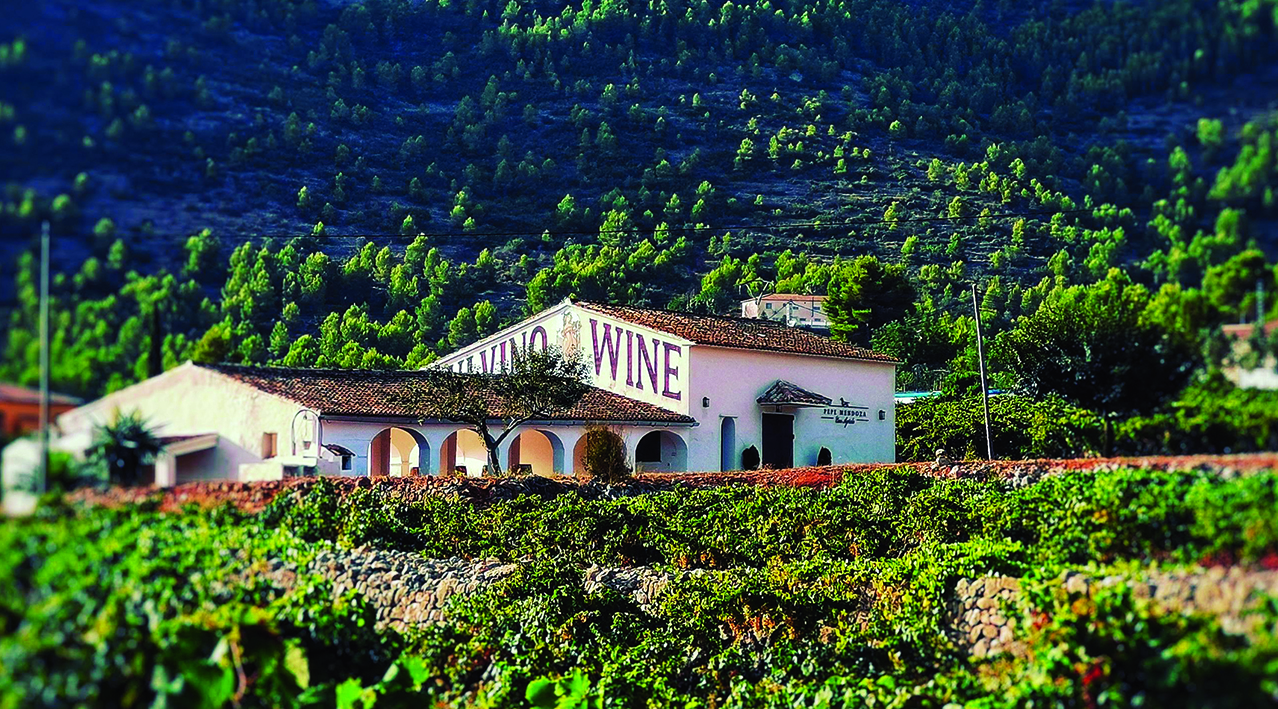
Casa Agrícola
(Image credit: Credit Unknown)
Pepe Mendoza appears as the smiling godfather in the Mediterranean wine world – ready to recommend wines, winemakers and places to eat, and to make connections. He undoubtedly has the liveliest Instagram presence among the producers in these pages, with highlights of life in the vineyard. Oh – and he is a dachshund owner, too. What more could one want?
Casa Agrícola is new, launched in 2016. Yet his experience in Alicante is long and deep, formerly working for his family’s business, Bodegas Enrique Mendoza. ‘It was after a trip to Georgia with [winemaker] Rafa Bernabé. My heart changed when I saw the simplicity of the winemaking. After spending 25 years trying to make a normal Chardonnay, I also realised the best wines were from indigenous grapes. You need to express the soil of Alicante, to see the pine, thyme and rosemary.’
Now he focuses on Monastrell and Giró. Moscatel, too. The winery buildings were formerly used for sun-drying Moscatel for raisins, once the industry in these parts. Today he’s interested in using the grapes for dry wines, made in amphorae: ‘Moscatel flourishes with skin contact. It has its bitter amargitos aspect, but people try to mask that with sugar.’
He also makes small releases of experimental wines. His response to these trials is typical of the man – there are never any mistakes: ‘Either you get it right and succeed, or you don’t, in which case you learn. Either way, you don’t lose.’
Les Freses, Alicante
Mara Bañó’s winery is just round the corner from the Mediterranean hotspot of Dénia, and her vineyards are surely prime building land. Fortunately, the estate is located in Montgó natural park, named for the mountain that overlooks the vineyards.
In 2009, Bañó acquired 14ha, an abandoned property that had been a strawberry farm, hence the name ‘Les Freses’. ‘The person to blame is my friend Pablo Calatayud [from Celler del Roure]. He gave me the impetus and helped me with the first decisions to transform the estate into a vineyard. We planted local varieties.’ First up was Moscatel, of which she has a mix of clones on different rootstocks, and in the last three years, Forcallà – ‘which I adore’. Her reds also include Bobal, Forcallà, Garnacha, Giró, Monastrell and Montalvana.
She is particularly enthusiastic about her amphorae, returning to the original tradition of winemaking. They were made by Carles Llarch in Penedès using clay from Les Freses. The shape follows the design of 7th-century BC amphorae found in the region.
‘The good thing is that the lees settle very quickly. I don’t have to filter my Amfora wine, or stabilise, or use sulphites – you could call it “natural” with its tiny amount of SO2.’ Bañó’s first vintage was 300 bottles; she now makes a comfortable 30,000. She is only at the beginning and is one to watch.
Javier Revert, Valencia
I first met Revert at Celler del Roure a few years back. He was winemaker there for a decade. Since then he has moved on. The first step was not far – just a few hundred metres in altitude to a vineyard planted by his great-grandfather in 1948 on the Penya Foradà slopes.
Revert had been looking for parcels of old-vine white varieties, and his grandfather pointed it out one day in 2014. He searched for more vineyards, some on terraces as high as 900m, abandoned long ago. The mix of local varieties is fascinating: Arcos, Bonicaire, Monastrell, Tortosí, Trepadell, Verdil…
His wines are delicate and fresh but penetrating. His Arcos wine, Simeta, is the most ‘serious’ of his range, strikingly complex. Micalet is a glorious blend of the white varieties, while Sensal is a crisp village red blend including the ‘super-interesting’ Bonicaire.
Revert has recently joined Finca Sandoval in Manchuela as winemaker, on the recommendation of Garnacha guru Dani Landi. Sandoval, which was founded in 1998 by the journalist Victor de la Serna, has new majority owners. The results of Revert’s first vintages and blends are very promising. Recalling discussions about approaches to wine styles with Sandoval’s founder, Revert remarks: ‘In one sense, I’m with Victor: I prefer blends. The great Mediterranean wines are blends.’
Mustiguillo, Valencia
If Pepe Mendoza is the godfather of the Mediterranean constellation, then Toni Sarrión is its secretary-general, due to his impressive ability to cope with organisations. Mustiguillo had an unpromising beginning: after all, neither the Bobal variety nor the Requena sub-region were renowned.
His ambition led him to invest time, energy and money into creating his own denomination, a Vino de Pago – DOP Pago El Terrerazo. The Vino de Pago category is criticised for uneven quality, but the Terrerazo wines disprove that.
Sarrión works with Bobals and Garnachas, and whites from the local Merseguera variety, grafted over Bobal rootstocks. He admits: ‘When I started I had no idea about fine wine. Up until 2008, I was producing powerful, hyper- concentrated wine. Then I started to look at the soils. [Argentinian winemaker] Sebastián Zuccardi worked with came to visit. They both said, “You’ve got limestone”.’ More recently, he has had advice from soil specialist Pedro Parra. Undoubtedly, he listens; Sarrión keeps Mustiguillo moving – since 2014, he’s changed from full-on new oak to foudres.
Equally in Ribera del Duero in Spain’s northwest, his latest interest is in managing the winemaking at Hacienda Solano winery, and he’s also president of Grandes Pagos, the network of mainly family-owned producers promoting single-estate wines. As with the Vinos de Pago, these wines were uneven in quality, but he is recruiting new members, and the prospects are good.
Rafael Cambra, Valencia
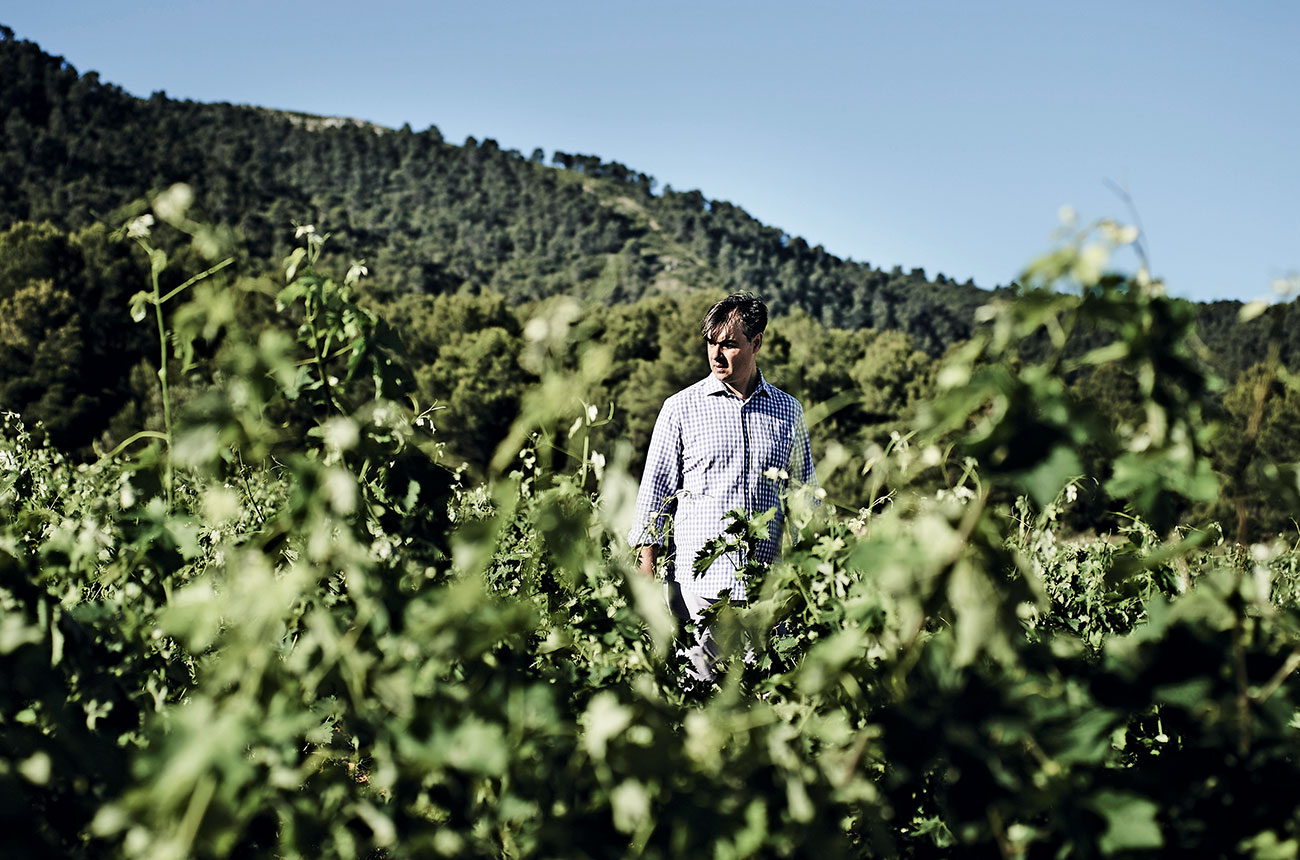
Rafael Cambra
(Image credit: Credit Unknown)
Rafael Cambra’s family business is a leading vine nursery, supplying many of the top names in Spain. While his background was in vines and the vineyard, his inclination was towards winemaking, and he travelled to France to study. However, he remained committed to his roots in Valencia.
His home is Fontanars dels Alforins, a town of some 800 inhabitants an hour inland from Alicante. It’s an attractive Mediterranean landscape of mixed farming in the Serra de l’Ombria at 750m, with cereals, almonds, sunflowers and olives, and a long tradition of vine-growing.
Cambra set up his own project in 2001 with a vineyard of Monastrell, about 50 years old. He went on to plant Cabernet Sauvignon and Cabernet Franc, drawing on his French experience. More recently, he has been working with local varieties: Arcos, Bonicaire, Forcallà and Rojal. These local varieties are not simple novelties – his Forcallà vines, for instance, are 55 years old.
As a winemaker, he is particularly thoughtful and considered: experimenting, reining back on oak in his wines and introducing concrete eggs to the winery. His latest project is in Rioja, where his Mateo Cambra wine is made from higher-altitude Garnacha.
Casa Castillo, Jumilla
You feel the elevation at Casa Castillo, sitting at about 750m, isolated in a fairly barren landscape with the occasional castle in the distance. Yet the unpromising gravelly, limestone terrain produces exceptional Monastrell, plus Garnacha and a little Syrah.
Casa Castillo is particularly famous for its Pie Franco wine, grown on south-facing slopes, planted in 1942. This Monastrell is on its own rootstock, for the sandy soil has more or less protected the vines against phylloxera. José María Vicente’s grandfather purchased the property in 1941, 405ha in total, of which 170ha are under vine. The vineyard is surrounded by almond and olive trees, in addition to the typical Mediterranean pines and bushes. The estate had a winery which was built in 1870 by French refugees fleeing the phylloxera that was plaguing their vineyards.
Vicente started working with his father in 1985, and they finally released their first vintage in 1991. Since then, he has worked with a clarity of purpose with bush vines, fermentation in stone tanks, and ageing in large casks and foudres. There’s a lot of talk about terroir wines: these are the best in Jumilla, and among the stars of Spain. Says winemaker Javi Revert: ‘There’s a constant debate about how to balance a wine so that it can age well for 10 years. Casa Castillo and Ponce worked out how to do it from the beginning.’
Juan Antonio Ponce, Manchuela
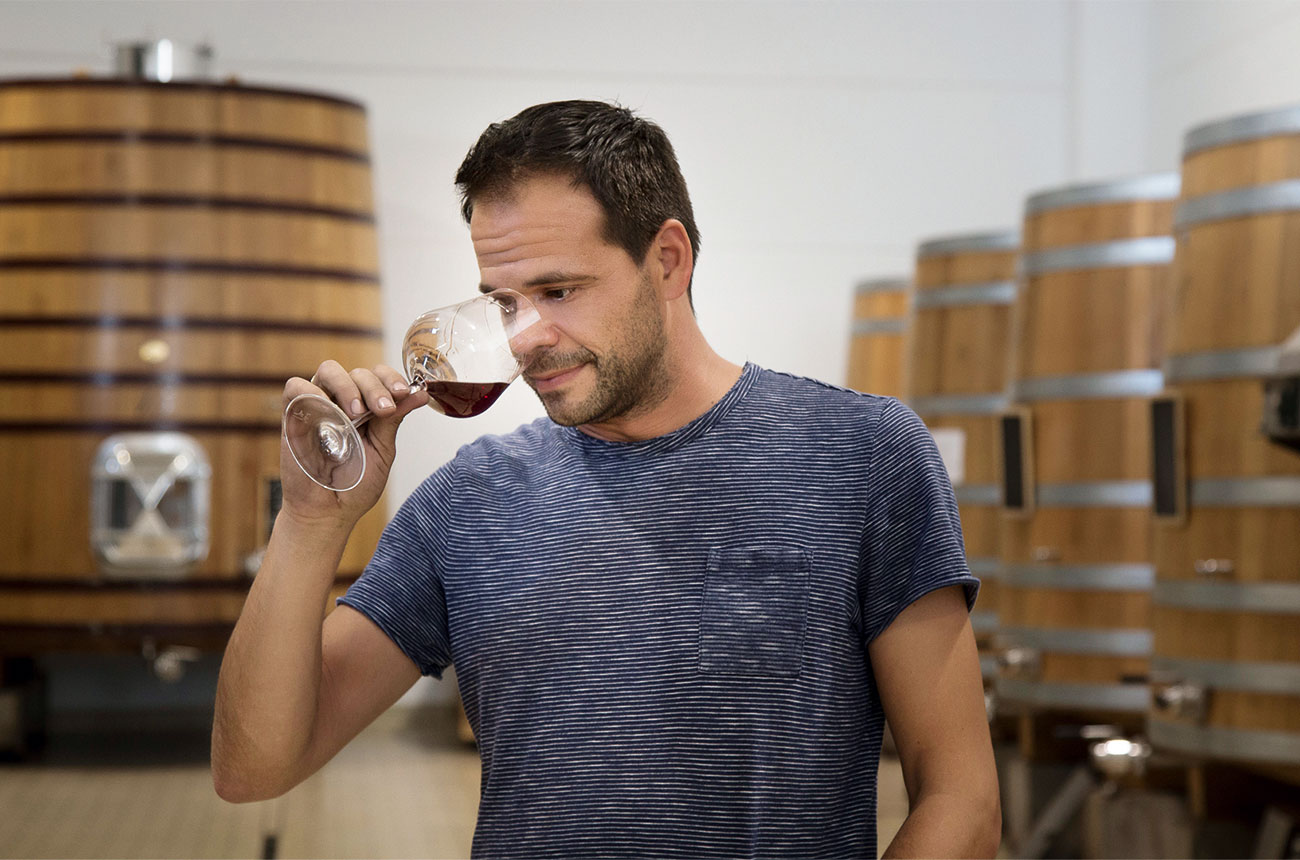
Juan Antonio Ponce.
(Image credit: Oenopole)
Ponce’s family have been vine-growers in the region for generations. The difference is that, like so many of his peers, he was able to travel, and to place his vines and his winemaking in a greater context. Part of that travel included working in Spain with Telmo Rodríguez and Pablo Eguzkiza, who were discovering and reviving old vineyards and local varieties across the country.
In his five years with them, he made wine in Rioja, Toro, Málaga, Alicante and Cigales. He also made time to learn about biodynamics in France. The result was that he returned home with two 5,000-litre wooden vats and a batch of 300-litre French oak barrels and set up his winery.
The vineyard? It’s Bobal. And the DO? Manchuela. Neither of these sounds likely to charm consumers, nor does Ponce have the kind of noisy personality to champion his wines. However, the finesse and subtlety of his winemaking has won many friends. He makes Bobal across the range, from the juicy Clos Lojen, to his PF (Pie Franco) made from 3.5ha of 60- to 85-year-old vines on sandy soils.
Recently, he has moved into white wine with a bottling called Reto, from the local Albilla grape. Manchuela may be out of the way, but Ponce has put it firmly on the map.
Fil.loxera y Cia, Valencia
2021 marks the 10-year anniversary of the founding of Fil.loxera y Cia, run by Pilar Esteve, her husband José Ramón Doménech and Joan Llobell. They recognised in Fontanars dels Alforins an exceptional environment with old vineyards at risk of being grubbed up.
Their La Mujer Caballo series – a reference to the wonder-women riders of 19th-century circuses – contains local varieties. These include the slow-ripening Arcos, once well known in Fontanars, Ullet de Perdiu and Valencí, which was popular for its dual use as a table grape. They found that this last variety greatly benefits from long skin macerations, hence the La Mujer Caballo Taronja, the orange wine, which also contains a little Moscatel and other varieties.
Fil.loxera y Cia’s wine names are as creative as their winemaking: ‘Sentada sobre la bestia’ (‘seated on the beast’) is taken from chapter 17 of the apocalyptic book of Revelation in the Bible.
Says Paul Grimwood, company director of Spanish food and wine importer Ultracomida in Wales: ‘The wines are all incredibly well put together, complex and well balanced and not the usual strand of Spanish wines. It takes a little time to explain a wine that isn’t the easy sell of Sauvignon Blanc or Shiraz, plus the region isn’t well known to the British market. However, if you can convince a customer to try the wine, they are inevitably hooked.’
Celler del Roure, Valencia
Pablo Calatayud, Celler del Roure
(Image credit: Credit Unknown)
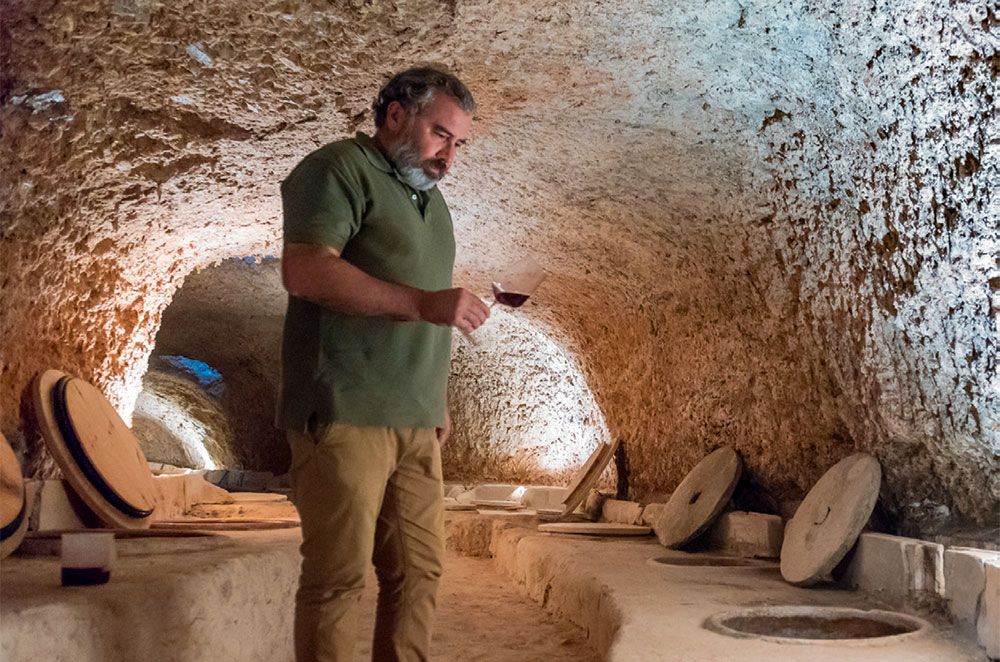
Celler del Roure is tucked away in the glorious southernmost part of Valencia, a golden countryside of masía farmhouses surrounded by their estates. Owners would make their own wines, traditionally using amphorae. What Pablo Calatayud and his father found when they purchased a 40ha estate there in 2006 was that they had also acquired an astonishing underground cellar with 100 amphorae buried up to their necks.
Over time, the vessels have been cleaned, given modern lids with seals and put back to work. The result – wines with exceptionally slow oxygen contact – is impressive. The amphorae don’t add flavour, but they keep freshness.
In addition, Celler del Roure has been reviving local varieties, particularly Mandó and Verdil. The Calatayuds have moved from varieties designed to appeal to an international market to something altogether more original, grafting local varieties such as these over the original Tempranillos and Merlots.
Over the years, Celler del Roure has made a steady transformation that is being repeated by producers in the Alforins region. This is what makes this small zone so exciting today. These Mediterranean wines are lighter in alcohol, lighter in body and, despite the southerly location, fresh.
Gutiérrez de la Vega & Curii Uvas y Vinos, Alicante
My first encounter with Felipe Gutiérrez de la Vega was in London via a glass of his Casta Diva, a Moscatel from Alicante – often derided as no more than a package holiday destination for Brits. Surely nothing good could result? How wrong I was! His touch is expert, and his influence extensive. Not just with sweet wines either, but table wines, and Alicante’s historic Monastrell-based Fondillón style. Although he works with Fondillón, legally he’s an outsider – he officially withdrew from the Alicante DO in 2010. A forthright person, maybe it’s not surprising that he chose to leave.
Felipe has since passed on the direction of the winery to his children, though he is still a presence there. Violeta Gutiérrez de la Vega – trained in France – runs the business with the assistance of her two siblings. She is quick to emphasise her father’s role in the region, recalling that ‘he was the first to bottle wine. Back then, it was all bulk wine’.
She also has a personal project, Curii Uvas y Vinos, with her partner Alberto Redrado, who’s qualified in viticulture and oenology. In his ‘other’ life, Redrado is the award-winning sommelier at the two-star Michelin restaurant L’Escaleta, where his cousin, Kiko Moya, is chef. (A favourite for wine lovers.)
Violeta and Redrado started Curii Uvas y Vinos in 2010 and have 3.5ha; they want to make wine for cellaring. Their aim is to celebrate local varieties such as Giró and Trepadell Blanc and to express a true Mediterranean character: ‘Our wines are lighter, more acid than has been typical in these parts,’ says Violeta.
Like Pepe Mendoza, they think that Giró is not Garnacha, and are involved in an ampelography study. Mendoza has said: ‘People think Giró is Garnacha, but Garnacha winemakers such as Fernando Mora have visited – they are clear it isn’t the same.’
The best Mediterranean wines: Sarah Jane’s must-try bottlesRead next:Spanish wine in 2021: Top trends and the 10 bottles worth seeking out10 great Spanish winemakers you need to knowTop 10 Spanish whites for your cellar
Dining and Cooking