
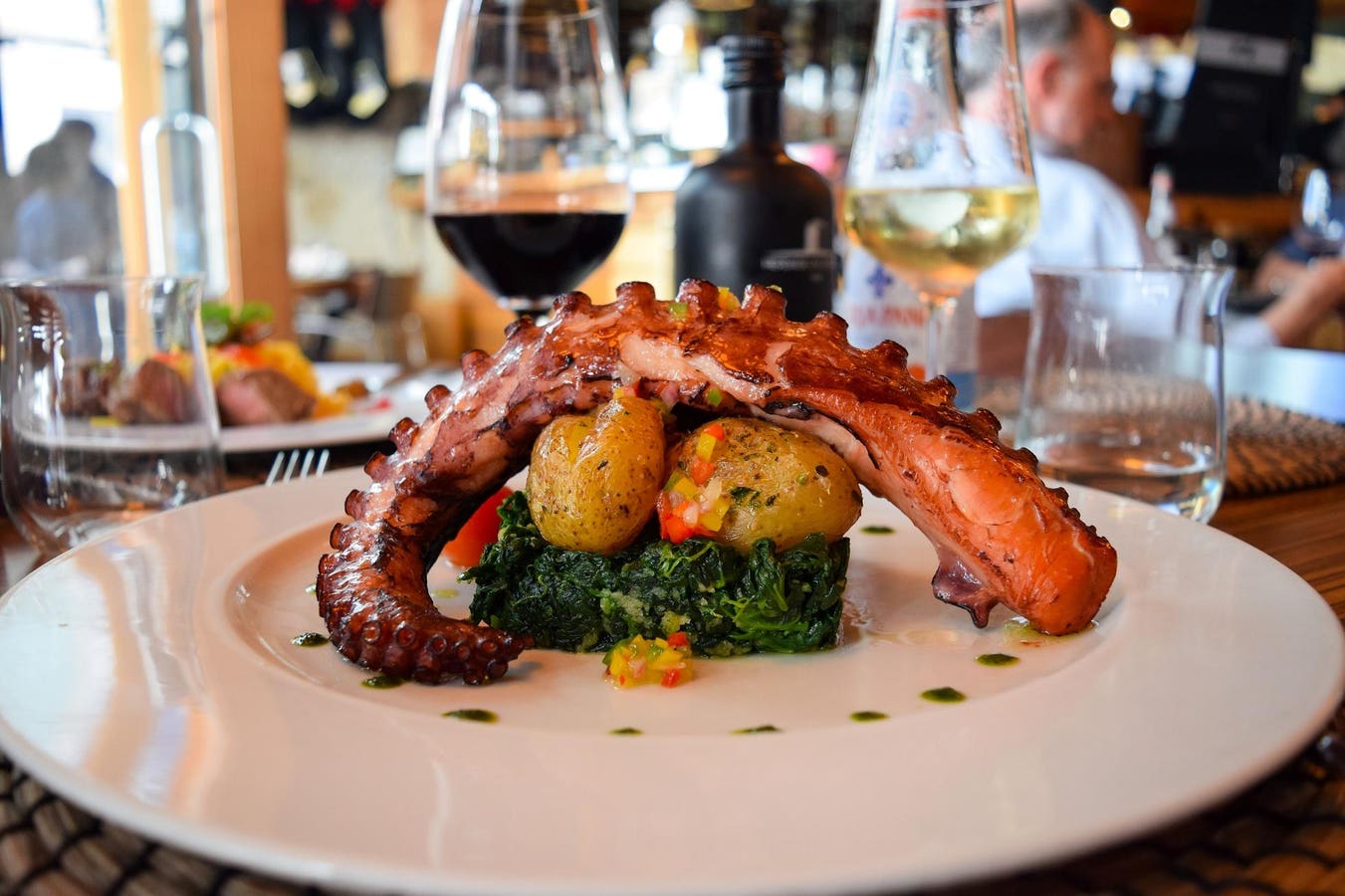
Portuguese wines align naturally with where consumers are¬—balance, moderate alcohol, food compatibility, and authenticity.
getty
Portugal has historically occupied a quiet corner of the global wine stage, defined almost exclusively by the fortified wines of Porto. However, a significant shift is underway. Portuguese wine is now being properly seen.
At a moment when wine consumers are recalibrating their relationship to price, alcohol, sustainability, and authenticity, Portugal is not merely relevant, but prescient. The country is currently undergoing a renaissance that aligns perfectly with the future of global wine consumption—prioritizing value, freshness, balance, and ethical practices.
Here are seven reasons to drink Portuguese wines now:
Outstanding Value Without Sacrificing Quality
Portugal remains one of the few wine-producing countries where quality and price have not become adversarial. Portuguese value wine is not shorthand for simplicity or compromise. Across the Douro, Dão, Lisboa, Alentejo, and Vinho Verde, wines routinely deliver depth, age-worthiness, and site expression at prices that would be unthinkable elsewhere.
Wine lover can access complex, age-worthy wines—often produced from old vines with low yields—at a fraction of the cost of their international peers. This democratization of quality allows for a premium experience without the premium price, making outstanding wine accessible for both daily consumption and investment.
“Yes, we can make value for money, but we can also compete with top wines from Napa Valley, Tuscany, and more. Sooner or later, consumers will realize we produce top-wines regardless of price,” says Jorge Rosas, president of Ramos Pinto.
Indigenous Varieties: A Mosaic Of Expression
Portugal’s greatest strength—its indigenous grape varieties—was once perceived as a liability. Thankfully Portugal steadfastly preserved its genetic heritage and wine consumers are ready to learn them. More than 250 native varieties shape wines that feel resolutely Portuguese yet familiar in style and pairing opportunities. “Our grape varieties are what gives Portugal the edge,” says David Baverstock, Chairman Winemaker at Winestone Group. “We are a little bit gangster this way.”
· Reds: The Touriga Nacional stands as the flagship, offering floral aromatics and robust structure; densely colored firm and rich Touriga Franca represents the most widely planted Douro grape. Tinta Roriz produces elegant fine wines with red fruit aromas, while Baga provides high-acid, tannic complexity often compared to Nebbiolo. Alicante Bouschet, one of the few teinturier (red-fleshed) grapes, adds unparalleled depth and color.
· Whites: Varieties such as Arinto and Antão Vaz are gaining traction for their ability to retain acidity and mineral texture even in warmer climates, while Alvarinho produces characterful, rich, mineral-driven wines.
These grapes are not engineered for easy translation. They demand attention—and reward it—with wines that feel refreshingly specific—textural, savory, and often quietly complex rather than overtly aromatic or bombastic.
Blending Philosophy That Honors Heritage
The U.S. market has long prioritized varietal labeling, but Portugal’s strength lies in the art of the blend. This is an ancient tradition born of necessity and perfected over centuries, not to mask flaws, rather to achieve balance.
Field blends—sometimes dozens of varieties planted together—are still common in regions like the Douro and Dão, particularly in old vineyards, creating wines of singular complexity and terroir expression. Additionally, old vineyards planted to dozens of varieties naturally hedge against climate volatility and stylistic extremes. Standing in a field blended vineyard of one-hundred plus year old vines, Esporão Quinta dos Murças winegrower and winemaker Mafalda Magalhaes says, “Portugal’s specialty is our blends. It’s our strength. We need to maintain this tradition.”
Furthermore, in the Douro and Alentejo, winemakers treat their indigenous varieties as components of a larger architecture. Through blending producers achieve a harmonious balance of structure, aromas, and acidity while moderating alcohol and preserving texture.
A New Generation, Quietly Rewriting the Narrative
Portugal’s current momentum is not driven by reinvention but by refinement. A new generation of winemakers—often returning home after working abroad—is reexamining inherited vineyards with fresh eyes. According to David Baverstock, Chairman Winemaker at Winestone Group, forty years ago Portugal lacked qualified winemakers. Most knowledge was either handed down or staying in other countries. But, he says, today this has changed. As wine education in Portugal has improved, younger generations have become more engaged. Winemaking and viticulture are seen as a respectable means to earn a living, while also leaving a legacy of honoring Portuguese heritage and caring for the future.
Organic and biodynamic farming, native yeast fermentations, reduced oak, and lighter extraction are increasingly common. Many wines here are not framed as natural, yet low intervention practices are widely employed. This restraint may be Portugal’s most contemporary instinct.
The Douro Valley, a UNESCO World Heritage site, is the legendary home of Port. Today, its non-fortified still wines—both red and white—are among Portugal’s most compelling expressions of terroir.
gettyWhite Wines Renaissance
If red wines built Portugal’s reputation, its whites are redefining it.
Vinho Verde has moved far beyond simple, spritzy summer wines, with Alvarinho and Loureiro bottlings offering mineral tension and aging potential.
Dão’s Encruzado has emerged as one of Europe’s most compelling white varieties—elegant, structured, quietly powerful, and deeply food-compatible. Responding well to oak aging, this wine can mature and gain complexity over many years.
Lisboa’s coastal vineyards deliver freshness and value; the Douro’s high-altitude whites combine concentration with lift. Arinto thrives across regions, serving as an anchoring white that retain acidity even as summers grow warmer. “Douro is seeing a huge amount of growth in white wines. We have a ton of freshness here,” says Kit Weaver, export manager of Quinta De La Rosa.
These are not novelty whites. They are serious wines—meant for the table and priced to be poured generously.
Douro Valley: Beyond Fortification
The Douro Valley, a UNESCO World Heritage site, is the legendary home of Port. Today, its non-fortified still wines—both red and white—are among Portugal’s most compelling expressions of terroir.
Pioneering producers are proving that the region’s steep schist terraces can yield table wines that balance the concentration, lift, and power of top-tier Bordeaux, but with a wild, savory edge distinct to the Douro, offering mineral tension, savory depth, and remarkable longevity. This evolution represents a diversification of the region’s portfolio, ensuring economic stability while showcasing the versatility of its terroir.
“Portugal is a small country with a huge diversity of wines,” says Rui Ribeiro, U.S. market manager of Symington Family Estates. “Trouble remains in the U.S., if we knock on a buyer’s door with port the door opens, but if we knock with non-fortified wines the door closes.” Consumers can change this by asking for more Douro non-fortified wines.
Sustainability and Low-Intervention Winemaking
Portugal is rapidly becoming a leader in sustainable viticulture, driven by necessity and ethics. The Alentejo region has established the “Wines of Alentejo Sustainability Program” (WASP), a rigorous initiative that has become a global model for resource management, biodiversity protection, and social responsibility.
At Quinta de São Sebastião in Lisboa DOC, winemaker Filipe Sevinate Pinto explains their focus is on the vineyards. By improving water retention in the soil through microbiology, improving diversity through beneficial insects and nature corridors, they are improving the wines. “Viticulture is the new oenology,” he says.
Simultaneously, a new generation of winemakers is embracing low-intervention practices. By rejecting heavy-handed manipulation in the cellar and prioritizing organic farming, these producers are crafting wines that are transparent reflections of their origins. This shift towards thoughtful winemaking resonates with a global consumer base increasingly concerned with the environmental impact of their purchases. “We are thinking about producing a low-alcohol wine, not no alcohol, but low, with a touch of carbon dioxide,” says Sevinate Pinto. “It is where the consumer is heading.”
Similar practices are being used at nearby Casa Santos Lima. “We have been adjusting our viticulture practices to combat climate change, but we are also harvesting earlier due to changes in consumers wants in wine style,” says Luis Olazabal De Almada, co-CEO of Casa Santos Lima.
Portuguese Wines Align With The Future Of Wine Consumption
Portugal’s wines align naturally with where consumers are—balance, moderate alcohol, food compatibility, and authenticity. Atlantic influence, altitude, and indigenous varieties help preserve freshness even in warmer vintages. These wines do not need recalibration to meet modern expectations; they were built that way. Portuguese wines are delivering exactly what today’s wine consumer is seeking. As Jorge Rosas, president of Ramos Pinto says, “Now that Americans are discovering Portugal through tourism, we think they will realize we produce top wines.”
More From Forbes: ForbesUncorking Uruguay—Where Winemaking Roots Meet Modern ExplorationBy Michelle WilliamsForbesOne Sonoma Winemaker’s Passionate Pursuit Of Expressing Terroir In WineBy Michelle WilliamsForbesPortugal’s Alentejo Region Utilizes Sustainability In Crafting Premium WineBy Michelle Williams
Dining and Cooking