
Reviewed by Dietitian Jessica Ball, M.S., RD
Recipe photos: Victor Protasio and Ali Redmond. EatingWell design.
About This Plan
This 5-day plan is set at 1,800 calories per day, with modifications for 1,500 and 2,000 calories.
Each day provides at least 81 grams of protein and 35 grams of fiber to support a well-balanced and sustainable diet.
This plan prioritizes lean proteins, grains, fruits, vegetables and legumes for someone starting out on the Mediterranean diet.
The Mediterranean diet emphasizes vegetables, fruits, whole grains, legumes and healthy fats from foods like olive oil, nuts, seeds, fish and avocado. While rooted in the Mediterranean region, this plant-forward style of eating is flexible and can be adapted to any cuisine or taste preference, making it especially beginner-friendly. This five-day meal plan keeps things simple with minimal-cooking recipes, sheet-pan and slow-cooker meals, and strategies like cooking once and enjoying leftovers twice. Designed at 1,800 calories per day, with options for 1,500 and 2,000, it provides at least 81 grams of protein and 35 grams of fiber daily, so you’ll feel nourished, satisfied and confident getting started on the Mediterranean diet.
DAYS
1
2
3
4
5
MEALS
Breakfast: Apple & Peanut Butter Toast
——–
Lunch: Chickpea-Farro Grain Bowl w/ Feta & Tomatoes
——–
Dinner: Mediterranean Stew + Whole-Wheat Toast
Breakfast: Berry Chia Pudding
——–
Lunch: Chickpea Grain Bowl w/ Feta & Tomatoes
——–
Dinner: Rotisserie Chicken & Sweet Potato Salad
Breakfast: Apple & Peanut Butter Toast
——–
Lunch: Mediterranean Stew + Whole-Wheat Toast
——–
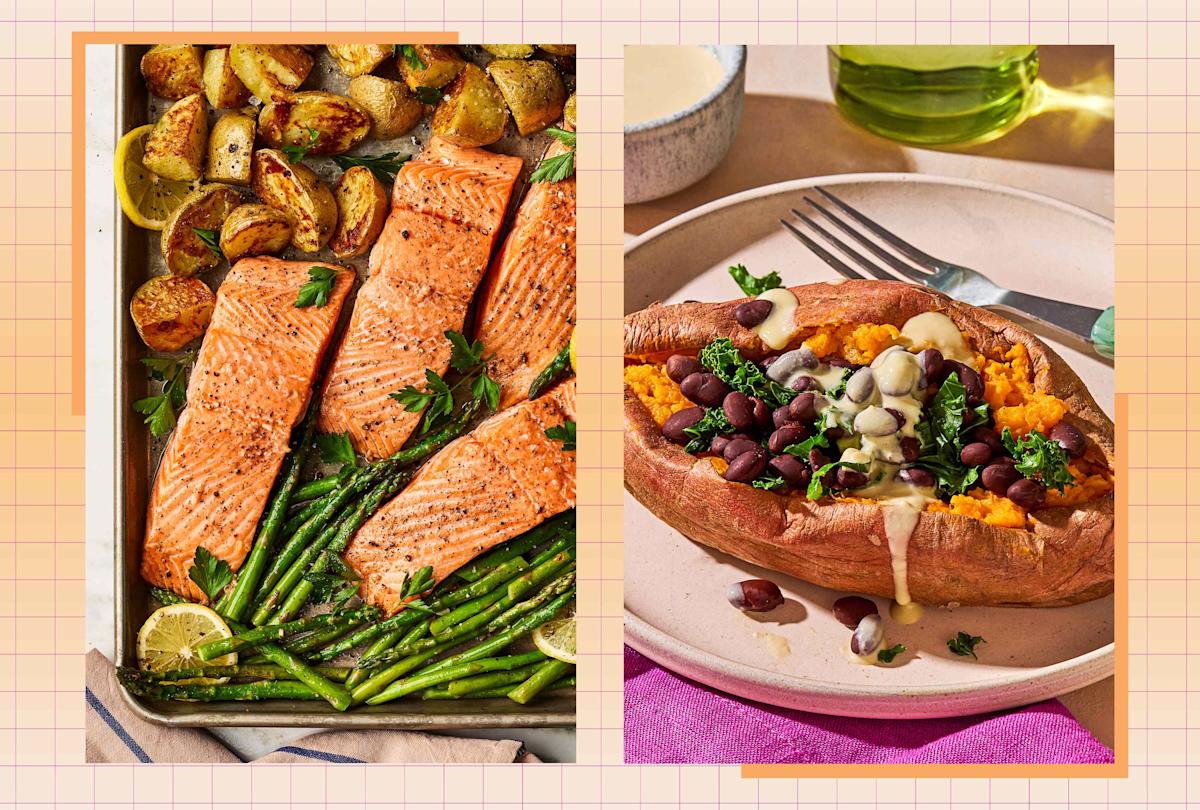
Dinner: Garlic-Butter Roasted Salmon w/ Potatoes & Asparagus
Breakfast: Berry Chia Pudding
——–
Lunch: Chickpea Grain Bowl w/ Feta & Tomatoes
——–
Dinner: Rotisserie Chicken & Sweet Potato Salad
Breakfast: Berry Chia Pudding
——–
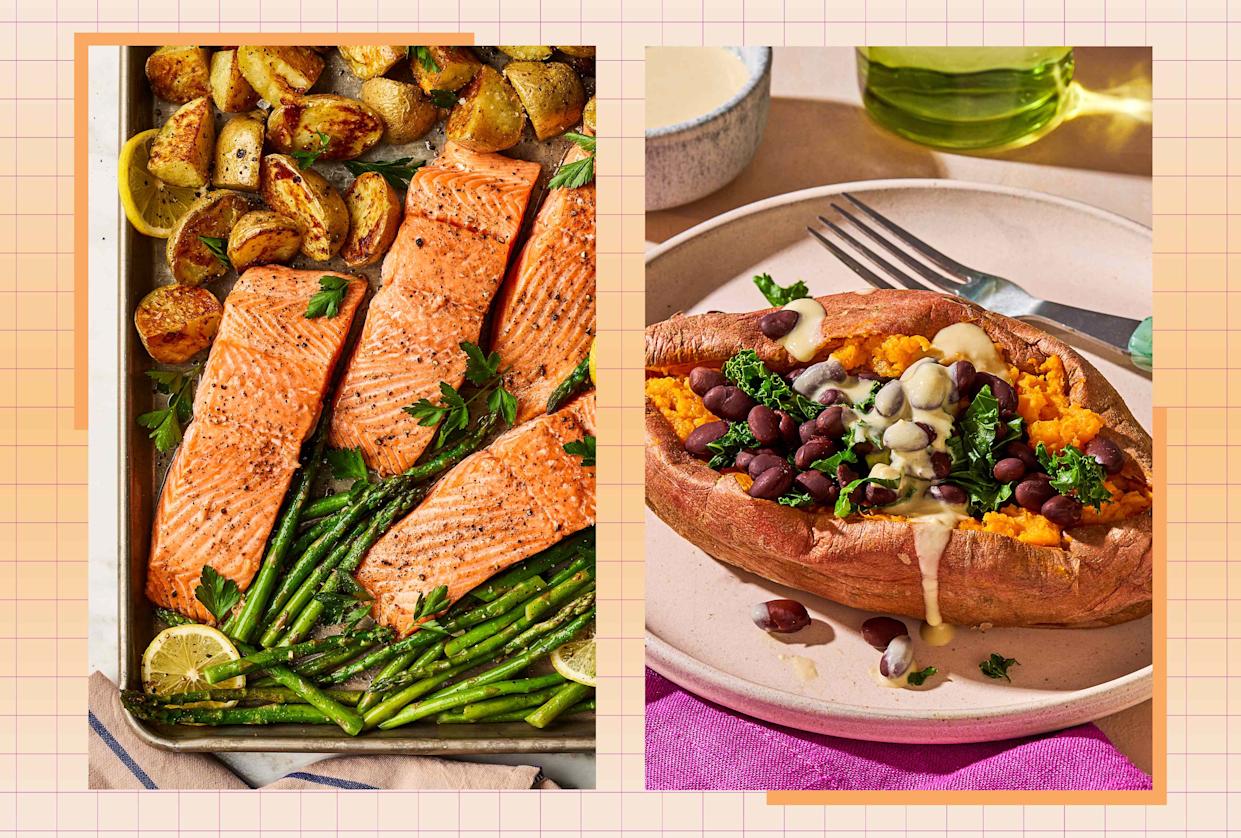
Lunch: Stuffed Sweet Potato w/ Hummus Dressing
——–
Dinner: Garlic-Butter Salmon w/ Potatoes & Asparagus
DAILY TOTALS
Calories: 1,854 Protein: 83 g Carbs: 201 g Fiber: 45 g Fat: 77 g Sodium: 1,478 mg
Calories: 1,839 Protein: 81 g Carbs: 173 g Fiber: 45 g Fat: 100 g Sodium: 1,375 mg
Calories: 1,809 Protein: 86 g Carbs: 154 g Fiber: 35 g Fat: 96 g Sodium: 1,635 mg
Calories: 1,787 Protein: 93 g Carbs: 184 g Fiber: 44 g Fat: 83 g Sodium: 1,417 mg
Calories: 1,806 Protein: 87 g Carbs: 195 g Fiber: 51 g Fat: 81 g Sodium: 1,275 mg
Day 1
Daily totals: 1,854 calories, 77 g fat, 83 g protein, 201 g carbohydrates, 45 g fiber, 1,478 mg sodium
Breakfast (588 calories)
Lunch (538 calories)
Dinner (231 calories)
Serve with 1 slice whole-wheat toast
Snacks
To make it 1,500 calories: Omit evening snack.
To make it 2,000 calories: Add ¾ cup in-shell edamame as a morning snack. Add 1 slice whole-wheat toast to dinner.
Meal-Prep TipsDay 2
Daily totals: 1,839 calories, 100 g fat, 81 g protein, 173 g carbohydrates, 45 g fiber, 1,375 mg sodium
Breakfast (478 calories)
Lunch (538 calories)
Dinner (584 calories)
Snacks
¼ cup unsalted dry-roasted almonds (206 calories)
To make it 1,500 calories: Reduce to 1 tablespoon almonds at morning snack. Omit afternoon snack.
To make it 2,000 calories: Add 1 oz. dark chocolate as an evening snack.
Day 3
Daily totals: 1,809 calories, 96 g fat, 86 g protein, 154 g carbohydrates, 35 g fiber, 1,635 mg sodium
Breakfast (588 calories)
Lunch (231 calories)
Serve with 1 slice whole-wheat toast
Dinner (522 calories)
Snacks
To make it 1,500 calories: Omit evening snack.
To make it 2,000 calories: Add ½ whole-wheat grilled cheese sandwich to lunch and add ½ serving whole-wheat crackers to afternoon snack.
Day 4
Daily totals: 1,787 calories, 83 g fat, 93 g protein, 184 g carbohydrates, 44 g fiber, 1,417 mg sodium
Breakfast (478 calories)
Lunch (538 calories)
Dinner (584 calories)
Snacks
2 Tbsp. unsalted dry-roasted almonds (103 calories)
To make it 1,500 calories: Reduce morning snack to 1 Tbsp. almonds. Omit afternoon snack.
To make it 2,000 calories: Increase morning snack to 3 Tbsp. almonds. Add 1 oz. dark chocolate as an evening snack.
Day 5
Daily totals: 1,806 calories, 81 g fat, 87g protein, 195 g carbohydrates, 51 g fiber, 1,275 mg sodium
Breakfast (478 calories)
Lunch (472 calories)
Dinner (522 calories)
Snacks
To make it 1,500 calories: Omit evening snack.
To make it 2,000 calories: Add 2 Tbsp. unsalted dry-roasted almonds as a morning snack. Add 1 serving whole-wheat crackers to afternoon snack.
Frequently asked Questions
Is it OK to mix and match meals if there’s one I don’t like?
Yes! This meal plan is meant to serve as inspiration. It doesn’t need to be followed exactly to reap the benefits. When choosing recipes, we made sure to check the calories, fiber, protein and sodium to align with the parameters of this plan and be within our sodium limits. If you’re making a recipe swap, it may be helpful to choose a recipe with similar calories, fiber, protein and sodium levels. For more inspiration, check out these delicious easy Mediterranean Diet recipes.
Can I eat the same breakfast or lunch every day?
Definitely, it’s fine to eat the same breakfast or lunch every day. The breakfasts range from 478 to 588 calories, while the lunches span 231 to 538 calories. These ranges are fairly close, though if you’re closely monitoring your calories or other nutrients, like protein, you may want to adjust a snack or two.
Why is there not a 1,200-calorie modification?
We no longer provide modifications for 1,200-calorie days in our meal plans. The 2020-2025 Dietary Guidelines for Americans suggests that limiting calories to 1,200 per day is too low for most people to meet their nutritional needs, plus it’s unsustainable for long-term health and well-being.
Health Benefits of the Mediterranean Diet
The Mediterranean diet is one of the most well-studied eating patterns in the world, with research showing it can help lower the risk of heart disease, obesity, type 2 diabetes, certain cancers and even neurodegenerative diseases like Alzheimer’s. Much of its power comes from polyphenols and antioxidants naturally found in plant-based foods, which have strong anti-inflammatory properties. By reducing chronic inflammation, this way of eating supports overall health and longevity.
Beyond physical health, promising research suggests the Mediterranean diet may also boost brain health. Studies link it to improved memory, reduced risk of cognitive decline and even better mood regulation, making it as good for your mind as it is for your body. The best part? This style of eating is approachable for beginners. Many of your favorite foods already fit the plan, making it easy to get started.
How We Create Meal Plans
Registered dietitians thoughtfully create EatingWell’s meal plans to be easy-to-follow and delicious. Each meal plan meets specific parameters depending on the health condition and/or lifestyle goal it is targeting and is analyzed for accuracy using the nutrition database, ESHA Food Processor. As nutritional needs differ from person to person, we encourage you to use these plans as inspiration and adjust as you see fit.
Read the original article on EatingWell
Dining and Cooking