
Black history is more than just a calendar observance — it is memory, movement, might and merit. For Chef Ciara Finley, this is a narrative most poignantly digested through food.
At her event A Love Letter to Black Food on Thursday, Feb. 26, cornbread and collards made savory appetizers for a main dish of culture, conversation and community.
Finley first began her catering business, Desiderata Kitchen, in 2016, prompted by her daughter’s need for allergen-friendly food after a lifetime of casually being in the kitchen.
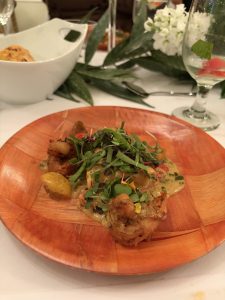 Sea Ge Cream at A Love Letter to Black Food on Feb. 26, 2026 in Baton Rouge, La. (Mia Hattaway)
“That’s how I developed a relationship for food. Before, I just cooked,” Finley said. “Food speaks, and there’s a feeling. You can do things: you can heal, you can make people happy.”
Once an off-site caterer, Finley has found a home for Desiderata in downtown Baton Rouge, where she meets with clients or hosts events, including her tribute to Black History Month.
Finley didn’t have this particular event in mind when she opened the space, though. Coming to her late at night, the idea to host a night dedicated to the foods that raised her felt like a natural way to celebrate the month.
“I wanted it to be an experience for anyone,” Finley said. “My clients, anyone that loves me, anyone that loves food in general, I feel like would benefit from experiencing something like this.”
For the 40 attendees of A Love Letter to Black Food, Finley most certainly delivered an experience.
Under dimmed lighting, a long table hosted the majority of the guests, with some opting to sit alongside the main seating at smaller tables set for two. Decorating each of the tables were live flower bouquets and candles, adding to the soft, romantic scenery. The interior of Desiderata is lined entirely by mirrors, which were written on with notes, including “You were measured by spirit, not teaspoons” and “Black food is artistry.”
In between courses, these mini love letters seemed to call out to guests, often prompting conversations in and of themselves.
Finley shared that the writing was intended to be a subtle, grounding aspect of the night.
“If someone catches it, they will,” Finley said. “If there’s someone that doesn’t, that’s fine too. I just want little elements to kind of hit people at different moments.”
The night started with sweet potato cornbread topped with brown sugar and butter. For every six people, there were two plates of bread, making the practice of sharing a core part of the night. Each request to pass the rolls was followed by an introduction to one’s tablemate. Soon enough, the event felt more like a family reunion than a formal dinner.
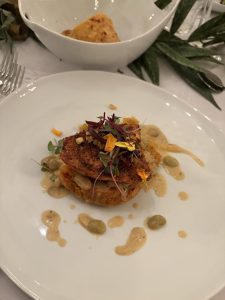 Memory and Refinement at A Love Letter to Black Food on Feb. 26, 2026 in Baton Rouge, La. (Mia Hattaway)
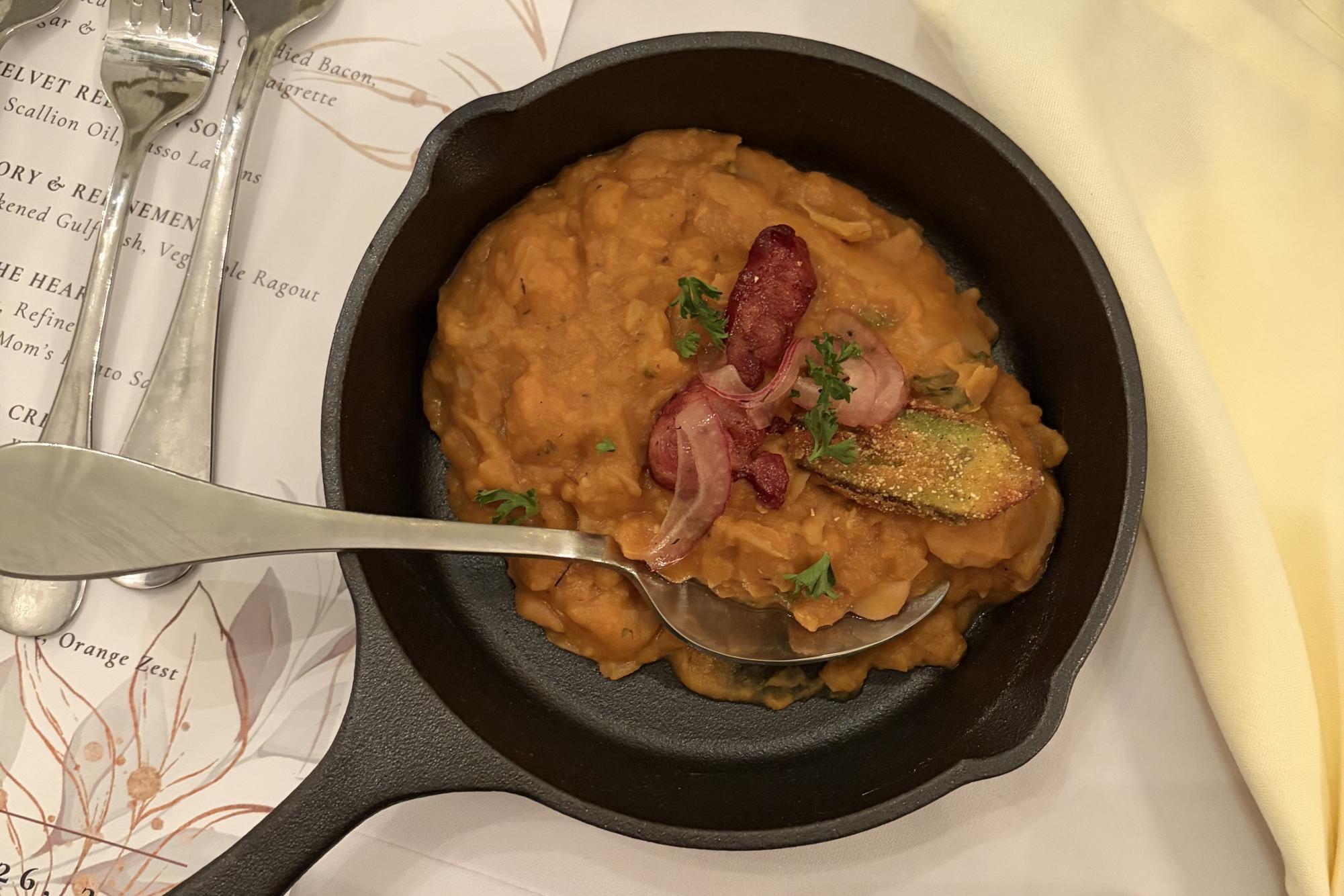
Finley’s first course, Butter Beans & Fire, was a velvety puree of butter beans topped with a crunchy fried okra chip and crisped andouille snips. Also included were pickled onions, which brought an unexpected vibrancy to the dish. Served in a small cast-iron skillet, the mousse-like beans were dense and rich while maintaining a lightness that paced attendees well in the seven course meal.
Down the table, one group discussed their shock in liking the dish, agreeing that they usually avoid butter beans at all costs.
Evident through her true and thorough mastery of the foods featured, all of the dishes were inspired by pieces of Finley’s youth and heritage.
“It’s not a history lesson,” Finley said. “I’m thinking about childhood. I’m thinking about my mom. I’m thinking about the things my brother liked to eat. But I’m thinking about my clients too. I want to make sure that I’m introducing things that aren’t so far off that it alienates my clients that truly understand the brand as well.”
The second course, Collards, Before the Pot, was a bright salad, with shaved brussels and collard greens bedding thin sliced sweet potato, coated in cane vinegar and a mustard seed vinaigrette. Also decorating the plate were tart cranberries and crispy pecans. Though Finley introduced the dish as being bitter, the sharp taste undercut the sweetness of the dressing, making the plate well balanced. Placed over the greens was a thick, flakey slab of candied pork.
“I could get proposed to with that piece of bacon,” one attendee said in between bites.
The Velvet Red Bean Soup followed, which was the heartiest course of the night. A thick base, the soup was topped with cornbread croutons, which added a crumble that rounded out the sensory side of the dish splendidly. Finley topped it with a sharp scallion oil and smoky tasso lardons, taking the nutty profile to another level.
Many of the courses, including the red bean soup, are popular in Creole tradition, echoing Finley’s experience being raised in New Orleans.
“New Orleans is so centered in culture,” Finley said. “Everything is music, food, dance, culture — and all of that is almost all the time. Every time there’s a festival, even if people aren’t actively going to those festivals, they’re celebrating them at their houses with food. Whenever we had family reunions and things like that, there was food. Growing up, it was always around us.”
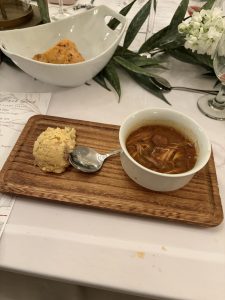 The Heart gumbo at A Love Letter to Black Food on Feb. 26, 2026 in Baton Rouge, La. (Mia Hattaway)
When curating the menu for the event, she chose to showcase Black cuisine that relates to her own life.
“I wanted to make this personal to me, so it’s not quite Black global,” Finley said. “What some people call Black food might be totally different to me. All of this, to me, looks like art. A lot of what I want to do with this is really just showcase that there’s so much art in this, and there’s culture in this.”
Course four, Memory and Refinement, truly captured the essence of its name. Sitting on top of a buttery yet textured corn maque choux pudding was a gorgeously blackened Gulf fish. Surrounding this was a vegetable ragout, which brought a grounding quality to a quite layered plate. The contrast in flavors read as refined, yet still Southern.
Finley shared that growing up, her first experiences with cooking were in her mom’s kitchen, acting as her sous chef alongside her sister. This is the very memory she wanted to preserve going into A Love Letter to Black Food as she served her mother’s very own gumbo, which she labeled the Heart.
“Before the recipes were ever written, they were lived,” Finley said. “They lived in the heart, and they lived in the soul. That’s generally how I learned, and that’s how we do it here, too: it’s a pinch of this, a pinch of that.”
The mild chicken and sausage gumbo was presented on a wooden serving board, making the course feel all the more nostalgic and homey. The accompanying potato salad instantly became a table favorite, the tang and seasoning proving to be a nice addition to the warm, steady mouthfeel of the gumbo.
Rounding out the main plates for the night was the Sea Ge Cream, a shrimp dish served over gouda grit cakes. The shrimp had a creeping heat to it that paired well with the smoky, savory base in the grits. The Creole garlic white wine sauce, though, made this sixth course pop – the enticingly light topping coated every bite, blending well with the freshness of the seared cherry tomatoes and brightness of the fresh spinach chiffonade.
Better yet, it was plated on a woven, burnt orange plate that furthered Finley’s callbacks to her own life. Across the table, a handful of guests remarked that it reminded them of dishware from a grandparent’s house.
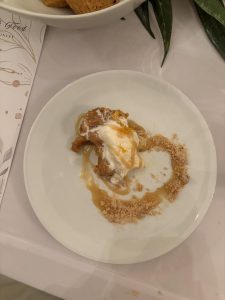 Sweet Legacy dessert at A Love Letter to Black Food on Feb. 26, 2026 in Baton Rouge, La. (Mia Hattaway)
Rounding out the night was the Sweet Legacy, a sweet potato custard bread pudding with vanilla bean ice cream, rum sauce, praline dust and orange zest. A perfect mix of comfort and art, the bread pudding was warm with a slight crisp, which created a silky juxtaposition with the melting ice cream and molten rum sauce.
“It’s like a hug or something,” dinner guest Maya Mingo said. “A warm hug.”
At the intersection of the bread pudding and praline dust, this felt like a true synthesis of Louisiana’s sweetest flavors, topping the night off in a playful but satisfying way.
When reflecting on the night, Kimberly Moore said the food “appealed to every sense.” Finding out about the event through social media, she decided to invite her friends for an early birthday celebration, and it’s fair to say that the night lived up to her expectations.
“The experience was like none other,” Moore said.
While the night technically ended with a sweet treat, most guests lingered, taking pictures of the phrases on the mirrors, asking for to-go containers and trading contact information with the guests they spent the night with. A Love Letter to Black Food wasn’t strictly about honoring tradition — it was a reminder that Black food as an artform continues to cook up community and legacy, one plate at a time.
Dining and Cooking