
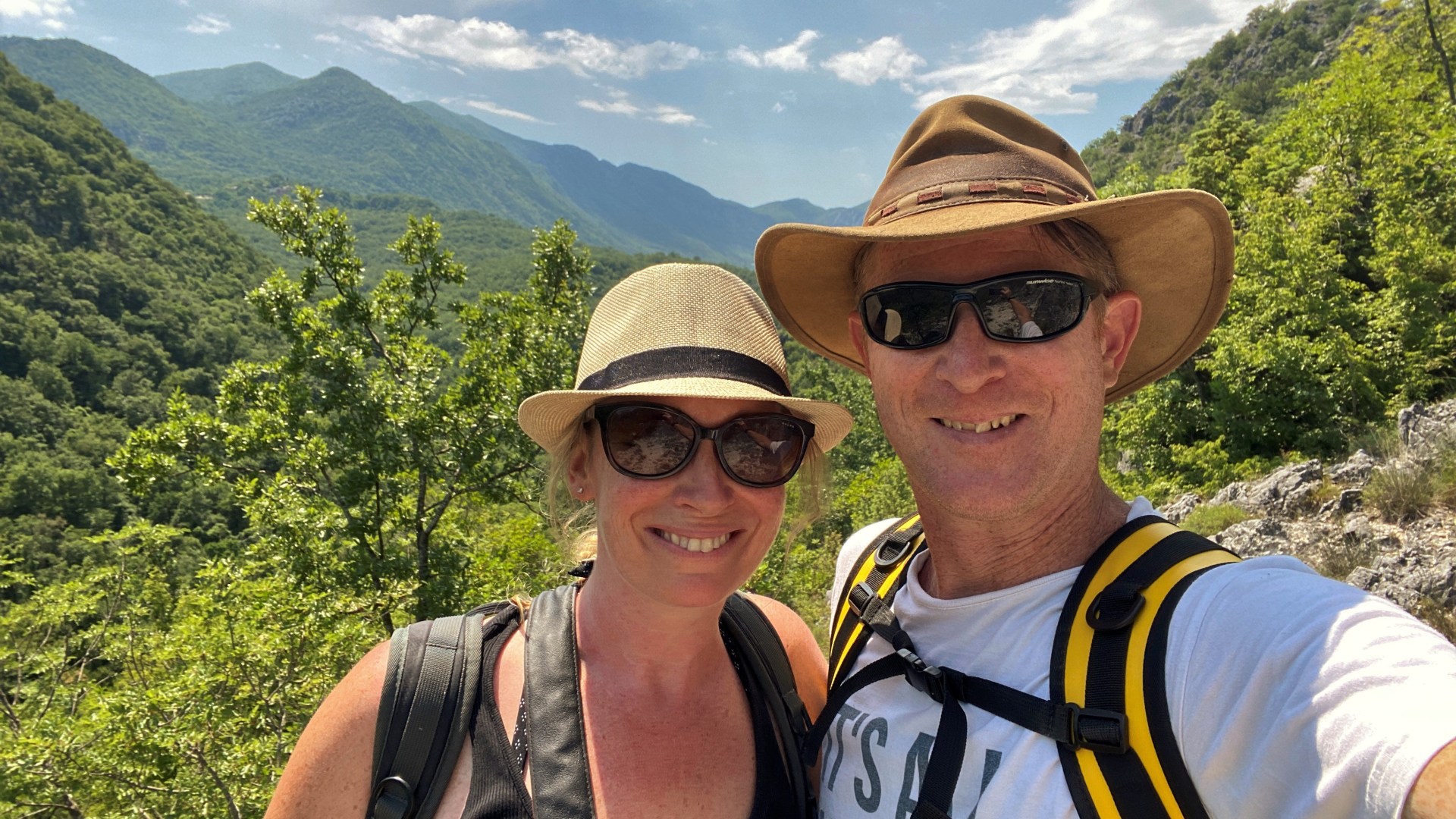
SIPPING on a glass of local wine from the window of her sun-soaked villa on a perfect summer’s day, Emma Heywood spots a flamingo wandering in the saltpans.
It’s not an unusual sight for Emma and her husband Ben, who now enjoy long panoramic drives, kayak safaris and incredible local food every week. Seventeen years ago, the couple left their office jobs in London to move to the little-known Mediterranean nation which basks in 2,500 hours of sunshine a year.
Emma Heywood and her husband Ben first visited the country in 2008 on holiday – four months later, they bought a home there
The ‘spectacularly beautiful’ country features 182 miles of coastCredit: Getty
The couple now live in Montenegro, where they run a holiday villa overlooking Lake Skadar – the biggest lake in the Balkans.
While they were ahead of the trend, buying their home in 2008, many Brits are now catching on to the nation, with 117 beaches along 182 miles of coast.
In 2024, flights from the UK to the Balkan country – which is just north of Albania – increased 164 per cent, and travel experts are increasingly naming it one of the top destinations for Brit expats.
“Montenegro is spectacularly beautiful with giant mountains that stretch from the coast to the northern borders, and stunning lakes like Skadar”, Emma tells The Sun.
“Even doing the school run can feel like a panoramic drive at times”.
“Montenegrin people are incredibly friendly, and I think that’s been one of the biggest attractions for Ben and me.
“You can expect heartfelt invitations for coffee, homemade wine and hearty plates of food.”
“Life just feels more spontaneous and free here”.
The couple first visited Montenegro in June 2008, as a holiday from their jobs in London.
Four months later, they bought a home there and never looked back.
They now run Undiscovered Montenegro, where they rent out their home and offer one-week activity holidays, which can include hiking, mountain-biking, rafting, kayaking and canyoning.
“In October 2008, we bought Villa Miela. It needed a lot of work doing – it was a ruin that had never had indoor bathrooms or running water. No one had lived here for 30 years”.
The old stone house, set in gardens with fruit trees, near Virpazar on the edge of Lake Skadar National Park, is where Undiscovered Montenegro’s guests stay.
“Ben and I created all the hiking and kayaking routes we offer to our guests from scratch”, says Emma.
“We love nothing better than wading down a river, seeking out wildlife in the forest or paddling far from anyone or anything, except the water lilies and birds”.
Rosanna Moore and her husband James moved to Montenegro last yearCredit: Supplied
The country has an alluring combination of rugged mountains, unspoilt nature, and the sparkling blue Adriatic SeaCredit: Supplied
Low tax is also an incentive that many Brits are finding in the Mediterranean nation.
The top rate of tax is just 15 per cent, much less than the 45 per cent top earners pay in the UK, while corporation tax is just 9 per cent – less than half of the UK rate of 25 per cent.
A more recent arrival in Montenegro is Rosanna Moore and her husband, James, who moved last year.
“We fell in love with Montenegro during our honeymoon Balkan road trip in May 2025,” Rosanna tells the Sun.
“A fishing village called Rose stole our hearts, and we dreamt of sunny days looking over the sparkling water of Kotor Bay being our daily reality”.
By September, Rosanna and her husband James were already back.
“We packed up the car – the bare bones of our worldly possessions along with the dog, and travelled 1,615 miles from the Scottish Highlands across nine countries in seven days”.
How much does it cost to live in the UK vs Montenegro
Average prices
Pint of lager
UK: £5.23 Montenegro: €1.50 (£1.31) or as little as 97p for local brands
Glass of wine in a restaurant
UK: £9 Montenegro: €4 (£3.50)
Loaf of bread
UK: £1.24 Montenegro: €0.40 (35p)
Monthly rent on a two-bedroom flat
UK: £1,381 Montenegro: €650 (£566)
Meal out
UK: (£15-£30) Montenegro: €10–€20 (£8-£16)
And the weather….
Hours of sunshine
UK: 1350-1530 hours a year Montenegro: 2500 hours a year
Rosanna and James used to work in property in Kent, then moved up to Scotland, where they set up several businesses.
Now they live in Kumbor, in Kotor Bay. “We love it. We have sea views from two floors, with a wrap- around balcony. We are extremely lucky to live here”, says Rosanna.
“We’re just renting for now – we’ll buy something when we find the right place”.
It’s no surprise Brits are falling for it, Montenegro has an alluring combination of rugged mountains, unspoilt nature, and sparkling blue Adriatic Sea.
There are also glacial lakes, primeval forests and deep canyons, it is especially loved by eco-conscious and adventure-seeking travellers.
On Lake Skadar, you might spot Dalmatian pelicans, flamingos and pygmy cormorants.
Moving west to the coast, you have the Budva Riviera with its sand-and-pebble beaches, much loved by Russians, and Kotor Bay, a deep channel, often compared to a fjord.
The bay is named after the tiny historic city of Kotor – its medieval walls are floodlit at night, making it perhaps Montenegro’s most romantic destination.
Emma and Ben now run a holiday villa overlooking Lake SkadarCredit: Supplied
Villa Miela offers holidays for tourists looking for adventuresCredit: Supplied
The sheltered waters of Kotor Bay are the ideal starting point for sailing north up the Adriatic to Croatia, or south towards Greece. Which is why there are now several luxury marina resorts there.
The best-known is Porto Montenegro in Tivat, home to a 460-berth super-yacht marina, two five-star hotels (Regent Porto Montenegro and SIRO Boka Place) and designer boutiques.
Nearby, at Portonovi in Kumbor, the ultra-chic One&Only Portonovi is set in landscaped grounds and offers a 238-berth marina and Chenot Espace spa.
It sounds idyllic, and the weather is gorgeous too, with hot sunny Mediterranean summers and relatively mild winters on the coast, plus snow in the mountains for skiing from December through March.
But anyone thinking of relocating to Montenegro should bear in mind that bureaucracy is complicated.
“The amount of paperwork involved to receive your “borovak” (temporary residence) and the ensuing scenes at the local Ministry of Internal Affairs are like something from a Monty Python sketch”, says Rosanna.
“At times, if you don’t laugh, you would certainly cry”.
Hot sunny Mediterranean summers are a feature along with relatively mild winters on the coastCredit: Getty
Emma says even doing the school run ‘can feel like a panoramic drive at times’Credit: Supplied
“We got a business working residency – we started a digital marketing company here in Montenegro and pay tax into the system.
“One of our projects is Doma Montenegro, a central portal that allows both expats and locals easy access to an array of different properties to rent or buy”.
“We get one year, then can renew for up to five, at which point we can apply for permanent residence”.
“The regulations are changing by the day. It’s quite a task to keep abreast of these amendments”, explains Rosanna.
“We’d recommend using a professional to help with the visa, to make sure you’re fully informed”.
You can dine out in style for around €15 to €20 a head including drinks
Emma, Brit expat in Montenegro
The Montenegrin coast has for centuries seen the coming and going of people from other lands – the ancient Greeks, Romans, Byzantines, Venetians and Austro-Hungary.
Kotor Bay was once famed for its fearless sea-farers and wealthy merchants, and Montenegrins are proud of their traditions and known for their hospitality.
“The driving style takes some getting used to, as well as the narrow mountain roads that cover much of the country”, says Emma.
“Driving here isn’t for the faint-hearted”.
‘Eating out sold us on the move’
And shopping can be frustrating.
“As a small nation of just 700,000 people, the shops just don’t have the demand to justify large stock ranges or lower prices.
Even local people will bring things like furniture, tech or cars in from Italy or Germany”.
Rosanna agrees. “The thing we have found hardest to adjust to is food shopping – stock reliability, price stability and quality of fresh produce.
“You never quite know what you will or won’t be able to get, how ripe it will be if you can find it, or if it’s mysteriously tripled in price this week”.
In fact, the key to eating well here is to keep it local and seasonal.
“At open-air markets you’ll find spinach, radishes, wild asparagus and strawberries in spring; tomatoes, courgettes, peaches and melons in summer; and pumpkins, pomegranates and grapes in autumn.
Roseanna’s dog looks out over the stunning Korot BayCredit: Supplied
Herceg Novi Old Town is filled with lively restaurants and bars that British expats loveCredit: Supplied
“Eating out in Montenegro was part of what sold us on the move – the fresh fish and salads, especially.
“Our favourite restaurant is Adriatic in Rose – their grilled fish kebabs are unbelievable”, says Rosanna.
“We’ve found the prices extremely reasonable too, much cheaper than UK dining out these days”.
“If you’re coming to Montenegro from the UK, you’ll be astonished by how cheap it can be to eat out and by the enormous portion sizes.
Montenegrin people are among the tallest in the world, and they
cater to match”, says Emma.
‘Montenegrin wines and beer are perhaps the country’s best-kept secret’
“Most restaurants serve hearty traditional fare, all delicious and in many cases, entirely locally-produced”.
“Prices can vary widely. At coastal resorts like Budva and Tivat there have been quite big price hikes in recent years, especially during the tourist season”, she adds.
“Inland, things are much cheaper, and you can dine out in style for around €15 to 20 a head including drinks.”
“My favourite place to eat is Konoba Galija in Buljarica. It’s a small, family-run seafood restaurant, and you can often spot their fishing boat from the tables.
When we discovered Montenegrin wines, we were blown away by the quality
Emma, Brit expat in Montenegro
“Their mušlje na buzaru (mussels in garlicky- wine sauce) is to die for, as is their daily catch”.
And then there’s the drinks.
“Montenegrin wines are perhaps the country’s best-kept secret. The stand-outs are fruity red Vranac and crisp white Krstač.”
“We have over 40 boutique wineries on our doorstep at Lake Skadar”, adds Ben.
“Tastings are generous and personal – often you’ll be sharing stories and a refill well into the evening.”
“When we discovered Montenegrin wines, we were blown away by the quality”, agrees Rosanna.
“Montenegrin Chardonnay is perfect! Light, crisp, dry – my ideal wine, especially when it’s only €4 a glass in restaurants or a shockingly cheap €4 a bottle in supermarkets.”
“James is more of a beer man, and he maintains that Nikšićko is the best beer in the world. In fact, ice-cold Nikšićko is one of the reasons we ended up here.
“I can see why local alcohols are barely exported – I would want to keep them all to myself as well.”
Dining and Cooking