
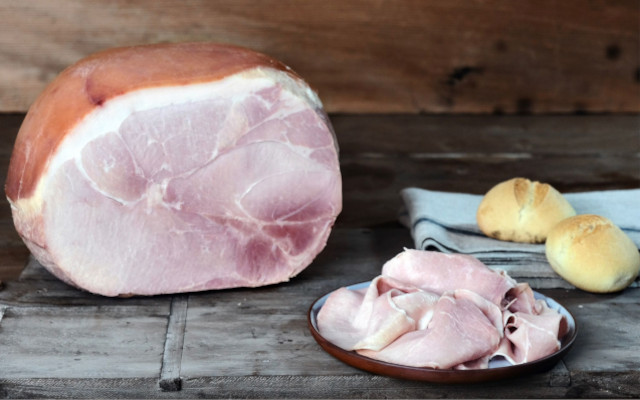
Cooked ham It represents the emblem of the technological evolution of Italian cured meats. A traditional product and at the same time a masterpiece of food technology which combines scientific rigor, microbiological safety and versatilityIn an increasingly demanding global market, the sector is being renewed today with the ministerial decree of 8 August 2025 which updates the transparency and qualityThis guide analyzes the excellence of ‘cotto’ through the most recent market data, cutting-edge chemical and physical parameters, and opportunities for international export.
Market Analysis: ‘Cotto’ Leads Consumer Consumption
La Italian produzione of cured meats reached a total volume of 1,165 million tons in 2024 (+1,2% compared to 2023), for a value of approximately 9,463 billion euros (+3,2%). baked ham is confirmed among the leading products of the sector, with a production of 295.000 tons (+0,8%) and a value of 2,316 billion euros (+1,6%), representing approximately a quarter of the total value of national cured meats. intern consumption of cured meats shows positive signs in 2025, with a growth of +3,1% in volume, driven by the recovery in demand in the Catering and from product research premium by Italian consumers. Cooked ham is the most consumed cured meat in Italy, with 28,1% of the total, followed by ham (21%), mortadella and sausages (19,7%), salami (8,5%) and bresaola (2,5%). Other cured meats represent the remaining 20,2% (SalumItalia, 2025).
THE export The Italian cured meats sector is showing positive signs: in the first nine months of 2025, exports reached 171.898 tons (+6%) for a value of €1,842 billion (+6,2%). EU markets absorbed 122.000 tons (+6,6%), confirming their position as the main recipients, while non-EU markets recorded 50.000 tons (+4,4%), with growing demand from North America and Asia. baked ham has shown particularly brilliant performances: in the first 8 months of 2025, exports grew by +8,7% in volume and + 5,2% in value, confirming the positive trend already highlighted in 2024, when exports reached 27.401 tons (+15,3% compared to 2023. SalumItalia, 2025). This growth reflects international markets’ appreciation for the high hygiene and health standards, extended shelf life, and the ability to meet the needs of convenience and versatility of use.
From industry to table: the scientific evolution of an icon
Modern cooked ham is born from the evolution of conservation techniques of pork developed in Central Europe between 18th and 19th century, when the introduction of the controlled brine and baking at defined temperatures allowed to obtain stable and microbiologically safe products (Toldrá, 2010).
In Italy, the success of cooked ham dates back to the second after war, with the spread of industrial installations
cooking cells steam, systems massage mechanics and stamping in metal forms. This technological modernization has allowed the production process to be standardized, ensuring Food safety e reproducibility organoleptics (Guerrero et al., 2013).
Unlike raw hams seasoned – whose history is rooted in local traditions and artisanal methods of preservation in salt – cooked ham is a product of the industrial food revolution, the result of the application of scientific principles of microbiology e food engineering (Lawrie & Ledward, 2006).
The new regulatory framework: the 2025 inter-ministerial decree
Il inter-ministerial decree August 8, 2025 update the discipline for the production and marketing of some delicatessen products Made and marketed in Italy. Specifically, regarding cooked ham and its “select” and “high-quality” versions, the decree establishes the following rules.
Product Identity: Definitions and ‘Nitrite-Free’ Innovation
The name «cooked ham» It is reserved in Italy for the cured meat product obtained from pork legs of the subspecies sus scrofa domesticus ‘possibly cut, boned, defatted, deprived of tendons and rind, using water, salt, including iodized salt, sodium nitrite, potassium nitrite possibly in combination with each other’.
‘Per pork leg means the hind limb of the pig cut transversely from the remaining part of the carcass not anterior to the end of the ilium. For the “cooked ham” category only, where the recognition of at least three thigh muscles is not required, it is possible to use a single type of muscle from more thighs of pork’.
‘It is allowed not to use nitrite under the responsibility of the food business operator who is required to demonstrate, to the satisfaction of the competent health authority, that the procedures used are supported by scientific justification and that they guarantee the achievement of the expected results. microbiological criteria process acceptability and food product safety’ (DM 8.8.25, article 1 – Definition).
Purity standards: permitted ingredients and new frontiers of taste
– permitted ingredients in the production of ham are ‘Wine, including aromatized and fortified wines, brandy and other spirits, beer, vinegar (including balsamic vinegar), sugar, dextrose, fructose, lactose, maltodextrin (glucose syrup), milk proteins, soy proteins, native or physically or enzymatically modified starches, spices, aromatic plants, edible gelatins, flavorings, permitted additives, honey, truffles, cheese, fruit (including nuts), dried fruit, pesto, nduja, fresh, frozen, or dried vegetables.’ (DM 8.8.25, article 2 – Ingredients).
Cooking engineering: production and safety phases
Il Working process The production of cooked ham is divided into the following main phases:
‘preparing the brine by dissolving or dispersing the ingredients;
salage: addition of brine to the meat, possibly followed by homogenization of the brine components, generally by mechanical means (massage/churning at atmospheric pressure or under vacuum);
Graduation: positioning of the product inside a container or wrapper capable of giving the product a shape;
baking: the heat treatment process, carried out under the responsibility of the food business operator, which ensures the disappearance of the characteristics of fresh meat through the adoption of times and temperatures suitable for guaranteeing the hygienic-sanitary health of the product;
possible pasteurization: the cooled and packaged product can be subjected to surface pasteurization’ (DM 8.8.25, article 3- Production methodology).
The Science of Quality: UPSD Parameters and Sensory Analysis
Cooked ham has a humidity rate on degreased and dehydrated product (UPSD) less than or equal to 82,0, where:
UPSD means [moisture % / (100 – fat % – F)] x 100;
F means 100 – (moisture % + protein % + fat % + ash % (DM 8.8.25, article 4 – Features).
Organoleptic properties
‘When opening the package, cooked ham sold whole has:
absence or negligible presence of liquids in the package;
sufficient compressive strength;
pink color, possibly tending towards pink-red;
no or negligible cavities or cracks;
slice hold: the slice of 2 millimetres maximum thickness that has sufficient hold between the muscles;
characteristic taste, not excessively spicy;
pink color, possibly tending towards red in muscles or portions of muscles naturally containing high concentrations of pigments’ (DM 8.8.25, article 5 – Organoleptic properties).
Introduction
Cooked ham is sold loose, in vacuum-packed or protective atmosphere packaging, whole, in pieces, sliced, diced or otherwise portioned.
The sales name must be integrated with reference to:
ingredients and foods possibly added for flavouring purposes, other than flavourings and food ingredients with flavouring properties as referred to in Regulation (EC) No 1334/2008.
any treatments of smoking o roasting (DM 8.8.25, article 6 – Introduction).
The categories of excellence: ‘Select’ and ‘High Quality’ compared
It is permitted to integrate the name “cooked ham” with the term “choice» if:
in the middle section of the whole finished product ‘I am clearly at least three of the four muscles are identifiable main (semitendinosus, semimembranosus, quadriceps and biceps femoris) of the thigh whole pig’;
‘the rate of humidity, on defatted and dehydrated product (UPSD), is less than or equal to 79,5’ (DM 8.8.25, article 8 – Selected cooked ham).
It is permitted to integrate the name “cooked ham” with the terms “high quality» or «high quality» if:
in the middle section of the whole finished product ‘at least three of the four main muscles (semitendinosus, semimembranosus, quadriceps and biceps femoris) of the entire pig’s thigh are clearly identifiable’;
‘the rate of humidity on defatted and dehydrated product (UPSD) is less than or equal to 76,5’.
In the production of high quality cooked ham:
‘it is permitted to use, in addition to the ingredients used for the production of cooked ham, ascorbic and erythorbic acids and their salts – monosodium glutamate – lactates, potassium chloride and other sodium substitutes’;
‘no others are allowed additives, other than those permitted by Regulation (EC) No. 1333/2008, provided that they respond to a real technological need, do not mislead consumers and their use presents a real advantage for the latter as provided for by the same regulation’ (DM 8.8.25, article 9 – High quality cooked ham).
Technical comparison of cooked ham categories (DM 8.8.2025)
Raw Materials
Pork leg (Sus scrofa domesticus)
Pork leg
Pork leg
Muscle Identifiability
Not required (possible use of single muscles from multiple thighs)
At least 3 of 4 muscles identifiable in median section
At least 3 of 4 muscles identifiable in median section
UPSD Index (Humidity)
<82,0
<79,5
<76,5
Use of polyphosphates
Allowed (as permitted additives)
Allowed
NOT allowed
Soy/milk protein
Admitted
Admitted
NOT allowed
Specific additives
Various (according to EC Regulation 1333/08)
Various (according to EC Regulation 1333/08)
Limited (e.g. ascorbates, glutamate, lactates)
Yield and texture
Softer, high water retention
Compact, defined muscles
Maximum compactness, intact muscle grain
Nutritional profile: balance and micronutrients
According to official data from CREA, 100 grams of cooked ham provide on average:
fats: 7,6 g, of which saturated fatty acids 3,20 g and fatty acids monounsaturated 3,52 g;
From the micronutrient point of view, cooked ham is a source of
Phosphorus, 126 mg per 100 g, equal to 18% of the Nutritional Reference Value (700 mg) indicated in Annex XIII to Regulation (EU) No. 1169/11;
Potassium, 311 mg, equal to 15,6% of the VNR (2000 mg).
From a nutritional standpoint, cooked ham can be included in a balanced diet if consumed in moderation, favoring products with a reduced salt content and organic ingredients.
Cooked ham Made in Italy stands out for its gastronomic versatility e ease of use, characteristics that make it a reference ingredient both in home kitchen how much in the professional catering:
direct consumption in sandwiches, toasts, tramezzini and cold dishes, where the soft texture and delicate flavour lend themselves to combinations with cheeses, vegetables and sauces;
employment in traditional recipes such as Florentine crepes, veal rolls, fillings for tortellini and cappelletti, where cooked ham adds flavour without overpowering the other ingredients (Parasecoli, 2014);
use in the collective catering (school, hospital, company canteens) thanks to the Microbiological safety guaranteed by heat treatment and stability in refrigerated storage;
industrial applications as an ingredient for frozen pizzas, savory snacks, stuffed pasta, ready-made salads and others convenience products, where cooked ham contributes to improving the protein profile and palatability (Toldrá & Reig, 2011).
La aromatic sweetness, the soft texture , palatability make it particularly suitable for international markets, where it is perceived as a ‘family-friendly’ ingredient and safe from a nutritional and hygienic point of view. shelf life The prolonged shelf life of versions packaged in a protective atmosphere or subjected to post-packaging pasteurization facilitates long-distance distribution and the penetration of non-European markets.
For international buyers it is advisable to:
favor organic cooked hams, for the highest standards of animal welfare and environmental protection;
check the ingredients list, favoring products without added polyphosphates and with reduced salt content;
request food quality and safety certifications (e.g. BRCGS, IFS);
evaluate the premium option of products made from Italian pigs.
In this context, the expertise of the team of GIFT (Great Italian Food Trade) represents a strategic added value: GIFT supports international buyers in selecting reliable producers, verifying certifications, evaluating the regulatory requirements of destination markets, and building transparent and sustainable business relationships.
Italian cooked ham is projected into the future as a technologically and regulatory-intensive product, capable of ensuring consistent microbiological safety without sacrificing its organoleptic distinctiveness. The 2025 legislative update is not just a bureaucratic requirement, but a powerful competitiveness tool that protects consumers and promotes transparent companies. With GIFT’s strategic support, international operators can now navigate this complexity, transforming the strict technical parameters into a unique commercial advantage in the global Made in Italy landscape.
Dario Dongo
Cover credit: Institute for the Promotion of Italian Cured Meats
References
Guerrero, L., Guàrdia, M.D., Xicola, J., Verbeke, W., Vanhonacker, F., Zakowska-Biemans, S., … & Hersleth, M. (2013). Consumer-driven definition of traditional food products and innovation in traditional foods. A qualitative cross-cultural study. Appetite, 52 https://doi.org/10.1016/j.appet.2008.11.008
Ministry of Enterprise and Made in Italy & Ministry of Agriculture, Food Sovereignty, and Forestry. (2025, December 19). Circular: Water Use in Delicatessen Production. https://www.mimit.gov.it/images/stories/normativa/allegati/251212_Circolare_acqua_aggiungi_con_intestazioni_signed_signed-NF.pdf
Parasecoli, F. (2014). Al Dente: A history of food in Italy. London: Reaktion Books.
Regulation (EC) No 1334/2008 of the European Parliament and of the Council of 16 December 2008 on flavorings and certain food ingredients with flavoring properties for use in and on foods. Consolidated text: 06/25/2025 http://data.europa.eu/eli/reg/2008/1334/2025-06-25

Dario Dongo, lawyer and journalist, PhD in international food law, founder of WIISE (FARE – GIFT – Food Times) and Égalité.
Dining and Cooking