
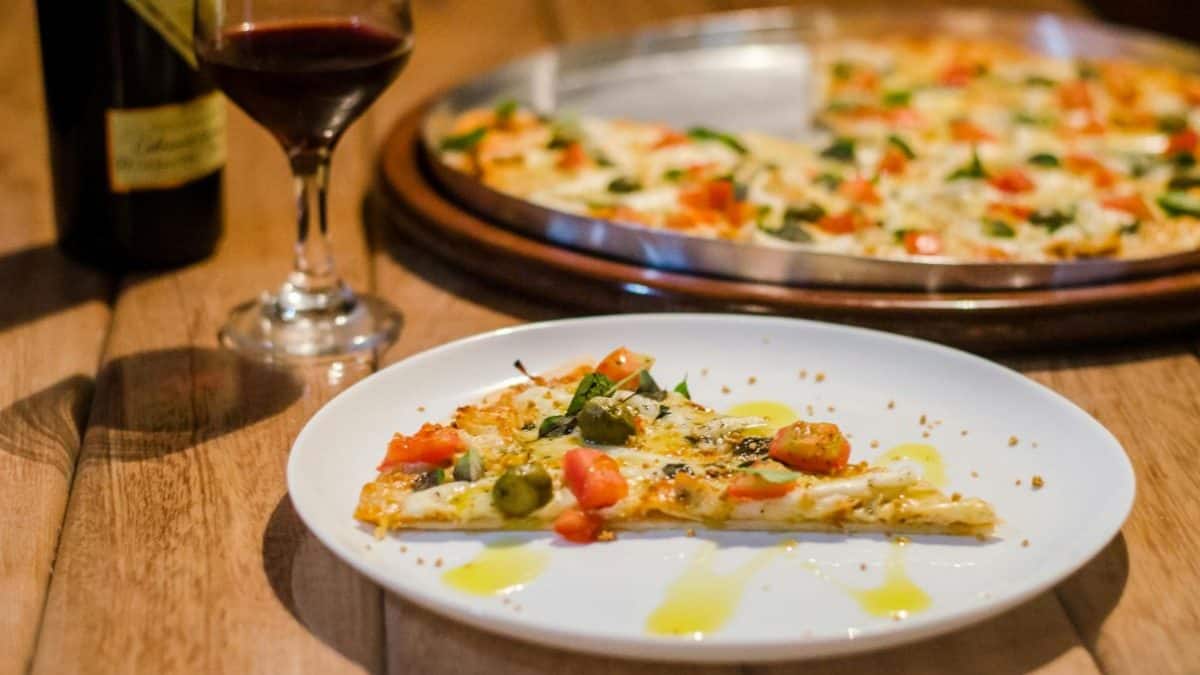
The Chef brought Italian tradition in its purest form to an Italian pop-up at Pullman in New Delhi from February 27th, 2026 to March 1st, 2026.
“If I see someone putting cream in carbonara, I get a heart attack,” Chef Francesco Calvani says with a laugh that is only half-joking. Calvani is a fierce protector of the original and dismisses fusion that feels like clutter, and ‘innovation’ used to mask one’s errors. To him, a recipe is a piece of cultural continuity.
As he brought his Italian Culinary Showcase to the Pullman New Delhi Aerocity, he issued a challenge to globalised food culture: respect the past before you dare to reinvent it, is what he emphasised on, whilst speaking to Firstpost.
STORY CONTINUES BELOW THIS ADMemory, and how it stayed in food
For Calvani, the plate is not a canvas on which he creates whims and fancies, but how he pays homage to what mattered to him as a young boy.
This philosophy began in the domestic warmth of a home in Italy’s capital. “One of my earliest memories is walking into my grandmother’s kitchen in Rome and being wrapped in the smell of her slow-cooked tomato sauce,” he reminisces. “It would simmer for hours and was never rushed, never forced. There was something so calm and intentional about the way she cooked.”
The calm and intentional pace has become his signature, even after twenty-two years of navigating the hustle and bustle of professional kitchens. While his career has been sharpened by the rigorous, sharp-edged discipline of Le Cordon Bleu London and the high-pressure world of Gordon Ramsay, his heart remains anchored in his Roman kitchen.
The French structure, The Italian soul
It is a fascinating contradiction: a Roman chef refined by classical French technique. “Training at Le Cordon Bleu London really changed the way I looked at Italian cuisine,” he explains. “It gave me structure, discipline, and a much deeper respect for precision. Instead of pulling me away from my roots, it actually helped me understand them more clearly.”
He describes his process as an adaptation of these worlds. “I adapt all the French techniques I learned into Italian cuisine,” he says. The result is a style that is rooted in heritage and uplifted by truly training with some of the best of his craft.
STORY CONTINUES BELOW THIS AD
This is most evident in his approach to the “demanding discipline” of simplicity. To Calvani, a dish with three or four ingredients is the ultimate test because it leaves a chef completely exposed. There is no extra garnish or heavy sauce to mask a mistake, there is only the quality of the ingredient and the precision of the hand.
The custodian of the classics
As a cultural custodian, Calvani feels a heavy responsibility toward the stories behind the food. In a world where authenticity is often diluted for mass appeal, he remains fiercely protective of the basics. “Original recipes don’t need a twist,” he asserts. “We only need to teach people.”
His mission is to educate and indulge. He wants diners to understand the difference between tomato varieties — noting that Italy has more than 100, and why one olive oil might taste grassy while another is more peppery.
“Authenticity isn’t about being rigid or refusing change,” he clarifies. “Food should evolve, just like culture does. But it has to come from a place of understanding. If you’re going to reinterpret a dish, you need to know its story first.”
Adaptation without compromise
This understanding has allowed him to thrive in India, a landscape that demands both flexibility and respect. “Cooking in India taught me humility more than anything else,” he says. “It taught me to listen to the ingredients, to the culture, to the people at the table.”
His time in the Indian kitchen has led to moments of brilliant, honest creativity—most notably a ravioli stuffed with butter chicken. It’s a dish he claims with pride because it doesn’t pretend to be traditional Italian. “It’s my dish,” he says. “We give it a new name. That’s how you create.” It is this balance—reverence for tradition, curiosity for flavor, and honesty of intention—that makes his cooking resonate across borders.
STORY CONTINUES BELOW THIS AD
The Pullman New Delhi Aerocity becomes the stage for this Roman masterclass. Set within the airy, sophisticated backdrop of Delhi in late February, the showcase was an invitation to experience Italian cuisine in a pure fashion
Whether it is the precision of a French-informed sauce or the emotional identity of an Italian heritage dish, Calvani ensures that every bite carries a narrative. “A chef carries memory,” he concludes. “We safeguard ingredients, we pass down techniques, and we teach the next generation how to cook, and why it matters.”
.
Dining and Cooking