
It’s not often that children in the lunch queue voluntarily choose salad, so when almost every child at a primary school in Sunderland recently did, the cook was slightly surprised. “You’ve started the Belly Bugs lessons today, haven’t you?” she said to a teacher.
That they all came in and ordered salad straight away, David Bell insists, was the only thing that parents, teachers and those in charge of bringing down rising obesity numbers really needed to hear.
Bell is the creator of Belly Bugs, a children’s book — and now a rapidly expanding educational programme — that explains the science of gut health in a fun and engaging way for children.
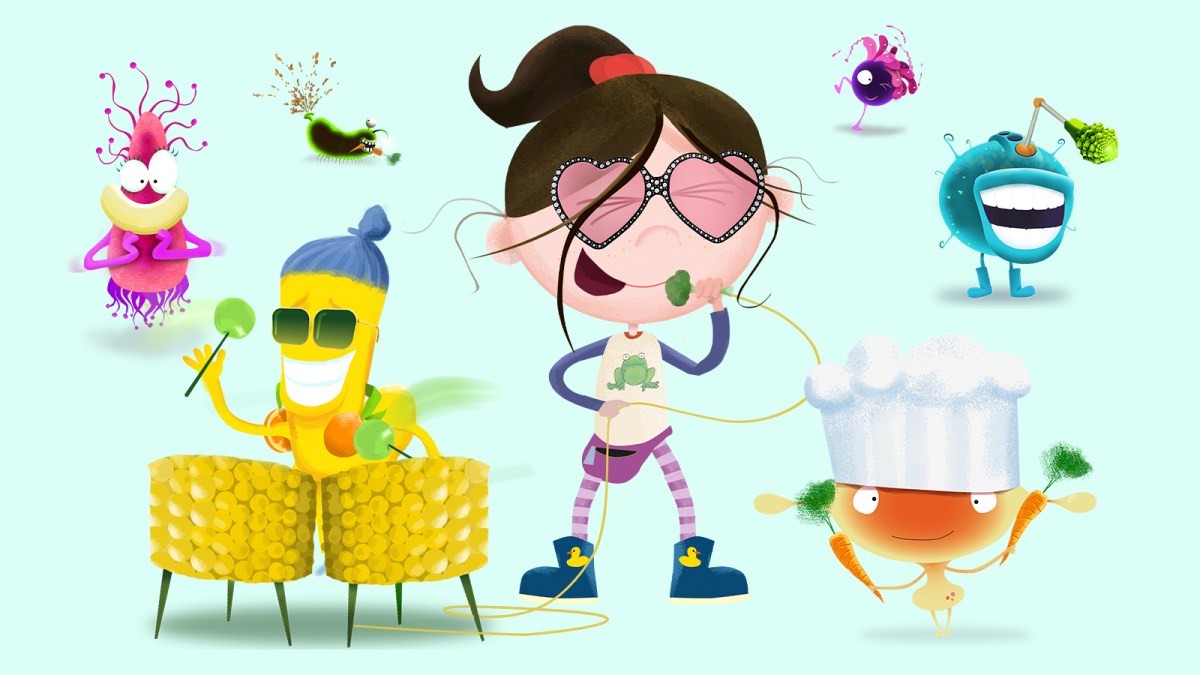
Belly Bugs centres on Billie Pickle, a girl who falls asleep and enters her own gut — a place called Rumbledom — populated by friendly microbes that thrive on colourful fruit and vegetables, and villains fuelled by ultra-processed food.

David Bell, creator of Belly Bugs
It is playful, simple and unashamedly binary: goodies and baddies, catapults and junk punks. Eat a cabbage to fight bad gut bacteria. Pick colourful fruit and vegetables to get “rocket fuel” that power up your insides. Oh, and there are poo jokes.
That simplicity is deliberate. “Health isn’t complicated,” Bell said. “We’ve made it complicated.” His stories started as a way to teach his young son, Gabriel, who was ten at the time, about healthy eating.
Bell had read Professor Tim Spector’s book The Diet Myth and Giulia Enders’ Gut, and had become interested in the subject. However, he realised there was a gap in children’s gut health information and education. “I’d take my son to football tournaments and there would be big marquees full of rubbish,” he said. “Sugary snacks everywhere. I thought: by the time kids are old enough to understand gut health properly, a lot of damage has already been done.”
As a successful advertising executive with his own agency, Cheetham Bell, he knew that the way to get children’s attention was through storytelling.
He brought the illustrator Martin Smith, whom he had previously worked with, to help him bring to life characters such as Bashy Bug, who can nuke Baddies with a sweetcorn blaster, and Cooly Bug, who loves nuts because they keep everyone calm.
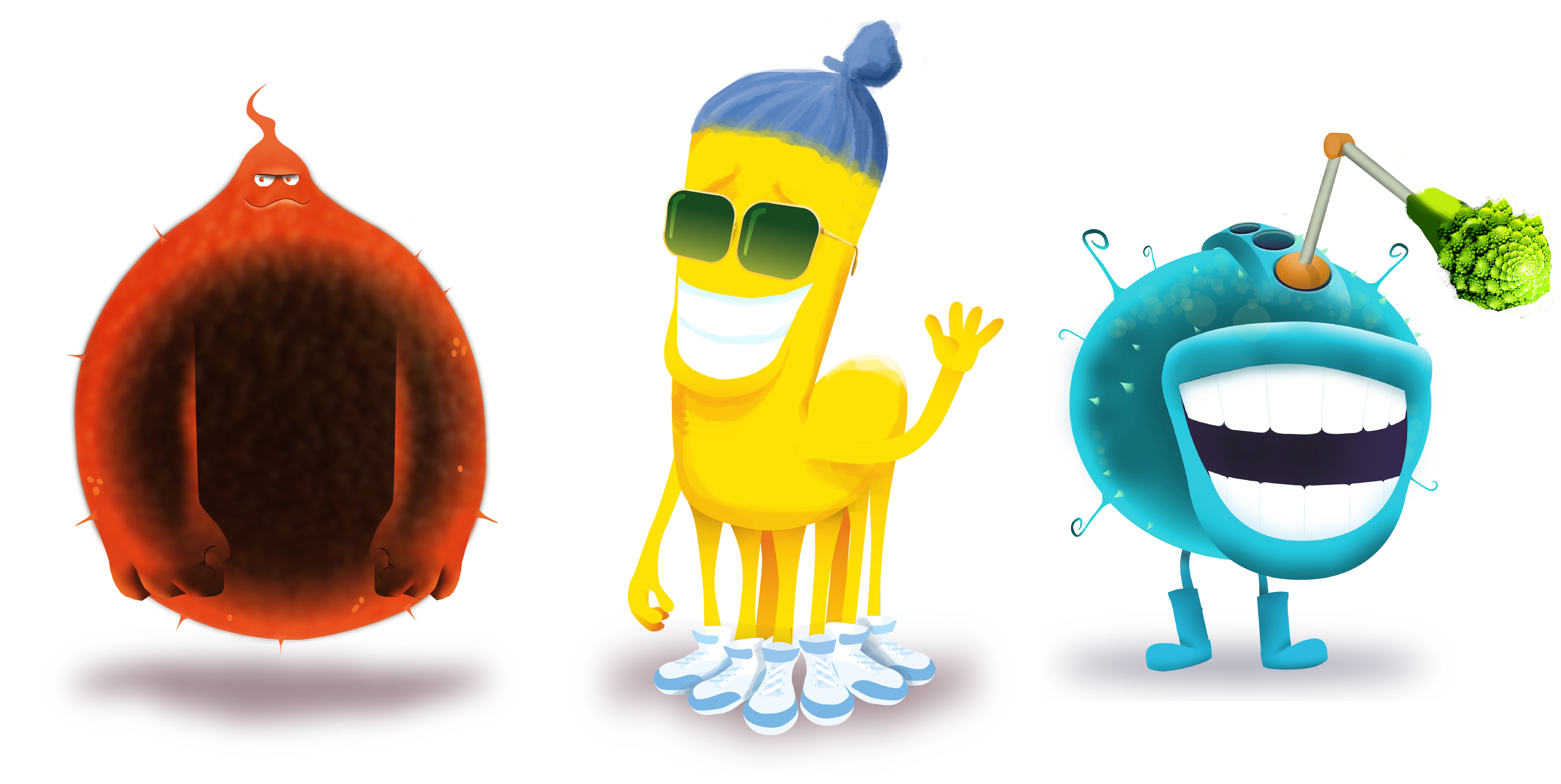
Bashy Bug, Cooly Bug and Chompy Bug
MARTIN SMITH
“Adults might know the ‘blube tube’ as the vagus nerve and ‘happy juice’ as serotonin, but we’re explaining the same processes,” Bell says. They had meetings with Spector, to check their interpretation of his science, and even had input from Keith Chapman, a former ad man best-known as the creator of the supremely successful children’s franchise Paw Patrol.
The first book, which they self-published, came out in August 2024. I was one of the first of now thousands of parents to buy it, having come across it on Instagram (my algorithms loved the intersection of gut health and parenting). My children, aged four and nine, loved the story of the Belly Bugs, and despite being relatively picky eaters, became curious about different vegetables and how the “secret superheroes” (polyphenols to grown-ups) protected them from inside — spurred on, definitely, by the accompanying wall chart and stickers.
Despite its cartoonish tone, Belly Bugs is rooted firmly in microbiome science. Spector has advised on the project from the start — and publicly endorsed it (he tells me: “I love Belly Bugs, it’s a fun way to educate children about how to eat well”), as has the gut health scientist Dr Federica Amati, and the nutritionist Rhiannon Lambert, who says it is “exciting to see children’s books, like this one, explain nutrition not just in terms of vitamins or heart health, but through the lens of the gut microbiome”.
Amati says her own children love the book. “It is a wonderful example of how complex science can be translated into a story that genuinely resonates with children. By personifying the gut microbiome as a cast of curious, energetic characters, it makes an otherwise abstract scientific concept concrete, relatable and joyful for young minds.”
The science, she says, is spot on. “From a scientific standpoint, the fundamentals underpinning Belly Bugs are well aligned with current evidence: the gut microbiome really does play a vital role in how our bodies process food, support immunity and contribute to overall wellbeing. Teaching kids early about the importance of eating colourful, fibre-rich foods that nourish our beneficial microbes aligns with what we understand from nutritional science and microbiome research. The core messages reflect real biology and highlight behaviours known to support a diverse and resilient gut ecosystem.”
What’s key about the book is that it’s not just parents telling kids to eat their greens, which we’ve been collectively doing — in my case largely unsuccessfully — for years. It flips the narrative and, as Amati says, “involves the children. It makes the science personal: children understand why their food choices matter because they see the consequences in the world of their Belly Bugs.”
It’s not just anecdotal evidence from my children, who can now be persuaded to try a red pepper (daring!), or a courgette (risky!) in return for a wall chart sticker. In 2023, Bell ran two pilots with Sunderland City Council across eight primary schools, reaching about 1,000 pupils. Every day, teachers read out during morning register “storytelling menu posters” — illustrated scenes showing how that day’s lunch would help the Belly Bugs defeat the baddies. A cabbage became ammunition. Salad became power.
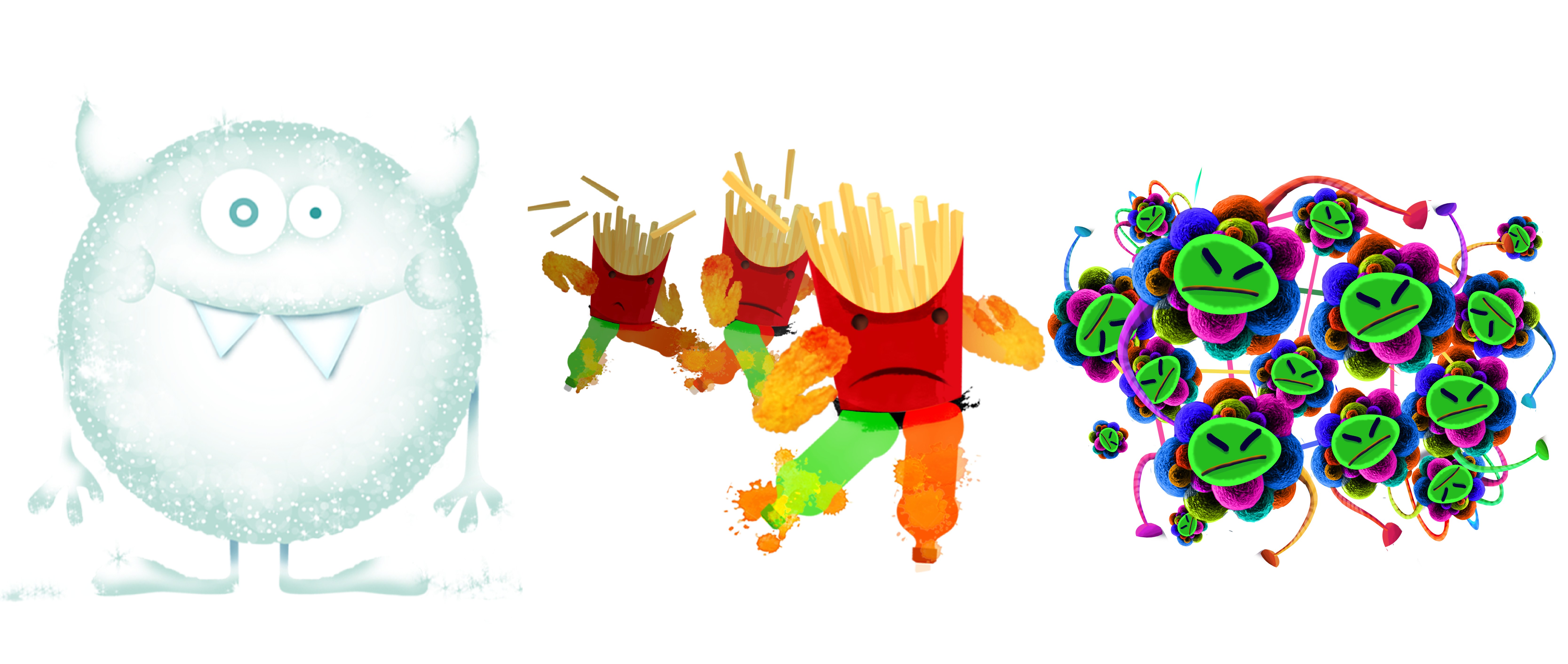
Sugar Monster, Junk Punks and the Ultra Bunch
MARTIN SMITH
Behavioural scientists analysed the results and found that children actively chose healthier food — that same day, with the school’s cook reporting back the huge salad uptake. “They’re not eating for teachers or parents,” Bell says. “They’re feeding the little guys who live inside them.” Dr Amati agrees. “This storytelling approach not only captures children’s imaginations, but also gives them agency; they don’t just learn about microbes, they care for them, much like looking after a pet. This emotional engagement is crucial for sustained curiosity and behaviour change.”
This year Manchester Metropolitan University has three master’s students writing dissertations on Belly Bugs, including research into its impact on neurodivergent children, who often struggle most with food.
Bell now has a three-book deal with the publisher New River, which also publishes Enders and the “Glucose Goddess”, Jessie Inchauspé; the first book has been tweaked and re-issued (it’s available to buy now), but there will be a big launch for the second book in the series in the autumn.
As an ad man, Bell knows that a successful campaign involves a multi-pronged approach. In April Belly Bugs will be available as an iPad gamified food diary, designed like an arcade, for which he received a £50,000 government grant. Children will log what they eat, earn gold stars for the best fibre content, earn power-ups in the game for healthy eating and see the digestive consequences.
It’s a start — but he would like to encourage more government backing, to roll it out in schools, where he has already proven it can make a big difference to children’s diets. “We know this works,” he says. “We see it.”
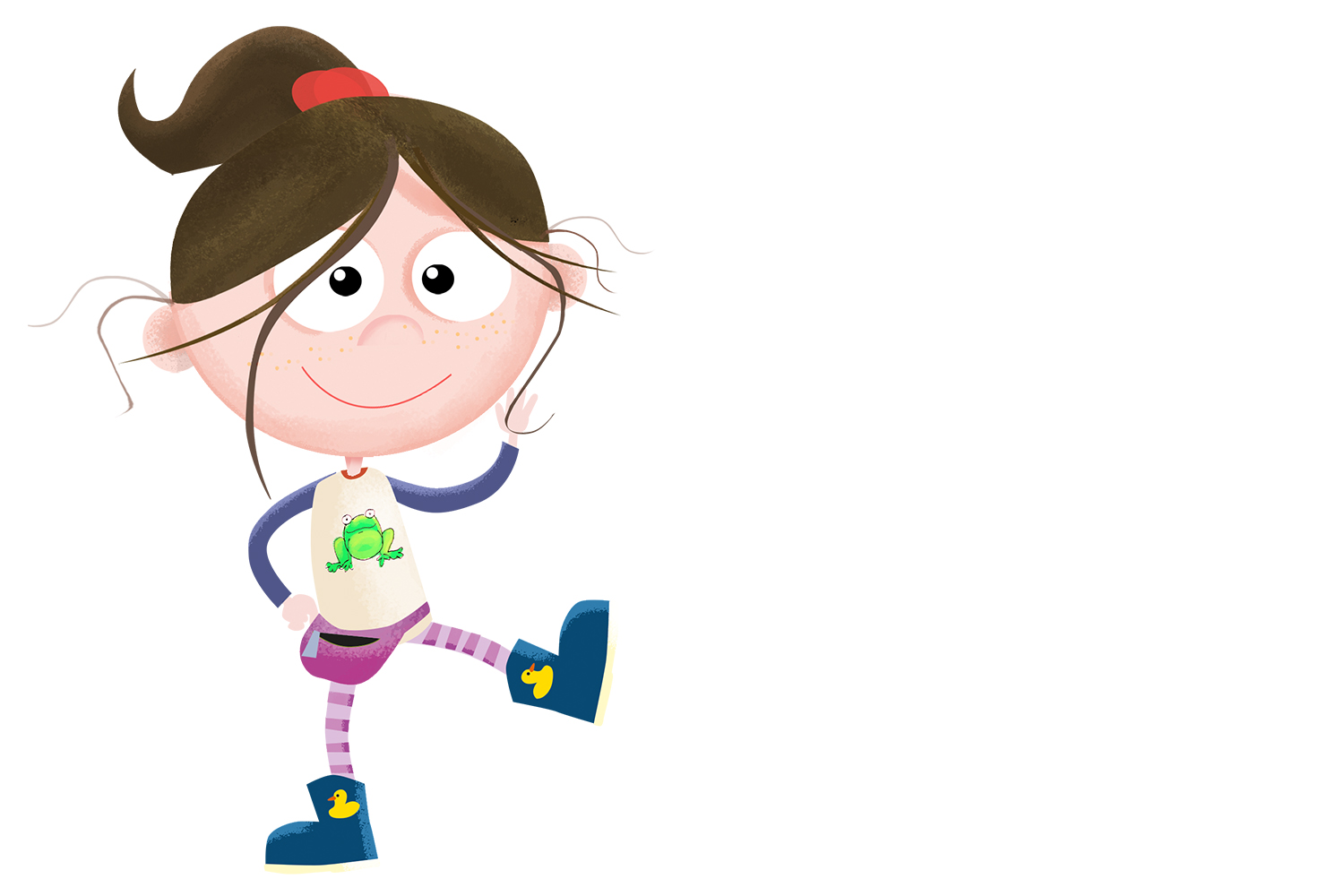
Billie Pickle falls asleep and enters her own gut
MARTIN SMITH
He feels that if he can get the message out, it could halt the rising tide of childhood obesity. One one in ten reception-age children (four to five-year-olds) are living with obesity. Along with the higher chance of premature death and disability in adulthood that a World Health Organisation report warns of, obesity already costs the country dearly.
Figures released late last year showed that the NHS spends more than £11.4 billion every year on obesity, with wider societal costs estimated at £74.3 billion annually due to ill health. Bell believes that for a few million pounds a national rollout could change eating behaviour before illness sets in.
Bell also wants to catch kids even earlier — in the womb, in fact — by educating pregnant women on the choices they can make with a section on the website called “Follow the Belly Bug Road”. “It’s very important [to get nutrition right in the first few years] because a child’s microbiome is pretty much set by the age of five,” Bell says. “There are things you can do to help after that, but getting their gut health in good order from the start gives them the best start.”
bellybugs.co.uk
Dining and Cooking