
Rachel de Thample is one of my food heroines. She’s the author of six books and course director of the College of Naturopathic Medicine’s natural chef diploma, and has also been head of food for Abel & Cole and commissioning editor of Waitrose Food Illustrated, among so much else. She trained with the likes of Marco Pierre White, Heston Blumenthal and Peter Gordon, and now teaches fermentation and gut health at River Cottage HQ, where I cut my own teeth in teaching eco-gastronomy more than 20 years ago. While researching honey fermenting recently, I came across her recipe in River Cottage’s Bees & Honey Handbook, which I’ve adapted here so you can make as much as you like using a variety of aromatics.
The Guardian’s journalism is independent. We will earn a commission if you buy something through an affiliate link. Learn more.
It’s essential to use raw honey for fermenting, because it is naturally acidic (low pH) and contains wild yeasts, beneficial microbes and active enzymes that help create a healthy fermentation environment once diluted. Pasteurised honey, on the other hand, is heat-treated to slow crystallisation, which also destroys many of the naturally occurring yeasts, beneficial bacteria and enzymes needed for fermentation.
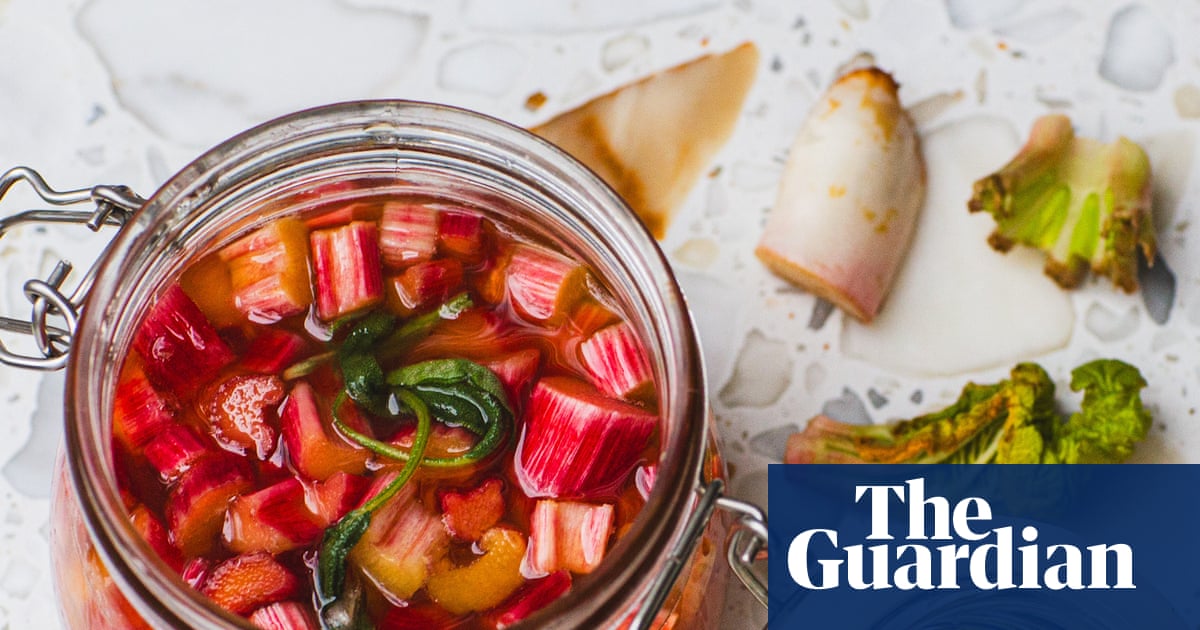
Honey-fermented rhubarb “jam”
This funky ferment is a rather sophisticated way to enjoy rhubarb. It’s very versatile in the sense that it can be enjoyed in a sweet or savoury context. Its sweet-and-sour flavour works well spooned over yoghurt, porridge or pancakes, and it also goes brilliantly with my favourite, cheese: cheddar, goat’s or sheep’s cheese are all perfect with the sweet-sour syrup and rhubarb chunks.
If, like me, you’re wary of sugar, honey-fermented fruit can be a great alternative to jam. Once soft, the rhubarb pieces are also lovely spread on to sourdough. As De Thample herself explains, “Honey contains prebiotic carbohydrates, which feed the good bacteria in our gut, as well as antioxidants called flavonoids, which are known to reduce inflammation in the body. Sugar, on the other hand, has an inflammatory effect on our systems.”
Makes 1 x 500ml jar
250g rhubarb
250g raw honey
Optional aromatics such as a thyme sprig, a bay leaf or a star anise
Wash and trim the rhubarb (compost any green leaves), then dice and weigh it – 250g is the ideal amount for a clean 500ml jar. Cover the rhubarb with the same weight of raw honey, stir and add your chosen optional aromatic. Cover loosely with a lid and stir twice a day for a week (alternatively, tighten the lid and shake, then untighten again). The rhubarb will soften, leaching juices into the honey and activating fermentation. Once the jam tastes as you like it (different flavours spike at different times through the fermentation process), seal and store in the fridge for up to three months.
Dining and Cooking