
At about 4 p.m. on a Wednesday, the hour for tea, I step into Mylapore South Indian Vegetarian Restaurant at San Jose’s Westgate Center mall.
Inside Mylapore, behind an open booth, a staffer holds his right arm high in an action that South Indians can recognize from the moon. Holding a cup in the air the man aims a hot stream of foaming milk into a stainless steel tumbler sitting inside a steel davara that rests on the counter. In a mind-numbing “aha” moment for me, coffee rises inside the tumbler, its froth and bubble puncturing the air with the force of a million coffee beans as I inhale the scent of the filter coffee of my roots.
On the tea-time menu that Wednesday is Vazhakkai Bajji, green plantain slivers folded into spicy chickpea batter, deep-fried a crisp orange-brown and presented on a banana leaf with a coconut dipping chutney on the side. They are four long ovals that those of us born and raised in South India bite into greedily to go aboard a nostalgia express to the hinterland of India’s Tamil Nadu.
These plantain treats — bound to make French fries and onion rings turn limp and soggy with insecurity — are merely a weekly afternoon delight. Mylapore’s all-day menu boasts several combinations of items for “tiffin” — which is a term from British India for a snack or a light lunch — as well as an elaborate lunchtime “thali,” typically served on a large, round platter with smaller bowls containing dishes like lentils, seasonal vegetables and rice or a bread or both to create a full, balanced meal.
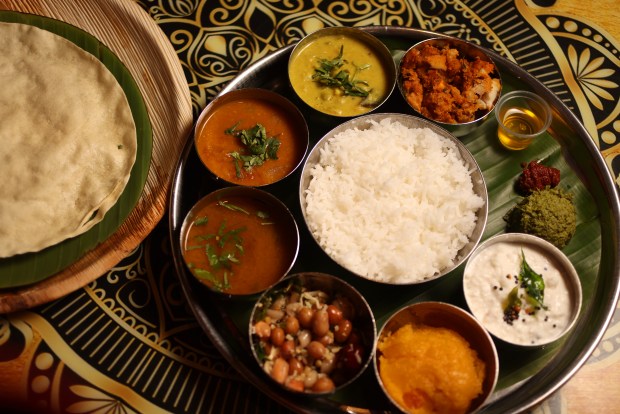 Mylapore’s lunchtime “thali,” as seen in San Jose, is served on a large, round platter filled with smaller bowls containing dishes like lentils, seasonal vegetables and rice for a full, balanced meal. On the side is fried urad lentil papad. (Aric Crabb/Bay Area News Group)
The name “Mylapore” in Tamil means “the land where peacocks screech.” A Chennai suburb steeped in Tamil culture and tradition, Mylapore is the location of the ancient port on India’s Coromandel Coast where once peacocks roamed in wild abandon by an iconic temple built in the 7th century.
The eponymous restaurant serving homestyle regional specialties at San Jose’s Westgate Center brings that ethos to Silicon Valley in an ambience flush with the sanctity that is integral to life in South India with its piped-in classical Carnatic music, Tanjore paintings and kolam art.
A Tambram restaurateur on a mission
Once considered unworthy of scrutiny, this homestyle Tamil-centric dining experience is revving up the Silicon Valley Indian food scene, even though its offerings are vegetarian or vegan and, in most instances, devoid of onion and garlic. In the last few years in the San Francisco Bay Area, more South Indian and regional style restaurants have popped up, and their driving force is the nostalgia for foods once savored and loved.
From Friday to Sunday, Mylapore is abuzz. On just one Saturday last fall, the Mylapore location at Westgate sold 650 cups of filter coffee, in a testament to how thirsty its clientele has been for an authentic cup; although some might argue that its popularity has to do with the fact it’s also slightly cheaper than an 8-ounce latte from Peet’s or Starbucks.
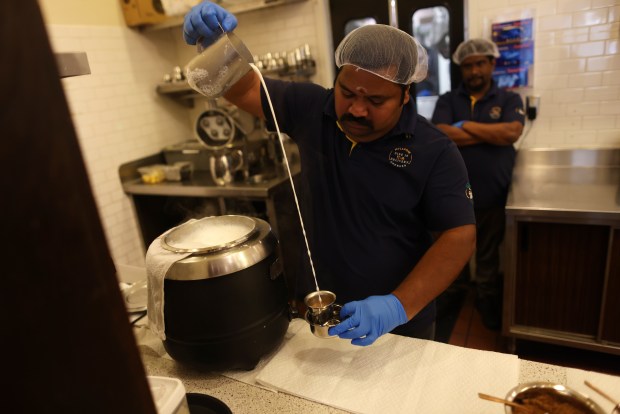 Indian filter coffee is prepared by pouring a stream of hot, foaming milk into a stainless steel tumbler sitting inside a steel davara at Mylapore restaurant in San Jose. (Aric Crabb/Bay Area News Group)
With 11 locations currently open around the Bay Area — six of which, called Idly Express, are focused on delivery and takeout — Mylapore caters to a niche crowd. Weekend wait-times at the sit-down restaurants can be two hours long.
The man behind this restaurant chain — which first opened in Folsom in 2008 — is Jay Jayaraman, a Tamil restaurateur who draws inspiration from his Tamil Brahmin heritage and the land that nurtured him. “Tamil Brahmin” (Tambram) refers to members of the Brahmin or priestly caste whose ancestral and cultural roots are in the Tamil-speaking regions of South India, primarily the state of Tamil Nadu.
Counter to the notion that a focus on caste and community is insular and, therefore, detrimental to business, Jayaraman embraces his heritage with a certain chutzpah and a largesse that makes customers return with their friends and family.
“I’ve always felt if we don’t showcase certain things in the way we Tambrams do, 50 years from now it will all die,” he says.
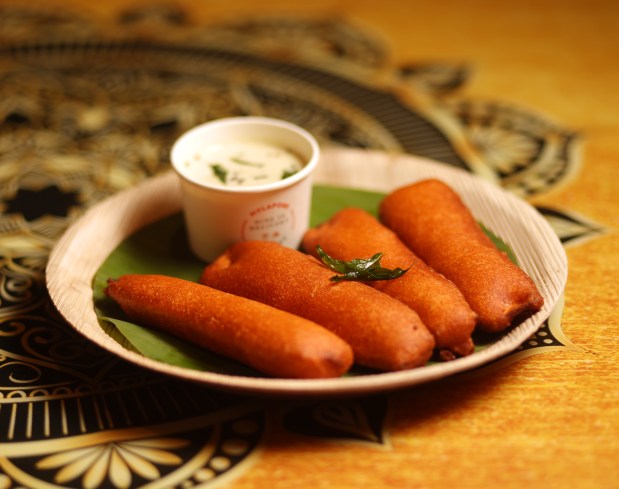 Vazhakkai Bajji, served at San Jose’s Mylapore, is made by green plantain slivers folded into spicy chickpea batter and deep-fried a crisp orange-brown. It’s then presented on a banana leaf with a coconut dipping chutney on the side. (Aric Crabb/Bay Area News Group)
Barely 3% of the population in Tamil Nadu, Tambram is a dwindling community that is now spread out in India and in the Indian diaspora. Yet its cultural mores and culinary ways remain distinct, often revolving around religious rituals and special days on the Hindu calendar (Panchangam) used by Hindus globally to schedule festivals and rituals based on solar and lunar cycles.
“What I really respect about places like Mylapore and Idly Express and many such regional cuisine restaurants is their clarity of purpose,” says Chef Vittal Shetty, co-founder and chef of Jalsa Catering & Events, Xari Mithai and Jashn restaurant in Santa Clara. “They know exactly who they are and what they want to serve, and they don’t dilute that.”
As one of the Bay Area’s preeminent Indian wedding caterers along with Jalsa co-founder Reshmi Nair, Shetty has intimate knowledge of how difficult it is to rustle up a dish consistently well and fulfill people’s nostalgic cravings by executing familiar dishes exactly as people remember them from their pasts.
Across most of India, every season is linked to specific produce, celebratory rituals and dishes, the element of faith being even more pronounced in the south. In mid-January, during the harvest festival called Pongal (also called Makara Sankranthi) every home prepares Sakkarai Pongal, a traditional sweet dish prepared with raw rice, moong dal (split yellow mung beans), traditional cane sugar (jaggery), ghee and garnished with cashews and raisins. It is a rich, creamy and fragrant dish commonly served in South India as an offering to the sun god who is believed to sustain the earth.
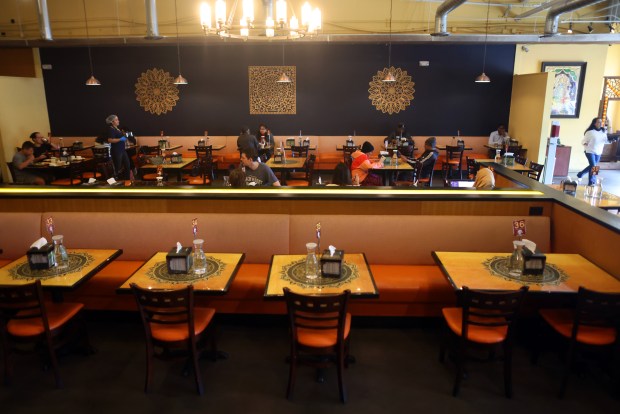 Diners start to sit down for an early lunch at Mylapore restaurant in Fremont on Tuesday, Feb. 24, 2026. (Aric Crabb/Bay Area News Group)
The calendar of cuisine is thus packed throughout the year. Rice, a South Indian staple, is often central to these dishes.
“What makes our cuisine stand out is the backbone called agriculture,” says South Indian food historian Rakesh Raghunathan, a judge on “MasterChef India — Tamil.” “In India, we once had more than 350,000 varieties of Indigenous rice. Those are slowly being revived. They have nutraceutical properties. They’re therapeutic. There are varieties that are very low-GI and high in fiber and protein content, making them diabetic friendly.”
Mylapore Restaurant offers specific rice dishes that establish it as a South Indian restaurant; yet to maintain its singularity, Jayaraman often goes back to India to mine his heritage for more authentic regional dishes and pre-packaged foods to offer to his clientele in alignment the season and the Hindu calendar.
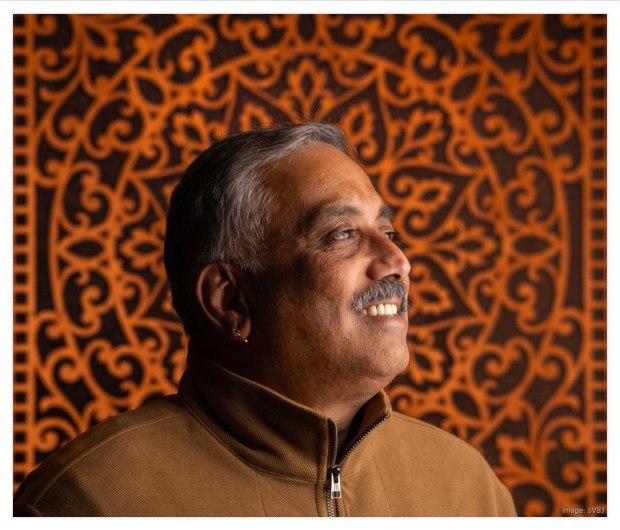 Entrepreneur Jay Jayaraman started the Mylapore restaurant chain to bring the authentic homestyle cuisine of Tamil Nadu, India, to the United States. So far, he has 11 locations in the Bay Area. (Photo courtesy of Mylapore)
For instance, Dvadasi, the 12th day of the 15 days in each lunar fortnight, is dedicated to the Hindu god Vishnu. On that day back in India, Jayaraman’s mother would make pirandai thogayal with sundakkai kuzhambu.
“Pirandai is Cissus quadrangularis,” the restaurateur says, chuckling when I try to repeat the botanical name after him. I recall that it was a creeper with medicinal properties, and that sundakkai kuzhambu is a tamarind stew made with turkey berry (pea eggplant).
While these dishes are not currently on the menu at Mylapore, on and off, the restaurant offers such rarer dishes to its patrons. On its shelves, we can find pirandai podi (“podi” means powder), known as veldt grape powder, a traditional South Indian condiment and herbal blend eaten with steamed rice to treat joint pain, improve bone strength and aid digestion.
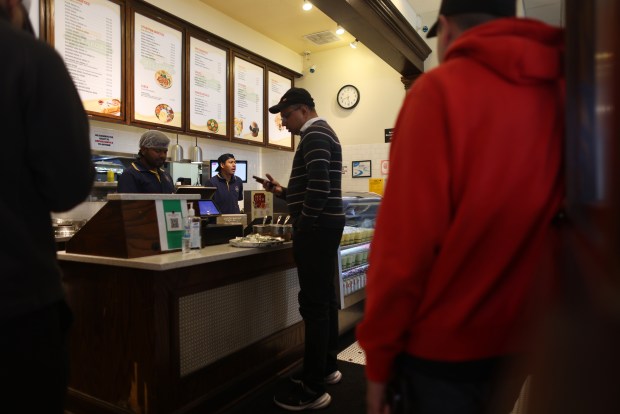 Customers order at the counter of Mylapore restaurant in San Jose on Monday, Feb. 23 2026. (Aric Crabb/Bay Area News Group)
On a weekend morning at the San Jose Mylapore, when my husband and I waited in a line that lasted over an hour, the staffers brought us a tray containing small cups of agathi keerai rice, a delicious, hunter green mix that delighted us. “Keerai” in Tamil is a generic term for spinach, and the agathi leaves are the leafy greens from the hummingbird tree (Sesbania grandiflora). While it’s sacred fodder for cows, agathi keerai is equally nutritious for humans, it turns out.
“When our ancestors put recipes together it was very well thought-out based on the principles of Ayurveda about having certain combinations that are good, about having certain elements on specific days,” Raghunathan says. In fact, Indian cuisine in general is moored in Ayurveda, an ancient system of holistic health care whose rich history dates back over 5,000 years.
The evolution of Indian food in America
In the late 1960s and 1970s, when the United States became home to a significant number of students and professionals from India, a New York City store called Kalustyan’s that sold Turkish and Middle Eastern groceries expanded to cater to the Indian market, mailing spices and groceries to homesick Indians spread around the country.
More than a half century later, the story is dramatically altered. Regional Indian foods have entered the mainstream, in a journey that mirrors the Indian immigrant’s own trajectory in the country. The Bay Area Indian community, the second-largest Indian American population in the country after New York’s, has been at the forefront of the Indian food evolution.
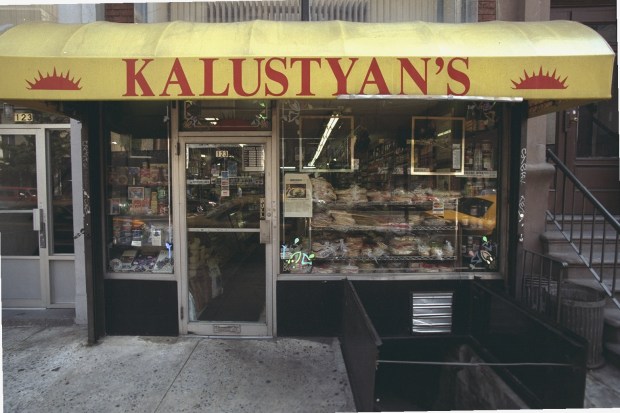 When a significant number of Indian students and professionals migrated to the U.S. in the 1960s and 1970s, Kalustyan’s, a New York City ethnic grocery store, began mailing spices and groceries to homesick Indians across the country. (New York Daily News)
The crepe-like dosa, made from fermented batter that is made by soaking and grinding split black gram (urad lentil) and parboiled rice, is one of the first South Indian dishes to catch on in the Indian diaspora. Almost two decades ago a man named Subramanian Krishnan began building a system to manufacture fermented dosa batter and ferry it to states around the U.S. Now, his dosa batter is sold at Costco stores.
Today, there are nearly 10,000 Indian restaurants in the United States with California being home to the most — approximately 2,000 — followed by Texas. Indian food in North America has evolved radically, from the generic samosa and chicken tikka masala fare to regional specialties like Meen Pollichathu from Kerala — “Pollichathu” in the Malayalam language literally means grilled or pan-fried — a fried fish wrapped in banana leaf with coconut milk masala and roasted in a pan.
Despite this development, on a recent 3,000-mile road trip through a dozen states on the East Coast, I discovered that, on average, most Indian fare in America still consists of a lackluster hodgepodge of generic North Indian dishes and, occasionally, dosa. They rarely cared to serve regional foods evocative of the different parts of a diverse country like India in which custom, dialect and cuisine tends to change every 50 miles.
How could food from India’s 23 states — with multitudinous subregions and over a thousand dialects — ever be distilled into the generic naan, dal, butter chicken, dosa and sambar?
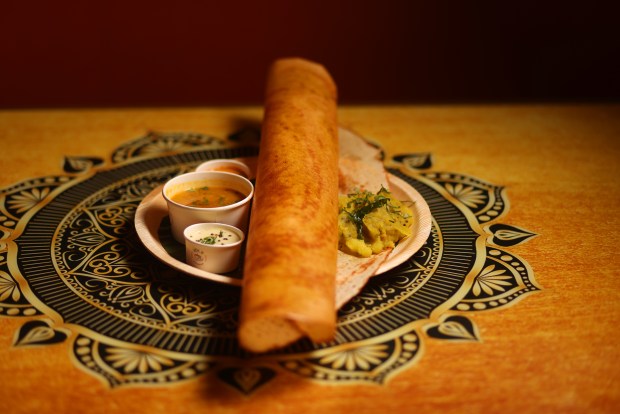 A Ghee Masala Dosa, featuring a crispy Indian crepe made out of urad lentil and rice batter wrapped around a potato filling, is served with tomato chutney, coconut chutney and a spicy stew called sambar at Mylapore in San Jose. (Aric Crabb/Bay Area News Group)
“Indian food lends itself to micro-cuisine, because every region, especially in the south of India, has a cuisine of its own,” Raghunathan says. A micro-cuisine is the localized expression of any particular community’s identity on a plate. In simple terms, it’s what your grandmother cooked that never makes it into restaurant menus or food festivals.
Raghunathan says that people around the world are now drilling down and asking questions about localized fare. He points to what is offered by top-flight restaurants in the United States.
“You have restaurants like Semma and Chatti in New York that are pushing boundaries by serving food as is,” he says. “They’re not altering taste just because they operate in the United States and must appeal to a non-Indian audience.”
Raghunathan notices Mylapore doesn’t cater to non-Indian preferences, either. “They’re making it the way it is, and it’s close to what we would savor at home,” he says. “People seem to visit Mylapore to get a taste of home.”
Along with being aware of micro-cuisines, regional homestyle restaurants in the Bay Area are sensitive to the treatment of food between the different regions of South India.
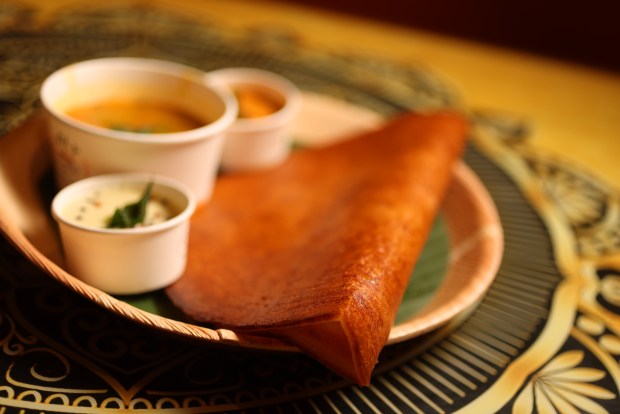 A Benne Dosa, aka a dosa cooked in butter, is served at San Jose’s Mylapore restaurant on Monday, Feb. 23 2026. Sambar, the spicy stew that accompanies a dosa, varies from region to region in South India. (Aric Crabb/Bay Area News Group)
The sambar (a spicy stew accompanying a dosa) from the state of Karnataka is sweeter, redder and thicker because of coconut and brown sugar, while the sambar served in Tamil Nadu is tangier, thinner and spicier, thanks to more tamarind and ground spices.
While each state imparts a different tang to a dish that may be common to all of South India, there are also a bevy of signature dishes unique to each state, and culinary approaches that are distinct to a state. Broadly speaking, the food from the state of Andhra Pradesh is spicier than most cuisines in India, and the cuisine from Kerala often employs more coconut in its dishes.
A Silicon Valley playbook for food nostalgia
In a valley that developed the iPhone and the Tesla, Mylapore founder Jay Jayaraman finds creative ways to address the food nostalgia among local Indian Americans as well as a growing customer base of non-Indians who are seeking more plant-based options. He deploys every social media tool available to him in a region that invented a good many of them.
On a chilly afternoon last March, Jayaraman announced, on LinkedIn, an elaborate multi-course vegetarian pop-up banquet from Tamil Nadu. It was a highfalutin march of 20 wedding dishes striding alongside a bowl of steamed white rice, that would unleash itself, hopefully, inside expandable stomach walls covered by elastic waistbands.
By 8 a.m. the following day, all 300 seats for this pop-up “Kalyana Sappadu — Served on a Banana Leaf” were gobbled up. The smorgasbord typically served at a wedding was lifted straight out of the heart of Tamil country in South India.
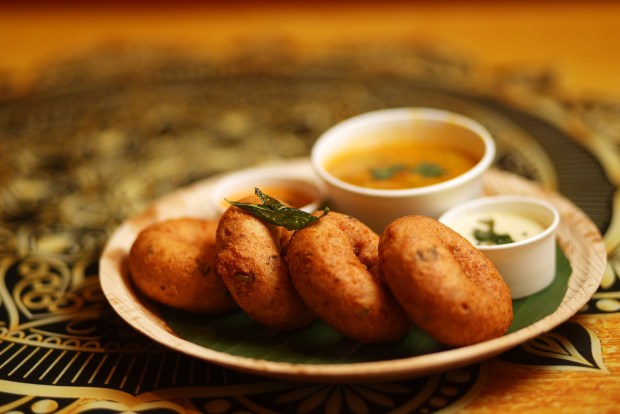 Medhu Vadai, or doughnut-shaped fritters made from lentil flour, are served on a banana leaf at Mylapore restaurant in San Jose on Monday, Feb. 23 2026. (Aric Crabb/Bay Area News Group)
Reading the menu, my tongue salivated with nostalgia: Paal Payasam (sweetened rice swimming in oodles of thickening milk), spicy Paruppu Vadai (split Bengal gram fritters spiked with coriander, curry leaves and spices), Vendakkai Thayir Pachadi (seasoned and roasted okra in yogurt), Tomato Sweet Pachadi (sweetened tomato compote) and Beans Paruppusili (diced string beans in a bed of spicy lentils), among a slew of other traditional Tamil specialties.
Immigrants from India’s southern states often talk of trips back home where we once savored this nostalgic experience of being served food on a broad banana leaf, one in which the tang of the banana leaf “plate” combined with the flavor of each dish for a heightened gastronomic experience.
Crowdsourcing ideas online among his growing fanbase as he scales his business, Jayaraman titled a post “AI and the Restaurant Industry” and laid out how he saw artificial intelligence playing out in his ventures. It follows that Mylapore will soon have Google-powered AI enabling its ordering systems.
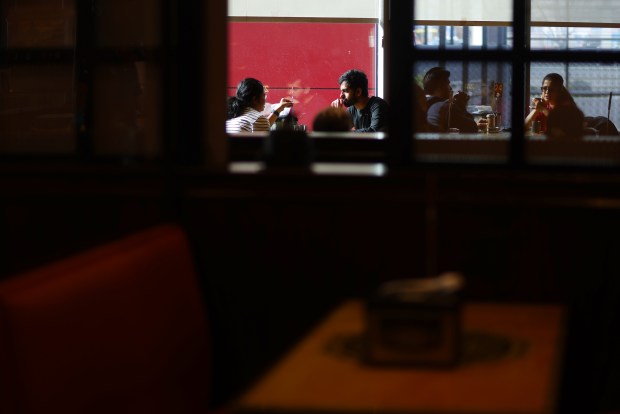 Customers eat in the dining room of Mylapore restaurant in San Jose on Monday, Feb. 23 2026. (Aric Crabb/Bay Area News Group)
Every few weeks, this valley entrepreneur plugs a new menu tied to a Hindu festival or a nostalgic cultural experience, often deploying tech jargon on his LinkedIn page while talking about the service he titles SaaaS — “Saapaad as a Service” — playing on a popular tech acronym for “software as a service.” “Saapaad” means food in Tamil.
Mylapore also sells pre-made sweets, comfort foods, condiments and seasonal pickles. In a few weeks, as mango season heats up in India, maavadu will be on the shelves. A popular, spicy and tangy South Indian summer pickle made from tiny, raw baby mangoes, maavadu, when paired with Curd Rice, is manna that will ferry me to the kingdom of heaven as the briny mango explodes between my tongue and my teeth.
Indian Americans from other parts of the country tend to rave about the regional culinary offerings here in the valley. On a trip to the Bay Area last year, Srinath Anand of Nashua, New Hampshire, and his New Jersey-based brother banded together to enjoy lunch at Mylapore. They ended up ordering a mingle-mangle of dishes off the menu. At the counter, they bought snacks and pickles to cart back with them to their homes back east.
“I felt like I was eating at home,” Anand says when asked how he felt about the gastronomic experience. For Jayaraman’s vision, there cannot be a greater compliment than that.
“At the end of the day we all crave for something simple,” Jayaraman says to me. “None of us wants exotic. Simplicity is key.” Pointing out that most people complicated the restaurant business, he says that most human beings seek out traditional, homestyle food.
Chef Vittal Shetty knows the challenges with offering a taste of home. “Serving the old and traditional is hard because you’re competing with memory and emotion,” he explains. “People come in with very strong expectations: ‘This is how it tasted back home.’ You have to be incredibly precise and consistent, and even then, you’re being judged against something very personal and nostalgic.”
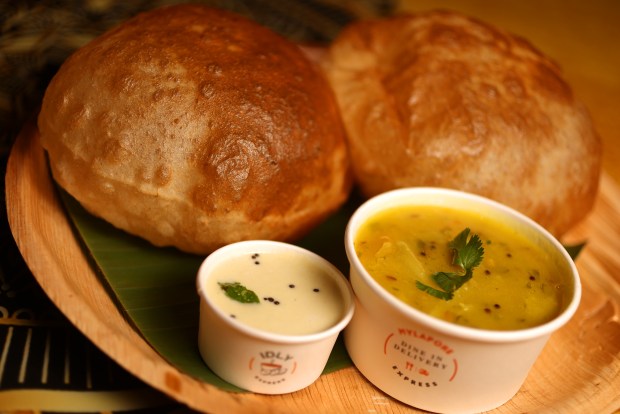 Poori Masala, fried wheat flour balls paired with potato-based masala gravy, is served at Mylapore restaurant in San Jose. (Aric Crabb/Bay Area News Group)
In a high tech valley always in a tizzy about the challenges of scaling, the Mylapore and Idly Express brands are scaling rapidly, both in California and elsewhere. An Idly Express location is slated to open soon in San Francisco. For the last few months, Mylapore has been operating a 6,500-square-foot cloud kitchen in Suwanee, Georgia, and the state’s first full-service Mylapore restaurant is set to open in Alpharetta this April.
A few months ago, on a Monday afternoon, I walked in to San Jose’s Mylapore at tiffin time for a Masal Vadai Beach Sundal — a spicy “gravy” of softly cooked dried yellow and green peas topped with freshly grated coconut, diced onion and raw mango, and crushed lentil fritters — to transport myself back to Chennai’s eight-mile long sandy beach. Still, while the taste of a nostalgic experience is magical, on most days, what we want is comfort food.
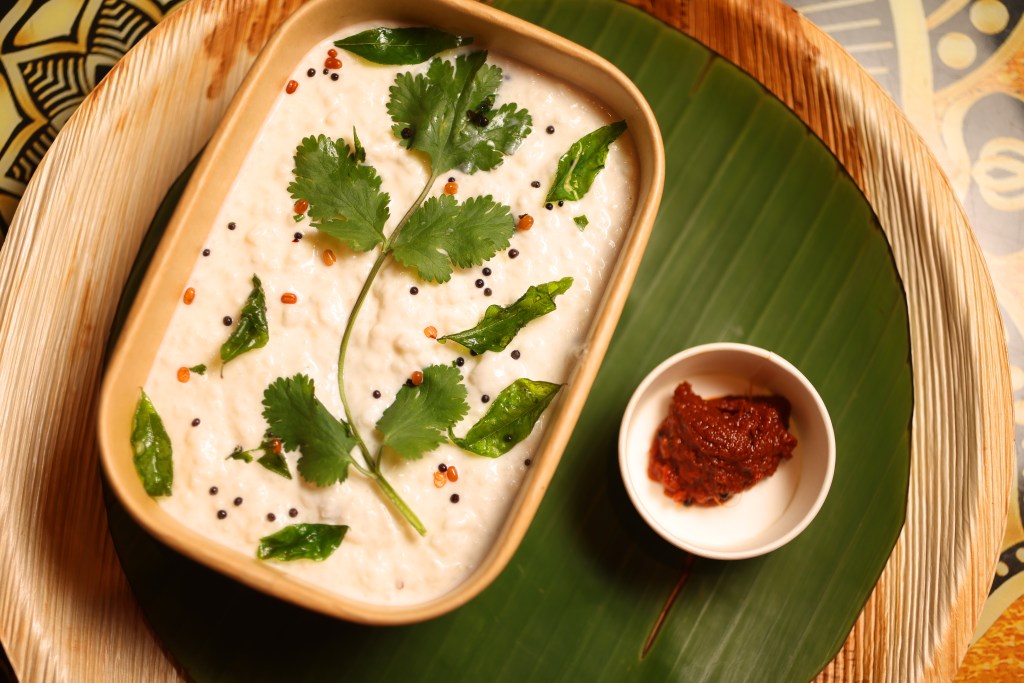
Last week, after returning from a busy week of travel, I walked up to the ordering kiosk at Mylapore to order Chinna Vengaya Sambar Rice (a one pot tangy stew with pearl onions) and a Curd Rice (cooked rice in fresh yogurt, tempered with spices and curry leaves). This was food I’d eaten since I was born.
The memory of it coats my bones and courses through my veins. It pampers. It heals. Just one spoonful of such a homestyle dish brings a bit of our former selves back to us, no matter where we live, and no matter which other place we call home.
Mylapore restaurant locations
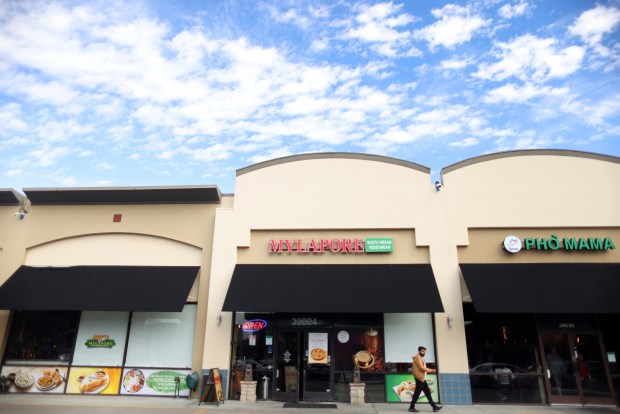 Mylapore restaurant in Fremont is one of nearly a dozen of Jay Jayaraman’s restaurants around the Bay Area. (Aric Crabb/Bay Area News Group)
San Ramon: Open 8 a.m.-10 p.m. daily, 2426 San Ramon Valley Blvd., San Ramon
Fremont: Open 8 a.m.-10 p.m. daily, 39024 Paseo Padre Parkway, Fremont
Pleasanton: Open 8 a.m.-10 p.m. daily, 4825 Hopyard Road, Pleasanton
Sunnyvale: Open 8 a.m.-10 p.m. daily, 1025 W El Camino Real, Sunnyvale
San Jose: Open 8 a.m.-10 p.m. daily, Westgate Center, 1692 Saratoga Ave., San Jose
Idly Express locations
Berkeley: Open 10:30 a.m.-9:30 p.m. daily, 1974 University Ave., Berkeley
Fremont: Open 8 a.m.-9:30 p.m. daily, 39144 Paseo Padre Parkway, Fremont
Milpitas: Open 8 a.m.-9:30 p.m. daily, 131 Ranch Drive, Milpitas
Santa Clara: Open 8 a.m.-9:30 p.m. daily, 2006 El Camino Real, Santa Clara
San Jose: Open 8 a.m.-9:30 p.m. daily, 4750 Almaden Expressway, San Jose
Mountain View: Open 8 a.m.-9:30 p.m. daily, 565 San Antonio Road, Mountain View
Details: Visit mylaporeexpress.com/dine-in or idlyexpress.com or follow Jay Jayaraman on Instagram at @mylaporeexpress.
Other Bay Area restaurants offering regional Indian cuisine
Bengalur Ootery: This vegetarian restaurant offering homestyle cooking from
Karnataka. Open 11:30 a.m.-2:30 p.m. and 4:30-8:30 p.m. Tuesdays-Saturdays, 11:30 a.m.-2:30 p.m. Sundays; 939 Edgewater Blvd., Foster City; ootery.com
Kovai Café: This vegetarian eatery features homestyle foods from Tamil Nadu’s
Coimbatore. 8 a.m.-10 p.m. Tuesdays-Sundays, 1136 S. De Anza Blvd., San Jose, and 181 Ranch Drive, Milpitas; kovaicafe.com/
Kongunadu Indian Restaurant: This spot offers regional foods from Tamil Nadu’s
Coimbatore. Open 11 a.m.-10:30 p.m. Wednesdays-Mondays, 1136 S. De Anza Blvd., San Jose; kongunadu.us
Suggi Oota: This vegetarian eatery features homestyle foods from Karnataka. Open 11 a.m.-9 p.m. Tuesdays-Thursdays and Saturdays-Sundays, 11:30 a.m.-9 p.m Fridays, 20 Washington St,, Santa Clara; suggioota.com
Rajbhog Thali: This vegetarian eatery offers homestyle thali from Rajasthan, Punjab, and Gujarat, depending on the day of the week. Open 11:30 a.m.-3 p.m. and 5:30-9:30 p.m. Wednesdays-Mondays, 1028 E. El Camino Real, Sunnyvale; rajbhogthali.com
Saapaaduu: This restaurant offers a medley of homestyle regional offerings from South India. Open 11:30 a.m.-2:30 p.m. and 5:30-9:30 p.m. Tuesdays-Sundays, 5968 Silver Creek Valley Road, San Jose; saapaaduu.com
Puranpoli: This vegetarian eatery features homestyle foods from Maharashtra. Open 11 a.m.-9 p.m. Wednesdays-Mondays, 3074 Scott Blvd., Santa Clara; puranpoli.net
Ulavacharu Tiffins Campbell: This vegetarian restaurant offers homestyle foods from Andhra Pradesh. Open 8:30 a.m.-2:30 p.m. and 5:30-9:30 p.m. Mondays-Fridays and 8:30 a.m.-9:30 p.m. Saturdays-Sunday, 1651 W. Campbell Ave., Campbell, and 3530 El Camino Real, Santa Clara; ulavacharutiffins.com
Anjappar Chettinad Indian Restaurant: This restaurant serves specialties from Tamil Nadu’s Chettinad region. Open 11:30 a.m.-10 p.m. Mondays-Saturday and 11:30 a.m. to 9:30 p.m. Sundays, 458 Barber Lane, Milpitas, and 777 Lawrence Expressway, Santa Clara; anjapparca.com
Besharam: This high-end restaurant features vegetarian delicacies from Gujarat. Open 5-9 p.m. Wednesdays-Sundays, 1275 Minnesota St., San Francisco; besharamrestaurant.com
Copra: This high-end restaurant celebrates regional coastal cuisines of South India. Open 5-10 p.m. Wednesdays-Sundays, 1700 Fillmore St., San Francisco; coprarestaurant.com
Dining and Cooking