
Reviews
Drawing on his family’s foraging traditions, Stina’s chef Bobby Saritsoglou is showing Philly there’s more to Greek food than lamb and gyros.
Devoted foodies and restaurant newbies love Foobooz. Sign up now for our twice weekly newsletter.
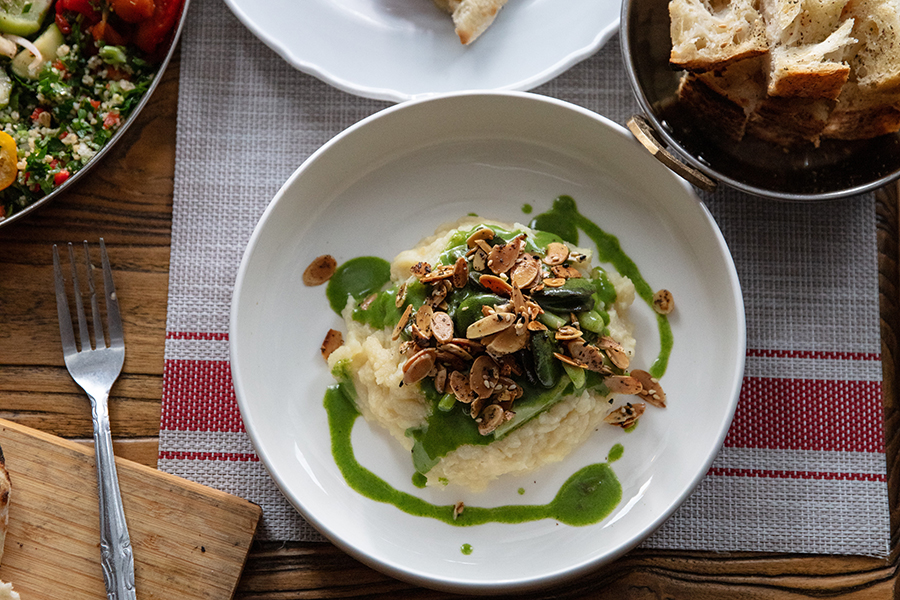
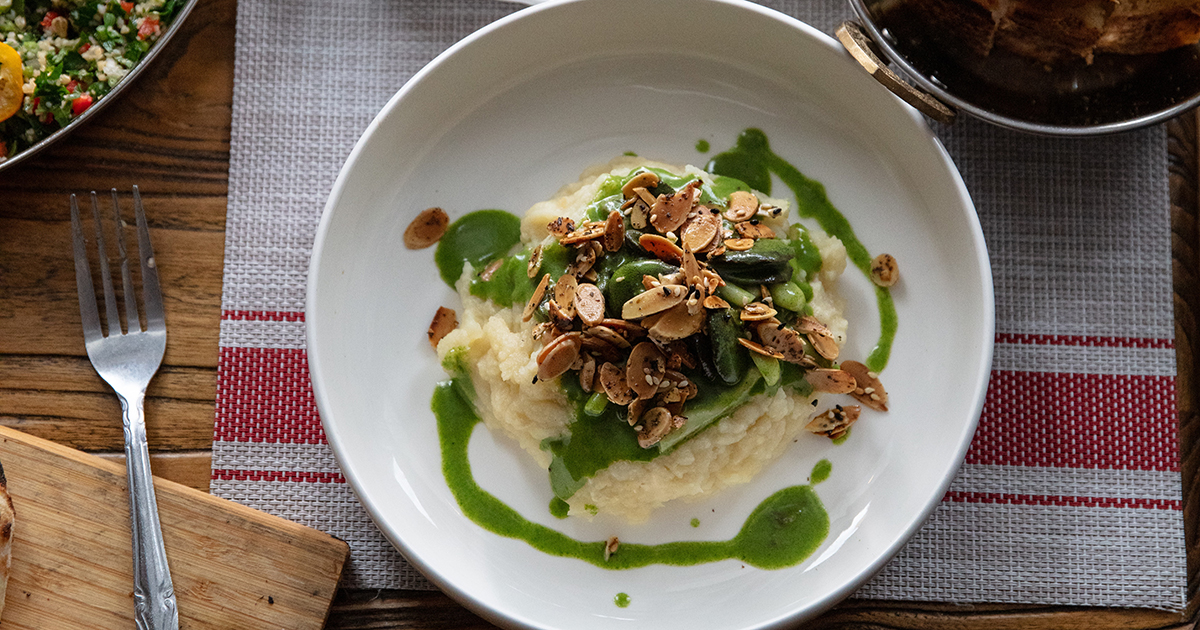
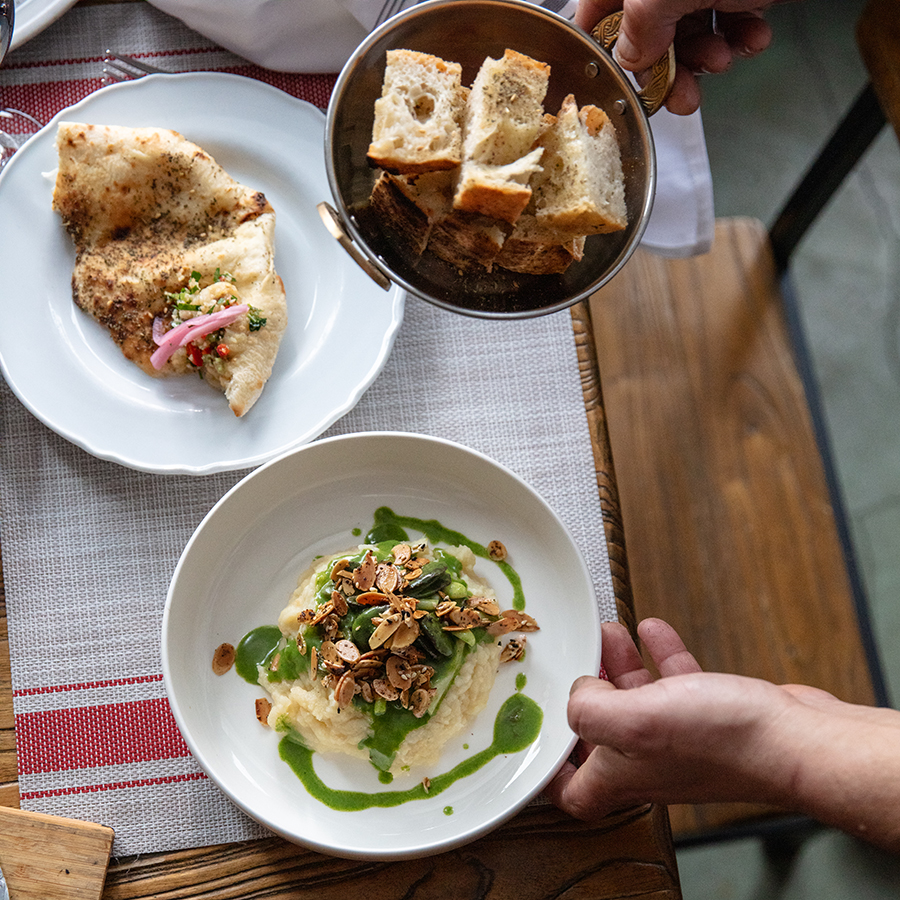
Braised snails at Stina / Photography by Neal Santos
Welcome to Just One Dish, a Foobooz series that looks at an outstanding item on a Philly restaurant’s menu — the story behind the dish, how it’s made, and why you should be going out of your way to try it.
As the children of immigrants, Bobby Saritsoglou and his siblings would often sit around their dining room table in Upper Darby and listen to their mother Irini’s stories of foraging for food in post-World War II Greece. “They grew up very poor, and so did we,” the chef-owner of South Philly’s Stina tells me. Saritsoglou’s family arrived in the U.S., in 1975, along with a wave of Greek immigrants who fled their home country amid civil unrest after the military junta’s collapse. “She was always kind of like, ‘Oh, you think this is bad? Let me tell you about the village,’” he remembers. “But she would always tell the story about the snails.”
One of eight children in a family of tobacco farmers in Stefanovouno, a remote village in the central-northern region of Thessaly, Irini and her sisters were regularly tasked with gathering mushrooms, berries, and snails for dinner. After a rainy day, they’d return home with buckets full of the gastropods, and Saritsoglou’s grandmother would get an outdoor fire going. She’d bring together butter, garlic, parsley, and onions in a metal pot over the flames, then throw in the snails, cooking them low and slow. Once the snails were ready (and cool enough to handle), the family plucked them from the shells and ate them right out of the pan, always with homemade bread that they’d dunk into the buttery, herby sauce.
The story stuck, and decades later Saritsoglou is serving plates of snails at Stina, the Mediterranean restaurant he co-owns with his wife, Christina Kallas-Saritsoglou, and which is known for its wood-fired fare like pide (Turkish flatbread) and its emphasis on Greek flavors. There, the braised snails are smothered in a zingy, parsley-tinged beurre monté and arranged on a bed of fluffy miso skordalia (a garlicky potato dip), then topped with a sprinkling of sesame-almond crunch that enhances the nuttiness of the gastropods, and more parsley butter in the form of a bright green swirl. On the side there’s house-made sourdough bread, lightly toasted so it’s supple enough to tear up and hefty enough to bear a generous swipe of skordalia and a snail or two. Texturally, everything feels balanced, with the pillowy potato and garlic purée and tender snail meat interposed with crisp nuts and seeds. The result is a dish that feels both simple and luxurious, landing somewhere between rustic and refined without skewing too far in either direction.
Saritsoglou liked the idea of “translating” his mother’s snail dinner onto the plate, but his version isn’t a word-for-word translation of the dish she grew up eating. Instead, it’s more of an interpretation, an ode to his family’s foraging past — anchored by the same leading notes of parsley, garlic, and earthy snail — that he has elevated to serve in his restaurant.
While he isn’t foraging for the mollusks himself, Saritsoglou is thoughtful about sourcing; he gets snails from Peconic Escargot in Cutchogue, New York, in small batches to keep them fresh. (Because of this, snails aren’t always available at Stina, though they usually have them.) And unlike his grandmother who cooked the snails in parsley butter, he braises them with celery, onion, carrot, garlic, bay leaf, and a little vegetable stock in the kitchen’s wood-fired oven. He then folds them into the beurre monté, which is infused with lemon and parsley that’s been blanched, shocked, and puréed to a concentrated paste. As for the skordalia, his family didn’t eat snails with the Greek dip, but Saritsoglou thought it would be a fitting pairing, both in flavor — bringing forward the garlicky tone that was central to his grandmother’s snail dish — and as a cue to diners that snails can be, and are, Greek food.
“I really love to highlight dishes that are not thought of as Greek food,” he says, pointing out that snails are usually considered a staple of French fine dining, but they’ve been foraged and eaten by Greeks for centuries. In fact, in 2 C.E., the Greek physician Galen said, “All the Greeks eat snails every day.” These days, they’re still popular in some parts of the country. The mollusks are sometimes used as the meat in stifado (a Greek stew), and in Crete people eat kohli bourbouristi (also known as saliggaria) — snails cooked in olive oil, rosemary, and red wine vinegar — as a bar snack.
Saritsoglou tells me he didn’t grow up eating snails; after having them out of necessity in Greece, his mom wasn’t exactly seeking them out as a delicacy when she came to the U.S., where other kinds of meat (and yes, lamb) became more readily available to her. But he has had escargot in “the French style,” including at a restaurant in Athens, and recalls a snail dish he enjoyed at Thessaloniki’s Mourga a few years ago that felt much more Greek to him. He remembers that restaurant serving the gastropods over a hummus-like lentil purée, and though the dish wasn’t a direct influence on Saritsoglou’s braised snails, it certainly left an impression.
At Stina, the braised snails have a similar effect on diners — including Saritsoglou’s mother, who “loved” the dish when she tried it, he tells me. “It’s always delightfully surprising to see people embrace snails on a menu,” Saritsoglou says. Even if they’re not the number-one seller, he adds, “they go pretty fast.” (He’s found the same to be true with other snail-centric menu items he’s served in the past.) Now, he’s working on a spring iteration of the dish: likely parsley butter-coated snails sitting atop a phyllo pie shaped like the creature’s shell and filled with parsley, roasted shallots, garlic, and butter. Sure, it’s a departure from the braised snails (and I’ll miss that heavenly skordalia), but it’ll still pay homage to Saritsoglou’s family’s foraging history.
As he continues to experiment with snails in the kitchen, Saritsoglou isn’t just showing diners how versatile this oft-forgotten protein can be, but also that there’s so much more to Greek food than lamb or gyros.
Dining and Cooking