
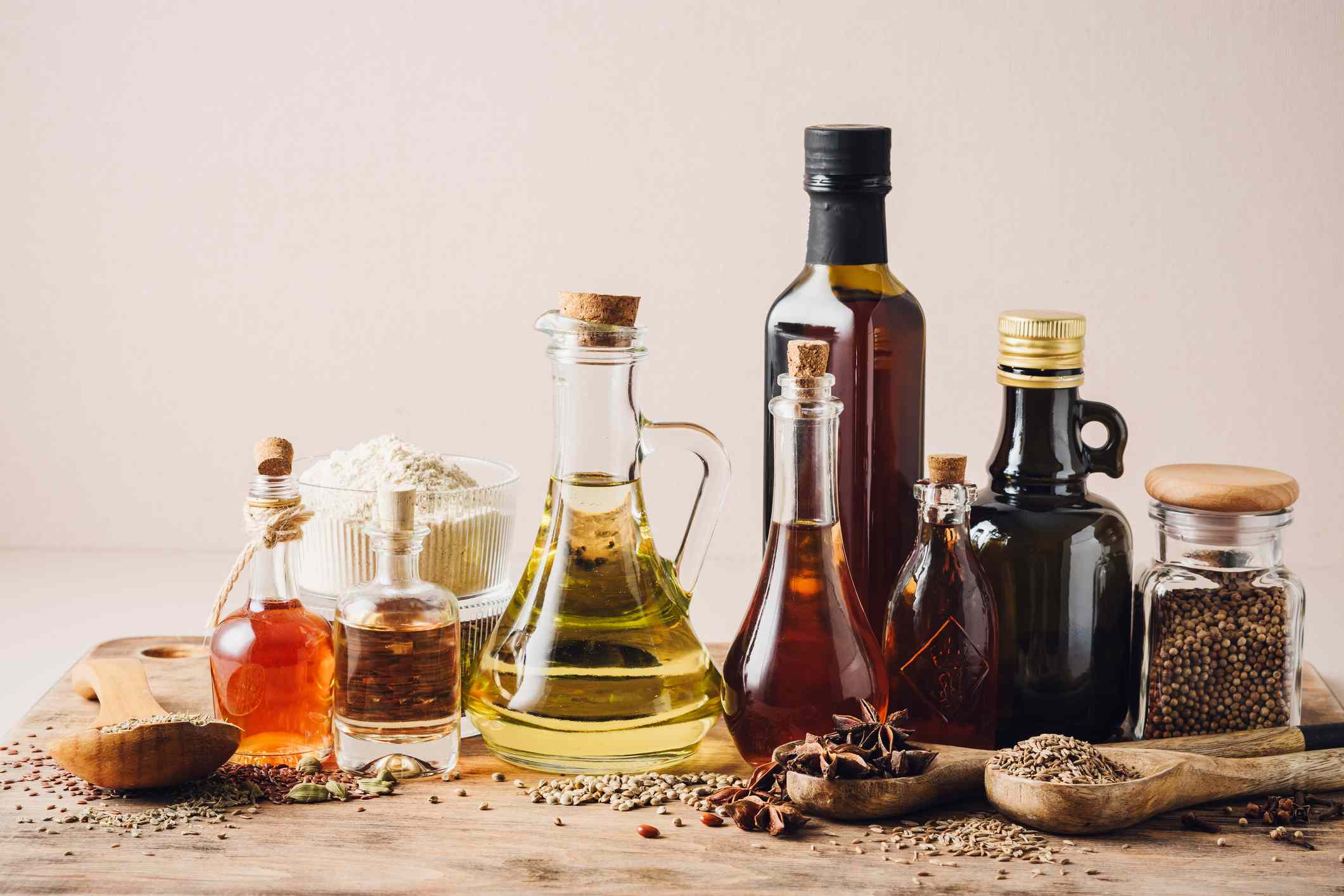
Choosing the right cooking oil can help support healthy cholesterol levels. Oils rich in unsaturated fats can lower LDL (“bad”) cholesterol and support heart health when used in place of saturated fats like coconut or palm oil.
al62 / Getty Images
Extra-virgin olive oil is rich in monounsaturated fats that promote heart health. “Oils rich in monounsaturated and polyunsaturated fats can help increase HDL cholesterol while lowering LDL cholesterol,” cardiologist Brett Sealove, MD, FACC, FAHA, told Health.
It also contains antioxidant polyphenols that help protect blood vessels and reduce inflammation. These compounds may also help prevent the oil from breaking down when heated.
Despite common belief, extra-virgin olive oil can be used for most home cooking. Typical stovetop temperatures fall within its smoke point range of about 350–410 degrees Fahrenheit.
Best uses:
Salad dressingsDrizzling over vegetablesSautéingGrilling
fcafotodigital / Getty Images
Like olive oil, avocado oil contains heart-healthy monounsaturated fats that support cholesterol balance and reduce LDL levels. Its mild flavor and high smoke point make it one of the most versatile heart-healthy oils.
“Oils with higher smoke points help prevent oxidation and the formation of harmful byproducts during cooking,” Michelle Routhenstein, MS, RD, CDCES, CDN, a preventive cardiology dietitian, told Health.
With a smoke point of up to about 520 degrees Fahrenheit, avocado oil is a reliable option for higher-heat cooking.
Best uses:
Roasting vegetablesSautéing meatsGrilling and high-heat cooking
Diy13 / Getty Images
Canola oil is low in saturated fat and contains a mix of monounsaturated fats and plant-based omega-3 fats that support heart health.
Research shows that replacing saturated fats with oils like canola may help reduce LDL cholesterol and the risk of heart disease. Sealove recommends versatile oils like canola for everyday cooking because of their neutral flavor and moderate smoke point.
Best uses:
SautéingBakingEveryday cooking
fcafotodigital / Getty Images
Soybean oil is one of the most affordable and widely used cooking oils. It contains polyunsaturated fats along with alpha-linolenic acid (ALA), a plant-based omega-3 fat.
“Soybean oil is one of the few commonly used and affordable oils that contains a significant amount of alpha-linolenic acid (ALA), an essential fatty acid that can be converted to heart-healthy, omega-3 fatty acids in the body,” Joan Salge Blake, EdD, RDN, LDN, FAND, a dietitian and nutrition professor at Boston University, told Health.
Evidence suggests that consuming about 1.5 tablespoons of soybean oil daily may reduce the risk of coronary heart disease.
Best uses:
Stir-fryingBakingEveryday cooking
alvarez / Getty Images
Walnut oil provides alpha-linolenic acid (ALA), an omega-3 fatty acid that supports heart health. Some studies suggest it may help lower inflammation and could offer protective effects against certain cancers.
Because walnut oil oxidizes easily when heated, it’s best used in cold or low-heat applications.
Best uses:
Salad dressingsDrizzling over cooked vegetablesIn dips
The type of fat in cooking oil can play a key role in cholesterol levels and heart health.
Monounsaturated and polyunsaturated fats help lower LDL cholesterolOmega-3 fats support heart health and reduce inflammationSaturated fats can raise LDL cholesterolTrans fats raise LDL and lower HDL cholesterol
“Saturated fats and trans fats have the opposite effect of healthy oils, raising LDL cholesterol and, in the case of trans fats, lowering protective HDL,” Sealove said.
Some oils may raise LDL cholesterol when used frequently because they are high in saturated or trans fats:
Coconut oilPalm oilButterBeef tallowPartially hydrogenated oils (trans fats)
According to Salge Blake, one common misconception is that all plant-based oils are heart-healthy.
“Some consumers assume that all plant-based oils are heart-healthy. They are not. Coconut oil has the highest percentage of artery-clogging saturated fat, as compared to other oils, even though it is sometimes touted on social media for being good for you.” she said.
The American Heart Association recommends limiting saturated fat to about 13 grams per day, and one tablespoon of coconut oil contains just over 11 grams.
Sealove said another mistake is using the same oil for every cooking method without considering its smoke point. He explained that unrefined oils like extra-virgin olive oil are best for dressings and finishing, while refined oils are better suited for high-heat cooking.
“Using one oil for every cooking method or overheating it beyond its smoke point can destroy nutrients and create harmful compounds,” Sealove said. “Storing oil in places with too much light or heat can also degrade its quality and health benefits,” he added.
For everyday cooking, Sealove recommends choosing oils with less than 4 grams of saturated fat per tablespoon and avoiding partially hydrogenated oils. Keeping a few healthy oils on hand helps match cooking methods and flavor needs.
Dining and Cooking