
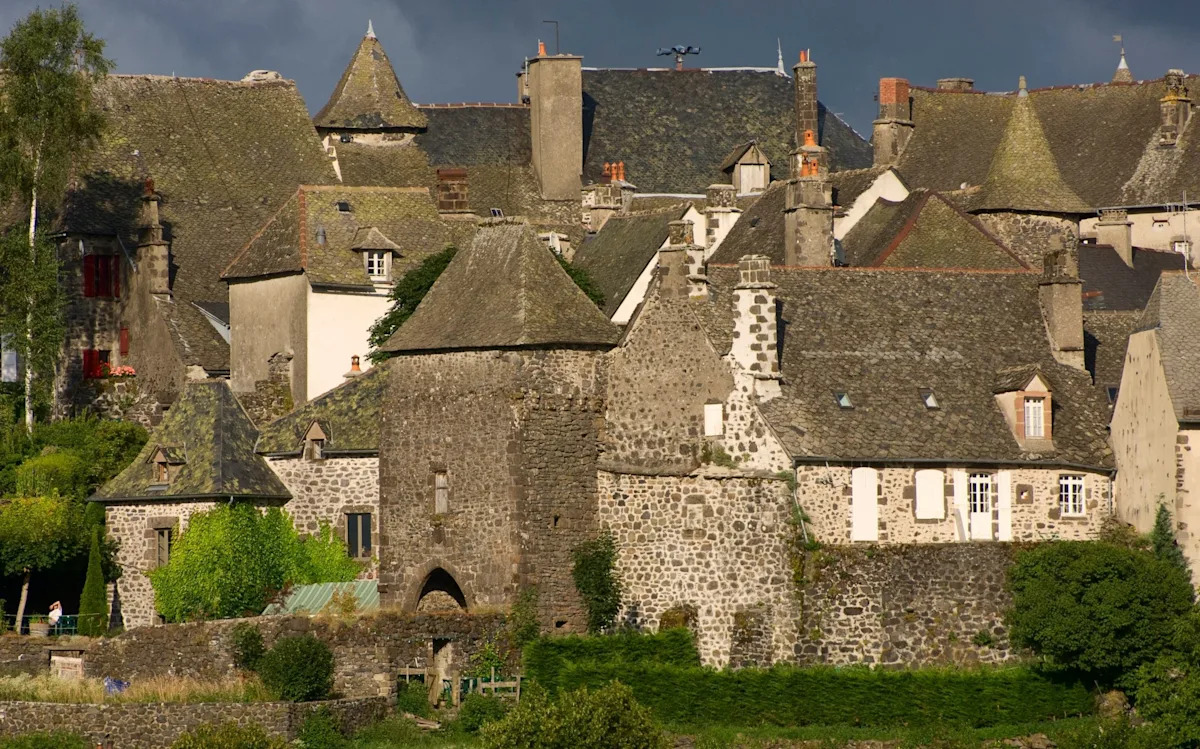
My love affair with Auvergne began at the age of 20, when I taught English in one of its small, sleepy towns. At first I bemoaned the lack of nightlife, but was soon won over by the abundance of green wilderness (I did, eventually, even track down a sweaty village nightclub). And within Auvergne, there’s no place quite so green and wild as the department of Cantal.
It has few residents, and welcomes even fewer tourists, largely due to its relative inaccessibility. It’s hard to find somewhere more deeply embedded in France’s diagonale du vide (empty diagonal). For Britons, it became a little easier to reach this year, thanks to the introduction by Ryanair of twice-weekly flights to Clermont-Ferrand, a two-hour drive away. Fortunately, I can’t see Cantal being spoilt by mass tourism, no matter how cheap the flights are.
Hire a car from Clermont-Ferrand. The poor public transport options aren’t worth the time or effort – take it from someone who has researched them extensively. Furthermore, the higgledy-piggledy stone villages and fields full of russet, long-horned cows offer the kind of views for which road trips were made.
This time, I started on the shores of Lac de la Siauve, taking my mum and puppy along for the ride. From our glamping site (Huttopia Lac de la Siauve) we could watch the sunset over the water, and we spent our days on undulating woodland walks which the more hardcore tackled on mountain bikes. A particularly pretty path along the lake took us to Château de Val, a turreted castle that wouldn’t have looked out of place in a Dracula adaptation.
The further south we went, the more the scenery looked like a fantasy film. The medieval town of Salers was like Godric’s Hollow from Harry Potter, the roads to reach it reminded me of The Shire. A village fête was in full swing when we arrived, which was the perfect opportunity to gorge myself on samples of the local cheese, imaginatively named ‘Salers’.
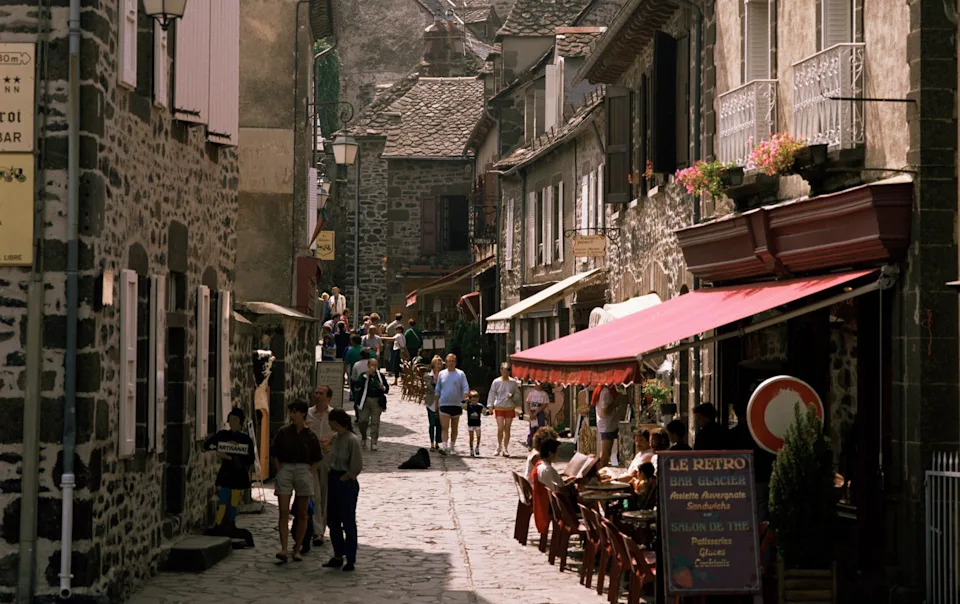
The medieval town of Salers is likened to the wizarding village of Godric’s Hollow from Harry Potter – Robertharding/Alamy
It’s near impossible to find Salers cheese outside France. It’s like a crumbly, extra mature cheddar, so tangy it almost hurts your teeth. I followed it up with a bourriol, Cantal’s answer to a Breton galette, oozing with Cantal cheese.
Food is reliably good in Cantal. You can do the fine dining kind – at Serge Vieira, run by Relais & Châteaux and with two Michelin stars, you can feast with the most sumptuous views of Cantalien volcanoes. Or you can do what we did, and eat in a cowshed.
I thought we’d got lost on the way to Bulle de Salers. The Waze app isn’t the most reliable in these parts, mixing up roads and goat tracks, and as we drove down the heavily potholed lane, all I could see in front of me was a herd of cows and a rather battered, if atmospheric-looking, stone buron (Cantalien shepherd’s hut).
There was no sign on the closed door, but his was allegedly home to the restaurant that had won France’s best fondue in 2022, beating every single restaurant in the Alps with its five cheese extravaganza made from all the Auvergnat AOPs (Salers, Cantal, Bleu d’Auvergne, Fourme d’Ambert and Saint-Nectaire). In the fading light, I half expected to push on the door and find myself staring at a bovine herd.
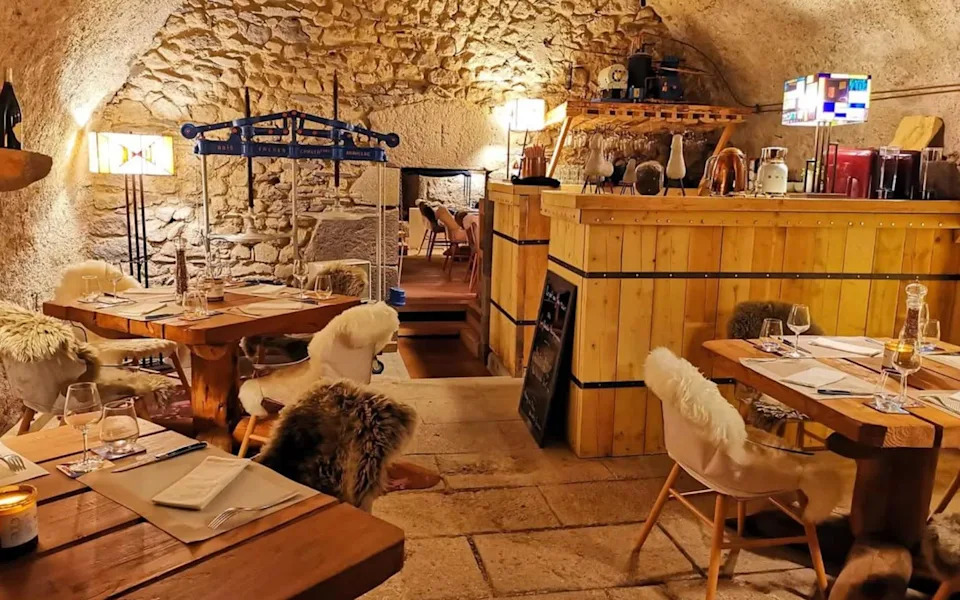
Bulle de Salers restaurant, famous for its five-cheese fondue
Those who’ve stayed in a Moroccan riad will understand the through-the-looking-glass effect of Bulle de Salers. From muddy fields, I was suddenly in the most perfect chalet restaurant I’d ever seen. The bar was a well-stocked, colourful speakeasy, a fire crackled in the hearth, and the furnishings were an ultra-cool, curiosity-shop mismatch, the kind that looks thrown together but is actually carefully curated. The Auvergnat fondue made the Alpine version look positively beige in comparison.
I’d encourage any foodie to go to Cantal just to eat, a large chunk of w
hat I did, but burons like this one fascinated me more and more as I travelled. They’re the ultimate example of rural gentrification. From the outside, they’re often ramshackle, while seriously swanky inside. Take Buron de la Chambe, for example, with its stone bathtub by the fire like something from Outlander. There’s often quite a walk involved to reach buron-gîtes, although many owners organise 4×4 transfers.
Cantal’s highest peak, an extinct volcano, is Le Plomb du Cantal at 1,855 metres. People ski here in winter, although I won’t argue that Auvergnat skiing beats the Alps in the same way as their fondue.
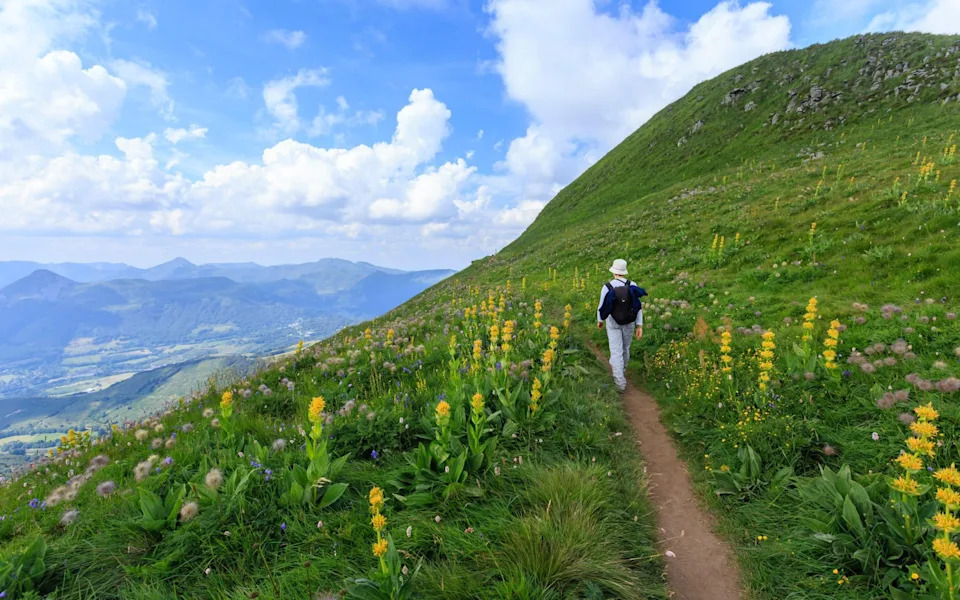
Le Plomb du Cantal, the highest peak in the region – Herve Lenain/Alamy
Keen hikers can get there and back in a day from Le Lioran (buckle up for 1,300 metres of elevation gain), or you can cheat and take the cable car. Puy Mary, the second highest peak, is the best for views, although both times I’ve been (in May) it snowed. The cloud cover sweeps in quicker than a sea mist here – it’s often summer in the valley and winter up above – but there’s a helpful webcam to let you know if it’s worth driving all the way up from the valley.
Cantal is at its finest in May-June and September-October, although even in the height of summer the only place you’re likely to get crowds is at Puy Mary. Good food, good digs and good hikes, in my opinion you can’t beat it.
Broaden your horizons with award-winning British journalism. Try The Telegraph free for 1 month with unlimited access to our award-winning website, exclusive app, money-saving offers and more.
Dining and Cooking