
Home
News
By Andrew Catchpole
Published: 05 March, 2026
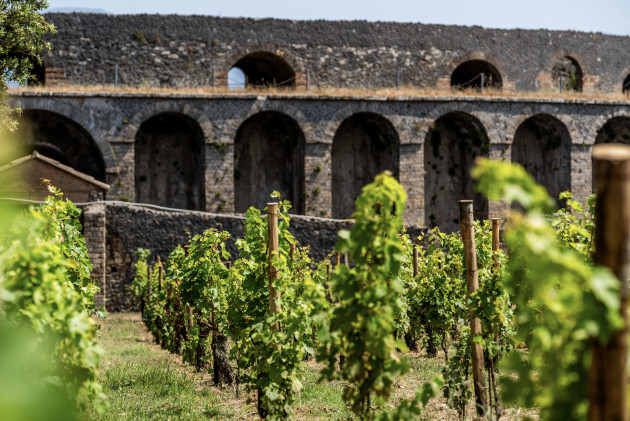
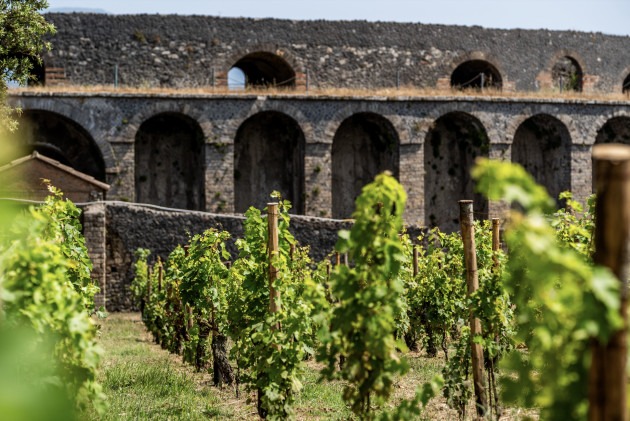
One of the more fascinating presentations on wine took place in late February in London, when the partners in an inventive Italian wine project began their international promotion of what was billed as ‘Cultivating History’. The setting was the Italian Cultural Institute (ICI) in Belgrave Square, and the cultivation in question was the planting of vines within the boundaries of the Pompeii Archaeological Park for The Pompeii Wine Project. And the aim of this ambitious initiative is – in the words of the Project organisers – ‘to revive the historical role of wine as an ambassador of civilization’.
By any measure it’s an interesting venture, bringing together this world-famous archaeological site with wine production, courtesy of Campania producer Feudi di San Gregorio, in a public-private partnership that also includes local government. And this with the aim of promoting not just Pompeii, but the culture and heritage of Italy, along with its gastronomic and vinous offerings, all in a sustainable way.
“We are promoting what we are doing for the future, by using relics of the past”, was how ICI London’s director Francesco Bongarrà put it, introducing the discussion.
With one plot already planted, to a mix of regionally typical indigenous vines, five more plots are now being populated with vines, bringing the likes of Greco and Aglianico, plus Piedirosso, Falanghina and Sciascinoso, to the site. A winery and tasting area is being constructed too, also within the boundaries of ancient Pompeii, with the idea that the focus on wine will help connect visitors with the traditions and heritage that traces back to the Roman era.
Gabriel Zuchtriegel, director general of Pompeii Archaeological Park, said: “This is about the history of agriculture, and culture, which have the same root.
“The Italian landscape has been created, and is still being created, by the women and men that still work the land. We are looking to cultivate vines in vineyards that were vineyards 2,000 years ago, inside the city and in the surrounding areas.”
Zuchtriegel painted a picture of the day, almost 2,000 years ago, when Vesuvius fatally erupted, destroying Pompeii and yet preserving its remains for archaeologists and visitors alike today.
“In 79 AD people didn’t [have the image] of Vesuvius as a volcano covered in snow, it was covered in vineyards,” he said. “This is to show that it is very hard to separate tangible and intangible heritage – the buildings and landscapes of Pompeii are tangible, but not traditions and culture. This is about experience and creating awareness around traditions, and knowledge that we are losing today.”
Antonio Capaldo, president of Feudi di San Gregorio, described the project as “a little bit ambitious, creating a unique wine experience for the world”, adding that he was “excited to work as a producer with volcanic soils that are untouched for two millennium”.
On the practical, viticultural and winemaking side, there are to be a mix of more traditionally farmed vines and ancient albarello training, traditionally grown up on trees, with both tonneau and amphora used in the cellar. In all other respects, the winemaking will be modern, though fully organic and sustainable, as it would have been in Roman times.
“This is also about biodiversity, using indigenous varieties, we need to enhance the value of what we do, of our own heritage,” Capaldo added. “The Roman’s planted vines and olives wherever they went, the message was ‘we are here to stay’, so this is central to our culture.”
In something of a sideswipe at our ever faster and self-absorbed modern culture, the Pompeii Wine Project was summed up as “the ‘us, us, us’ of longevity, not the ‘me, me, me’”, with wine described as being a component of bringing people – and thus society – together.
While some experimental batches will be produced ahead of this time, 2028 is likely to see the first, small, commercial bottling as the vines come more fully into production. And the resulting wines will be fascinating to see.
Other articles of interest
Dining and Cooking