
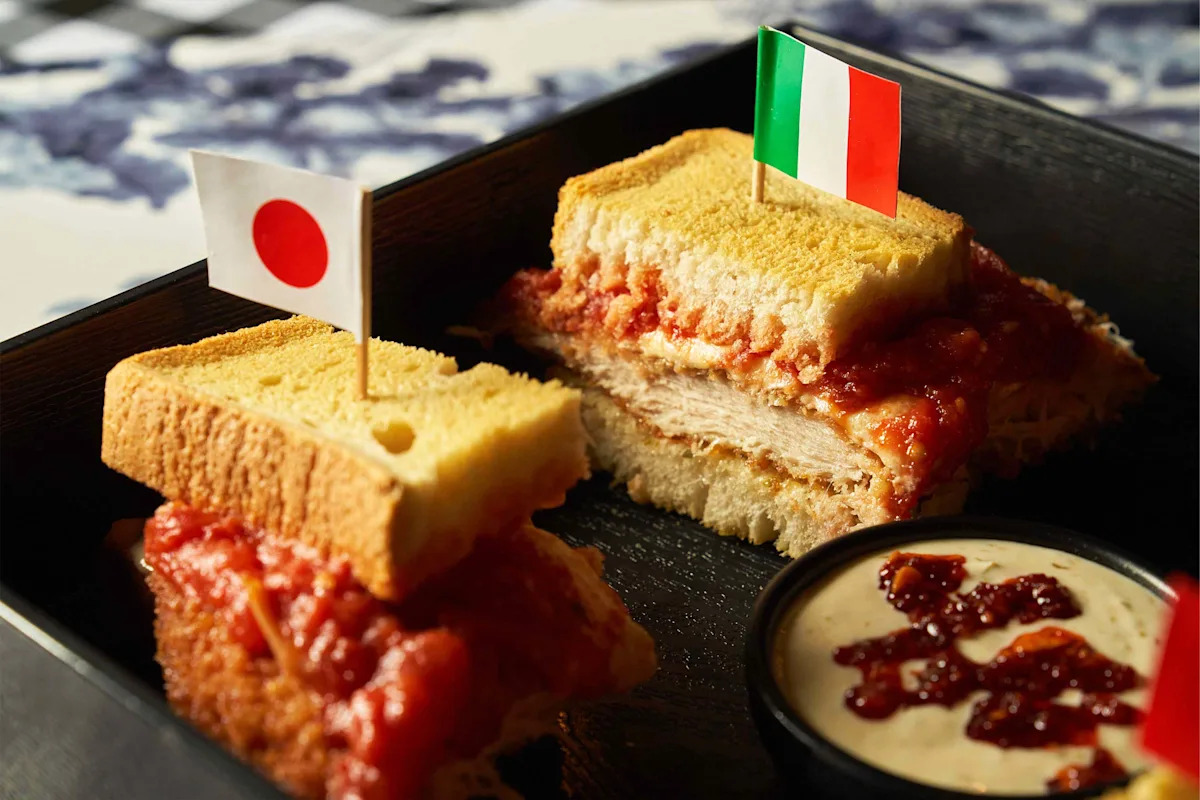
Itameshi is a term that refers to Japan’s fusion with Italian cuisine (“Ita” is taken from “Italia,” while “meshi” means “meal”). It’s embodied through dishes like F&W 2016 Best New Chef Brad Kilgore’s dashi-brined and breaded chicken breast topped with caper aioli, mozzarella, and chili crisp that’s served at his OISE Ristorante in Fort Myers, Florida. Kilgore calls it “Okinawan chicken parm,” and he serves it garnished with miniature Japanese and Italian flags.
Introduced in the 1920s, itameshi has seen renewed interest in recent years. It’s made waves in Tokyo, with ripples that have reached stateside.
Itameshi is not new in the U.S. Chef Christine Lau of New York City’s Kimika, which opened in 2020, helped popularize dishes like uni spaghetti, for example. But a wave of openings across the country suggests this fusion is again resonating with chefs and diners alike.
Related: 8 Japanese Comfort Foods That Have Won the World Over
What is itameshi?
Itameshi isn’t just a combination of ingredients or techniques, but a blend of culinary traditions, says Wanchai “Tom” Intawong, co-owner and chef of Miso Mozza in Providence, Rhode Island’s first itameshi restaurant which opened in October 2025.
“What makes it special is the harmony between two cultures that both deeply respect seasonality, craftsmanship, and high-quality ingredients,” he says.
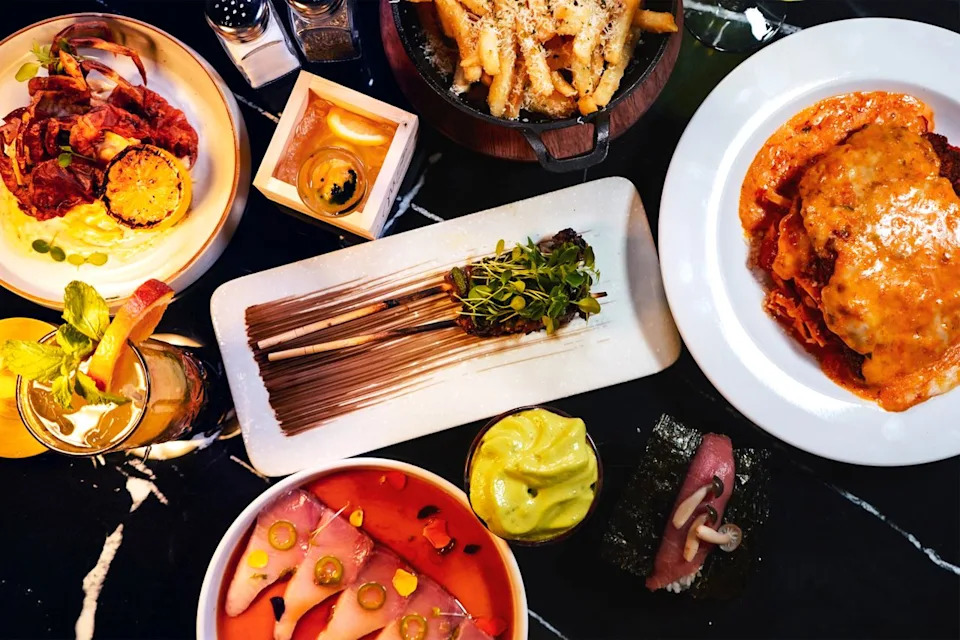
A spread of dishes from Miso Mozza.
Credit: Photo By pvdcontent / Miso Mozza
According to Intawong, who served as a head chef in Italian restaurants before he opened Miso Mozza, a key link between Japanese and Italian foods is umami, a savory taste associated with two flavor-enhancing acids, glutamates and nucleotides. Many ingredients common to each cuisine, such as tomatoes, Parmigiano-Reggiano, mushrooms, miso, seaweed, and tamari, are naturally umami-rich.
The building blocks of the cuisine
It’s umami, “the flavor of deliciousness,” that Kilgore says is his touchstone when he creates itameshi dishes. In summer 2025, Kilgore opened OISE, followed by ama in San Francisco that fall. Both feature menus inspired by his Sicilian grandmother and Japan’s approach to Italian food.
Kilgore substitutes Japanese herbs like shiso leaves for Italian standbys like basil, adds miso to lobster bisque, and uses togarashi in place of chile flakes. Popular dishes include a yuzu-kosho Caesar salad and “THE Caramelized Meatball,” an oversized Wagyu beef meatball bathed in caramelized fondue and set atop red miso marinara.
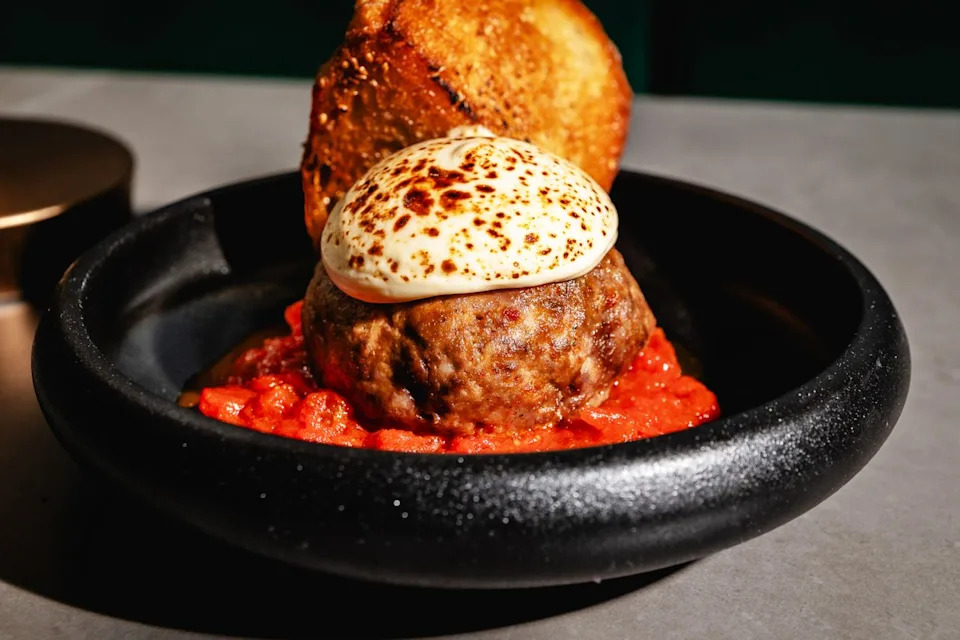
The popular caramelized meatball at OISE in Fort Myers, Florida.
Credit: Photo By German Garcia / Bradley Kilgore
“The hurdle that we have to overcome is that people think Italian-Japanese is chicken Parm melted over sushi rolls,” says Kilgore. Once customers try itameshi, though, he says they’re fast fans. Intawong agrees. “It feels intuitive once you taste it,” he says.
In Utah, Felipe Oliveira and Hiro Tagai opened Junah, an itameshi restaurant and a 2026 James Beard Award semifinalist for Best New Restaurant. The first of its kind in Salt Lake City, Junah regularly welcomes guests new to the style.
Oliveira recommends that newcomers start with Junah’s mentaiko pasta, made with tonnarelli noodles, shiso, and sun-dried tomato. “It follows the familiar Italian structure of a pasta dish, yet the flavor profile is unmistakably Japanese — layered, briny, and aromatic.”
Related: From Shoyu to Tonkotsu — Every Type of Ramen to Know Before Eating Your Way Through Japan
An approachable comfort food
Oliveira says some customers may expect itameshi dishes to be overly complex or experimental, “but instead, they find something balanced and approachable. Itameshi can be refined, but it can also be comforting.”
One example is Junah’s arancini. In parts of Italy, these fried risotto balls are shaped to resemble Sicily’s iconic volcano, Mount Etna. “We reimagine that concept by forming ours into the triangular shape of Japanese onigiri,” says Oliveira.
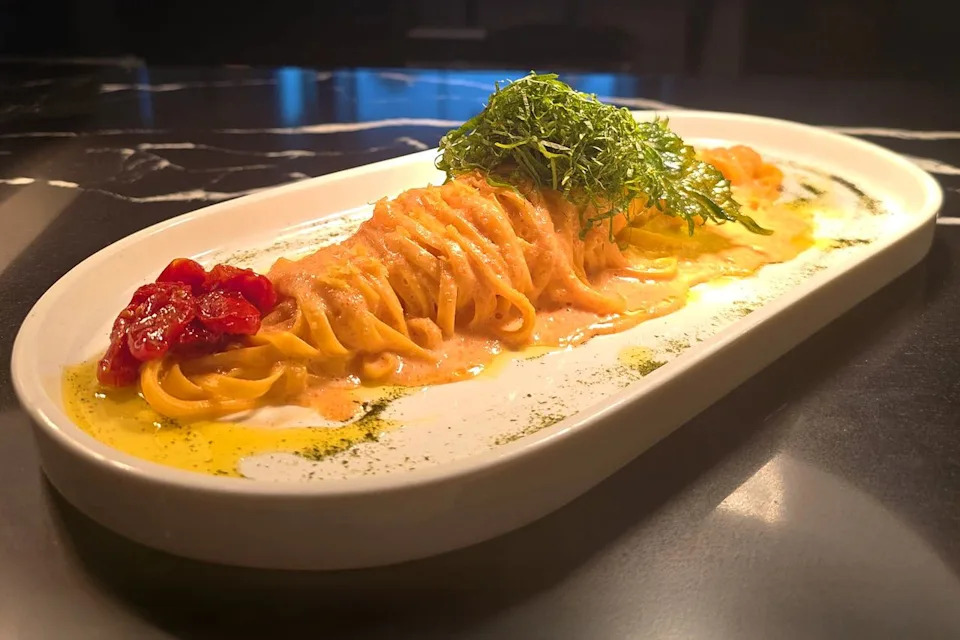
The mentaiko pasta, made with tonnarelli noodles, shiso, and sun-dried tomato, at Junah.
Credit: Courtesy of Junah
Instead of a classic ragù filling, Junah’s arancini features fresh buffalo burrata. They’re fried, and then finished with cured salmon roe, ikura, and placed on nori cream sauce.
“It is playful but intentional, honoring both traditions while creating something that feels cohesive and original,” says Oliveira. Much like itameshi itself.
Read the original article on Food & Wine
Dining and Cooking