
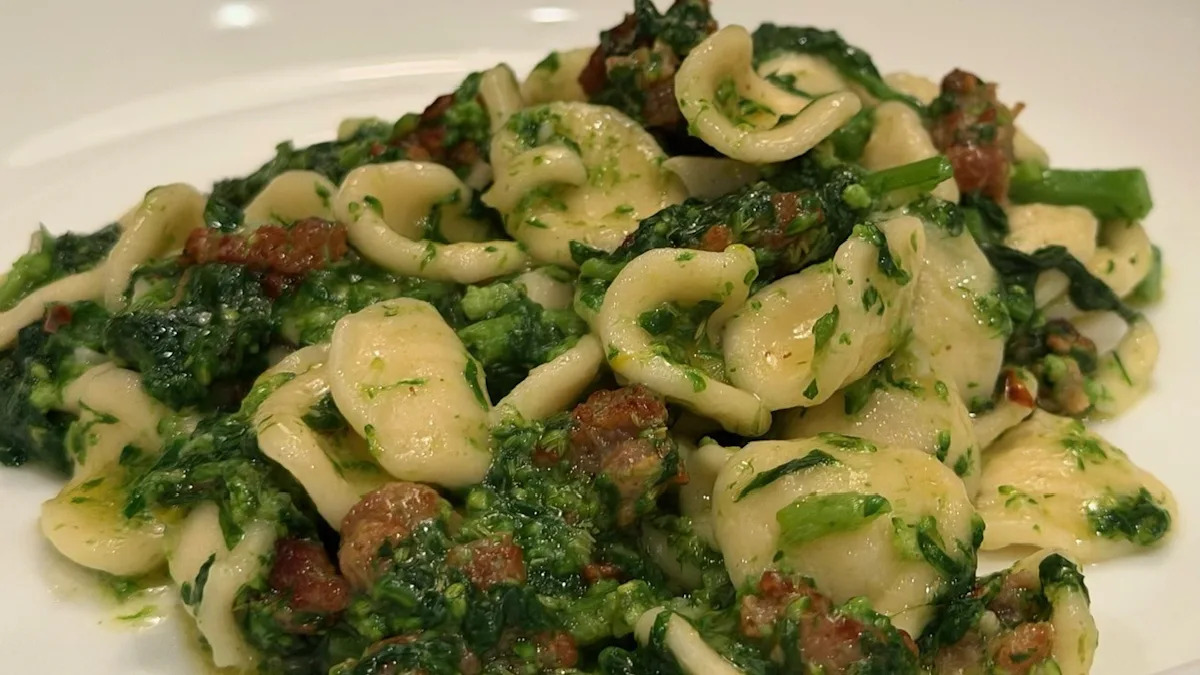
Some dishes simply feed you, while others define you. For me, orecchiette with rapini falls into the latter category. A Southern Italian dish at its core, this pasta-and-veggie recipe is culinary shorthand for the rugged, sun-drenched landscape of Puglia, where it’s most famous.
It’s a dish where the assertive punch of bitter greens meets the “little ear” pasta, creating a textural dialogue that has sustained generations. Growing up in my family, this wasn’t merely a recipe scribbled on a card; it was a weekly ritual. The steaming, fragrant meal spanned the distance between our ancestral Italian roots and our vibrant Italian-American table for as long as I can remember.
In the Old Country, this pasta staple was built on necessity and what was easily available. The peppery bite of rapini stood alone, tempered only by the taste of garlic (as meat was a rare luxury). However, when my family immigrated to the United States, the dish underwent a classic New World evolution. The addition of savory, browned fennel sausage upgraded the meal to orecchiette with sausage and rapini, a robust, soul-warming main course that my family loved.
Despite the meaty addition, the soul of the recipe remained untouched. What never changed was the “old-way” technique my grandmother used to make this dish shine. She understood that the secret wasn’t just in the ingredients, but in how they were cooked, ensuring that every bite told a story of survival, adaptation and home.
I’ve recreated my grandmother’s orecchiette with sausage and rapini recipe below, following her simple-but-effective approach. It’s a super comforting, feels-like-home type of meal that nods to our Italian roots. Make it once, and I bet it will be a favorite at your house, too.
Related: Ina Garten’s Weeknight Bolognese Gives You Slow-Simmered Flavor in 30 Minutes
😋😋SIGN UP to get delicious recipes, handy kitchen hacks & more in our daily Pop Kitchen newsletter🍳🍔
What Makes My Grandmother’s Orecchiette With Sausage and Rapini Recipe So Special?
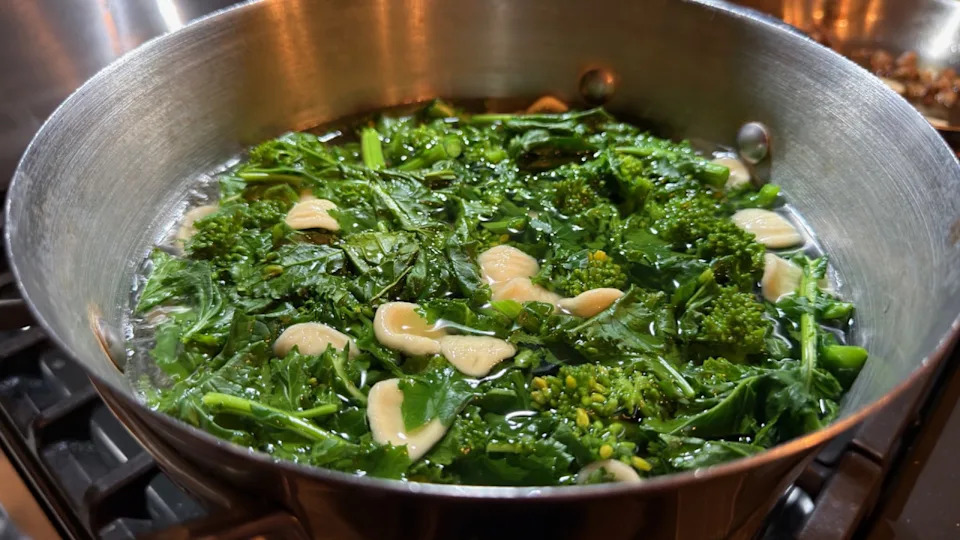
The big appeal of this recipe doesn’t lie in any fancy ingredients, but rather in clever cooking techniques that help build flavor effortlessly. My grandmother didn’t believe in blanching the rapini separately or fussing with a sink full of pots. Instead, the greens went straight into the same pot of heavily salted water as the pasta. By the time you scooped them out and tossed them into the pan, the pasta was already seasoned from the inside out, ready to marry with the sizzling sausage.
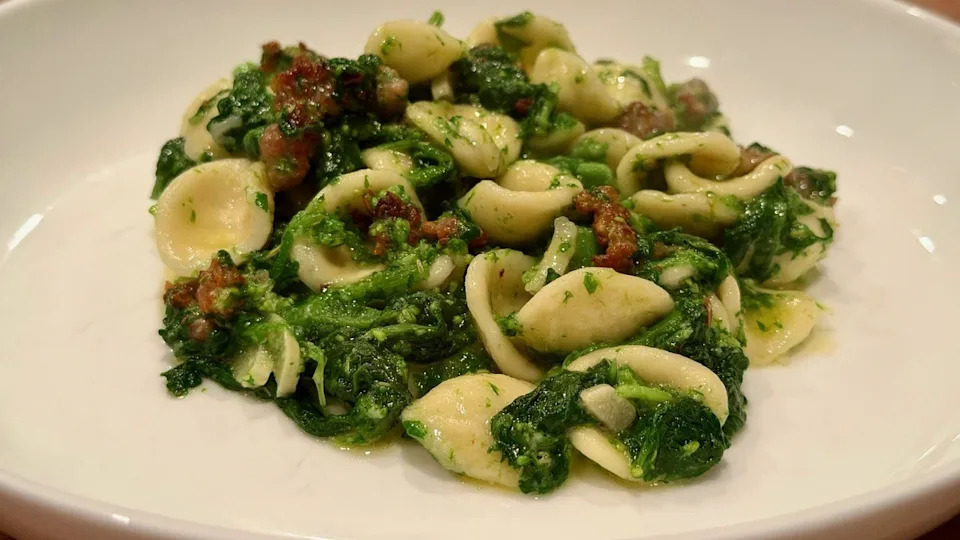
Courtesy Theresa Greco
(Courtesy Theresa Greco)
That single decision is where the magic happens. Dried orecchiette typically requires 10—12 minutes to reach a perfect al dente, but the rapini is added to the pot only for the final five minutes. This sharing of the pot is more than a matter of efficiency; it’s a necessity. As the pasta releases its starch and the greens begin to break down, they transform the boiling water into a savory, mineral-rich base. When tossed with sausage and garlic, these elements emulsify into a vibrant green sauce that clings to every piece of pasta, creating a richness that feels indulgent without a drop of cream.
The combination of ingredients is simple, but perfect. The assertive bitterness of the rapini finds its perfect counterpoint in the savory, spiced richness of the sausage, for a bowl of pasta that is quintessentially Italian-American. It’s the taste of our family history forever rooted in the quiet, enduring wisdom of my grandmother’s kitchen.
Recipe: Mister Rogers Loved This Corn Pudding Recipe From His Grandmother, So I Gave It a Try
What Is Rapini?
Rapini, also known as broccoli rabe, is a leafy green vegetable known for its assertive bitterness. Despite the name, it’s not closely related to broccoli. Instead, rapini belongs to the turnip family, which explains its sharp, peppery flavor and tender stems. Also, unlike broccoli, rapini requires minimal cooking time and is often blanched or boiled briefly to tame its bitterness, then sautéed with aromatics. Best of all, the entire plant is edible, including the leaves, stems and small florets, which soften quickly when cooked.
Related: The Viral Recipe That Has Us Rushing Out to Buy Broccoli
Why Orecchiette Is the Right Pasta for This Dish
Orecchiette, which means “little ears” in Italian, is traditionally paired with rapini in Southern Italy for both practical and structural reasons. While other short pasta shapes may suffice, orecchiette’s unique architecture ensures a perfect distribution of greens in every bite. The little pasta cups catch the sauce and goodies and the firm al dente center provides a nice contrast to the softened rapini, maintaining a balance of texture and flavor.
Ingredients Needed To Make Orecchiette with Sausage and Rapini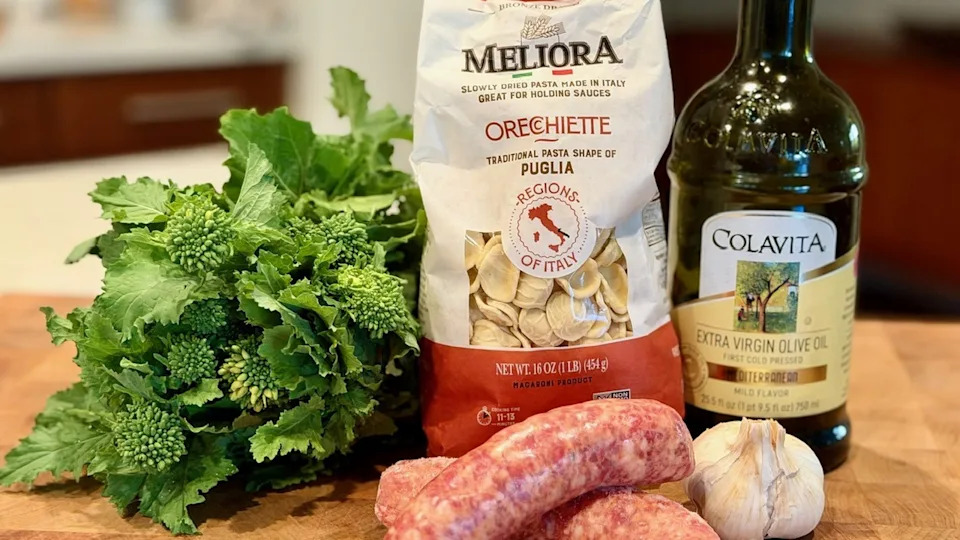
Courtesy Theresa Greco
(Courtesy Theresa Greco)
To pull this dish together, you’ll need a few simple Italian ingredients. It’s a short list, so buy the best versions that you can get. Grab a bunch of fresh rapini and your favorite Italian sausage, and you’re halfway to a classic Southern Italian dinner. Here’s the full ingredients list:
1 bunch rapini (or broccoli rabe)
1 lb Italian sausage (spicy or mild)
Red pepper flakes, to taste
Related: The ‘Unexpectedly Gourmet’ Pasta Recipe That’s Changed My Noodle Game Forever
How To Make Orecchiette With Sausage and Rapini
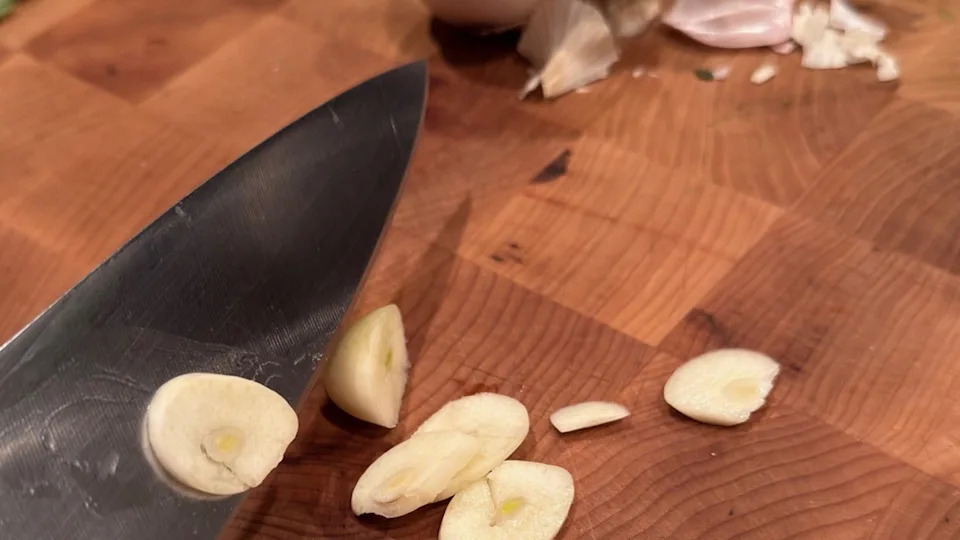
This dish starts by slicing the garlic into paper-thin slivers.
Courtesy Theresa Greco
(Courtesy Theresa Greco)
Next, wash and chop the rapini into bite-size pieces, discarding any woody stems.
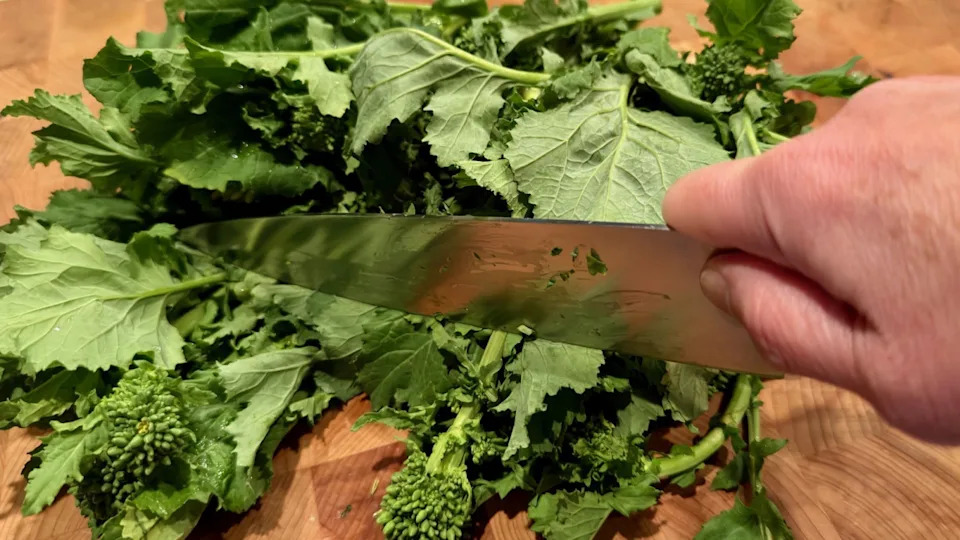
Courtesy Theresa Greco
(Courtesy Theresa Greco)
Remove the sausage from its casing and tear it into small chunks.
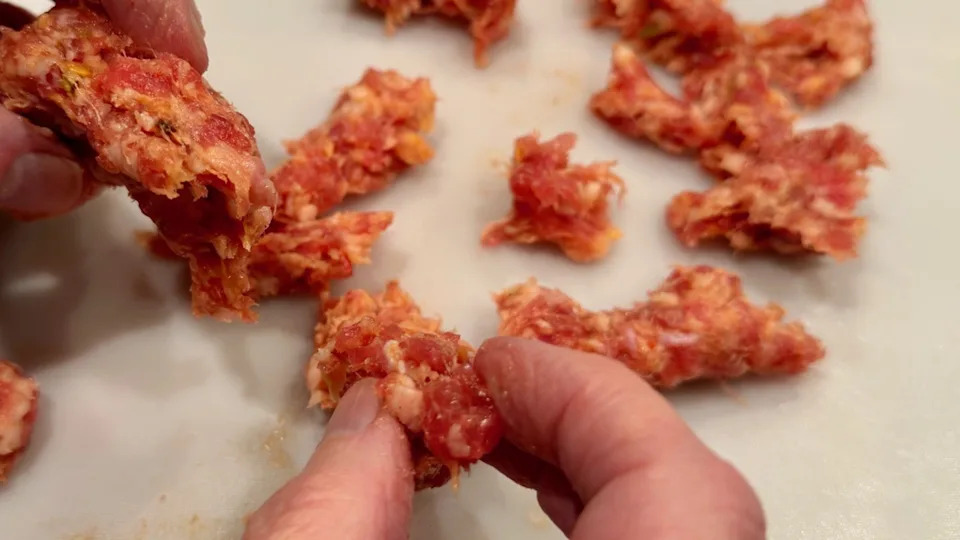
Courtesy Theresa Greco
(Courtesy Theresa Greco)
With your prep complete, heat a drizzle of olive oil in a wide pan and brown the sausage, crumbling it with a spoon as it cooks.
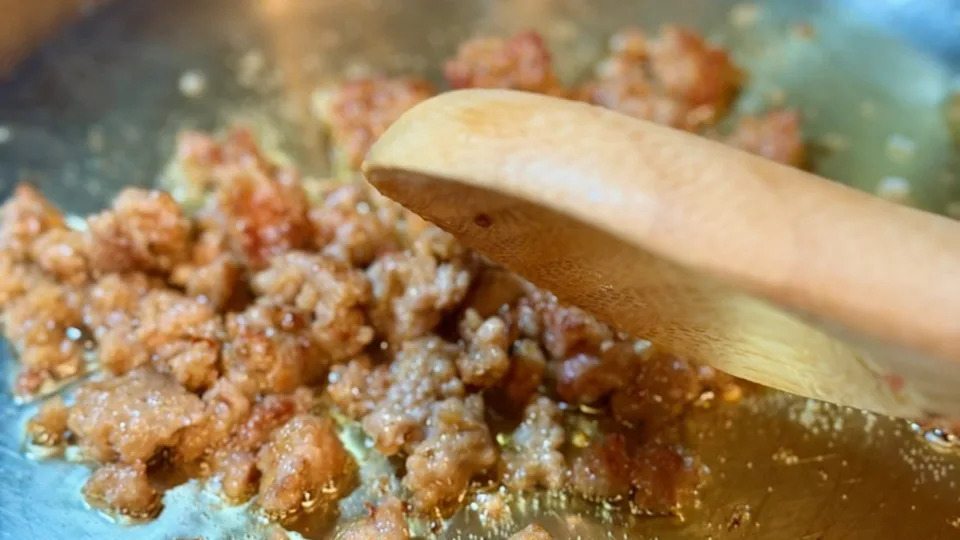
Courtesy Theresa Greco
(Courtesy Theresa Greco)
Once browned, clear a space in the center to sauté the garlic and red pepper flakes until fragrant, then set the pan aside.
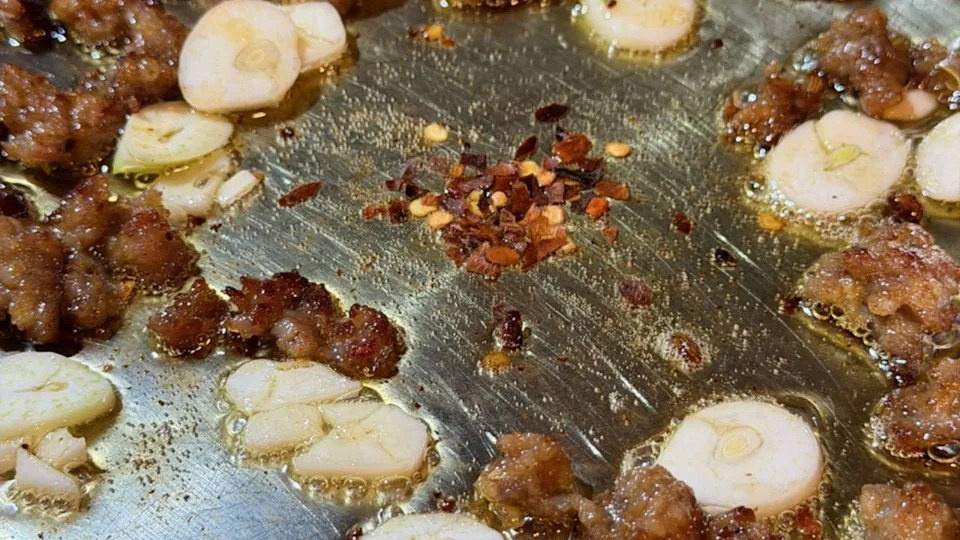
Courtesy Theresa Greco
(Courtesy Theresa Greco)
In the meantime, bring a large pot of heavily salted water to a boil and drop in the orecchiette. Five minutes before the pasta reaches al dente, add the rapini directly to the boiling water to blanch. Before draining, reserve a cup of the starchy “liquid gold” pasta water.
Courtesy Theresa Greco
(Courtesy Theresa Greco)
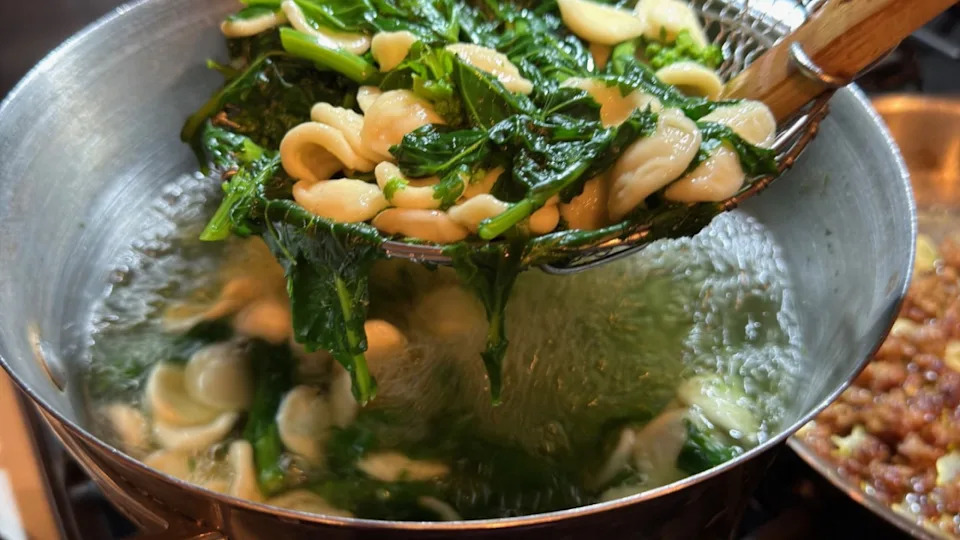
Using a pasta spider or a slotted spoon, transfer the pasta and greens into the pan with the sausage, tossing everything over medium heat.
Courtesy Theresa Greco
(Courtesy Theresa Greco)
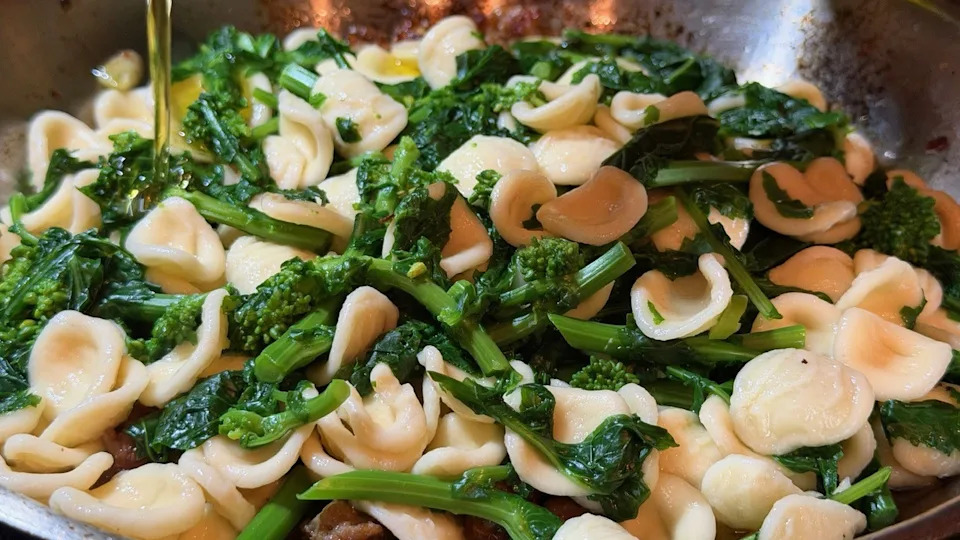
Gradually splash in the reserved water to create a silky, emulsified sauce that clings to every “little ear” of pasta. Serve hot with a final drizzle of olive oil, if desired.
Courtesy Theresa Greco
(Courtesy Theresa Greco)
Related: 41 Easy Pasta Meals to Feed a Crowd and Have Leftovers for the Week
3 Tips for Making This Pasta Dish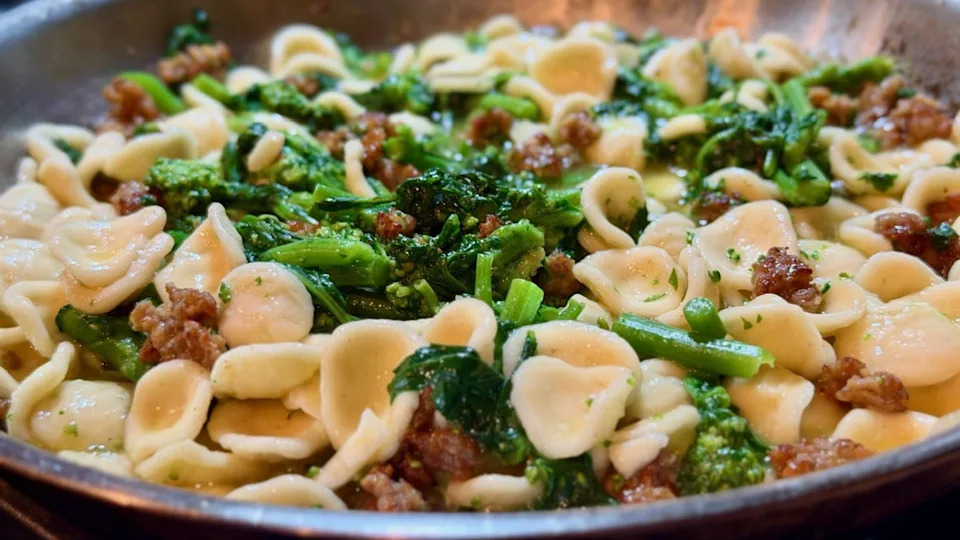
Courtesy Theresa Greco
(Courtesy Theresa Greco)1. Hold on to that pasta water
Never drain all of your pasta water down the sink. That starchy liquid is “liquid gold.” When tossed over the final dish, it helps to create a silky emulsion. This is a good tip to keep in mind for pretty much any pasta dish you make.
2. Use plenty of olive oil
Don’t be afraid of being a little heavy-handed with the olive oil. A final, generous drizzle of high-quality extra virgin olive oil right before serving adds a fresh note and completes the “old-world” taste this dish is known for.
3. Add some cheese
To make this pasta dish even more delicious, serve it with freshly-grated Pecorino or Parmesan cheese.
Up Next:
Related: I Mastered Julia Child’s Beef Bourguignon and It Was the Most Rewarding Meal I’ve Ever Made
This story was originally published by Parade on Feb 6, 2026, where it first appeared in the Food & Drink section. Add Parade as a Preferred Source by clicking here.
Dining and Cooking