
“Vinegar” seems an odd answer to the question, “What cooking ingredient would you not live without?”
Yet Bob Miller, chef at Mediterranean-influenced restaurant Symposium Mediterranean Restaurant, would not want to be stuck anywhere without balsamic vinegar.
The very special and sometimes surprising characteristic of balsamic vinegar is its versatility. Use it on meats, cheeses, vegetables or ice cream as a condiment or, in the French way, as a digestif, say chefs, cooks, purveyors of fine food and travelers to Italy.
The classic (numbered and expensive) versions of this unsweetened yet syrup-like vinegar are aged for many years and distilled into a series of smaller and smaller casks. They begin as white grapes grown in the province of Modena in Italy and are certified only after rigorous tasting ceremonies, according to Bill Mandros.
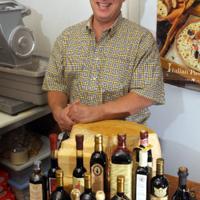
One at a time, Mandros talks about the bottles in his personal stash of fine balsamic vinegars. He looks at them with passion but is not about to open a gifted $200 consortium-approved bottle of balsamic vinegar, containing a mere 3.3 ounces. It’s like a priceless wine, he said.
Proper preservation is an important part of the price, said Mandros, who with his brother, Dino, operates Mandros Imported Foods at the corner of Lemon and North Charlotte streets.
“The vessel must be intact. It must be handled carefully. Keep it cool but not refrigerated and agitate it a little every now and then to keep it from stagnating,” he said.
“Once you open a bottle of balsamic (vinegar), it will begin to stagnate. So use it within six months.
“Between inexpensive and certified, there are many stages,” said Mandros. “A $20 balsamic (vinegar) can be very, very, very good, and within this price range, you aren’t afraid to use it. Even so, a little bit goes a long way.”
“If we assume price is related to quality, I can tell the difference between a $10 and a $20 dollar bottle of balsamic (vinegar). Between $10 and $60 I can tell the difference. But between $60 and $100 bottles I probably cannot tell,”said Sam Neff.
Neff’s passion for balsamic vinegar goes along with his passion to get rid of the mystique. At the S. Clyde Weaver store in East Petersburg, Neff, co-owner of the store, has installed a row of metal containers – each with its own spigot – filled with balsamic vinegar of several prices, countries of origin and flavors.
Both Mandros and Neff say the latest twist in balsamic vinegar is the addition of other flavors to the essence of the grapes. Mandros sells vinegars aged in casks of cherry wood and other native wood flavors. Neff introduced balsamic vinegar flavored with pomegranate and other fruit tastes.
Tasting is the important thing, according to Neff. He offers samples and sells the vinegar by the ounce to customers who bring in dark-colored bottles that will keep the light from breaking down the vinegar. If needed, he will sell you the bottle as well.
“Balsamic (vinegar) makes a great digestive” Neff said. Both Neff and Mandros sip the vinegars while they are cooking. Balsamic vinegar is a 4 percent vinegar, and that “pushes the American mind,” said Neff because of the expectation of a high level of acidity or sourness.
American vinegar is standardized at 6 percent acidity. If you want a sour vinegar, a neutralizer like that, said Neff, buy a good malt or cider vinegar not balsamic.
A customer, Donna Hollinger of Elizabethtown, approached Neff while he was talking about balsamic vinegar. She was looking for “balsamic cream,” a syrup she bought on a recent trip to Italy.
“Make a reduction,” said Neff. He suggested she use a diffuser or a very gentle heat and “not your best balsamic (vinegar)” until you learn how to get it just right. “It’s very easy to burn the sugar in the process,” he said.
Hollinger recommended a flat bread, a crostini made with asiago cheese and olives, to dip into balsamic vinegar as a snack or hors d’oeuvre. She ate balsamic syrup on ice cream in Italy and, recently, used it instead of butter on Lancaster County fresh sweet corn on the cob. She is intent on following the balsamic vinegar trail she found in Italy.
Reduced or syrupy balsamic vinegar is the real thing and works well as a drizzle, say these chefs because the dark color will bleed onto light colored foods like Buffalo Mozzarella, a favorite cheese of Mandros.
Drizzle it in a design on the plate, and swipe the food through it, just enough for your own taste, Neff suggested.
Taste buds are like black and white cows, said Neff, no two configurations are alike and no two sets of taste buds will perceive balsamic vinegar the same way.
“Food needs to be accessible, that is my mantra,” said Neff. “Intimidation keeps you from exploring. There should be no arrogance with good food.
“When it comes to learning about balsamic (vinegar), measure (the amount) with the eye and explore.”
E-mail: rstrickler@lnpnews.com
Success! An email has been sent to with a link to confirm list signup.
Error! There was an error processing your request.
Dining and Cooking