
A reader asks: I was recently made a godparent and read somewhere that I should buy a case of wine for my godchild to enjoy or sell when they come of age. What should I buy?
This is a lovely idea and one that your godchild will remember for decades to come. When they reach adulthood, they can either enjoy their wine over the next few years or sell it, hopefully at a nice profit.
Firstly, you have to hope your godchild was born in a good vintage. Wines from a lesser year will taste fine when young but won’t last the distance. My son had the misfortune to be born in a year that was universally awful, with the exception of California. I bought him a case of very good Napa Valley Cabernet. Sadly, the wine did not increase in value over the next 20-odd years, but he did have great fun drinking some very nice mature wine – and even shared some of it with me.
You can read reports on vintages and particular wines online: wine-searcher.com, jancisrobinson.com, winespectator.com and robertparker.com (The Wine Advocate) are all good sources.
Even in good vintages, not every wine is built to last 20 years. It tends to be the expensive wines that have the legs to mature over a long period, so be prepared to pay €80 to €100 or more a bottle. Certain grape varieties such as cabernet sauvignon, nebbiolo and sangiovese have the tannic structure to last a few decades, as do white wines that are high in acidity, such as chenin blanc and riesling.
Vintage Port and Bordeaux are the two traditional choices; both can last the distance in good vintages. Barolo in the north of Italy is one of the great wine-producing regions – less well known in Ireland, but certainly worth considering. Very tannic, in good vintages it will last for decades. Vintage Port is one of the most long-lived wines of all, and a good candidate for laying down. A Port producer will generally only make a vintage port three or four times in a decade.
Other wines worth considering include Northern Rhône syrah and Australian shiraz, cabernet from the Napa Valley, Chile and Australia, or Brunello di Montalcino and Chianti from Italy. Sweet wines such as Sauternes and German riesling will last but are probably more niche.
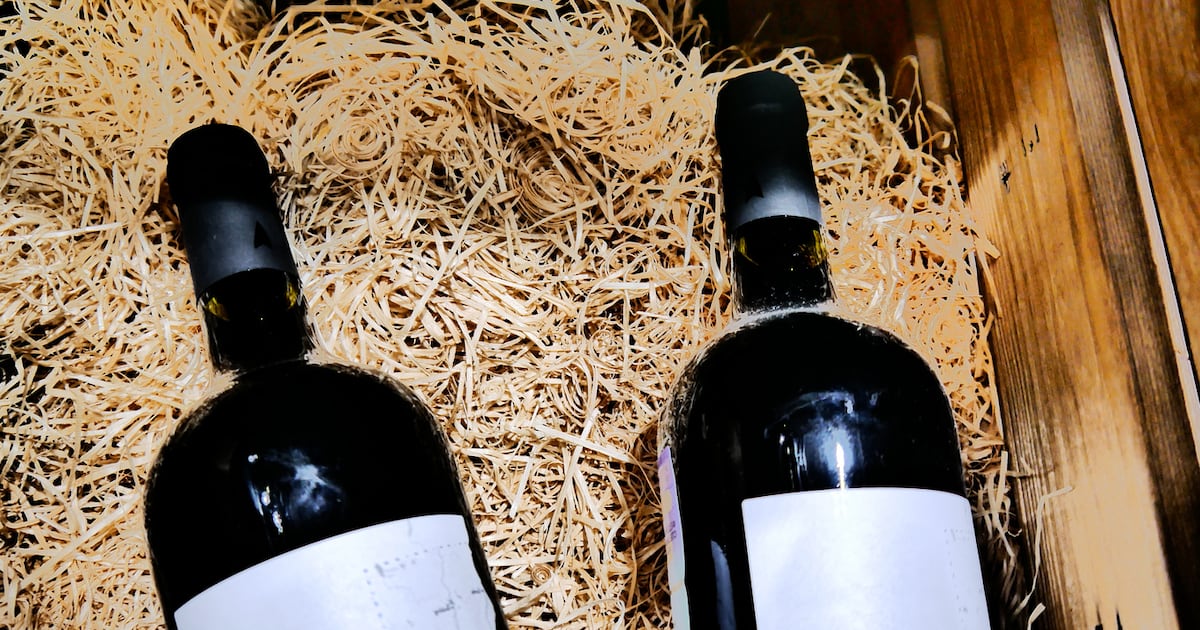
It is traditional to buy a full case (12 bottles) of the same wine, which will probably come nicely packaged in a wooden box. You could pick a selection of different wines from the same vintage, although it will be more difficult to sell, as most buyers look to buy a full case of the same wines.
[ Grapes of weather wrath: the new white wine varieties emerging due to climate changeOpens in new window ]
Good wine shops, including Greenacres, Searsons, Mitchell & Son, Pembroke Wines, Carrington, JNwine.com, Jus de Vine, Green Man Wines and The Corkscrew, all keep good stocks of appropriate wines. Some offer wine en primeur. This means that the wine is still in cask. You pay for the wines, excluding taxes, and the remainder when it is delivered 18 months later. This can be a good idea if the wine is produced in small quantities or in great demand. However, there is a glut of fine wine around the world, so you should be able to wait until the wine actually arrives in this country.
It is important that you or your godchild has somewhere safe to store the wine. Ideally you need somewhere cool, dark and moist where the temperature doesn’t fluctuate too much. Some wine merchants offer a wine storage service.
Dining and Cooking