
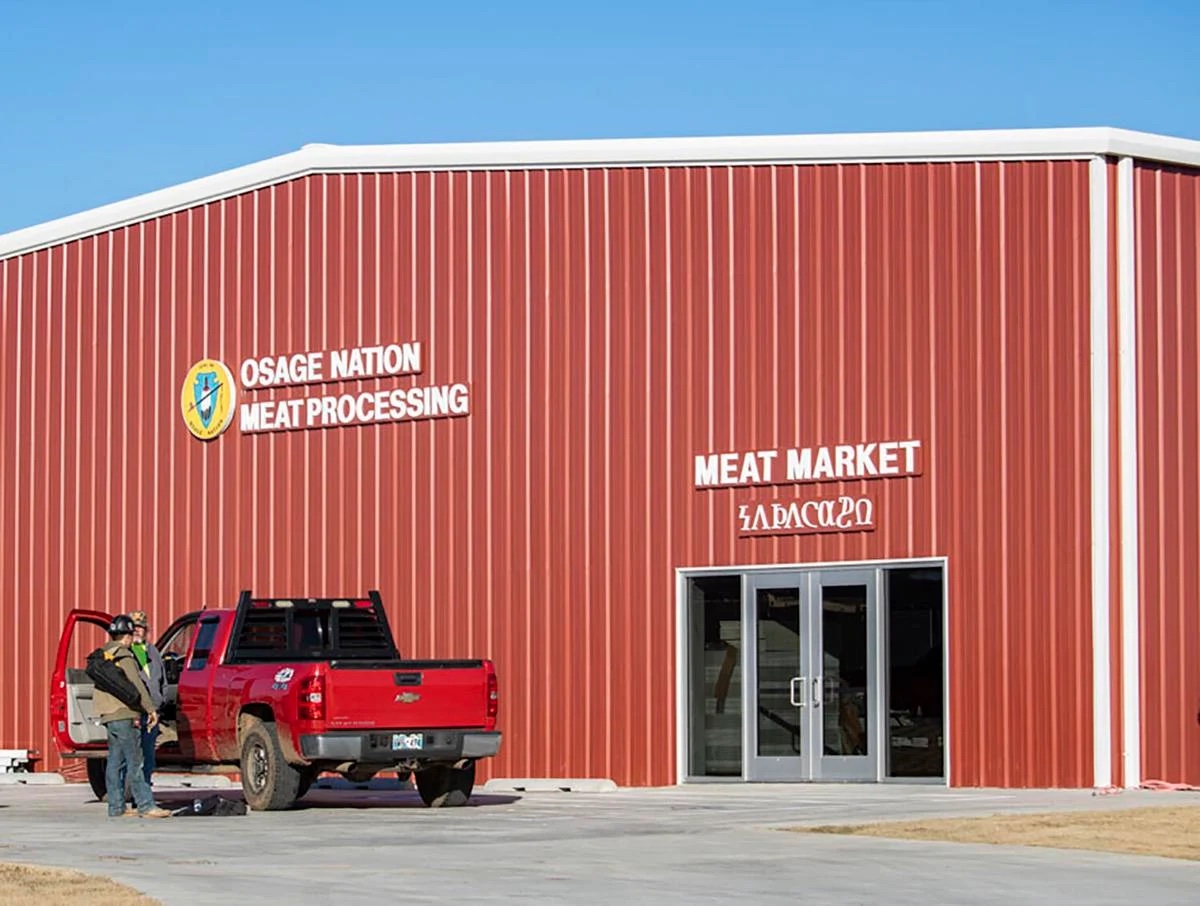
A bipartisan Senate bill would allow tribes to conduct federally recognized meat inspections at tribally owned processing facilities, a change supporters say could expand bison and other Indigenous food production in Indian Country.
The legislation, called the “Promoting Regulatory Independence, Mastery, and Expansion for Meat Processing in Indian Country Act,” would amend the Federal Meat Inspection Act to authorize tribal self-determination contracts for inspection duties currently handled by the U.S. Department of Agriculture.
Sen. Markwayne Mullin, R-Okla., introduced the measure with Sen. Tina Smith, D-Minn. Mullin was recently nominated to serve as secretary of the Department of Homeland Security following the firing of Kristi Noem, adding visibility to the proposal.
Under the bill, tribes could hire and train inspectors who would operate under federal standards equivalent to USDA rules for sanitation, humane handling and pre- and post-slaughter inspection. Facilities must be at least 51% tribally owned, and inspectors could not have financial interests in the plants they oversee.
Products inspected under tribal contracts would qualify for federal inspection labels and interstate shipment, addressing a long-standing bottleneck for tribal livestock producers who often must transport animals long distances to access federally inspected facilities.
“Allowing our people to be trained and contract with the U.S. Food Safety and Inspection Service to approve the processing of buffalo meat will greatly facilitate the work of our member tribes,” said Ervin Carlson (Blackfeet), president of the InterTribal Buffalo Council, a coalition of 89 tribes in 22 states working to rebuild buffalo herds.
The Native Farm Bill Coalition, which represents tribal agricultural interests, said in a statement the legislation would extend tribal self-governance into meat inspection while supporting local processing capacity and food sovereignty.
If enacted, the change could allow more tribal livestock to be processed locally rather than shipped long distances to federally inspected plants.
About The Author

Staff Writer
Chez Oxendine (Lumbee-Cheraw) is a staff writer for Tribal Business News. Based in Oklahoma, he focuses on broadband, Indigenous entrepreneurs, and federal policy. His journalism has been featured in Native News Online, Fort Gibson Times, Muskogee Phoenix, Baconian Magazine, and Oklahoma Magazine, among others.
Other Articles by this author
Dining and Cooking