
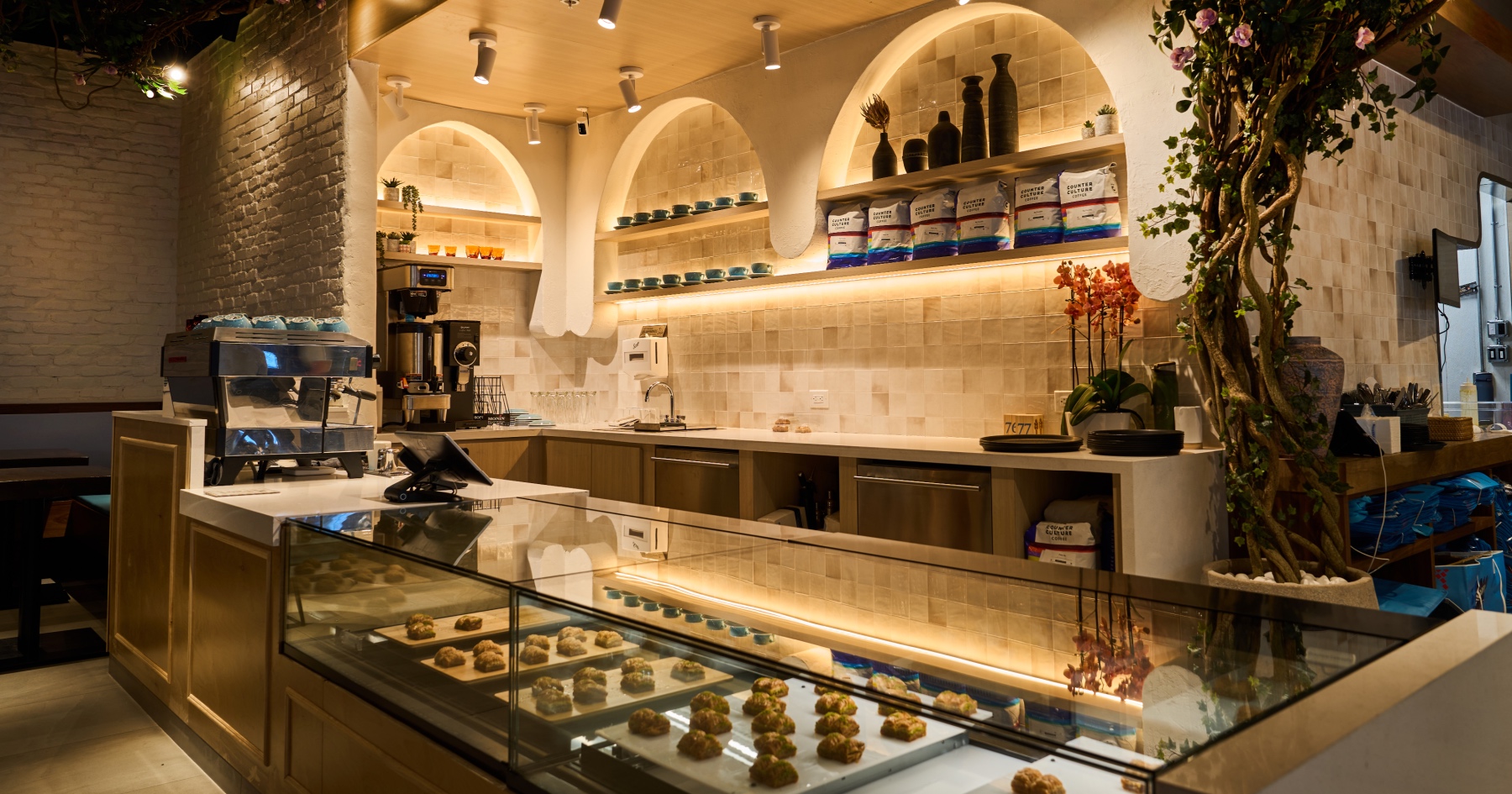
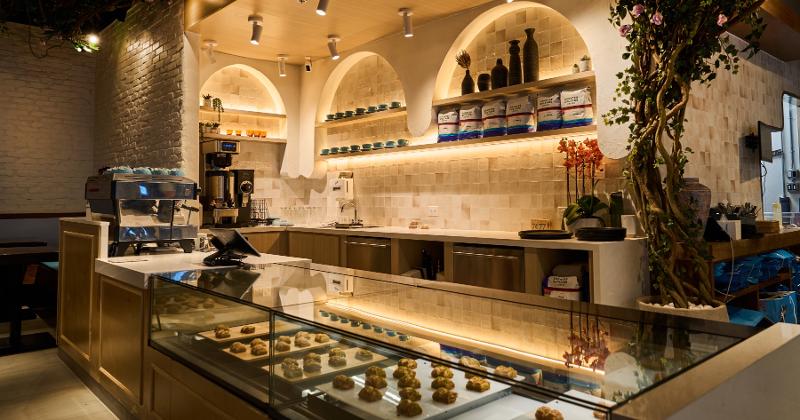
Rice Mediterranean Kitchen recently opened its 10th location in Miami. | Photo courtesy of Rice Mediterranean Kitchen

Thirty years ago, when Jafar Shabani moved to Miami, there wasn’t much in the way of Mediterranean food—and especially not Persian cuisine.
But that’s the way Shabani and his family wanted to eat. So he and his brother set out to create a restaurant that represented the fresh ingredients, grilled proteins, herbs and spices, and rice that they grew up with as Iranian-Americans.
So Rice Mediterranean Kitchen was born.
Now celebrating its 20th anniversary, Rice Kitchen, as it is known, recently opened its 10th location in South Florida. The latest unit is in Coconut Grove.
Over two decades, the fast-casual concept has evolved. And so has the American understanding of Mediterranean cuisine. Restaurant chains that call themselves “Mediterranean” tend to borrow a mishmash of flavors from across the Middle East, including Greece, Israel, Lebanon or Turkey.
Mediterranean cuisine has also been embraced as healthful. This has benefited the Greek-inspired Cava, now with 439 units, which has become a category leader with only distant competitors.
The 50-unit Luna Grill has Persian roots, but the menu there has also evolved to become more broadly Mediterranean.
But Shabani, who is now CEO, sees a lot of white space for a more Iranian-inflected version of Mediterranean fast casual. He wanted to make Rice Kitchen’s Persian influence clear.
War has brought a surge in interest in the views of the Iranian-American community. And, although Shabani doesn’t want to get into political issues, he believes strongly that food can be a powerful way for people to build understanding of other countries and their cultures.
“No matter what’s happening in the world, food always brings people together,” he said. “Our core is not only introducing our Persian flavors and culture, but I really believe that food is one of the most powerful ways cultures meet.”
That’s why, in part, Rice Kitchen on its menu offers Chicken Joojeh and Tenderloin Chenjeh, for example, both Persian-style kabobs marinated in saffron, lemon, yogurt and onions, as well as kubideh, made with ground beef. The Iranian descriptors are used, rather than a more bland “chicken kabob,” or “beef kabob.”
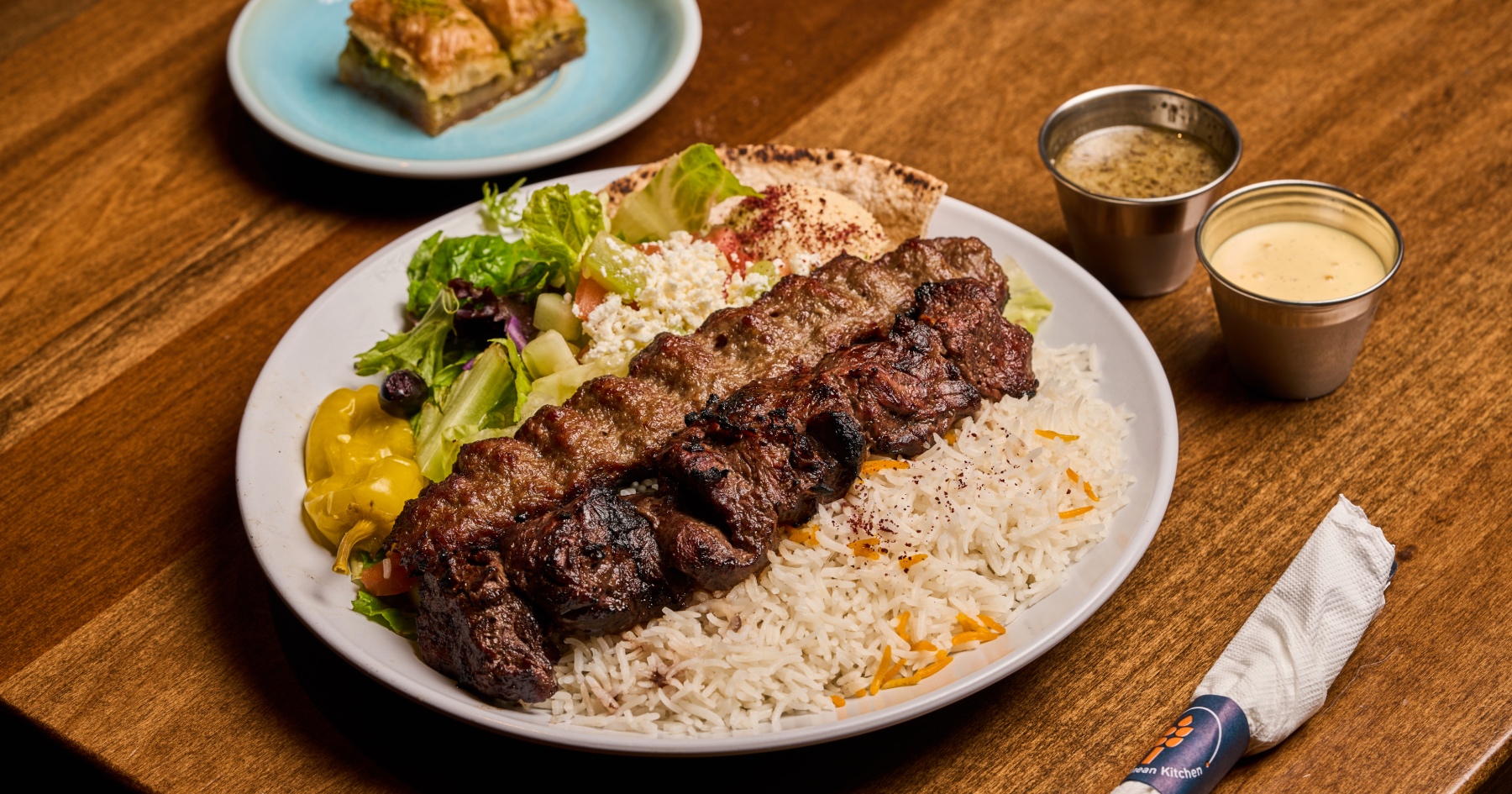
A kabob platter at Rice Mediterranean Kitchen. | Photo courtesy of Rice Mediterranean Kitchen.
There are more traditional braised beef and chicken dishes, along with a spicy roast chicken platter, all, of course, served with basmati saffron rice and a fresh salad—or fries.
And there are bowls, in the style of Cava. Shabani said Persian food doesn’t typically include the sort of sauces that Americans have embraced as Mediterranean. But in a concession to American tastes, Rice Kitchen developed a yogurt-based Sumac Sauce that has become a huge hit.
The chain even makes its own yogurt, because Shabani said they weren’t able to find the right flavor profile from suppliers.
“It’s labor-intensive, but it’s worth it,” he said.
<
Typically about 1,800- to 3,500-square feet, Rice Kitchen units also have an emphasis on high design. Even the takeout bags are something special.
Shabani said the chain invested in four designs for reusable insulated bags that serve as walking billboards.
“It’s not something people will just trash right away,” he said. “You see people using them to go grocery shopping or to the beach.”
@ricekitchenmiami#RiceMediterraneanKitchen#CustomerLove#MiamiEatS#CoconutGrove♬ Way down We Go – KALEO
At the newest location in Coconut Grove, Shabani is experimenting with an expanded coffee program, as well as Persian teas with cardamon and rosewater, and drinks with pomegranate and cherry syrups.
It’s a test to see if there’s demand for the beverages. But the restaurants also offer desserts, like baklavas, made by a local bakery, and the setting invites sitting down and staying a while.
So far, the family-owned chain has grown organically without any outside investment. Shabani said they would like to continue to grow—the chain is looking for one to two more sites to add more in South Florida this year.
But they are in no hurry, he said.
There are no plans to franchise. The family would welcome the right investors to help them scale, but, for now, the focus is on building a strong brand and building awareness of Persian cuisine, which is Rice Kitchen’s differentiator.
“What we do is a little different and there aren’t that many concepts tapping into that market,” he said. “We are making sure that if we do want to scale, if we are at that position, that we have the backbone for that.”
Lisa Jennings is a veteran restaurant industry reporter and editor who covers the fast-casual sector, independent restaurants and emerging chain concepts.
View All Articles by This Author
Dining and Cooking