
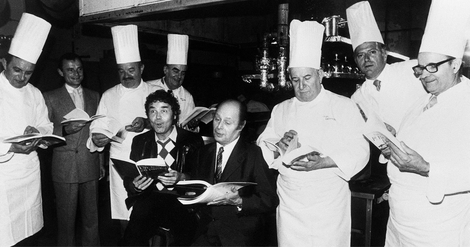
At lunch at Le Grand Véfour in Paris, an ornate, gilded restaurant in the Palais-Royale, I was listening to a few decades’ worth of gossip about the French food world—sordid affairs and infidelity, blackmail and bribery, feuds and petty rivalries, who had done what to whom—dispensed with charm and humor and irony by Albert Nahmias and Jean-Claude Ribaut. Nahmias was a restaurateur who’d opened the groundbreaking Olympe with his then wife (the restaurant was named for her, and she was the chef) on the Left Bank in 1974; Ribaut was a veteran journalist and author who’d been the restaurant critic for Le Monde for more than 20 years before retiring.
I was doing research for my book The Secret History of French Cooking, about the rise and fall of nouvelle cuisine (a movement in the 1970s toward newer, lighter, more inventive cooking), the sudden glamour surrounding chefs like Paul Bocuse, Michel Guérard, and the Troisgros brothers, and all the ways that this movement had liberated chefs and made them household names. Bocuse and his peers were inventing new dishes, flavors, and ingredients, no longer beholden to the Escoffier classics of decades past. Meanwhile, a group of young female chefs, including Olympe Nahmias, were battling the male-chauvinist culinary establishment.

Enter your e-mail to read the full story for free
and to receive our weekly e-mail newsletter
Subscribe to AIR MAIL for full access.
Already a subscriber? Sign in here
Dining and Cooking