
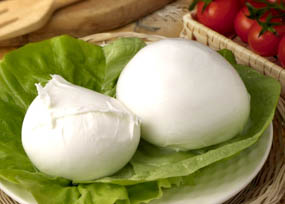
Mozzarella di Bufala Campana DOP is the millennia-old synthesis of a unique ecosystem. A symbol of Southern Italy’s biodiversity, this ‘white gold’ contributes to the excellence of the Mediterranean diet – a UNESCO heritage site – combining in a single artisanal gesture the knowledge of Benedictine monks and the nobility of buffalo milk.
Beyond its inimitable sensory profile, modern research today celebrates its exceptional functional value: a natural density of Calcium and the presence of bioactive peptides which give the product antioxidant and intestinal-protective properties.
A living food that tells the story of a resilient land and a cheesemaking art capable of perfectly combining the ancient ritual of ‘mozzatura’ with the most advanced standards of health and sustainability.
According to the ISMEA & Qualivita 2025 Report, the DOP Italian Economy has reached a production value of over 20,7 billion euros (+3,5% compared to 2023), of which certified dairy products represent a significant component. Mozzarella di Bufala Campana DOP ranks at third place among Italian cheeses with the most sold Geographical Indication in the world, after Grana Padano PDO and Parmigiano Reggiano PDO, with the following results:
production: 55.718 tonnes (+0,2% compared to 2023);
production value: 529 million euros (+0,2% compared to 2023);
consumer value: 892 million euros (+0,2% compared to 2023);
export value: 189 million euros (-11%).
In the context of recent trade flows, theexport of Mozzarella di Bufala Campana DOP has maintained its attractiveness towards countries such as France, Germany and Spain, while other destinations such as East Asia (Japan) and North America show ever-expanding interest, despite the challenges associated with reduced shelf life typical of fresh cheeses.
Ancient Roots: From the Pilgrims of Capua to the Conquest of the Markets
Le Mediterranean buffalo They were introduced into southern Italy between the early Middle Ages and the Norman period, finding an ideal habitat in the marshy areas of the Campania Felix and lower Lazio. Historians attribute the arrival of the species to the Lombards (6th century) or the Normans (11th-12th century), although more recent sources suggest traces of bubalus bubalis already in late Roman times (Borghese & Mazzi, 2005).
The documented origins of the Mozzarella di Bufala date back to the 12th century, when the Benedictine monks of Monastery of San Lorenzo in Capua they offered the pilgrims a fresh cheese called ‘mozza’ or ‘provatura’, from the manual gesture of to cut off (to cut) the still-warm stretched curd. This Campanian dialect term derives from the verb “mozzare,” which perfectly describes the artisanal technique of manually separating the still-elastic curd.
Over the centuries, the production technique has consolidated in the marshy plains of central-southern Italy, where the environmental conditions (pastures rich in spontaneous flora, mild climate, abundance of water) and the diet of Mediterranean buffalo have given the milk unique chemical and physical characteristics. The Protection Consortium, established in 1981, obtained recognition of the Denominazione di Origine Protetta (DOP) .
DOP production regulations
Geographic area
The DOP specification strictly defines the production area, which includes a series of municipalities in the Campania region and specific provinces of Lazio (Frosinone, Latina, Rome), Puglia (Foggia) and Molise (Isernia, Campobasso). This delimitation protects the territorial bond (terroir) between the environment, animal feed and the organoleptic quality of the finished product.
Breeding and milk quality
The specification prescribes the exclusive use of fresh whole buffalo milk of Italian Mediterranean race (Bubalus bubalis), originating and raised within the authorised geographical area ‘in semi-free housing with limited paddocks, outdoors with grazing’ (Article 3). Milk must:
Having a lipid content: minimum 7,5%;
Having a protein content: minimum 4,2%;
be delivered to the dairy, appropriately filtered using traditional means, and transformed into mozzarella within 60 hours of the first milking.
Ingredients and transformation process
The ingredients permitted by the specification are fresh whole buffalo milk, natural calf rennet, sea salt and natural serum graft ‘derived from previous processing of buffalo milk within the same company’ or in nearby companies. The traditional artisanal process includes rigorous phases:
Coagulation: the milk is heated to 33-39°C and natural rennet is added; coagulation occurs in 20-40 minutes;
Maturation of the curd: the curd rests in the acid whey for a period that varies in relation to the amount of lactic ferments present in the natural whey starter, approximately 5 hours on average from the addition of the rennet;
Breaking the curd: at the end of the maturation process, after being left on a draining table, the curd is cut into strips, minced and placed in special tubs, even steel ones, or in spinning machines;
Spinning: the curd, after being mixed with boiling water, is worked until it obtains the characteristic smooth, shiny and elastic stretched curd;
Modeling: the pasta is then cut and/or formed into individual pieces in the desired shapes and sizes (see the next paragraph);
Cooling and salting: the mozzarellas are placed in drinking water, for a period of time
variable depending on the size, up to
firming. They are then immersed in brine (10-18% water and salt solution) for variable times depending on size;
Possible smokingThe product can be smoked only with natural and traditional processes: in this case the
The designation of origin must be followed by the wording “smoked”.
Packaging and traceability
The finished product must be packaged in the same production plant and kept in its original state until final consumption. governing liquid, acidulous, possibly salty, which maintains its freshness, softness and sensory characteristics.
The label must necessarily show the full name ‘Buffalo Mozzarella Campana PDO’, The official consortium brand (European PDO logo + Protection Consortium logo), the name of the producer and the tracking code which identifies the dairy company.
His Majesty the Mozzarella di Bufala DOP
His Majesty the Mozzarella di Bufala DOP, according to the specifications, is characterised as follows:
crafts rounded or ‘morsels, braids, beads, cherries, knots, little eggs’;
weight Varies from 10 to 800 grams depending on the shape. For the braided shape, a weight of up to 3 kg is permitted;
external appearance: ‘porcelain white color,
very thin rind of about one millimetre with a smooth surface, never slimy or flaky; thin-leaved structure, slightly elastic in the first eight to ten hours after production and packaging, subsequently tending to become softer; free from defects such as holes, caused by anomalous gaseous fermentations; absence of
preservatives, inhibitors and colorants; presence of whitish serosity when cut,
fat, with the scent of lactic fermentsthe’;
flavor: characteristic and delicate;
fat on dry matter: minimum 52%;
Nutritional properties
According to official data published by CREA – Food and Nutrition Research Center (2019) 100 grams of Mozzarella di Bufala Campana DOP provide on average:
protein: 14,1 g (high biological value)
As regards the micronutrients, the Mozzarella Bufala DOP is:
rich in Calcium: 367 mg (45,9% of the Nutritional Reference Value indicated in Annex XIII to EU regulation 1169/11, 800 mg)
source Zinc: 2,21 mg (22,1% of NRV, 10 mg)
source Vitamin A, 203 μg (25,4% of NRV, 800 μg).
Health properties and bioactive compounds
Modern scientific research has highlighted how the buffalo milk is naturally rich in bioactive compounds with potential beneficial effects on human health. To date, no operator has submitted applications for authorization of specific health claims, and EFSA (European Food Safety Authority), consequently, has not yet assessed the validity and relevance of the scientific studies in question. Their findings, however, suggest the need for further research and clinical trials for this specific purpose.
Antioxidant and anti-inflammatory activity
Buffalo milk contains bioactive peptides which, after gastrointestinal digestion, could exert an antioxidant and protective activity at intestinal level:
Basilicata and colleagues (2018) isolated from buffalo ricotta a peptide derived from β-lactoglobulin which, after simulated digestion, showed the ability to significantly reduce oxidative stress in intestinal epithelial cells, suggesting a role of protection against intestinal inflammation;
Tenore et al. (2019) have in turn demonstrated that a peptide derived from the gastrointestinal digestion of buffalo mozzarella exerts a intestinal anti-inflammatory effect significant in experimental models, modulating the expression of pro-inflammatory cytokines (TNF-α, IL-1β) and reducing markers of oxidative stress.
Lipid profile and cardiovascular health
Il profile of the fatty acids Buffalo mozzarella contains components beneficial for lipid metabolism. Although the saturated fat fraction (palmitic acid, stearic acid) prevails, buffalo milk contains appreciable concentrations of oleic acid (monounsaturated) and conjugated linoleic acid (CLA). CLA intake is associated in the literature with potential positive effects on lipid metabolism – in particular, the LDL cholesterol reduction – and on body composition (Derakhshande-Rishehri et al., 2015; Pintus et al., 2013; Ahmad et al., 2013; El-Salam & El-Shibiny, 2013).
Phospholipids and minor components
Recent studies have highlighted that buffalo milk is particularly rich in bioactive phospholipids (phosphatidylcholine, phosphatidylethanolamine, sphingomyelin) which remain stable even after the dairy transformation processes. Di Paolo et al. (2025) analyzed the effect of the technological process and temperature on the phospholipids of buffalo milk and dairy by-products, confirming the presence of lipid fractions with functional properties which deserve further clinical investigation.
Microbiota and secondary metabolites
Natural fermentation mediated by native lactic ferments It contributes to the formation of secondary metabolites (peptides, free amino acids, volatile aromatic compounds) that positively influence sensory characteristics and may have prebiotic effects. Metabolomic studies have highlighted distinctive profiles of buffalo mozzarella compared to cow’s milk mozzarella, with a greater presence of bioactive compounds derived from fermentation (Pisano et al., 2016).
It is important to underline that, although the scientific picture is promising, further research is needed. further clinical research on the specific effect of fermented cheeses on human health, and that the presence of saturated fats requires a balanced consumption in the context of an overall balanced and varied diet.
Gastronomic culture: versatility and serving temperature
Mozzarella di Bufala Campana DOP is extremely versatile in the kitchen, ideal both for crude which as a cooking ingredient:
fresh consumption: alone or with fresh tomato and basil in the iconic Caprese salad, seasoned with DOP extra virgin olive oil and sea salt;
appetizers and salads: combined with Parma ham o San Daniele DOP, rocket, datterini or pachino IGP tomatoes;
Neapolitan Pizza STG: a distinctive element of the Neapolitan tradition, where the mozzarella is drained 2 hours before using, sliced and distributed on the dough disc before cooking in a wood-fired oven, for uniform melting without rubberiness;
first dishes: in gnocchi alla sorrentina, risottos, cold summer pasta dishes, and even vegetarian lasagna;
baked dishes: eggplant parmigiana, stuffed eggplant, swordfish rolls, savory tarts.
La serving temperature The optimal temperature is 18-20°C (room temperature), which should be reached by removing the mozzarella from the refrigerator at least 30 minutes before eating to enhance its characteristic aroma, creaminess and sweetness.
Shopping Guide
When choosing Mozzarella di Bufala Campana DOP it is essential to check:
presence of the full wording ‘Mozzarella di Bufala Campana’ and of the DOP mark (European logo + consortium logo) on the packaging;
packaging in the preserving liquid (whey or light brine) to ensure freshness and organoleptic characteristics;
date of production e shelf life: prefer products packaged a few days before, which can be consumed within 7-10 days of opening if stored in the refrigerator (4-6°C) in the original liquid;
preference for the organic supply chain, which offers greater attention to the environment and certified animal welfare.
For international importers and buyers, GIFT (Great Italian Food Trade) offers specialized assistance in selecting reliable and DOP-certified suppliers, verifying compliance with production specifications, and supporting refrigerated logistics.
The supply chain’s commitment: circular economy and land protection
The Mozzarella di Bufala Campana DOP supply chain is evolving towards a model of The circular economy, aimed at reducing environmental impact and valorizing every by-product of processing. This transition is based on two main pillars:
whey valorizationWhey, the main byproduct of cheesemaking, is no longer considered waste, but a resource. It is used to produce buffalo ricotta from Campania (often certified DOP), to extract high-biological-value proteins for nutraceuticals, and, increasingly, as a basis for the production of biogas and biomethane;
effluent management and bioenergy. Due to the high concentration of farms in limited areas, many companies have implemented systems of anaerobic digestionThese plants transform buffalo waste into renewable energy and digestate, a natural organic fertilizer that replaces synthetic chemical fertilizers, closing the carbon cycle in agricultural land used for fodder production.
Conclusions
Mozzarella di Bufala Campana DOP represents an excellence of the Italian agri-food heritage, with deep historical roots, a rigorous production specification that protects the link with the territory and a significant role in the global market for cheeses with Geographical Indication. With a nutritional profile rich in high biological value proteins, bioavailable calcium and potential functional properties linked to the bioactive peptides of buffalo milk, this cheese continues to fascinate consumers, chefs and international gastronomy professionals.
Attention to quality, DOP certification and the supply chain traceability It is essential to preserve the authenticity and value of this symbol of Made in Italy, while contributing to the economic sustainability of rural communities involved in buffalo farming and traditional cheesemaking.
References
Ahmad, S., Anjum, F. M., Huma, N., Sameen, A., & Zahoor, T. (2013). Composition and physico-chemical characteristics of buffalo milk with particular emphasis on lipids, proteins, minerals, enzymes and vitamins. The Journal of Animal and Plant Sciences, 23(Suppl. 1), 62-74. https://www.researchgate.net/publication/259743953
Basilicata, MG, Pepe, G., Adesso, S., Ostacolo, C., Sala, M., Sommella, E., Scala, MC, Messore, A., Autore, G., Marzocco, S., & Campiglia, P. (2018). Antioxidant properties of buffalo-milk dairy products: A β-Lg peptide released after gastrointestinal digestion of buffalo ricotta cheese reduces oxidative stress in intestinal epithelial cells. International Journal of Molecular Sciences, 19(7), 1955. https://doi.org/10.3390/ijms19071955
Borghese, A., & Mazzi, M. (2005). Buffalo population and strategies in the world. In A. Borghese (Ed.), Buffalo production and research (REU Technical Series 67, pp. 1-39). FAO Regional Office for Europe. https://www.fao.org/4/ah847e/ah847e00.pdf
Derakhshande-Rishehri, S. M., Mansourian, M., Kelishadi, R., & Heidari-Beni, M. (2015). Association of foods enriched in conjugated linoleic acid (CLA) and CLA supplements with lipid profile in human studies: a systematic review and meta-analysis. Public health nutrition, 18(11), 2041-2054. https://doi.org/10.1017/S1368980014002262
Di Paolo, M., Pelizzola, V., De Luca, L., Casalino, L., Polizzi, G., Povolo, M., & Marrone, R. (2025). Effect of technological process and temperature on phospholipids in buffalo milk and dairy by-products. Foods, 14(1), 98.
Pintus, S., Murru, E., Carta, G., Cordeddu, L., Batetta, B., Accossu, S., Pistis, D., Uda, S., Elena Ghiani, M., Mele, M., Secchiari, P., Almerighi, G., Pintus, P., & Banni, S. (2013). Sheep cheese naturally enriched in α-linolenic, conjugated linoleic and vaccenic acids improves the lipid profile and reduces anandamide in the plasma of hypercholesterolaemic subjects. The British journal of nutrition, 109(8), 1453-1462. https://doi.org/10.1017/S0007114512003224
Pisano, M. B., Scano, P., Murgia, A., Cosentino, S., & Caboni, P. (2016). Metabolomics and microbiological profile of Italian mozzarella cheese produced with buffalo and cow milk. Food Chemistry, 192, 618-624. https://doi.org/10.1016/j.foodchem.2015.07.061
Tenore, G.C., Pagano, E., Lama, S., Vanacore, D., Di Maro, S., Maisto, M., Capasso, R., Merlino, F., Borrelli, F., Stiuso, P., & Novellino, E. (2019). Intestinal anti-inflammatory effect of a peptide derived from gastrointestinal digestion of buffalo (Bubalus bubalis) mozzarella cheese. Nutrients, 11(3), 610. https://doi.org/10.3390/nu11030610
Dining and Cooking