
Blackberries, a key part of many summer fruit salads and the stars of tarts, muffins, and scones, are a delicious, nutrient-packed fruit. Their deep purple-black color and balance of sweet and tart flavors make them a popular choice for eating by the handful or baking into a pie, cobbler, or turnover. The antioxidant-rich fruit typically enjoys a long peak season too—from late spring to early fall.
Like their cousins strawberries and raspberries, blackberries need gentle handling to stay intact and fresh. This means gentle, but thorough, cleaning. Southern Living tapped Andre Paquette, the founder of Firefly Farm and Mercantile, for his expertise on cleaning blackberries.
As someone who has spent much of his career honing methods for cultivating and preserving fruits, ensuring they stay fresh and flavorful for as long as possible, Paquette has smart, easy-to-follow tips on washing blackberries so they are both safe and delicious (read: no hidden bugs) to eat.
How To Wash Blackberries With Water
The delicate nature of blackberries means you want to approach them with care. “Be as gentle as possible,” advises Paquette.
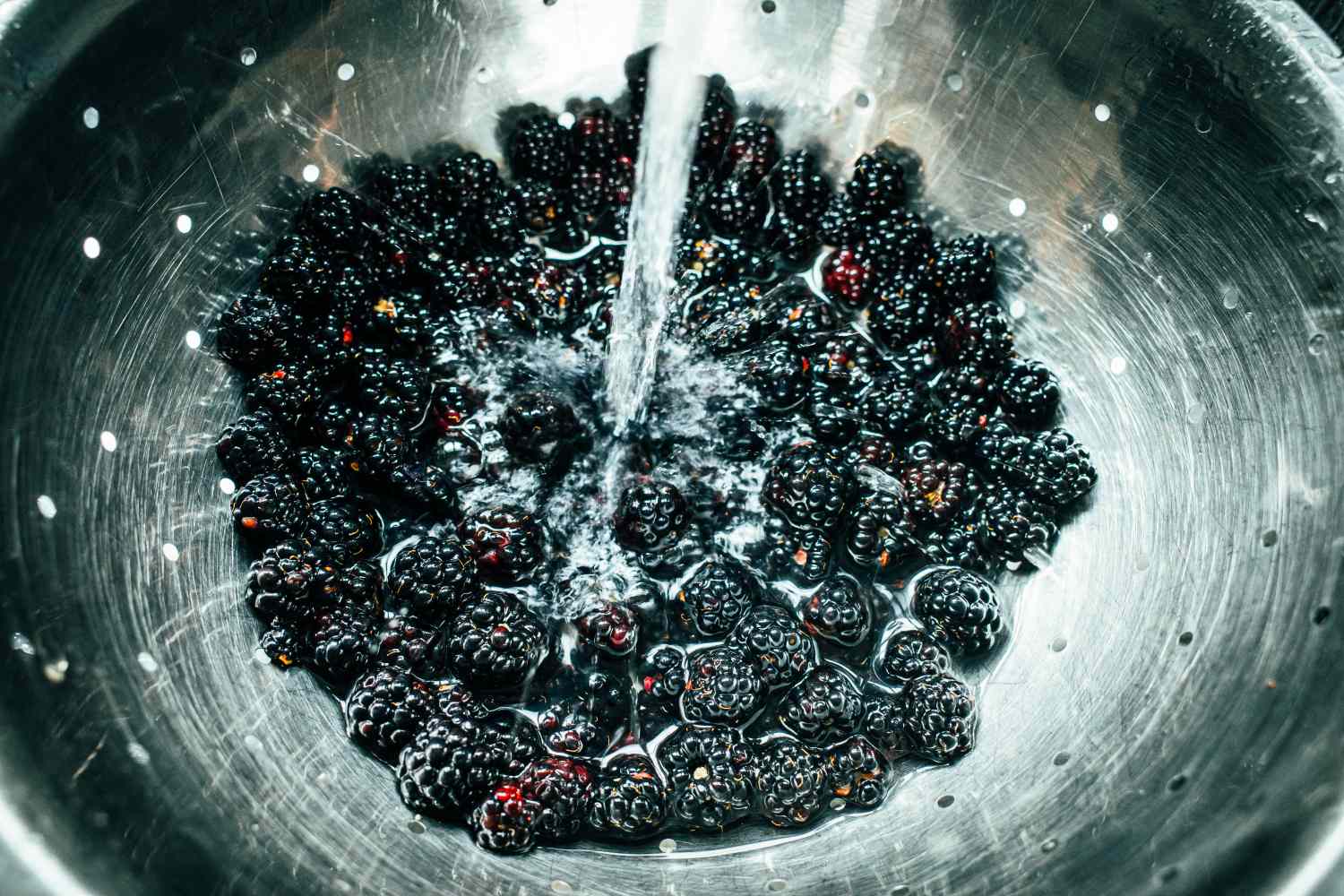
Once you’ve brought them home from the market, place them in a fine mesh colander or a shallow bowl and rinse under cool, running water, instructs Paquette. But avoid soaking them, he says, for if the blackberries absorb too much water, they can become mushy.
The FDA’s guidance clearly states that there’s no need to use a produce wash or soap. Just water will get the job done.
How To Clean Blackberries With Vinegar
Now, if your goal is to extend the shelf life of blackberries and be extra diligent about removing any bacteria or pesticides, you can do a vinegar wash.
Simply “mix one part white vinegar with three parts water, gently swirl the blackberries in the solution, then rinse with cold water,” says Paquette. “It helps kill mold spores and slightly extends shelf life,” Paquette says. He also notes it’s “effective and less abrasive” than baking soda.
How To Dry Blackberries
Regardless of which method you choose, you want to be sure to dry the berries thoroughly to avoid letting them get mushy or moldy. Proper drying will also ensure they stay good longer. Once cleaned, Paquette recommends laying the berries on a clean paper towel to air dry for approximately 30-60 minutes—until they’re dry to the touch. Excess moisture can cause mold or cause them to deteriorate faster.
Once the berries have had a chance to dry, you can pop them back in the fridge. Paquette prefers a shallow container lined with paper towels. He says they’ll “last about 2-3 days when stored properly, but they’re best eaten within 1-2 days for optimal freshness.”
How To Choose Blackberries
You want to pay attention to a few things when selecting blackberries: color, shine, and texture. “Look for ones that are deep black, shiny, and plump,” advises Paquette. Avoid berries that are soft or appear mushy or shriveled as these are indications that the fruit is past its prime.
Dining and Cooking