
(Updated 16/08/2025)
I’m a sucker for a roadside trattoria in Italy, and Tuscany has some exceptional ones. Most of these have been tried and tested by yours truly, but I must admit there are still some I need to visit on my next road trip along the vineyards of Chianti or while exploring those off-the-beaten-path roads that always leave me longing for my next trip to Tuscany. I’ll be avoiding the tourist traps here, except maybe for one, a butcher called Dario. So, if you’d like to tag along, I will get started on my favorite pitstops in Tuscany.
TL;DR: Explore Tuscany’s hidden culinary gems, from the hearty traditional meals of Garfagnana’s medieval villages to the local eateries scattered across the scenic landscapes, avoiding tourist traps for an authentic taste of regional Italian cuisine.
Local Eats Tuscany – North of Florence
They’re becoming fewer, but after living in Tuscany for about two years on a tight budget, I’ve certainly managed to add some special finds to my list. In this article, I’ll travel from north to south and east to west in Tuscany, sharing my favorite spots for local eats where you can still truly enjoy local cuisine, perhaps sometimes eating only what’s on offer that day, but where you’ll never leave disappointed.
The Garfagnana
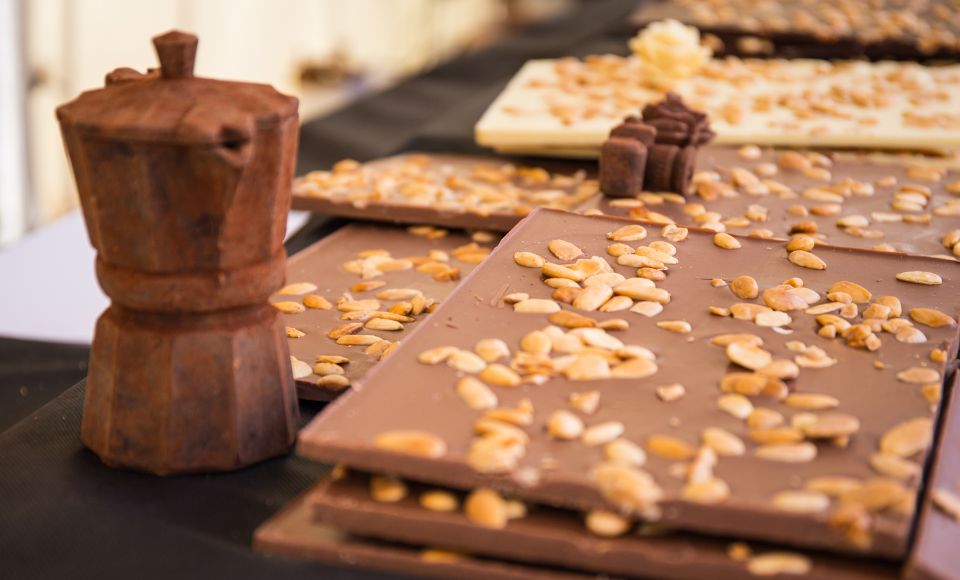
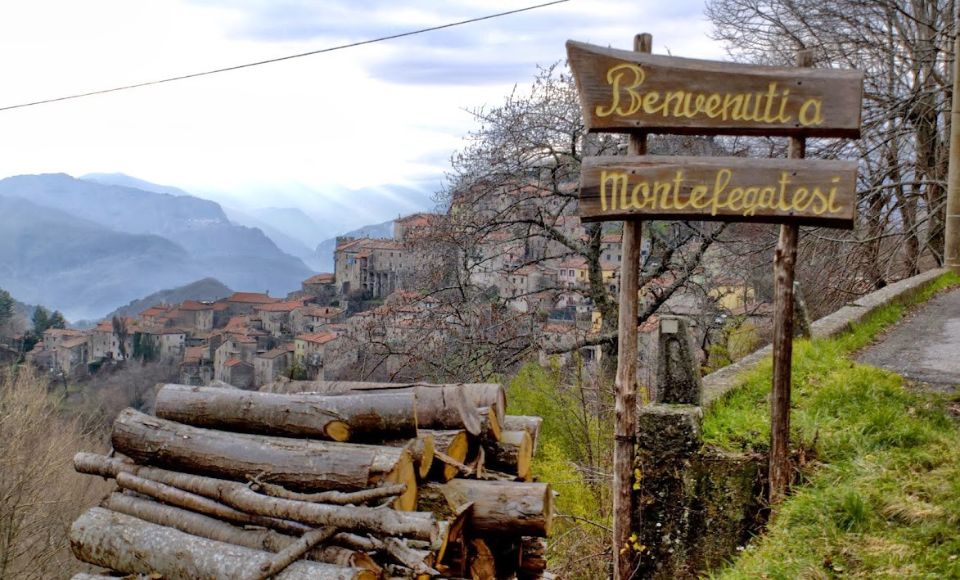
We start in northern Tuscany in the Garfagnana, a somewhat rugged area of rivers, forests, mountain gorges, and isolated medieval villages like the mystical Montefegatesi, the 25 hamlets of Bagni di Lucca, and Barga with its rich gastronomic past and famous chocolate festival ‘Barga in Cioccolato’. When dining in this region, expect hearty fare with local ingredients such as various nuts, especially chestnuts, and meat and game dishes. The prices for a meal in this area are the most democratic, perhaps in all of Tuscany.
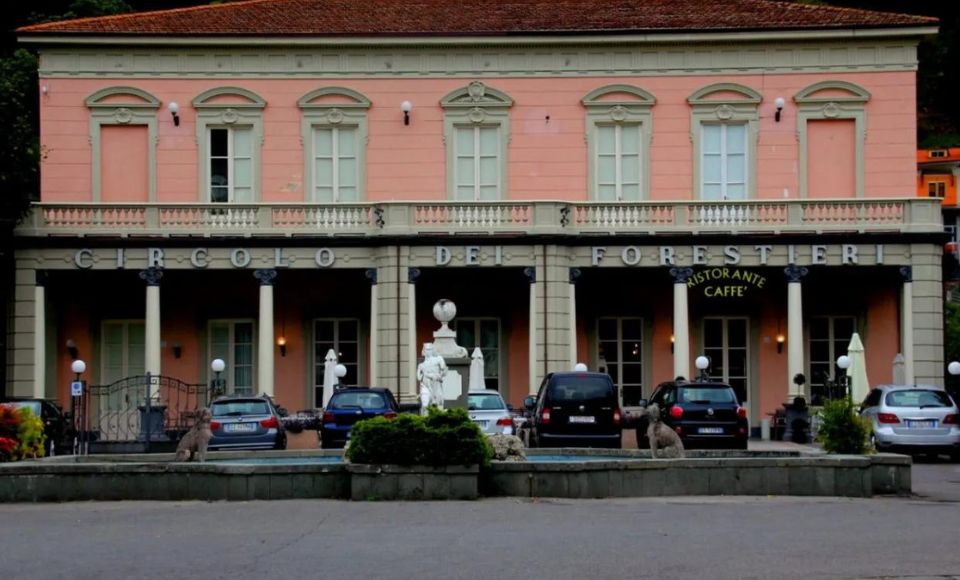
A lunch menu traditionally served to local lumberjacks starts with a primo (usually a pasta, for example with a creamy nut sauce), a substantial main course such as roast beef or wild boar with a glass of house wine, and coffee after the meal. Although you can see this kind of lunch offered almost everywhere, I can most recommend the ‘pranzo di lavoratori’ in the village of La Villa at the restaurant of the Circolo dei Forestieri, even for tourists. The restaurant is actually quite cozy and, as an exception, also has a few tables on a fairly quiet terrace with a nice view. In the Garfagnana, it’s often cold and eating outside isn’t always possible; the restaurants are often along a busy road, so a terrace isn’t practical for obvious reasons but don’t let that stop you from stopping at one of these local eats in Tuscany.
What is coperto?
When dining out in Italy, you might be charged a coperto, which can vary from €1 to sometimes €10 (rarely) per person, but usually it’s no more than €2. The coperto (cover charge) is an amount you pay for service, cutlery, plates, bread, and sometimes a carafe of water. You might pay extra coperto if the restaurant has a particularly special location! The payment of coperto originated in the Middle Ages when many people used inns to consume their own food, especially in the cold season and on days with bad weather. The innkeeper, who then didn’t sell a meal, charged for the place as a ‘covered place’ (where it gets its name from) and, often, for the use of cutlery and plates. In Italy, by the way, most Italians don’t give an extra tip. You can, but it’s not necessary.
If you want to eat the best pizza in the world (yes, I know, you hear this often), climb the mountain road towards Bernabbio, a hamlet with just one family pizzeria without too much charm, although the brother and sister are extremely friendly and welcoming. The secret lies in the extremely special pizza dough, as light as a feather, so light that after a bite you actually see the crumbs floating down onto your plate. It’s almost a culinary miracle. The name of the restaurant is not for nothing Acquolina in Bocce=”Mouth-watering”.
Acquolina In Bocca, Via Lupo Lupari 7 in Benabbio, Lucca – Website: Facebook pageCircolo dei Forestieri, Piazza Jean Verraud 10, Bagni di Lucca – Website: https://www.facebook.com/circolodeiforestieri/
The Mugello Region
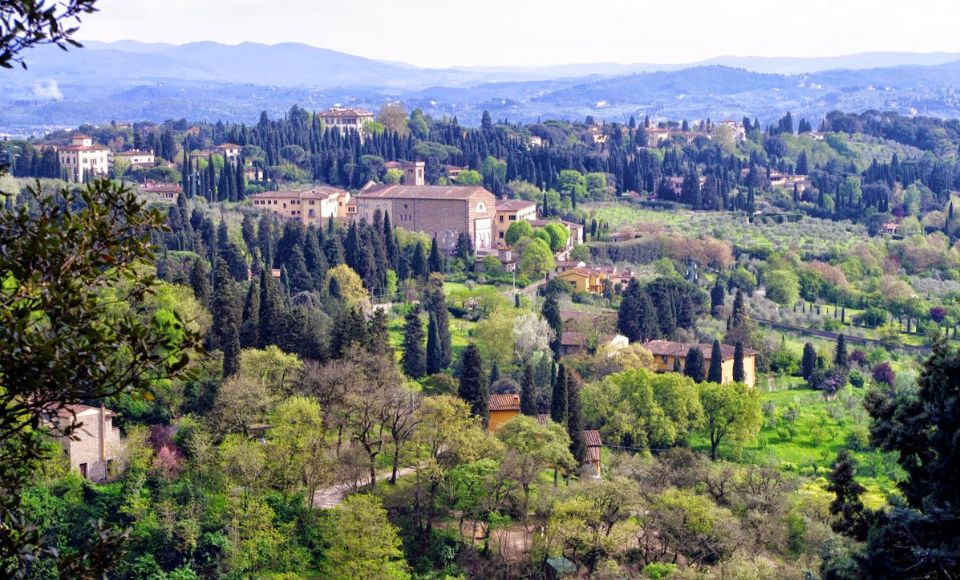
In the Tuscan region of Mugello, trattorias specialize exclusively in local dishes. The characteristic dish of the green, relatively undiscovered Mugello region north of Florence is tortelli di patate (soft pasta filled with potato). After staying in Mugello for 6 months, I can recommend a few nice local eats, for example the cozy family Trattoria La Casa di Prociutto in Vicchio. You eat hand-rolled tortelli, spinach and ricotta strozzapreti (pasta), and tagliatelle with porcini. Main courses include stuffed rabbit, grilled pigeon, and roast chicken, and if you’re lucky, there might also be fried artichokes or zucchini flowers on the menu. You end the meal with a legendary dessert. If you don’t mind eating from plastic plates, you can also take the meal to one of the picnic tables along the bank of the Arno River. The best part is that you really sit down with the locals at this spot. What I would do is make a reservation in advance because it’s very popular.
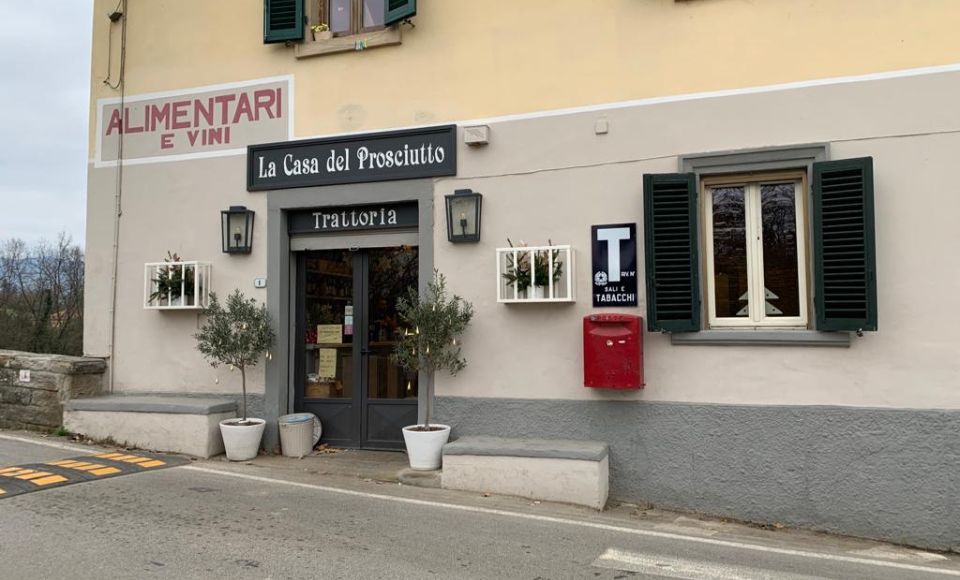 La Casa di Prociutto, Via Ponte a Vicchio 1, Vicchio – Tel. +39 055 844031 – Website: La Casade del Prociutto. – Opnening hours: Open between Wednesday and Sunday afternoon for lunch.
Just half a minute from the Barberino di Mugello exit on the Autostrada del Sole and about 30 km before Florence, you can have a delicious meal at Trattoria Marisa, which from the outside looks more like a well-visited roadside restaurant. Inside, it’s very comfortable and, as I’ve heard, recently completely renovated.
Florence, how to best get around the city of art
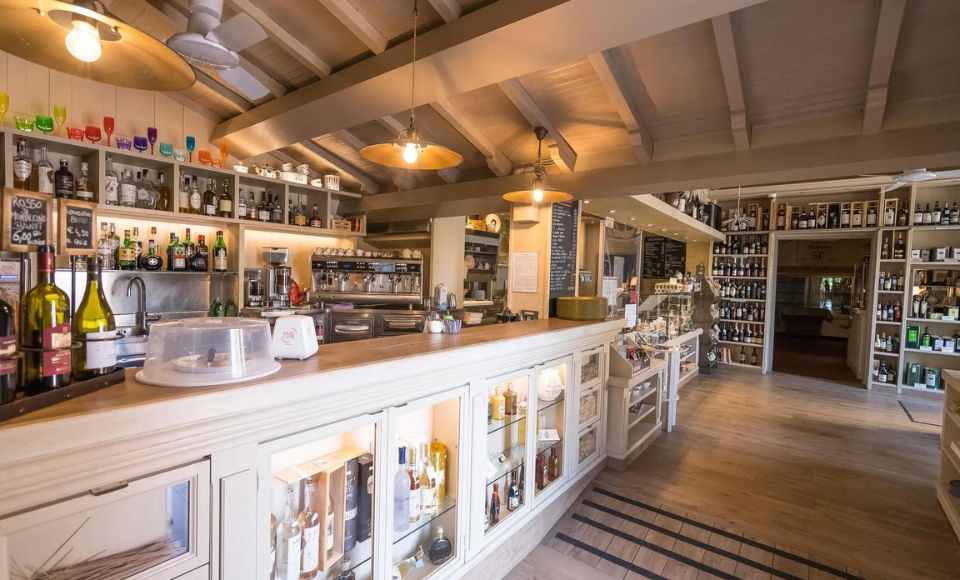
It’s one of the better spots if you love local ingredients and want to try everything. You might consider an antipasti of various Tuscan cold cuts such as coppa, lardo, and salami. For the secondo, the Florentine steak is the most popular, but for a smaller meal, you can opt for a Tuscan ribollita or fried artichokes. It’s best to avoid this local eat on Sundays – it’s far too busy and you’ll wait hours for a table, plus the staff isn’t too friendly during these peak hours.
 Trattoria Marisa , Via del Lago 21 in Barberino di Mugello – Website: https://www.ristorantemarisa.org/
Local Eats in Tuscany – Pisa and Livorno
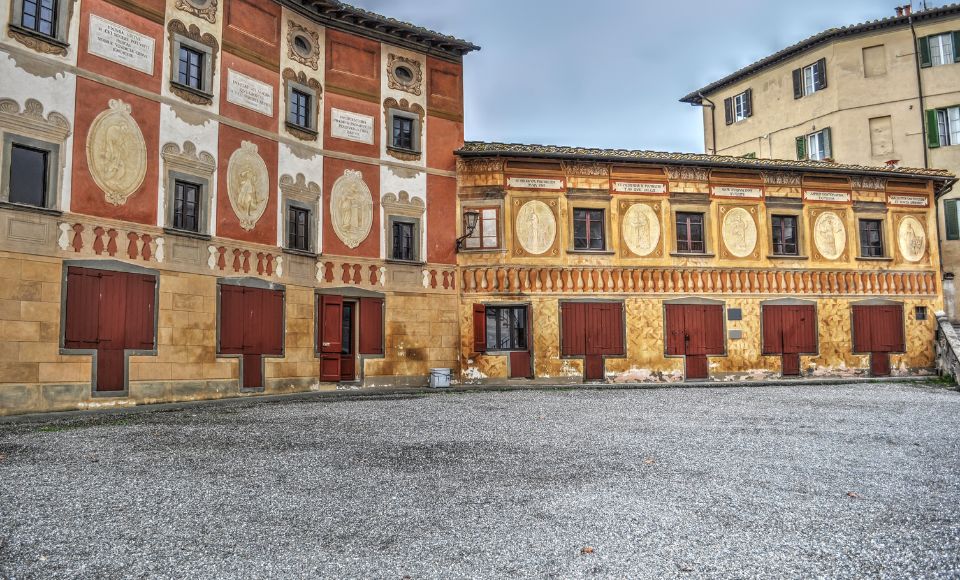
There are endless Tuscan culinary experiences, but truffle hunting is undoubtedly the ultimate adventure. The tartufo bianco pregiato is the most coveted of all truffles. The highlight of this truffle season takes place in the region around San Miniato, a beautiful medieval village between Pisa and Florence, between the months of September and December. The forests in the hills attract many truffle hunters searching for this desirable tuber. For more infomation about this truffle fair, see the events agenda.
It’s a unique activity and there are many ways to enjoy it. Giulio Benuzzi (also known as Giulio the Truffle Hunter) is one of the world’s best truffle hunters and offers various guided walks through the woods with his trained dog Eda. If you prefer to attend a cooking workshop or a truffle tasting, you can also arrange this through Giulio and yes he is also well informaed about the local eats so feel free to quiz him.
 Giulio Benuzzi Tel. +393347234689 – Email: [email protected]
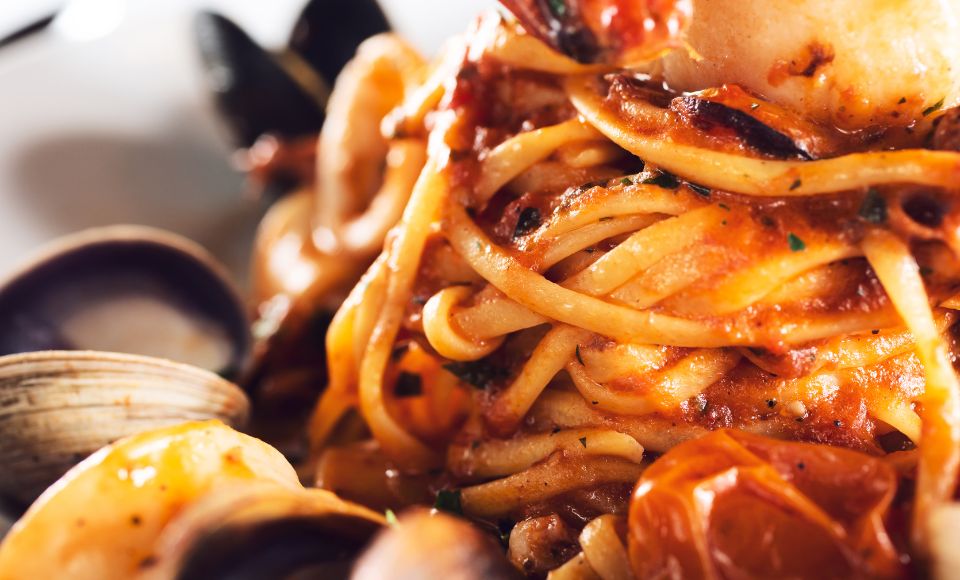
Fresh fish and seafood are absolutely the main reason to dine out in Livorno and its surroundings. Livorno and the Calafuria National Park are located on the wild Etruscan coast. The city is especially known for its ‘cacciucco’ (fish stew) and ‘torta di ceci’ (chickpea pie). For foodies, a visit to Livorno’s gigantic covered market is a real spectacle not to be missed. Livorno (still) has a legion of reasonably priced restaurants. The local cuisine is honest, simple, and influenced by the various cultures that left their mark here throughout history.
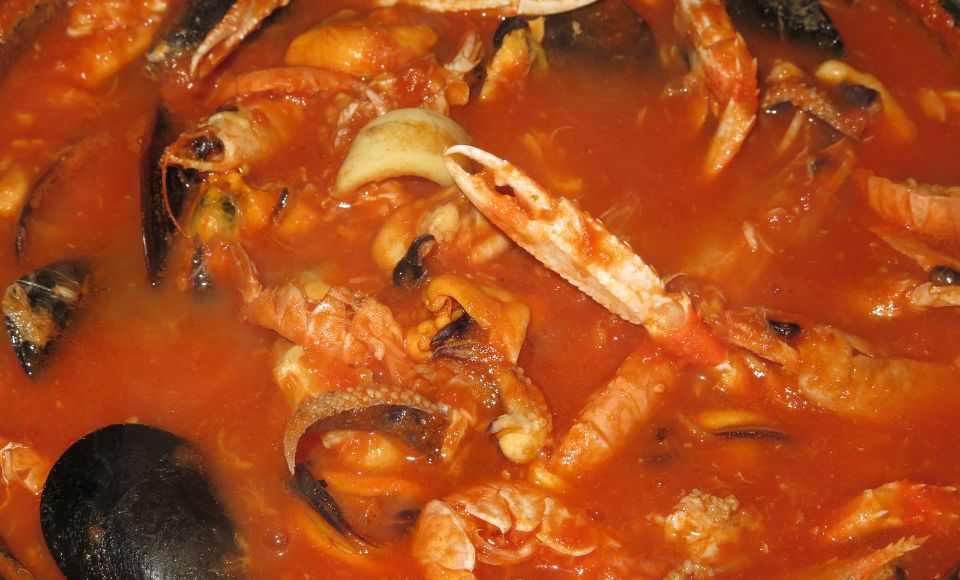
A really great is the Cantina Senese, a charming and simple restaurant in the historic center, where dock workers and local families come to feast on divine mussel soup, fried cod and anchovies, and of course the ubiquitous ‘cacciucco a Livorno’. Other tasty options are Trattoria Antico Moro and Osteria del Mare, both specializing in fresh, authentic homemade fish dishes.
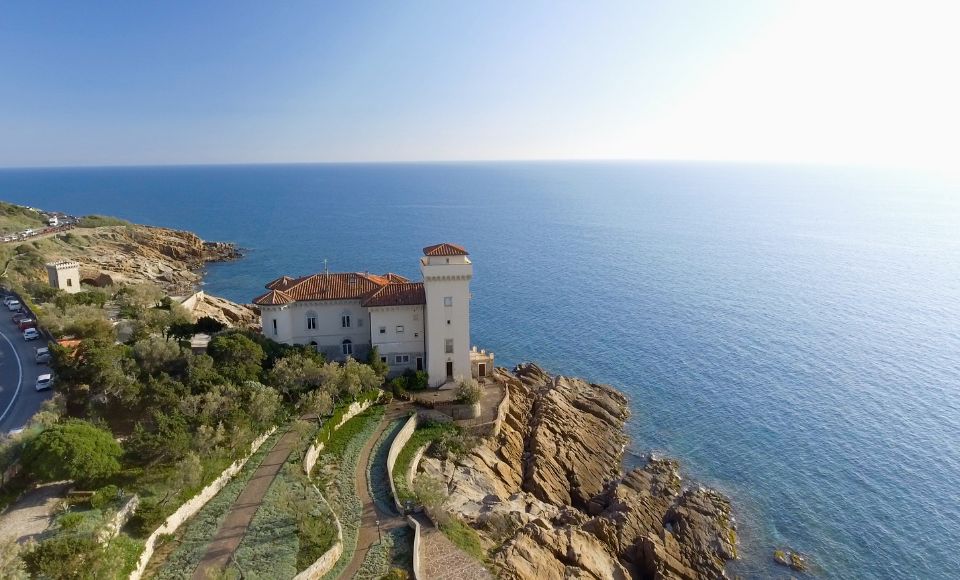
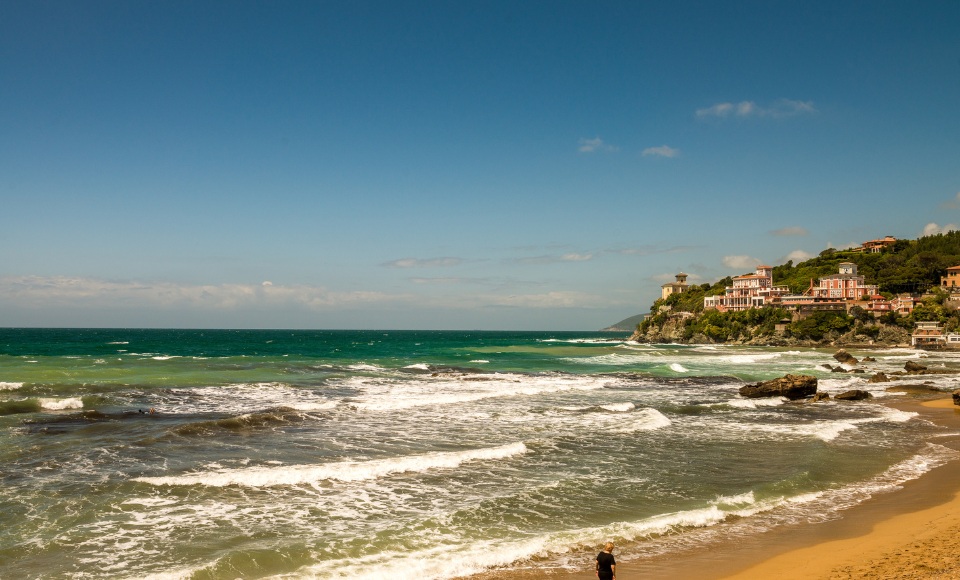
A modern alternative is located directly on the boulevard, the Viale Italia. L’Ostricaio is chic by Livorno standards, with a busy oyster and seafood bar. If you drive a bit further towards the Calafuria National Park, you can enjoy the most delicious mussel sauce I’ve ever had the pleasure of tasting at Trattoria La Calesse in the town of Quercinella. The trattoria is located a few streets behind the beach and a railway and unfortunately doesn’t have a good view, but it does have a few tables on a terrace. The kitchen, specializing in fish and seafood, is one of the best on the Tuscan coast – not to be missed.
 Cantina Senese, 95 Borgo dei Cappuccini in Livorno – Website: https://ristorantecantinaseneselivorno.it/
As one of the culinary meccas of the world, it’s no surprise that even the smallest, most remote village in Tuscany celebrates its local specialty with a sagra. The region offers holidaymakers so many wine, olive oil, chestnut, and truffle festivals that making a list of them would be an impossible task. What you as a foodie tourist should know is that most of these festivals take place in the off-season. It’s an excellent way to immerse yourself in Tuscan culture and get to know the best products of the area better. One of the most famous Sagras of Tuscany takes place every year in Certaldo Alto and is called Boccaccesca. It’s a food and wine spectacle run by all the local eats and wineries that unfolds in the narrow medieval streets of the town located halfway between Florence and Volterra.
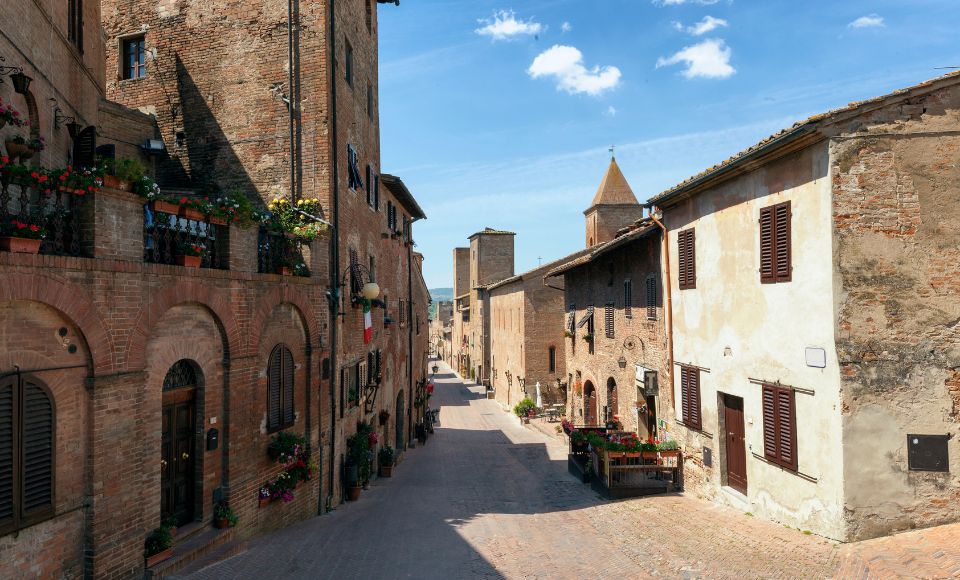
You’ll taste traditional Tuscan dishes like porchetta and ribollita soup, which might not be to everyone’s taste, but it’s the regional cuisine of Tuscany where offal is common in street food dishes and you can’t have an aversion to a hearty soup with lots of beans. During such a gastronomic festival, there’s of course much more to taste, think of local cheeses, cold cuts, and of course the wines like Chianti Classico or Brunello di Montalcino.
Other notable gastronomic festivals include the White Truffle Fair in San Giovanni d’Asso, the Sagra del Cinghiale di Chianni (the wild boar festival of Chianni), Il Desco in Lucca, and Cookstock in the historic center of Pontassieve.
Local Eats in the Florentine Hills
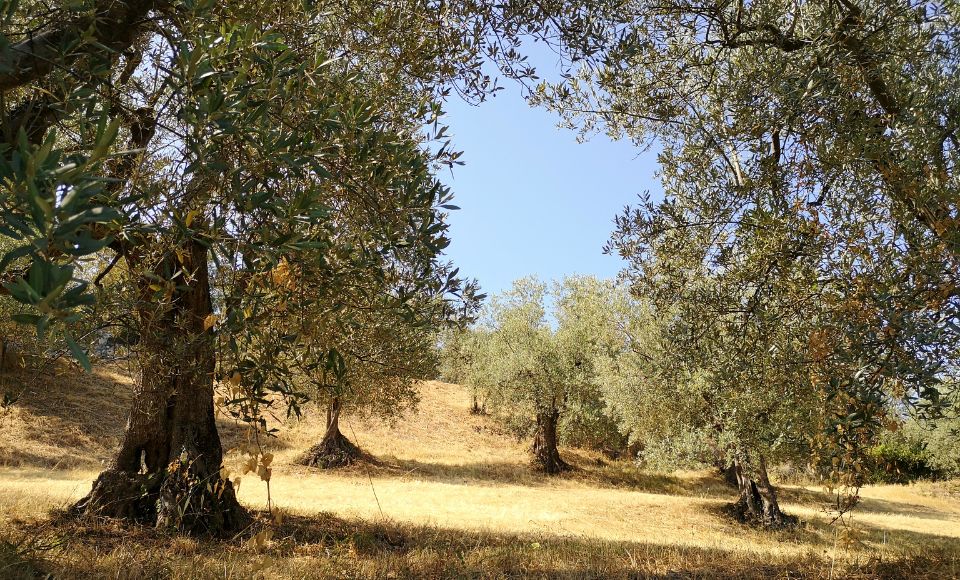
The search for fun authentic experiences always seems to be a priority for many tourists. A so-called ‘0 km’ experience is still possible in some places, I’m thinking of well-known farms like La Vialla or La Parrina (see below), but they are becoming bigger and more commercial and the prices also seem to be getting higher every year. What I actually find much more enjoyable is the farm-to-table concept, something like Il Canto Del Maggio, a local eat in the countryside of Valdarno, about 40 minutes from Florence. Owner Mauro and his daughter Simona serve Tuscan dishes themselves that are prepared with love and always with seasonal ingredients, straight from their own orta (garden). You can really call this place cozy and informal, you eat your meal in the dining room or outside on the terrace with a glass of local wine.
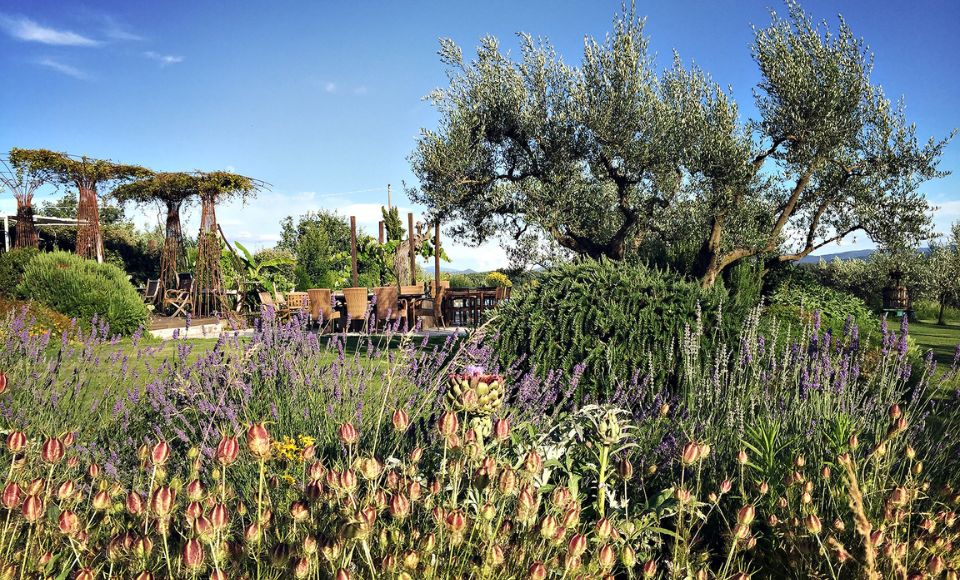 Il Canto Del Maggio, Località Penna Alta, 30/d, Terranuova Bracciolini, Arezzo – https://www.cantodelmaggio.com/
A Bistecca alla Fiorentina
Craving the famous Florentine steak? The residents of Florence will quickly let you know that their favorite grill restaurant is outside the city. If you have a car, that’s of course convenient. Here, I’ll give you the three favorite addresses.
The first, Piatti e Fagotti, is not too far outside the center on the road to Fiesole along Via San Domenico, but I recently had to wait almost half an hour for a table there; despite that, it’s always worth it.
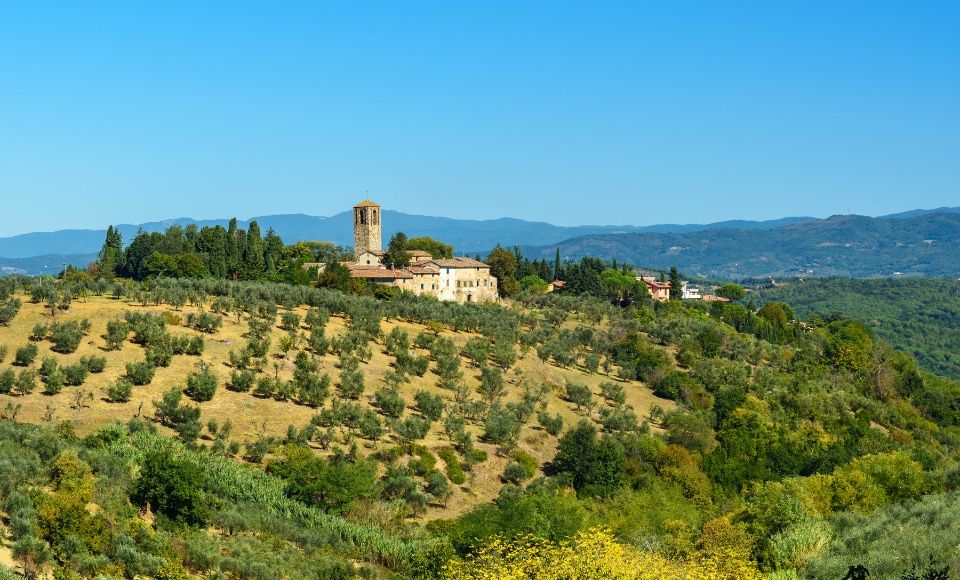
The other is much further outside Florence, beyond the Val di Pesa. You drive 20-25 minutes southward on the SP4 Volterrana towards Montespertoli and then take the exit to Galluzzo. It’s really a nice ride through the Tuscan hills with cypresses, country roads, and Renaissance villas. The restaurant is called Il Focolare and is located in Montagnana, a tiny hamlet that’s part of the municipality. This local eat in Tuscany is unpretentious and the food is simply fantastic.
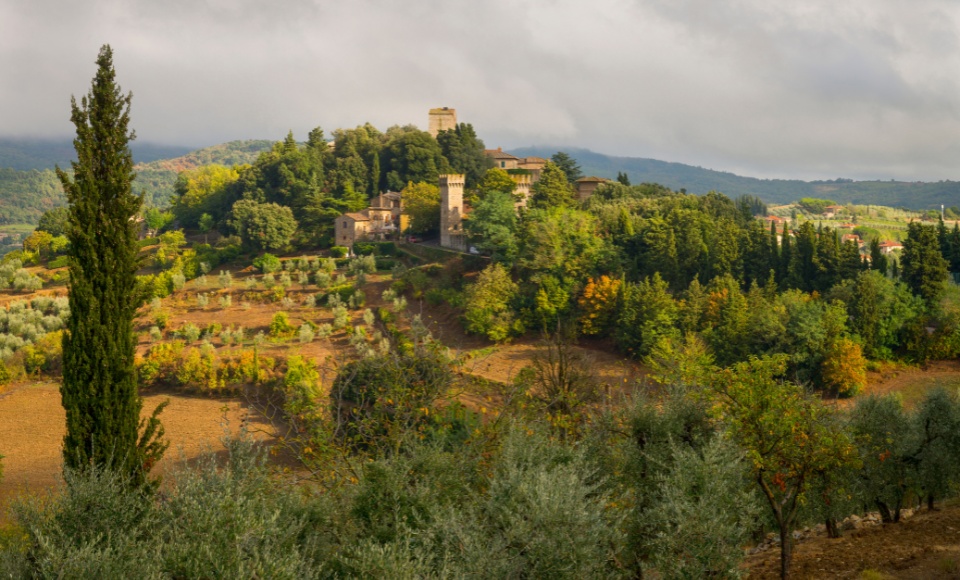
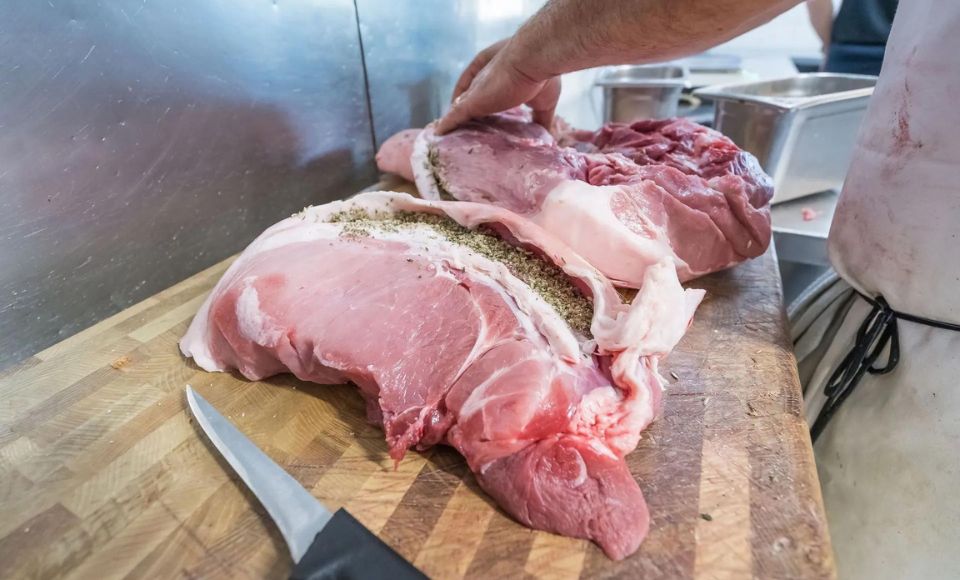
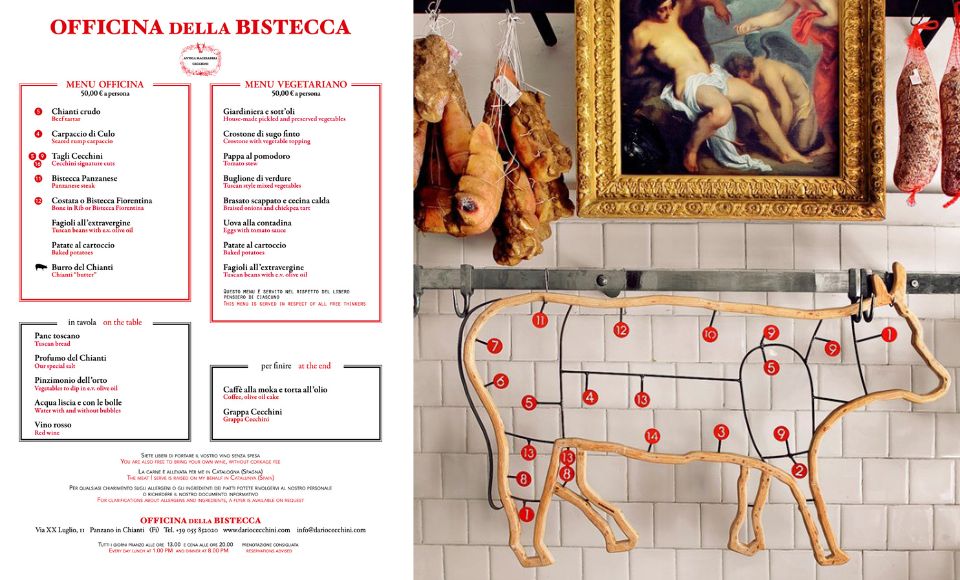
Those who know Panzano know the Antica Macellleria Cecchini. The restaurant-cum-butcher shop is located on the edge of the medieval village in Chianti and is not your average typical butcher shop! Eating with low decibels might not be possible as the volume knob of the sound system is always turned all the way up, but it’s always inviting; the bottles of wine and snacks practically greet you upon arrival. In the shop space, you eat in the rustic Officina della Bistecca, it’s a true paradise for meat eaters.
The menu even includes the MacDario, a burger made exclusively from the best Val di Chianina minced beef, served with potatoes, sweet red onions, and various sauces; it remains one of the best bargains in the world. For a small extra amount, you also get pappa al pomodoro (Tuscan bread and tomato stew), beans, and raw vegetables with the Super Dario. By the way, you can operate the BBQ yourself to grill your piece of steak of choice. It remains a special experience and is certainly recommended.
Antica Macellleria Cecchini, Via XX Luglio, 11, G8V8+RH Panzano, Florence – Dario Cecchini website link. Closed on Sunday Il Focolare,Via Volterrana Nord, 175, Montespertoli (FI)- Website: https://www.ilfocolaremontespertoli.com/
Local eats in Tuscany – South of Florence
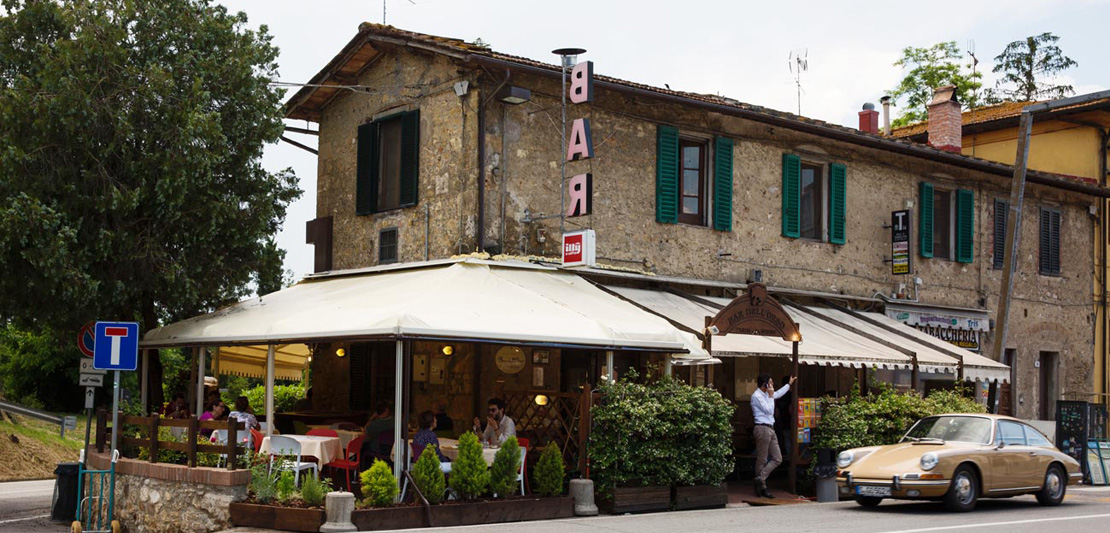
A familiar and simple roadside spot is always a must, and Bar del Orso is for me the perfect road restaurant. It’s known for cold cuts, cheese, and preserves, but you can also quickly order a plate of pasta or a great Tuscan main course. They’re open daily from as early as 5:00 AM until midnight.
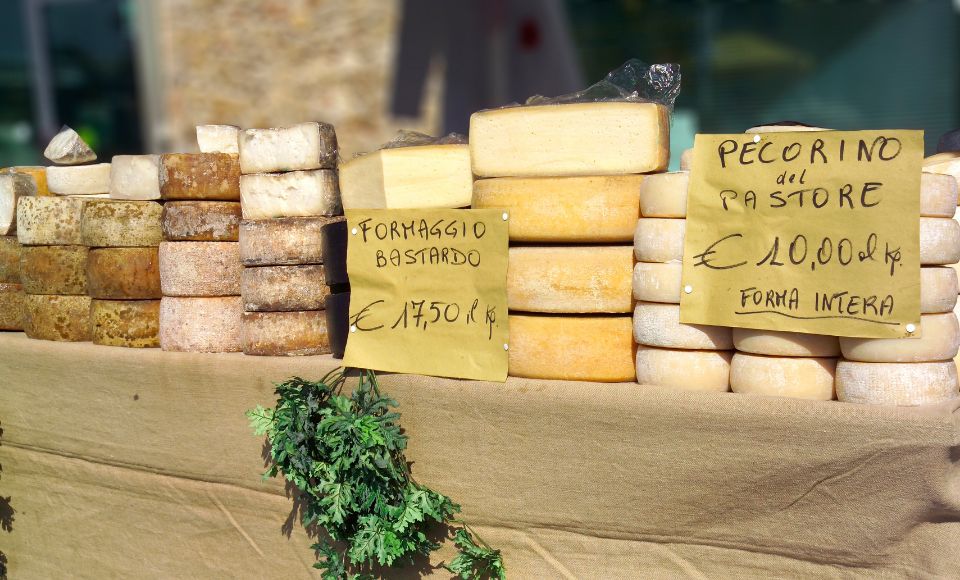
Because it’s located halfway between the Maremma coast and Florence, it’s a regular stop for many visitors who dine here on the way. Around noon it can unfortunately get way too busy, especially on weekends, but during the week it’s quite manageable. Try the classic panini with a thick layer of pecorino cheese (Pecorino from Pienza, Monte Amiata, and Casentino), delicious sun-dried tomatoes, and eggplants. All these delicacies are weighed, so you pay a price per kilo. Order, for example, a generous mixed platter for two including marinated artichoke hearts and sun-dried tomatoes.
Bar del’Orso, Via Cassia Nord, 23 Monteriggioni – Website: https://bardellorso.it/
Wine Tasting in Bolgheri
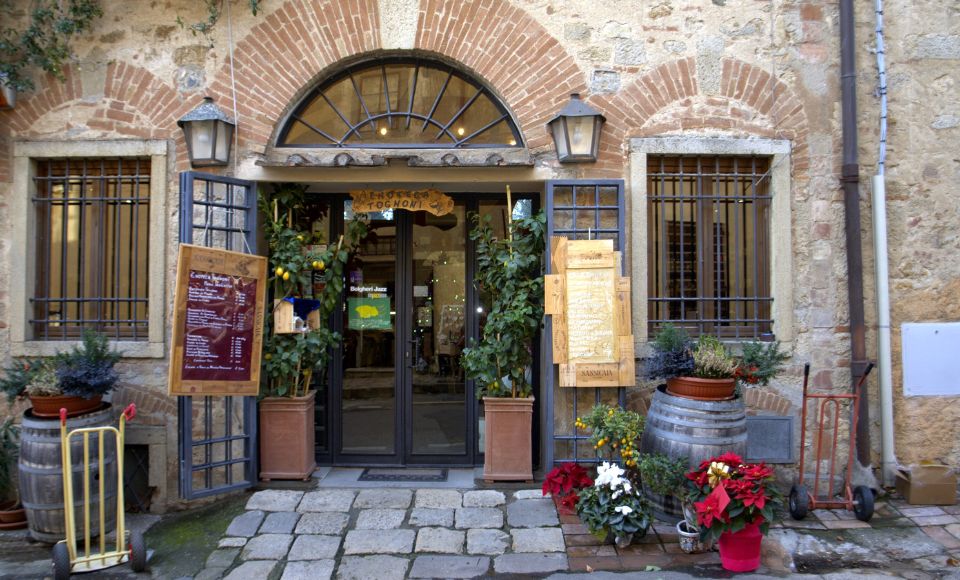
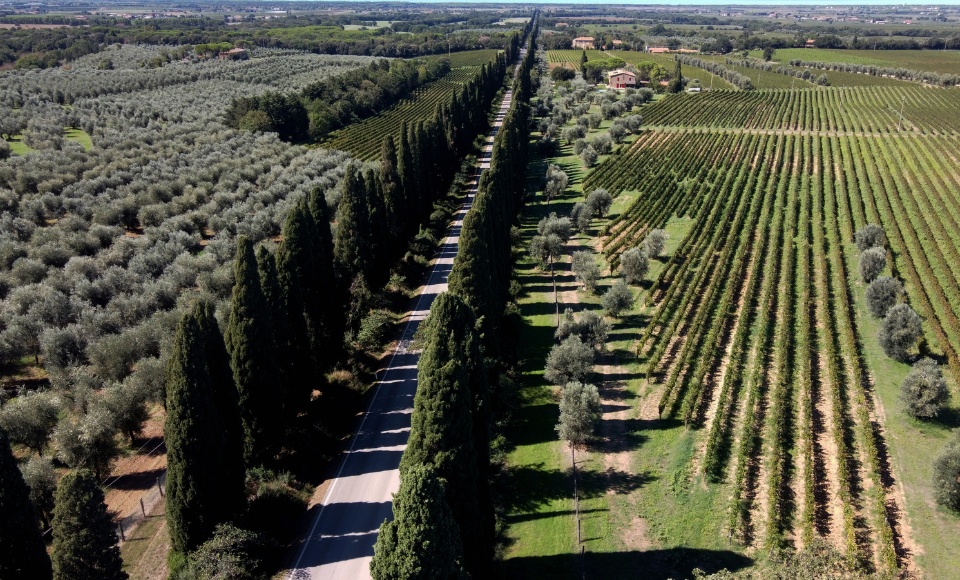
I know most people expect a lot from Bolgheri, but the famous wine village of Sassicaia has exactly three streets. The place can’t really afford many restaurants, and most of them are too expensive and too busy. If you’d like to taste a sip of Sassicaia or Ornellaia without spending 200 Euros on a bottle, you’re better off visiting Enoteca Tognoni. It’s a simple locale and a large enoteca in Bolgheri, but you eat excellently there and you can taste all the Super Tuscans that exist.
Local eats in Tuscany – The Maremma
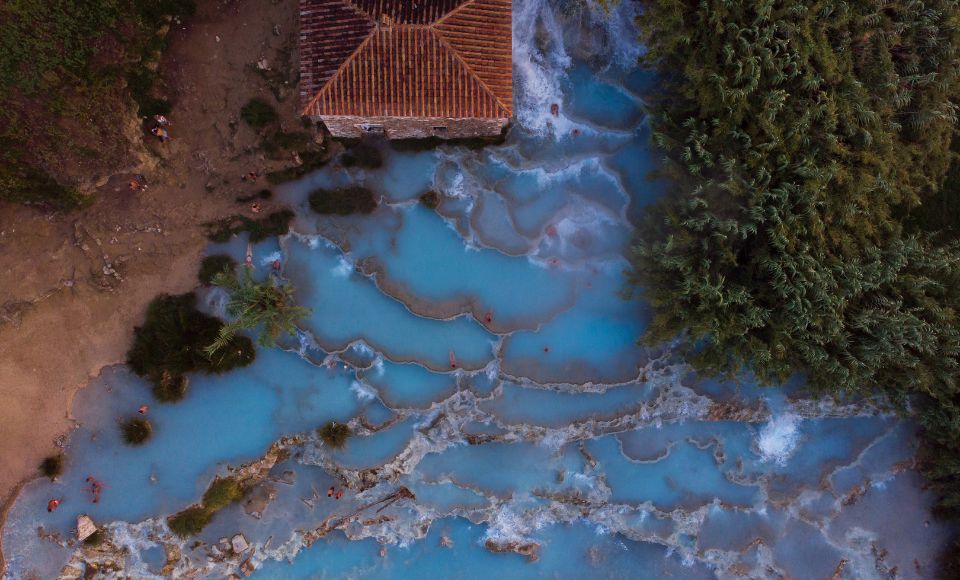
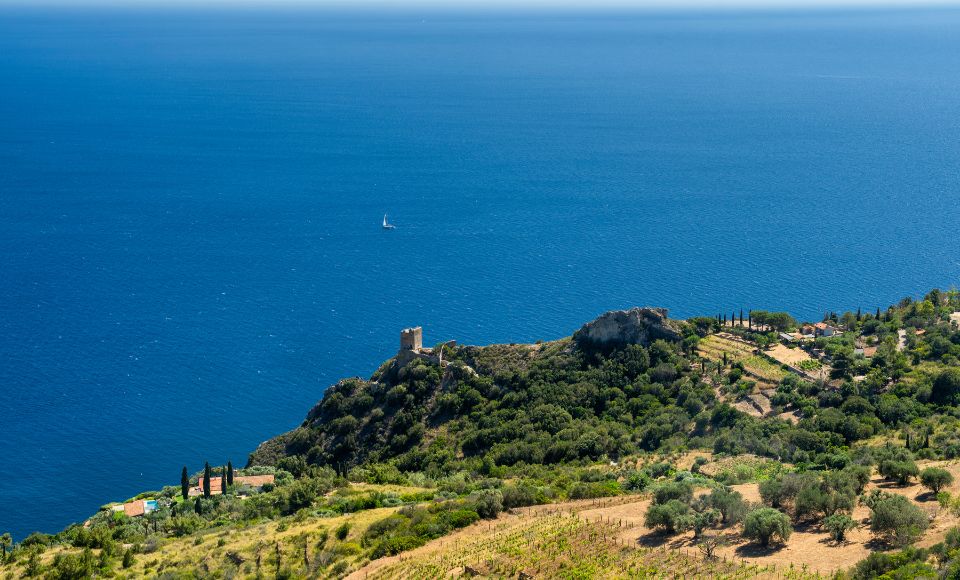
We descend further down the coast towards the Maremma. This unspoiled southern part of Tuscany roughly coincides with the province of Grosseto, and at a certain point, you enter the wine region of Scansano, where they make Morellino wine. If you drive south via Scansano, you’ll come near the famous natural SPA of Saturnia, one of the most beautiful thermal baths in Italy when you arrive at a time when it’s not packed with tourists everywhere. If you’re hungry, visit the picturesque old village of Murci, 20 km from Saturnia and Scansano.
On the typical village square opposite the church stands a building from the 1920s, this is the Trattoria L’Asino Vola in Murci (and when someone sees a donkey flying through the air, anything is possible). It’s a cozy inn with 3 rooms and a cheerful pizzeria on the ground floor. The owners moved to this area from Naples a few years ago and they are wonderful hosts.
If you want to snoop around in this area for a few days, it’s an easy spot without much frills, but with very good food. There’s plenty to see in the surroundings; within 45 minutes you’re at the sea or on Monte Argentario. The nicest thing is to join the host, the neighbors, and some accompanying glasses of Morellino DOC at the table after your daily excursions. You can really meet interesting people here.
Murci is a small community of artists, actors, and other residents who once bought holiday homes here or who moved here from big cities. After the aperitivo, you take a seat at the table in the dining room and eat what’s on offer that day, but regardless of what’s on the menu, you should order a pizza at least once. It’s hard to find such a good Neapolitan pizza in Tuscany!
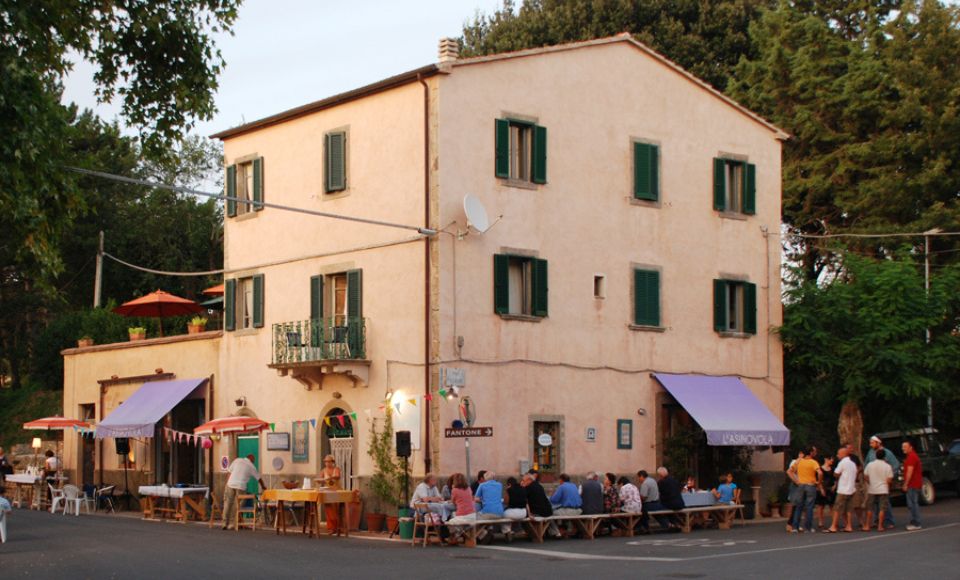 Trattoria L’Asino Vola, Via Centrale Nuova 1, Murci, Grosseto – Website: http://www.asinovola.com/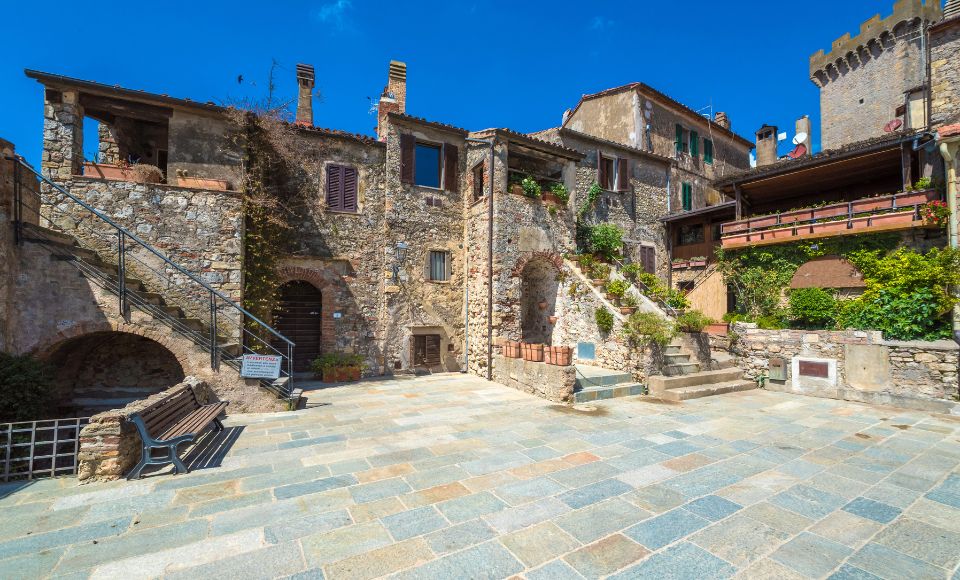
The Tuscan Maremma is really full of gastronomic discoveries. Like the protected Bottarga that you can taste in Orbetello at the cooperative fishermen. Or the wild boar sagra of the medieval village Capalbio and the organic farm of La Parrina near Talamone. But an old village high in the Maremma hills above the old Siena-Grosseto road is truly a little beauty, it’s Casal di Pari sleepy, old-fashioned, and medieval.
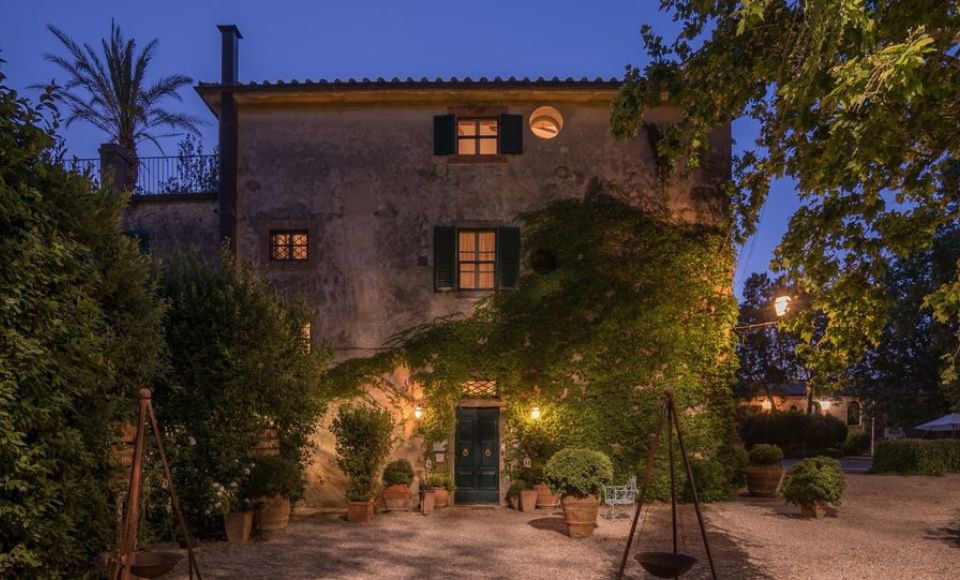
The village bar is the heart and center of the village, inside an osteria without frills where Signora Rosanna serves hearty portions of homemade tagliatelle in family-recipe tomato sauce, cannelloni with spinach and ricotta ravioli, cinghiale alla cacciatora (one of the regional favorites, wild boar hunter-style) or arista with lots of garlic (roasted pork loin). A two-course meal with a quirky bottle of red from the local Montecucco grape won’t break the bank, even a homemade dessert will certainly still fit well within the budget.
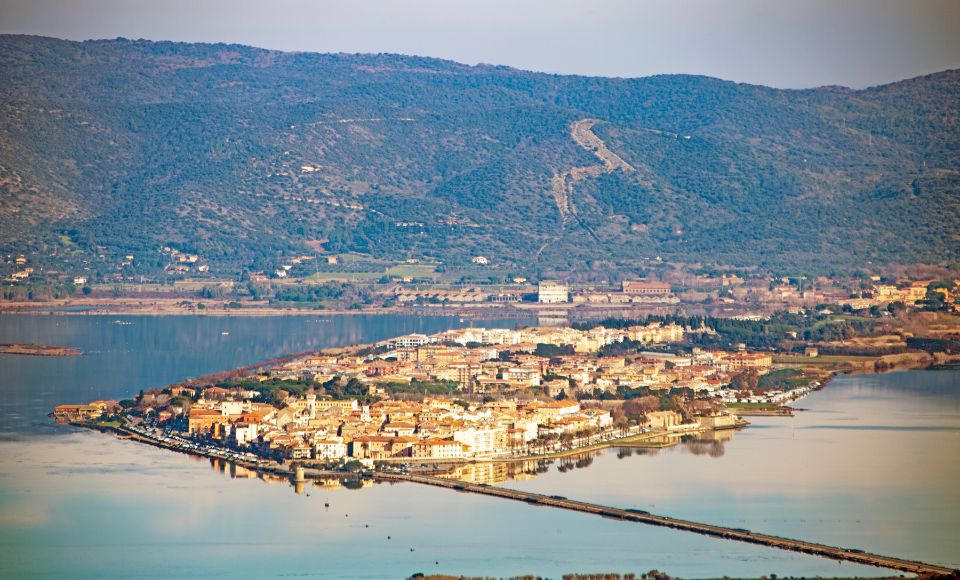 Trattoria di Rosanna, Piazza Milazzo in Casale di Pari, Grosseto – Facebook page
Local eats in Siena and Arezzo
Anyone who has ever had to brave the via Cassia between Florence and Arezzo, until recently still full of treacherous potholes, but with views of the wide Arno valley that make you forget the state of the road now and then, will be happy with this address. It’s a rustic spot with a beautiful shady terrace for a hot day. Inside it’s a bit too dark and the owner wouldn’t be out of place as a strip club owner from the 80s. (Update 2023: according to the latest information, the restaurant has moved and the interior description might no longer be accurate. We haven’t verified this yet.)
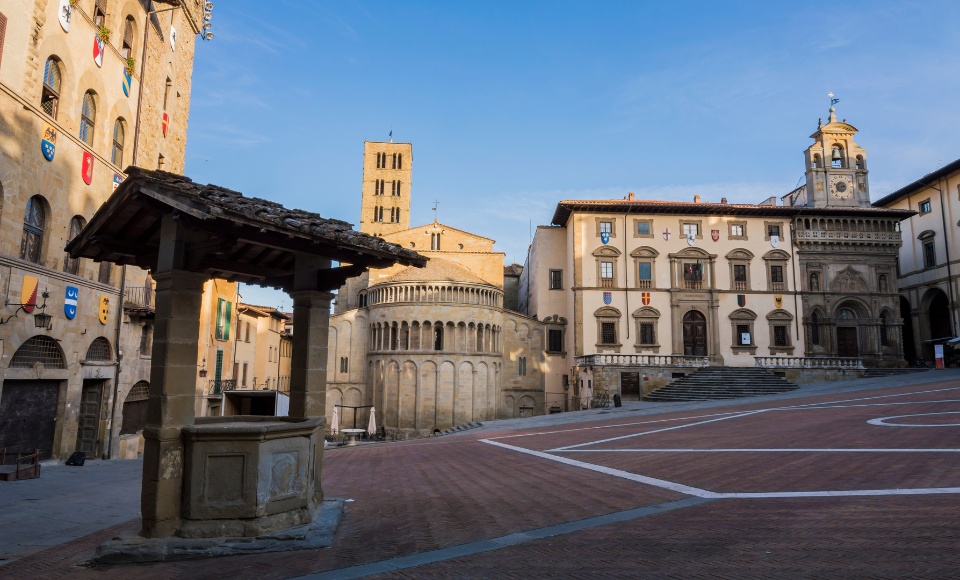
The menu is a whole different story, proudly showcasing local products and Slow Food-approved ingredients that are transformed into colorful dishes such as trofi pasta with arugula and almond pesto and a Renaissance-inspired chicken with lemon, ground almonds, and saffron. But the real attraction is the fantastic gelato, made from seasonal ingredients and always organic. In winter, this means peperoncini, licorice, or Sicilian cassata, and in summer, fruity sorbets such as Amalfi lemon, peach, or apricot.
Osteria Cassia Vetus, Via Manzoni 9, Via Nazario Sauro, 19 in Terranuova Bracciolini, Arezzo +39 055 9172116, Website: Osteria Cassia Vetus. Closing days vary, so check before you leave.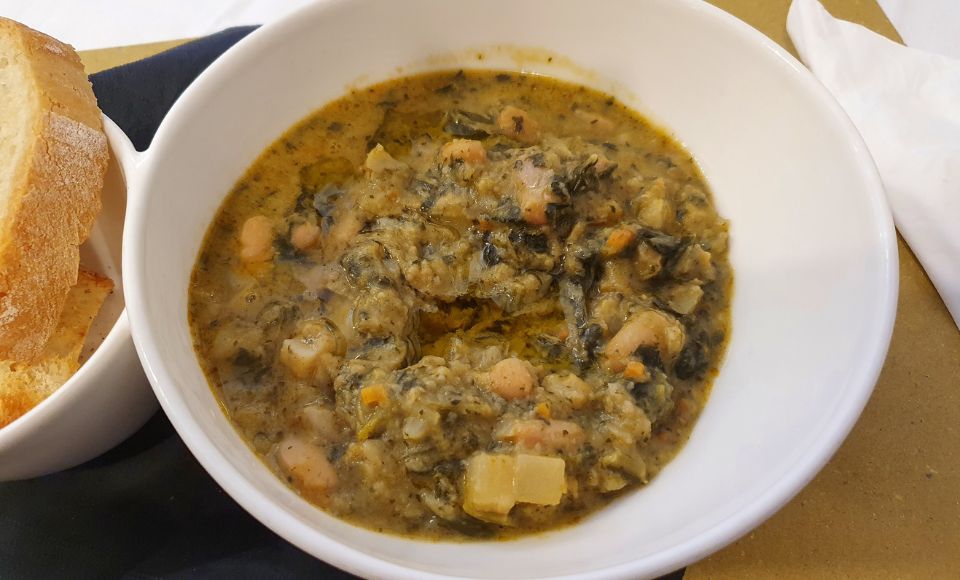
The Locanda with the cliché name Paradiso is another find. It’s located on the edge of the tiny village of Chiusure east of the city of Siena, and the terrace offers a view of the chalk ravines typical of this part of Tuscany. If you dine here, you’ll find local cuisine at its best, with remarkably low prices and an authentic atmosphere that’s becoming increasingly rare in Tuscany. Start with a plate of bruschetta with a drizzle of olive oil, then perhaps a plate of ‘pici’, a kind of thick spaghetti with a Chianina beef ragù, or a ribollita soup. They don’t serve much meat here, unless you count the platters of excellent salumi. Generally, seasonal vegetarian dishes are offered, for example, the fried artichoke hearts.
Locanda Paradiso, Via Porta Senese 25 in Chiusure in the province of Siena – Tel. +39 0577 707016. Opening-hours: Closed on Mondays – Restaurantguru pageExperiences near Florence
Don’t wait in line, book experiences before they sell out.
Viator
Visit Tuscany
Florence
FI
Tuscany
Italy
Dining and Cooking