
At first glance, the menu at Willie’s—new from BCB3 Hospitality (Somaek, Zurito, more)—could be mistaken for Italian-American: burrata, meatballs, pizza, pasta. But look further and you’ll find bits of globe-trotting inspiration that draw upon chef Jamie Bissonnette, Andy Cartin, and Babak Bina’s other restaurants. Korean flavors infuse a spin on rigatoni amatriciana; one pizza is topped with fancy Spanish ham, while another’s toppings resemble a deconstructed version of a pintxo next door at Zurito.
Label it what you will, but at least as far as Bissonnette is concerned, it’s simply “a neighborhood pizza joint.” More on Willie’s backstory here, and see below for a closer look at five dishes to try when you go.
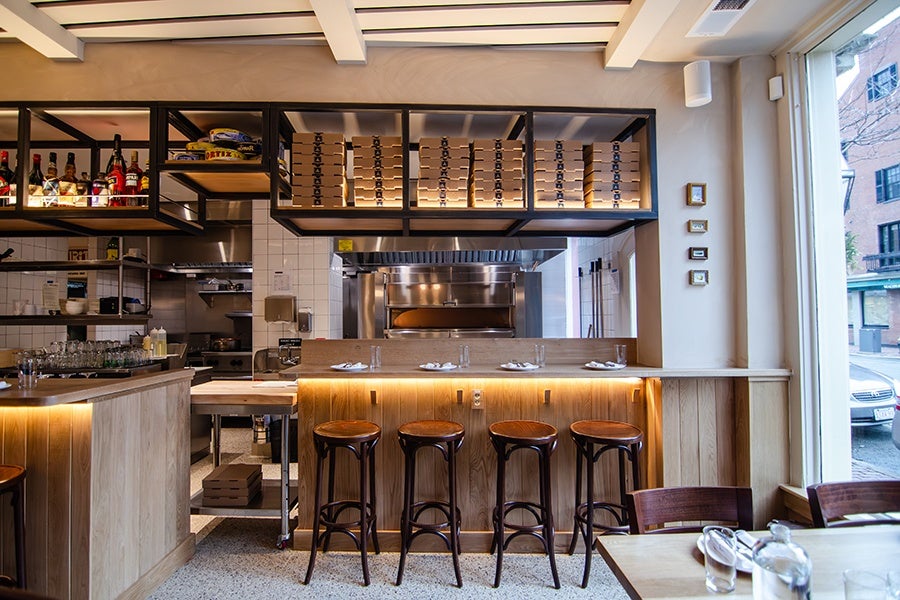
Willie’s. / Photo by Rachel Leah Blumenthal
PLATES
Among the eclectic collection of plates starting off the menu is a Caesar (a great prelude for a pizza-and-beer lunch is “a simple little salad with a couple crunchy vegetables,” as Bissonnette previously put it), a cold cut grinder, meatballs, and supplì (Roman street food similar to arancini). Two standouts:
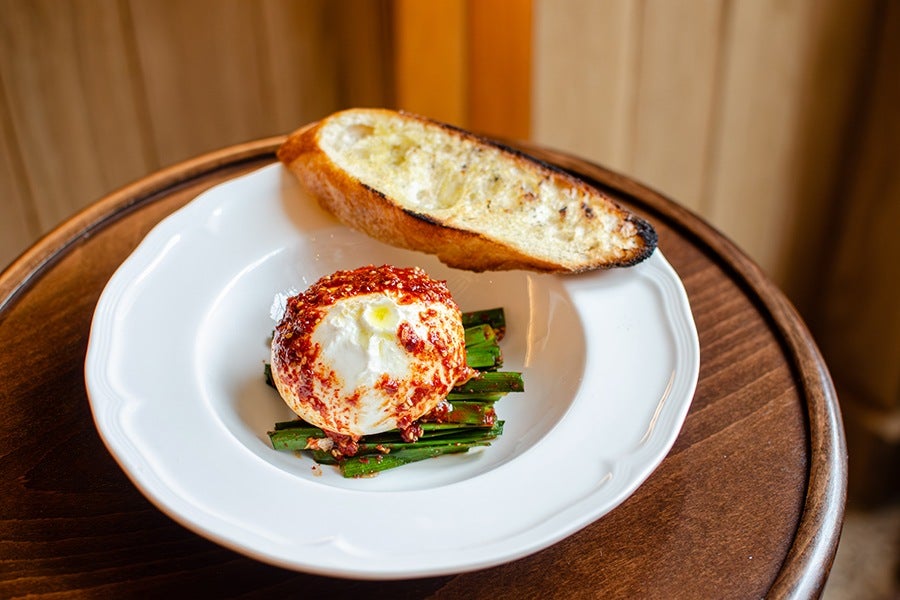
Burrata at Willie’s. / Photo by Rachel Leah Blumenthal
Burrata
With baguette and buchu muchim
The burrata—mozzarella stuffed with creamy stracciatella—is one of several dishes on the Willie’s opening menu that seamlessly melds Italian and Korean cuisines. Here, the fusion is thanks to buchu muchim, a zippy Korean garlic chive salad, which is “one of the more popular side dishes” at sibling restaurant Somaek, says Bissonnette.
“Burrata is something that I hardly ever eat, but when I do, I want it to be unique,” he says. At home, Bissonnette simply grabs burrata and banchan, Korean side dishes, and has realized that eating burrata with kimchi is “such a good combination of creamy, rich, fatty, salty, acidic, and a little spicy.” Here, buchu muchim hits similar notes and adds “a good texture and acidity,” says Bissonnette. A reminder not to get too attached: He’ll play around with other vegetables and ingredients as the seasons change. Watch for asparagus in the spring, for example, or perhaps a combination of tomatoes (“a no-brainer” with burrata, he says), sesame leaf, and maesil-cheong, green plum syrup.
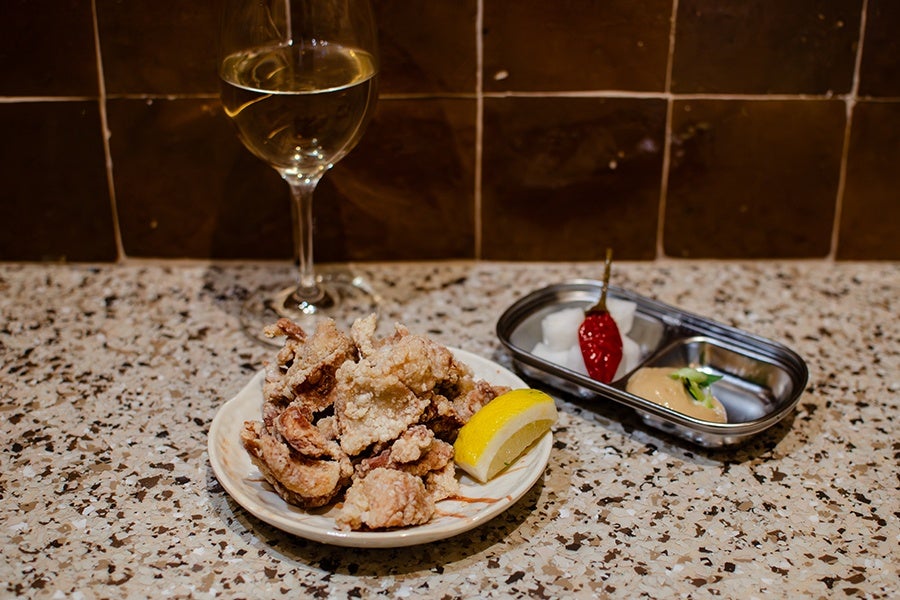
Calabrian karaage at Willie’s. / Photo by Rachel Leah Blumenthal
Calabrian Karaage
Fried chicken, Calabrian chili oil, onion soup mayo
“I love fried chicken,” says Bissonnette, “and I was thinking about takeout. People love fried chicken with pizza, whether wings or tenders.” (As for the latter, he plans to add a “dope-ass tender” to the kids’ menu in a few months, when things are running smoothly.) Wings are hard to do in a small kitchen, he says, so he landed on karaage—light and crispy Japanese fried chicken. But instead of marinating with typical karaage ingredients like sesame oil and ginger, he thought extra garlic and Calabrian chili oil “would be fun.” Extra fun? Dipping it in onion-soup mayo and then taking a contrasting bite of pickled mu, Korean radish. “This is just one all-over-the-place dish,” says Bissonnette.
PASTA
The Willie’s team is making a variety of pasta shapes in-house, from creste di gallo to cavatelli, although there’ll be the occasional imported pasta, too, like a spaghetti that’s about to go on the menu. The opening selection is fairly concise, but Bissonnette anticipates adding some verbal specials once things ramp up. “This is the kind of restaurant, because it’s so small, that’s the perfect canvas to do fun stuff, and I love making pasta,” he says. “To be able to make 20 [portions of] pasta, something super unique, and sell it all in one day is really appealing.”
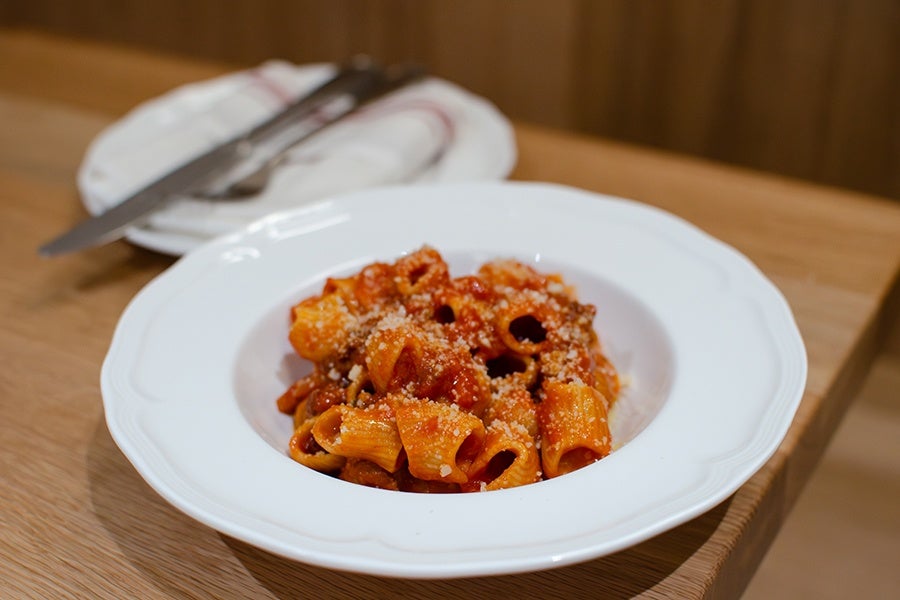
Rigatoni amatriciana at Willie’s. / Photo by Rachel Leah Blumenthal
Rigatoni Amatriciana
Extruded pasta with guanciale yak-gochujang and pecorino
“Amatriciana is one of my wife Song’s favorite things, and she’s my favorite person in the world to cook for,” says Bissonnette. The tomato-based pasta sauce hails from Amatrice, a town not too far from Rome. Guanciale, Pecorino Romano, and chili give it a signature smoky-spicy flavor, and while it’s often paired with bucatini or spaghetti, Song saw it made with rigatoni at a lot of restaurants on her last trip to Rome. “I love rigatoni with a red sauce,” says Bissonnette, and “when I make any red sauce at home, I always fry gochujang [Korean chili paste] in the tomato paste to give it a slow heat.”
At Willie’s, he uses yak-gochujang as the base—chili paste fried with meat, in this case guanciale. “It looks so simple, just a bowl of pasta with sauce, but when you eat it, it’s got a bit more nuance to it,” says Bissonnette.
PIZZA
Willie’s pizzas are broadly “American,” as Bissonnette said previously, cooked in a gas Wood Stone oven with a crispy crust and a bit of char. Not aggressive New Haven-style coal-oven char, mind you, but Bissonnette grew up in Connecticut and finds New Haven “apizza” to be the best in the world, and that inspiration peeks through. Take Willie’s P.C.T., or “pizza con tomate,” for example. Its name is a nod to Spain, but the no-mozzarella tomato pie would be right at home in New Haven. Other pizzas at Willie’s are tied more closely to Spain and feel like an ode to Zurito, Willie’s sibling Basque-inspired pintxo bar next door. A pizza called Gilda “The OG,” for instance, mirrors the gold-standard pintxo, gilda, with anchovy, olives, and guindilla peppers.
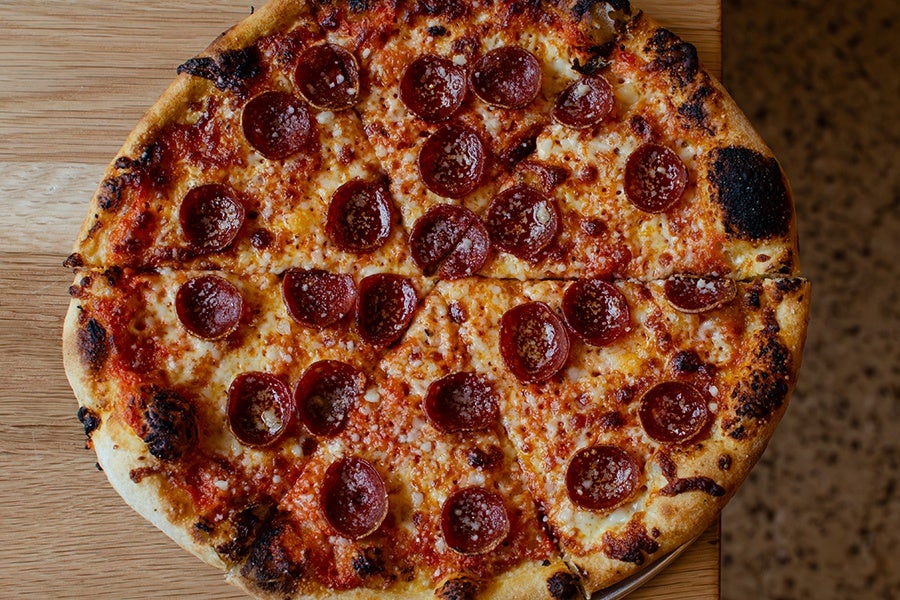
Pepperoni alla vodka pizza at Willie’s. / Photo by Rachel Leah Blumenthal
Pepperoni alla Vodka
Vodka pink sauce, pepperoni, mozzarella, parmesan
“Vodka sauce seems to be having a moment again,” says Bissonnette. “I’ve served it intermittently over the years, because it’s awesome. There’s a place called Norm’s in Brooklyn, near our brother-in-law’s house, and Song had it there once and talked about it non-stop until we went down together and I had a slice. I was like, ‘Wow, this is great.’ So, we played around with it. We’re doing a classic vodka sauce with sun-dried tomatoes, mozzarella, and Ezzo pepperoni.” Ezzo is a sausage-and-more brand beloved by cured meat connoisseurs and pizza-makers, especially the varieties where the edges curl up to make little cups. “I really love the cups,” says Bissonnette. “I want the danger of ruining a shirt with grease.”
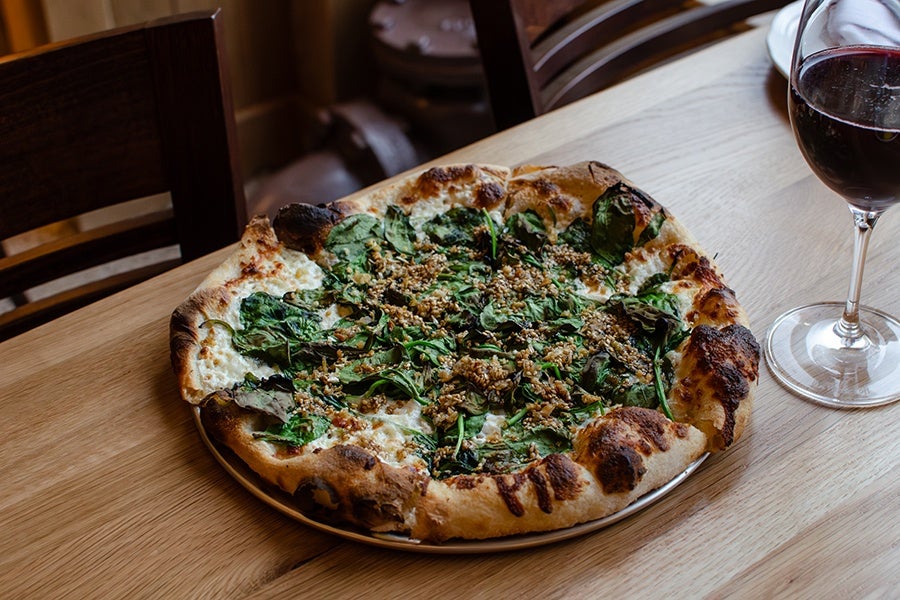
Spinach pizza at Willie’s. / Photo by Rachel Leah Blumenthal
Spinach
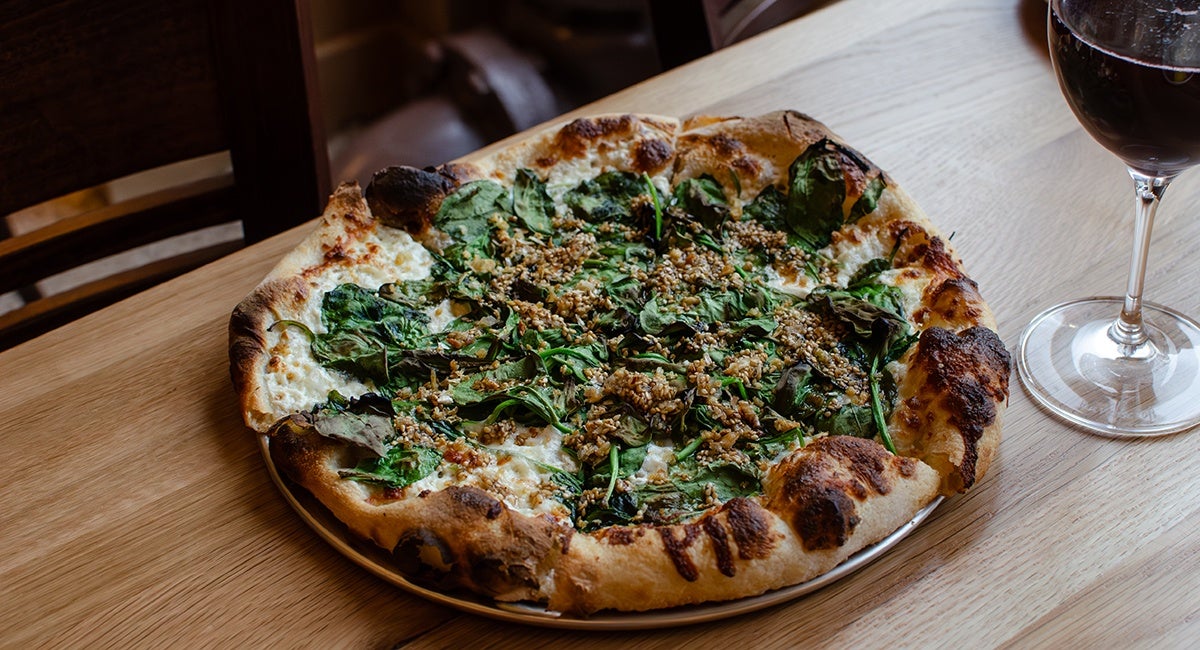
Ricotta, baby spinach, mozzarella, sesame, parmesan
The spinach pizza also references a New York spot, although this one is now closed—Co., a Chelsea pizzeria from famed baker Jim Lahey, that served a memorable spinach pizza called the Popeye. “They put a handful of baby spinach on a white pizza and baked it in the back of the oven so as it cooked, the top kind of broke down and burned, then wilted down onto the pie,” says Bissonnette. Combine that idea with one of his favorite Korean banchan—sesame spinach with garlic, sesame oil, and a splash of soy sauce—and Willie’s spinach pizza was born.
“I wanted to see what it would taste like if we garnished a spinach pizza with a ricotta base with a vinaigrette of roasted sesame seeds, sesame oil, soy sauce, and raw and fried garlic,” he says, “and dang it, it’s really good and unique.”
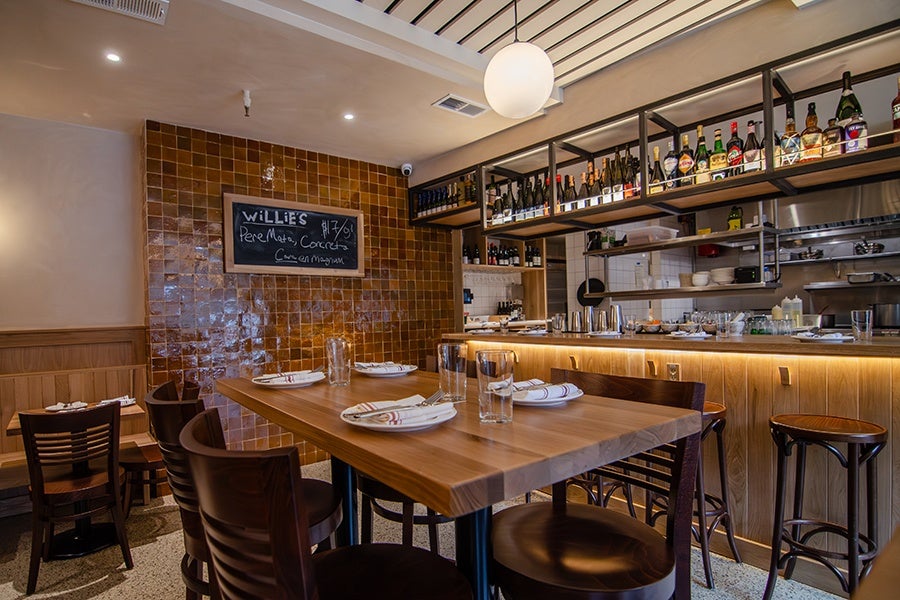
Willie’s. / Photo by Rachel Leah Blumenthal
The team aimed to create the type of neighborhood-friendly spot they saw as lacking on Beacon Hill, and they just might have done it. Serve killer pizza and pasta, and the neighborhood will show up again and again.
Open for lunch and dinner daily. 20 Charles St., Beacon Hill, Boston, williesboston.com.
Dining and Cooking