
Toyakisphoto/Shutterstock
Interior design trends rise and fall every year. But the 1950s birthed some design elements that have gone on to become iconic, not just as retro fads. but as design staples. Many of the overarching trends of the 1950s — including connected dining, form-meets-function furniture, and future-forward designs — have become timeless. The 1950s generally saw a rise in optimism in the U.S. Wages rose for many workers, and more commodities were available than ever. Designers created space-age and atomic styles that still evoke feelings of reaching for the stars.
This optimistic modernism of the ’50s paved the way for many a now-timeless piece, from cantilever chairs to tulip tables, futuristic chandeliers, and more. Interestingly, with the rise of open plan living, the 1950s was also the decade that the area rug was devised. Below are 12 dining room elements that are both very 50s and wonderfully timeless — if done right.
A lighthearted dash of ’50s pastel tones
Onurdongel/Getty Images
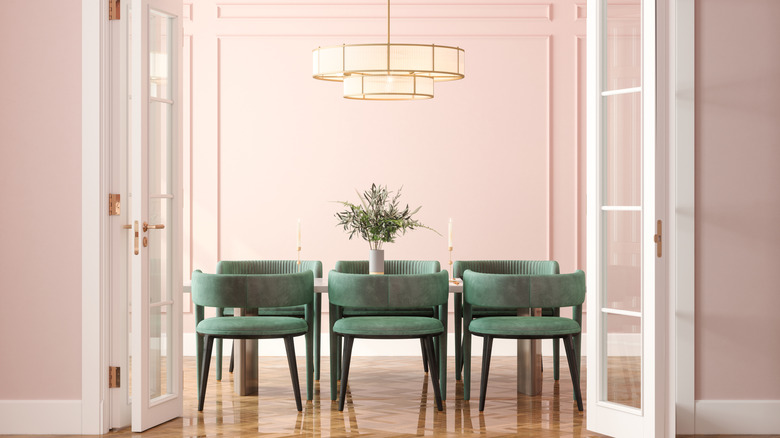
Pastels are often seen as a hallmark of 1980s design, but the trend really came about in the 1950s as more consumers turned to cheery, lighthearted colors in the post-war era. Pastel tones punctuated appliances, tubs, toilets, tile, and, of course, paint shades. Historic ’50s color palettes from paint companies for this period are invariably picked out with shades of pastel pink, mint, yellow, and blue. Items like tablecloths and servingware also featured pastel shades — as evidenced in the depression and milk glass pieces from this period.
We love a dose of soft, happy color, but, going overboard on pastels might make your dining room feel more like a dollhouse than a real space. To channel the ’50s feel in an updated way, focus on how you’d like to incorporate pastels and then balance them in the room. Those who are considering color drenching might opt for pastel paint on the wall. If you love this option, either go for a full color drench in the room or choose shades and finishes that contrast with the pastel shade. This will help them pop against the walls. If you’d prefer to skip painting, and would rather play with pastels through accessorizing, try spreading pastel notes across your table linens, servingware, and decor. A neutral wall color can also pair well with pastel chairs and artwork.
Mid-century furniture offers a pared-back, streamlined look
YWSDDD/Shutterstock
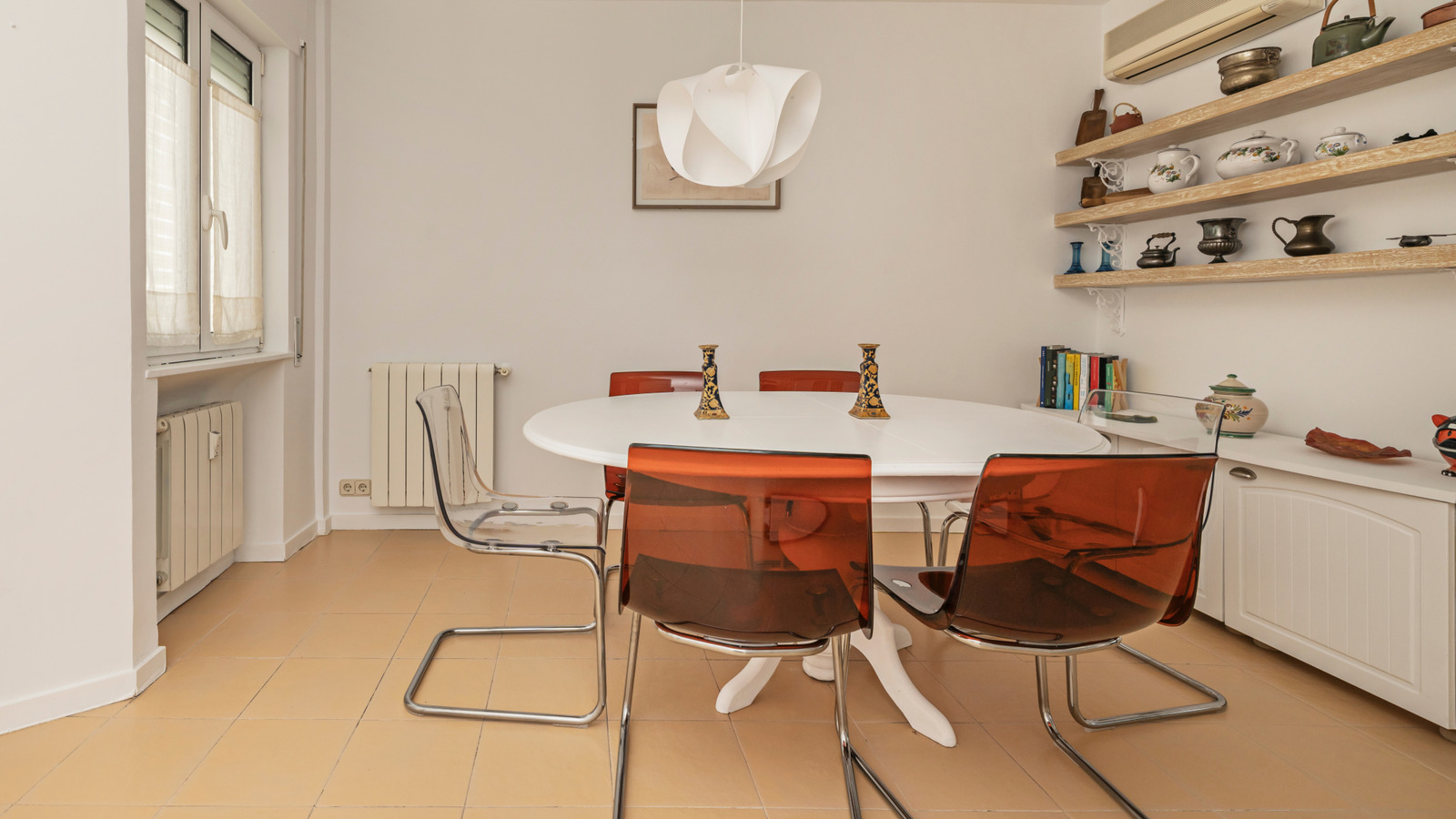
Mid-century modern furniture never truly goes out of style. Yes, overloading spaces with mass-produced, cheap “mid-century” pieces is definitely a design trend that’s dating homes in 2026. But mid-century modern, in its true form, is timeless. Its appeal stems from the classic form-follows-function approach to the design, which simply means that the style of the piece should not overshadow its intended function. Mid-century dining room chair styles were slimmer and more pared back, making sure that the pieces were comfortable and didn’t dominate the room in a way that interfered with its function. They typically used solid wood like walnut, teak, and elm in lighter finishes. Paired with the streamlined silhouettes, MCM pieces can brighten dining rooms and make them feel a little less stuffy.
The key to bringing in mid-century modern in these days lies in not overdoing it. Having all mid-century furniture in the dining room can easily look a little too retro and feel flat. Although it may be practical to buy a dining set, resist the urge. Instead, mix and match your dining table and chair styles. Mid-century chairs can lighten the feel of a heavy, traditional dining table.
Bar carts embrace the leisure of the 1950s
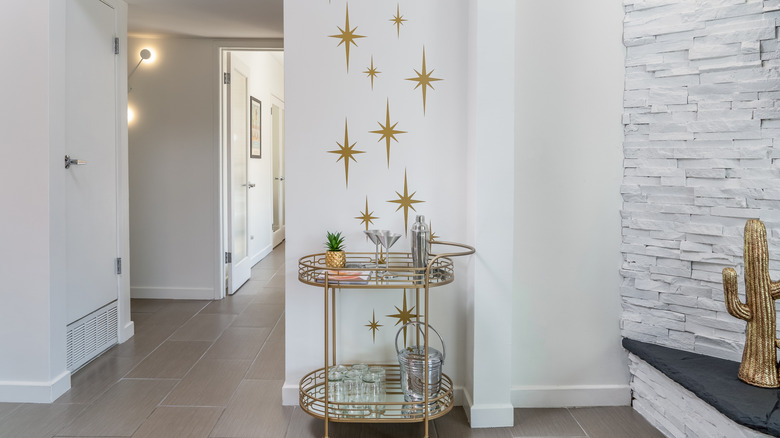
Tom Windeknecht/Getty Images
Another outcome of the 1950s: More leisure time. In this post-war era, rising wages and low unemployment gave people the freedom and means to relax and socialize in style. Cocktail culture experienced a surge in suburban homes, and bar carts were a staple during this decade.
These days, bar carts can do much more than level up your cocktail station. In small apartment dining spaces, they can act as buffets, allowing guests to serve themselves an extra helping of potatoes or pour themselves a drink. They can also be multi-tiered accent tables. This square gold bar cart from Lormiter has three shelves, which means their purposes can be mixed. You might store additional glassware on the bottom, cocktail accessories on the middle shelf, and drinks and glasses on the top. For a more rustic look (remember, you don’t want too much mid-century), Bon Augure’s bar cart has racks for wine glasses and hooks on the side for towels and utensils.
Black leather upholstered dining chair seating is a mid-century staple that still looks chic today
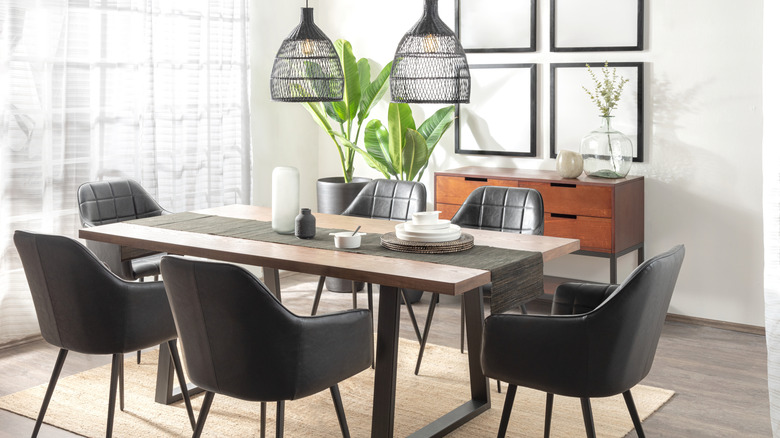
Wood wasn’t the only material of choice for mid-century designers. Black leather was a dominant upholstery feature in mid-century dining chair designs. It often appeared in Danish and Dutch MCM dining chair designs, paired with mid-toned wood, such as birch or rosewood, and in combination with sleek, future-forward silhouettes that whispered back to early 1900s bentwood designs, but boasted stripped back, modernist lines and straighter angles.
One of the most straightforward ways to channel this mid-century dining room furniture choice is to find a full set of chairs. Plumping for two statement chairs at the heads of the table can also be an option. While you can find new renditions of black leather mid-century dining chairs (for instance Home Depot stocks the Ashcroft Furniture Roxy leather dining seats), it might also be worth scouring places like Facebook Marketplace for some vintage finds.
Chrome frame dining room chairs can channel the ’50s in all of the right ways
Chrome became a favorite finish during the 1950s. Its reflective surface felt especially bright and modern at the time compared to the dark, heavy brasses and bronzes that had dominated in previous decades. Its uses in very modern conveniences like cars and home appliances helped elevate it and made it feel sleek, almost futuristic. Chrome cropped up in everything from laminate table edges (remember those pastel, formica kitchen tables anyone?) to table lamps and chair legs. One chair style that really highlights the use of chrome has to be the (now internet-famous) cantilevered seat. The origional design was invented and presented by Mart Stam in 1926, and went on to become an iconic mid-century silhouette. Chrome-legged dinette chairs (often featuring pastel colored seats and backrests) were massively popular in the ’50s. They lean much less timeless, but can still be a fun option if you want a strong retro feel.
For a modern take on the cantilever design, these dining chairs from Gopop have a chrome base, and the high backs should make them comfortable seats during long dinners. If you’re after more of a classic cantilevered silhouette, the Zesthouse Natural Rattan Dining Chairs feature lower backs. Chrome dinette chairs aren’t quite as common to find, but Wayfair stocks quite a selection.
Mid-toned wood dining tables with clean lines
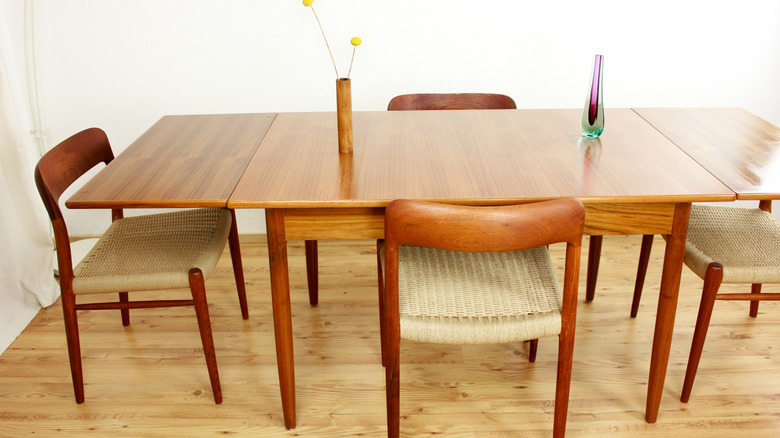
Dreamprint/Shutterstock
Part of mid-century design’s appeal comes from its commitment to natural materials, such as solid wood legs, and exotic wood veneer in tables. Vintage pieces from the era are usually heavy, but medium to light in finish. As mentioned earlier, walnut and teak were the primary woods used in mid-century pieces, and they were much lighter than the mahogany and cherry finishes of decades past. Like all mid-century modern pieces, dining table designs focused on function rather than ornamentation and featured very clean lines. Smaller designs with flexible leaves were also popular — and still retain their practicality today. Slim, often tapered legs are a hallmark feature of mid-century tables, as well as legs that angle outwards.
Something like Livinia’s Aslan round wooden dining table is a nice example of a modern take on this classic design. If you want to avoid a leggy look (something that can easily happen when pairing a splay-legged table with chairs that are busy on the bottom, such as Eames-style dining chairs) — then go for something more sculptural. Rocity’s 70-inch dining table in walnut captures that mid-century vibe with its simple design and dedication to form, but its look could fit a number of styles.
The ’50s birthed some iconic round dining tables
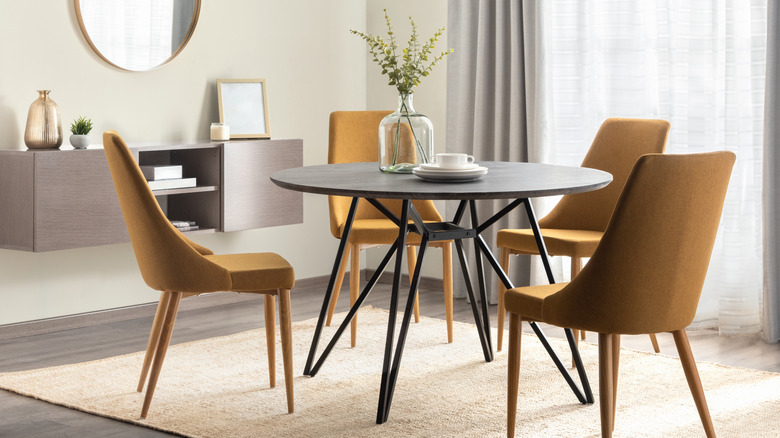
YWSDDD/Shutterstock
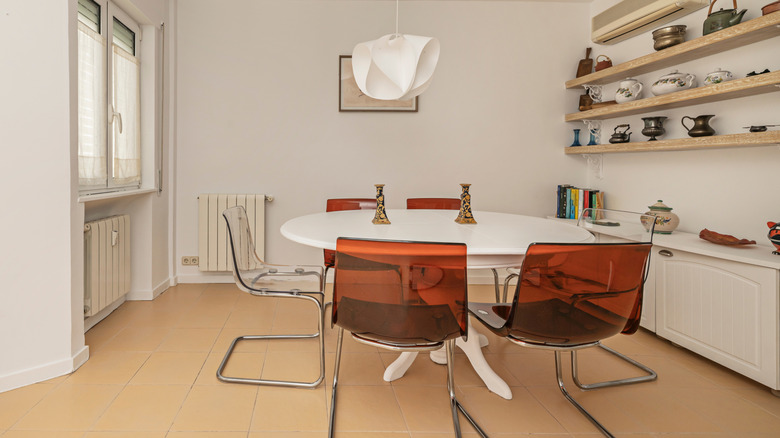
Round dining tables can be a practical pick, especially in small spaces, and the mid-1900s gave rise to some designs that both mark the era and still fit seamlessly into contemporary homes. Some of the most prominent designs include Jean Prouvé’s rounded wooden Guéridon table, which was created in 1949 and is, to this day, being reissued by Vitra. Its splayed legs are classic mid-century, as is its use of steel to stabilize the base. In his quest to “clear up the slum of legs,” architect Eero Saarinen designed the tulip table in the 1950s for Knoll, which had a rounded top and plenty of space for human legs in the absence of chair legs.
Pedestal bases like these aren’t merely attractive — they also solve the issue of chairs bumping into the table legs. If you’re looking to pick up something reminiscent of Jean Prouvé’s Guéridon table, the Crossroads oval dining table from Modway has an intricate MCM-style base and enough space to seat eight people. Its walnut finish evokes that mid-century feeling. Fans of the tulip table will appreciate Meridian Furniture’s Holly dining table. Available in three sizes, the piece is made from solid wood with a walnut finish.
Sputnik chandeliers channeled the space age feel of the ’50s, and are still popular today
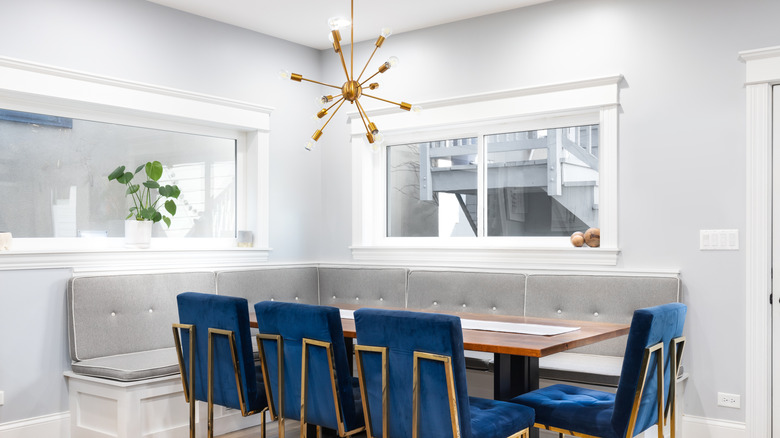
Joe Hendrickson/Getty Images
Sputnik chandeliers, the space-age lighting fixture named after the Russian satellite that launched in 1957, became a hit in the 1950s and 60s thanks to its futuristic design. Countless iterations of this fixture exist, but in general, these chandeliers have a circular base suspended from a single rod. From that base, individual arms shoot out and end with a light bulb. Some versions have frosted glass balls covering the bulbs, while others have arms of varying sizes, creating an asymmetrical look. Brass, chrome, and matte black finishes are fairly common with these lights.
One of the secrets to nailing statement lighting is getting the scale right. Too small, and the fixture is going to look out of place over a long table. Oversized lighting features have been trending with designers for some time, but, you also don’t want guests nearly knocking themselves out on your chandelier. So measure the space before you start shopping. Weesalife’s sputnik chandelier has crystal-like glass over its bulbs, giving it a sparkling look, and comes with three different sizes of hanging rods, allowing you to customize the height at which you hang it. This semi-flush sputnik mount from Asgyisa brings in that same style but doesn’t hang as low, ideal for lower ceilings.
Geometric and playful prints
As beautiful as mid-century design can be, it can also feel quite pared back with its no-frills approach. To balance this, prints of this era leaned into geometric, color-block, and futuristic, almost cartoonish-inspired patterns and shapes. They covered drapes and other textiles, and the geometric shapes showed up in table and floor lamps. These styles balance the seriousness of the furniture’s form with youthful designs that can make a dining room feel both lived-in and modern.
The same idea can be applied to just about any furnishings you have in your dining room, making it easy to infuse it with a little 1950s playfulness. Look for soft goods and lighting that bring in some whimsy to your dining room. This will keep it from looking too formal and show guests that you don’t take yourself too seriously. This table runner from Focusbrite has an atomic pattern in yellows, blues, and reds that nod to ’50s aesthetics. Etsy also boasts a range of tablecloths in mid-century-inspired prints. For lighting on a sideboard, these vintage-looking ceramic table lamps from Vpazg have a geometric-patterned ceramic base with a crackled look in a turquoise glaze.
Atomic accessories amp up the space-age feel
Atomic and space-age designs popped up in homes around the country after the launch of Russia’s Sputnik 1 in 1957. The event took the U.S., which had been working to launch a satellite, by surprise and kicked off what’s known as the Space Race. As both countries raced to the moon, the public’s fascination with space in the U.S. continued well into the 1960s, culminating in Neil Armstrong’s historic moonwalk in 1969, but long before then, designs inspired by the stars were easy to spot in homes.
Going overboard on space-age designs will look dated, not timeless, and it may be tough to blend in those looks with other more modern trends. The trick here is to bring in the space age through decor sprinkled around the dining room. This will nod to the era without letting it overpower the room. A piece of space-age wall art or a clock with a sunburst design (like the Fieldy’s wall clock) in bright colors could give just enough 1950s feel. If even that’s too much, then introduce the colors into your space in a different way. This set of three ceramic vases from Gaosheng subtly brings in those atomic colors, but won’t clash with other styles. Alternatively, keep your eyes peeled for any vintage atomic decor treasures — not only is it a retro decor trend that deserves a comeback, but vintage versions of these items can also be quite valuable.
Rugs define space
Chedko/Shutterstock
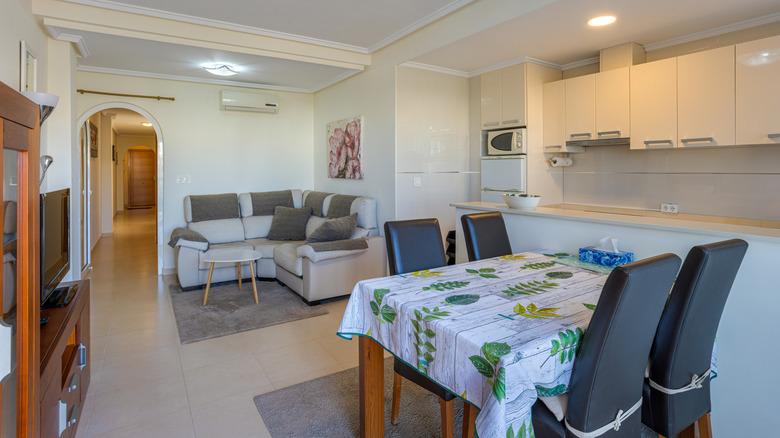
As homes opened up in the 1950s, rooms started to blend together. The open-concept designs we know today, ones where one room might contain the living room, dining room, and kitchen, wouldn’t become popular for a few more decades, but this was the start. Though not quite as open, these rooms often had wider door frames that opened up to each other. Traditionally, there were doors separating kitchens and dining rooms, and many of those came down as well. The line between the kitchen and dining room became less formal. To better delineate the space, rugs became an important tool to separate one room from another. An industrial designer by the name of Raymond Loewy led this drive toward area rugs in 1952.
Rugs are still used today to identify one space from another. For dining rooms in open-concept spaces, the right rug can inject a 1950s look while also visually separating the area. If you’re trying to decide on how to choose a beautiful dining room rug that channels the ’50s, a great starting point is examining Loewy’s early designs. While it’s hard to find an exact dupe for these nowadays (the original designs are once again in production, but you can only get a price on enquiry), his range featured organic, abstract, and atomic designs. Channeling these types of motifs, in a similar color palette, is a sure-fire way to spark that design-forward ’50s feel in a dining space.
Dining and Cooking