
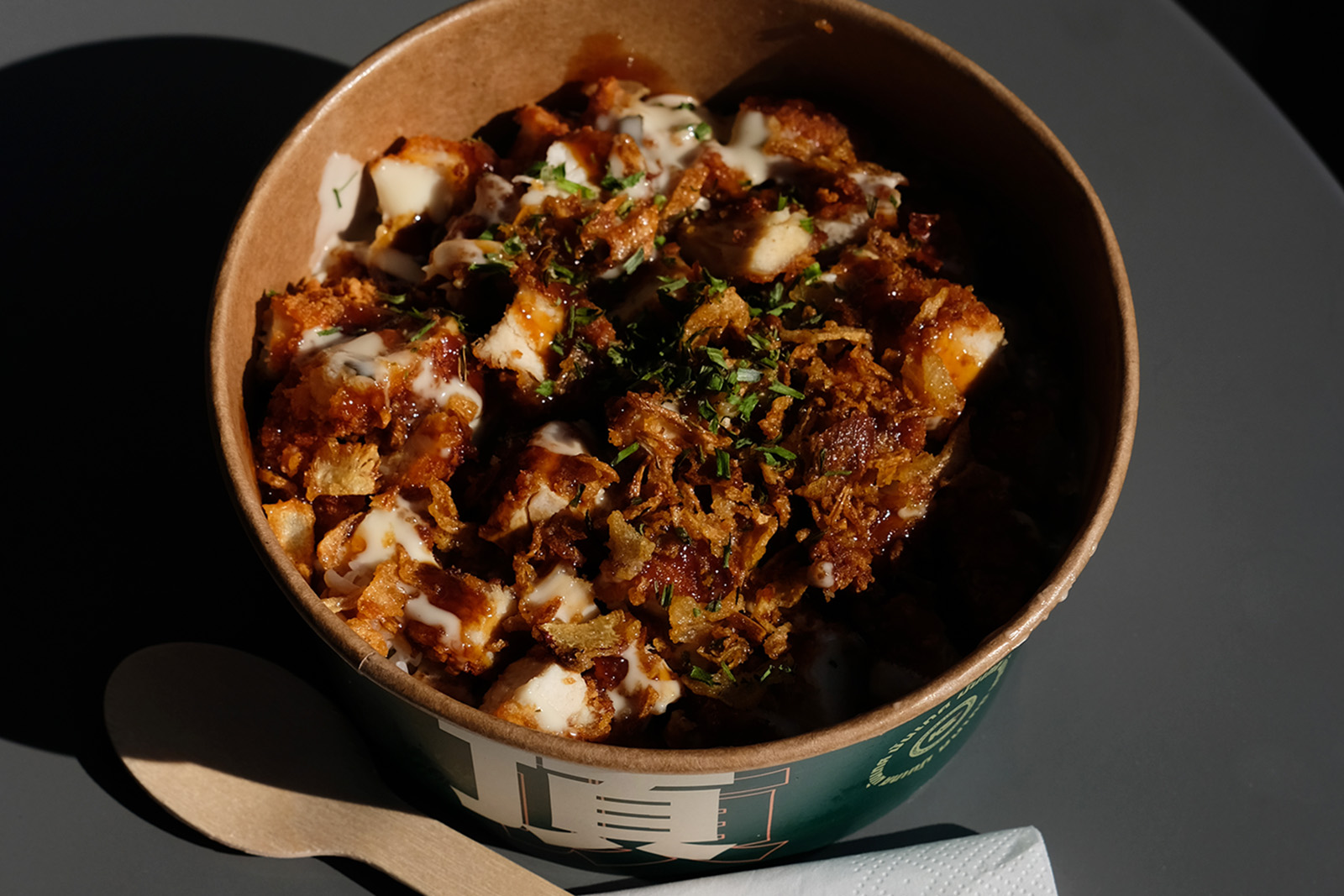
 The crousty at Krousty Sabaïdi. Photograph by Capucine Japhet
A chicken-and-rice tray popularised on TikTok has triggered a riot and stoked debate about class, race and French cuisine. Even KFC wants a bite

A crunchy, addictive chicken served over rice and drowned in sauces: this is the simple, secret recipe behind one of France’s latest fast-food crazes, the crousty. Even KFC has adapted its own version, Crousty Tenders. The trend is credited to the founders of Krousty Sabaïdi, two entrepreneurs from Bordeaux who say they invented the Asian-inspired dish.
In the self-proclaimed land of gastronomy, 67% of people aged 18 to 34 say they regularly eat fast food. It is perhaps no surprise, then, that Krousty Sabaïdi recently opened a new restaurant at Les Halles, the popular street food venue in the heart of Paris.
It is one of 35 locations run by the group, which began with a single small shop in a suburb of Bordeaux in 2012.
When the Les Halles branch opened in September, the launch event quickly spiralled out of control. Sabaïdi had invited a social media influencer and promised 1,000 free meals. The turnout far exceeded expectations.
“We ended up with around 3,000 people,” said Jérémie Dupuy, the group’s head of operations and development. “We had to stop the event, and what the media later described as ‘riots’ happened hours later, when we were no longer involved.”
A quick look at social media is enough to understand why this simple dish has become so popular.
Tasty Crousty, one of Sabaïdi’s main competitors, has also built a strong online presence with more than 139,000 followers. The chain, whose logo borrows from the aesthetics of the Grand Theft Auto video games, posts energetic promos filmed inside its restaurants. The brand is owned by Galo Diallo, founder of Smile Conseil, an agency representing social media creators — a background that helps explain its aggressive online marketing.
On TikTok, customers regularly film themselves eating the dish, turning it into a viral trend. The hype has spread so widely that many kebab shops have started adding their own versions of the crousty to their menus to keep up with demand.
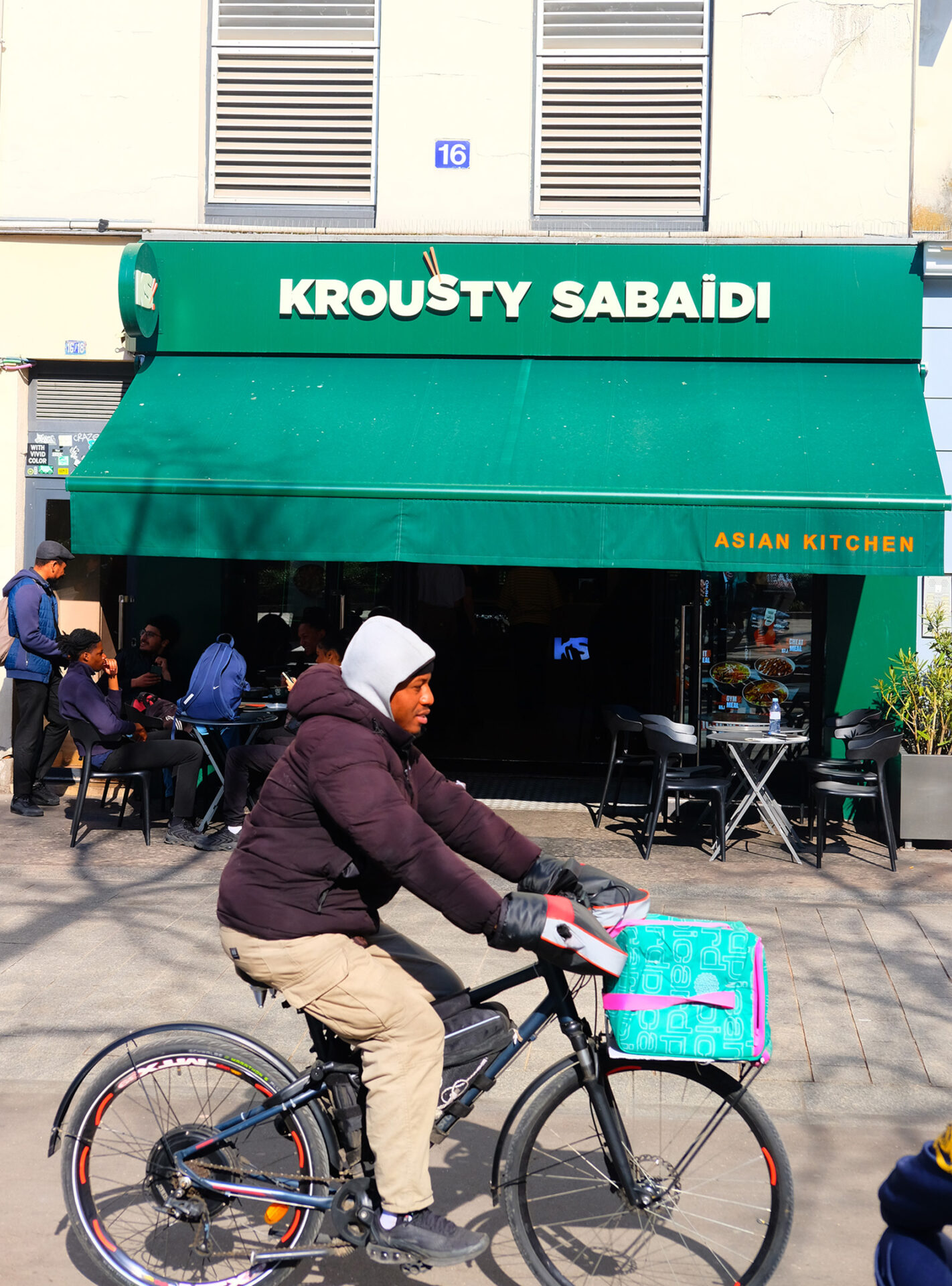 One of Krousty Sabaïdi’s 35 outlets. Photograph by Capucine Japhet
Even politicians have tried to tap into the craze — a reminder that food can quickly become political in France. During municipal election campaigning in the Paris suburb of Bussy-Saint-Georges, the town’s rightwing mayor posted a video of himself trying crousty for the first time: “I understand why young people like these restaurants.”
Yet despite this growing mainstream attention, crousty still carries the image of a counterculture dish. Like the French taco before it, it is often dismissed by parts of the culinary elite.
“We’re not aiming for the CSP+ lawyer,” Dupuy admits, using a French acronym that refers to people from more privileged socio-economic backgrounds. Still, he insists the brand is not targeting a specific social group. “The idea isn’t to be a community restaurant, either. It’s for everyone.”
In practice, however, the clientele often reflects people with tight budgets. Krousty Sabaïdi’s success is explained by its product pricing — usually between €7 and €11 — and by its inclusivity. The chain serves halal food, something that can still spark debate in France, and some locations offer special menus during Ramadan.
“This tray has a symbolic role that goes beyond the food itself,” says the French YouTuber Manon Delcourt, who has nearly 300,000 followers, in a video analysing the trend. “The marketing of brands like Tasty Crousty mainly targets suburban areas and speaks to a young, racialised and mostly male audience with relatively little disposable income.”
A glance at a map of Paris seems to highlight this pattern. Dedicated crousty chains are almost absent from the city’s wealthiest districts, such as the 16th arrondissement near the Eiffel Tower. For Delcourt, the geography of the major chains raises questions.
“One of my biggest concerns is that this location pattern isn’t random,” she argues in the video. “It reinforces long-standing inequalities. Some communities end up being far more exposed to unhealthy food environments.”
French media have also challenged the idea that crousty is a healthier alternative to kebabs or tacos, pointing out that the dish remains a high-calorie fast-food option.
But Dupuy says the company is transparent about what it offers. “We clearly position ourselves as fast food,” he says, maintaining that some crousty menus are lighter than those of major chains such as McDonald’s.
Dining and Cooking