
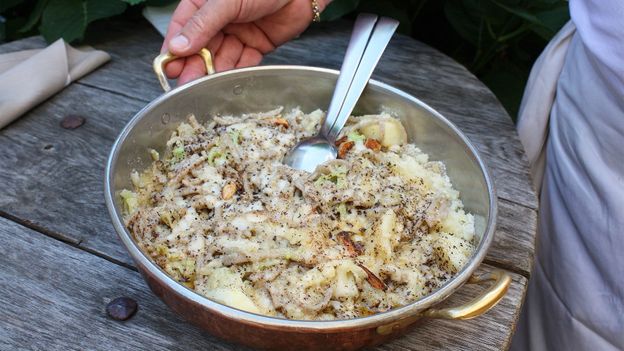
By the end of the 1800s, there were 5,000 acres of buckwheat cultivated in Valtellina. Today, however, only 50 acres are farmed, primarily in Teglio. Buckwheat production declined drastically with the rise of industrialisation in the 1950s and was replaced by more lucrative crops like wheat, which was substituted for some of the buckwheat flour used for making pizzoccheri.
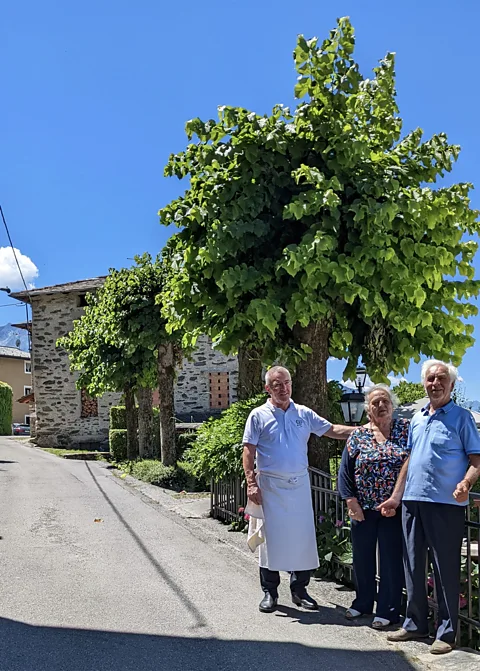 Liz ShemariaAi Tigli, run by Roberto Scínetti (left), continues to make and serve pizzoccheri (Credit: Liz Shemaria)

Around that time, the Lanzarotti’s, too, stopped growing buckwheat on their Teglio land. However, their restaurant, Ai Tigli, run by Lanzarotti’s son, Roberto Scínetti, continues to make pizzoccheri and is one of 10 Teglio restaurants recognised by a consortium for serving what some claim to be the “authentic” version of the dish. Founded in 2002 by Scínetti along with two dozen other chefs, farmers and residents, the Accademia del Pizzochero di Teglio (Teglio Pizzocchero Academy) had determined that the official Pizzoccheri di Teglio recipe must include pasta made from 75% buckwheat flour, 25% wheat flour and water. (It also stipulates that pizzoccheri pasta should be 5mm wide, 7-8cm long, and 2-3mm thick.)
“Gnocchi and tagliatelle pasta is made from buckwheat and water and topped with cabbage, cheese and potatoes – depending on the seasonal harvest”
However, this recipe is a point of debate, as many locals have traditionally only used buckwheat flour to make the dish. Giancarla Maestroni, a Teglio historian and former university professor and middle school teacher, considers buckwheat-only pizzoccheri to be more “original”, as the first recorded recipes didn’t include wheat flour. As botanist Giuseppe Filippo Massara wrote in 1834, “Gnocchi and tagliatelle pasta is made from buckwheat and water and topped with cabbage, cheese and potatoes – depending on the seasonal harvest.” Massara’s description is similar to Maestroni’s family recipe.
Dining and Cooking