
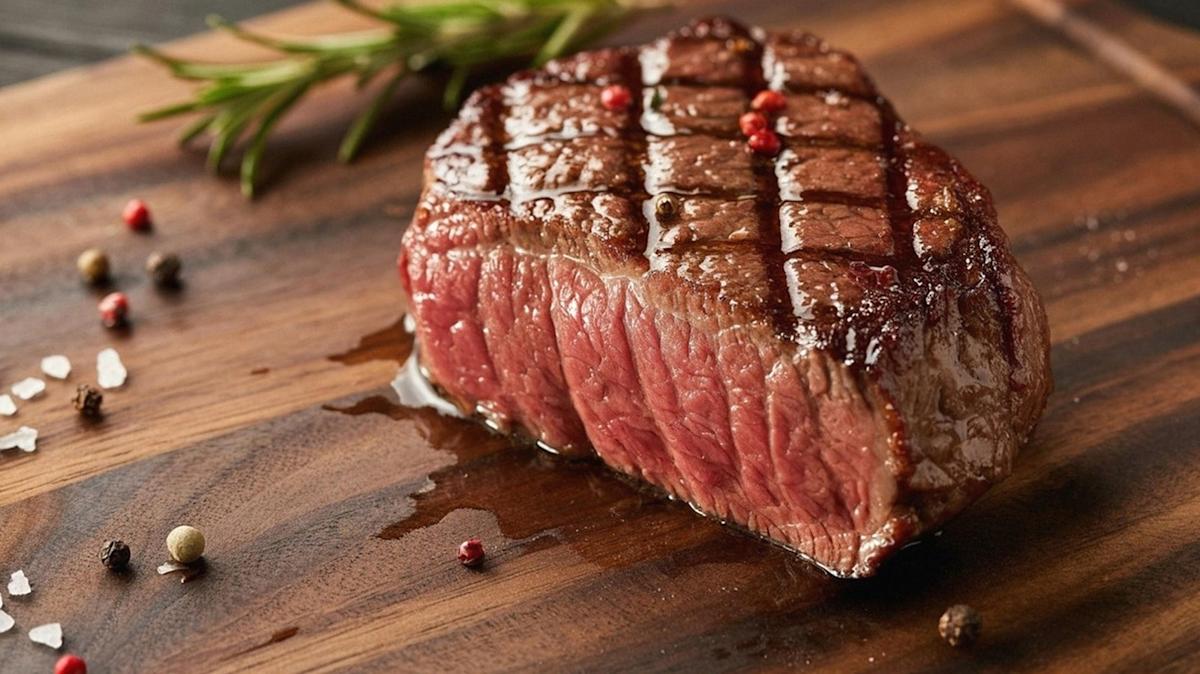
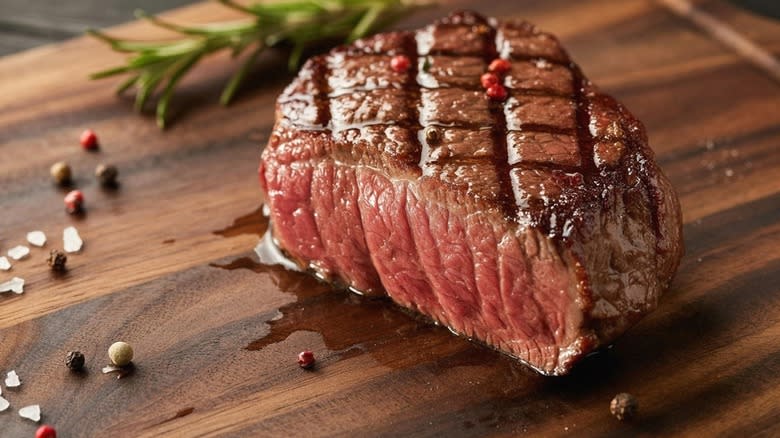
A grilled filet mignon steak with grill marks and garnished with fresh rosemary on a wooden board – Ahmed5514/Shutterstock
Some people say that a good cut of meat pretty much cooks itself. Unfortunately, this isn’t quite true, and there are plenty of common mistakes that can ruin your filet mignon. The good news is, if this is your first time preparing this cut, the best ways to cook filet mignon involve simple processes that allow the natural flavor and texture to stand out. In other words, as long as you avoid the most common pitfalls, you’re golden.
We sought expert advice on the topic from Rosangela Teodoro, owner and head butcher at Teodora’s Boucherie Gourmand in Cohasset, Massachusetts. Teodoro grew up on her family ranch in Brazil, so she certainly knows a thing or three about quality meat and how to cook it. Today, she runs her butcher shop on the same principles she learned growing up, focusing on high-quality, sustainable practices. From using a cold pan to bad storage, overcooking, and forgetting to let it rest, she shares with us the most common mistakes when cooking a filet mignon.
Read more: 4 Cuts Of Steak That Are Worth Buying At Costco And 6 To Avoid
Mistake: Buying the cheapest meat available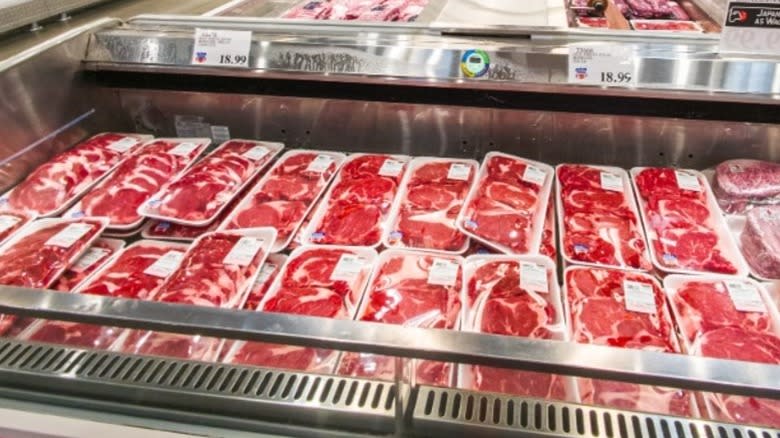
Rows of prepackaged meats in a supermarket freezer – PJ McDonnell/Shutterstock
If you’re approaching your filet mignon as “just” a source of protein, you’re already doing it wrong. Not all protein is created equally, and Rosangela Teodoro is a firm believer in working with a butcher who sources superior grass-fed beef from a diverse selection of farmers who practice good stewardship. The freshness of the beef also impacts the end result, which is why just going for the cheapest filet mignon available is a mistake.
To make sure she’s getting good-quality meat, Teodoro prefers to work with the local community, following a farm-to-table approach, encouraging ethical practices, sustainability, and healthy living. “These factors can truly impact the quality and taste,” she says. “You get what you pay for. Beef quality matters greatly with filet mignon because the cut itself is very lean and delicate. When someone buys the cheapest option available, they are purchasing beef from animals that are raised quickly, sometimes with less attention to feed quality or animal welfare. The result can be meat that lacks flavor and depth.”
As a bonus tip, when buying your filet mignon, do let your butcher know how you’ll be preparing the meat and how many people you are serving. This will help them calculate the right quantity of filet mignon cut to your needs.
Mistake: Not checking the color of the steak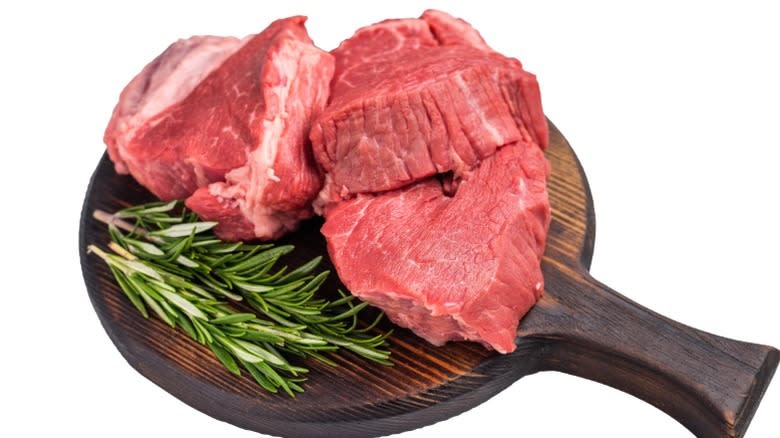
Three pieces of raw filet mignon on a wooden serving board with rosemary sprigs – Vladimir Mironov/Getty Images
We get that it’s not always possible to buy your filet mignon from a specialist butcher shop. Nowadays, most big grocery chains offer a well-equipped meat department. With items like Costco’s gourmet steak boxes available, it’s worth knowing what to look for. When checking the quality of the meat, Rosangela Teodoro advises to always choose steak that’s firm and has a bright red color.
“Whether in a refrigerator, a butcher cabinet, or wrapped in supermarket packaging, beef can slowly turn from red to brown,” Teodoro explains. “It’s the result of myoglobin, an oxygen and an iron-binding protein that gives meat its red color. With time it ages, as it’s more exposed.” Basically, if the meat at your favorite grocery store looks too dark, it means that it’s not as fresh as it could be, and you’re better off looking elsewhere.
As a bonus tip, when beef becomes sticky, tacky, or slimy, or looks too discolored, it’s a sign that it’s gone bad and is not safe to eat. Teodoro’s advice is to simply toss it out.
Mistake: Leaving the meat exposed to air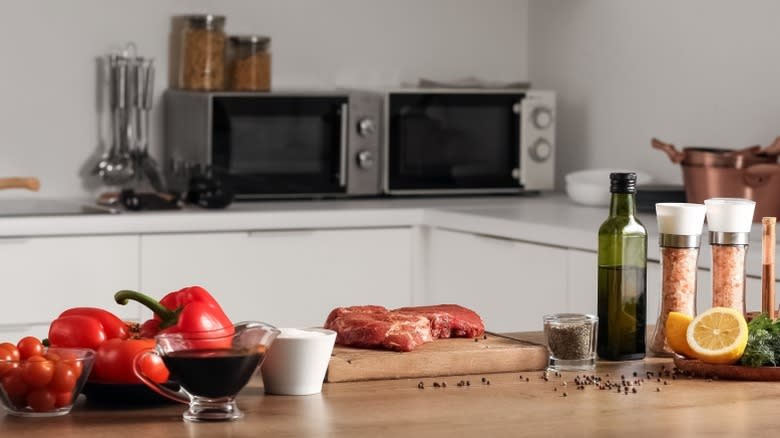
A beef steak on a wooden kitchen top counter surrounded by red pepper and seasoning in a kitchen – Pixel-Shot/Shutterstock
A place where many home cooks slip up and make a mistake when cooking their filet mignon is failing to store it properly. The key, Rosangela Teodoro says, is not to leave it exposed to air for too long — and she’s very strict about what constitutes too long. “If I’m cooking it the same day, I may keep it on the tray, but anything longer than that, I rewrap or vacuum-seal it,” she explains. “You can really taste the difference when the meat isn’t exposed to air.”
Asked about the best way to store meat, she recommends chamber sealers as the best-case scenario. These will remove all the air from an entire compartment, creating an airtight seal. If you don’t have the space for this, a decent countertop vacuum seal is enough. If you’re storing your meat in the fridge for the short-term, butcher paper is your best option, as it protects the meat without suffocating it. Freezer storage requires a different approach, and you’ll need to double-wrap to ensure that air doesn’t get in. If butcher paper is not available, freezer paper will work just as well.
Mistake: Failing to preheat your pan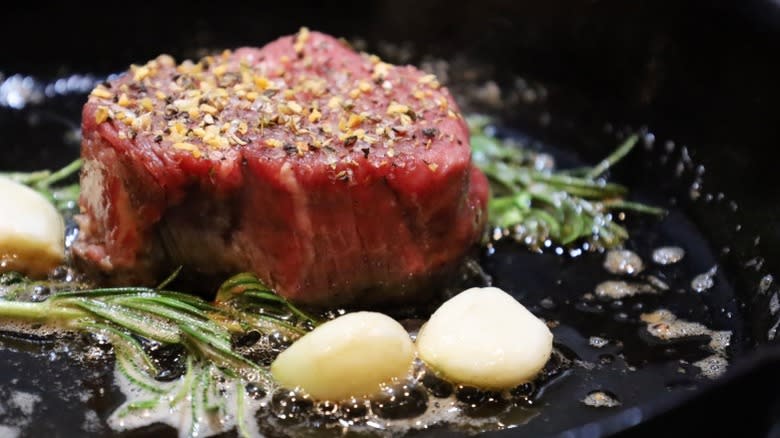
A seasoned filet mignon searing in a pan – Cavan-Images/Shutterstock
Many chefs, like steakhouse chef Greg Peters, swear that you should always use a cast-iron pan for steak. For Rosangela Teodoro, though, the biggest mistake you can make when cooking filet mignon isn’t choosing the wrong pan, but failing to make sure that it’s properly heated before putting the meat into it. As long as you follow this bit of advice, you can use whatever’s most convenient, whether that’s a regular pan, a cast-iron, or a grill.
You should also make sure your meat isn’t too wet, so it’ll sear properly and get that restaurant-quality crust. Teodoro explains the science behind the process, saying, “Filet mignon is a thick and very lean cut. If the surface of the steak is wet, it will steam instead of sear.” She advises, “Pat the steak dry and place it in a hot pan to build a proper crust. Put the oil in the pan, not on the steak.”
Mistake: Letting the steak cook beyond 125 F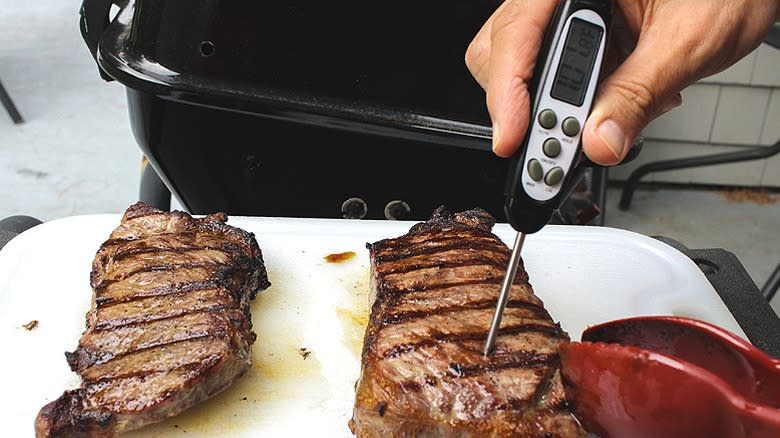
Two pieces of fillet beef off the grill, being checked for temperature – Unrestedm/Getty Images
We all know that we shouldn’t overcook steak, right? What’s less commonly known is that the road to achieving the perfect steak temperature actually starts before you put it on the heat. Rosangela Teodoro suggests bringing the meat to room temperature before cooking it. Next, you’ll need to add olive oil to the pan, as opposed to the meat itself. Once the meat is cooking, make sure your thermometer is at the ready, so you can gauge when the steak’s properly done.
Is the thermometer strictly necessary? Teodoro says yes, explaining, “Because the steak is thick, the outside will cook faster than the center.” This means you cannot rely on your eyes to tell you when it’s ready. So what temperatures are we looking at here? For the perfect tender filet mignon, Teodoro has a very precise temperature in mind. “Control the heat and pull off the burner at 125 F so it can rest and heat up to the preferred temperature,” she says.
Even when armed with the best intentions and full instructions, we can still get it wrong, though. If you find yourself with overcooked steak, don’t panic, as there are some things you can do to try and save the flavor of overcooked meat. At worst, this may involve biting the bullet and repurposing it into stuffing or simmering it in broth to rehydrate it.
Digging in without allowing the meat to rest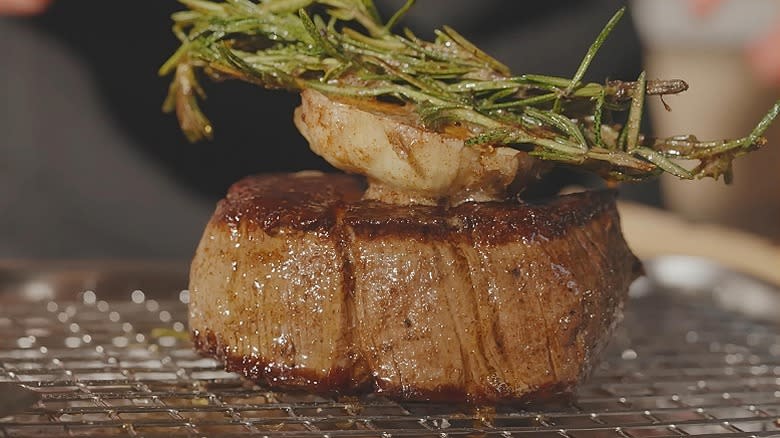
A juicy filet mignon with garnish, resting – IB’Captuers/Shutterstock
According to Rosangela Teodoro, to achieve the perfect tender filet mignon, you should let it rest after taking it off the grill. Serving it immediately is a mistake, as it stops temperature and texture from reaching just the right stage. If you’ve pulled the meat off the fire at the right time, the internal temperature will increase to between 130 F and 135 F, ready for eating. How long should you let it rest? There are different schools of thought here. Some butchers say five minutes, but Martha Stewart recommends that it should be half the time it took to cook. So if the steak was on the heat for 10 minutes, you’ll need a further five minutes resting time.
Wondering why you should let meat rest after cooking? A steak continues to cook after being removed from the heat in a process referred to as carryover cooking, which is how it reaches the ideal serving temperature of 135 F, preferred by Teodoro.
Teodoro also recommends that your filet mignon be at least 1.5 to 2 inches thick. This thickness keeps the center tender, allowing you to easily achieve a medium-rare consistency. A thinner steak will cook too quickly, resulting in dry meat.
Hungry for more? Sign up for the free Daily Meal newsletter for delicious recipes, cooking tips, kitchen hacks, and more, delivered straight to your inbox. You can also add us as a preferred search source on Google.
Read the original article on Daily Meal.
Dining and Cooking