
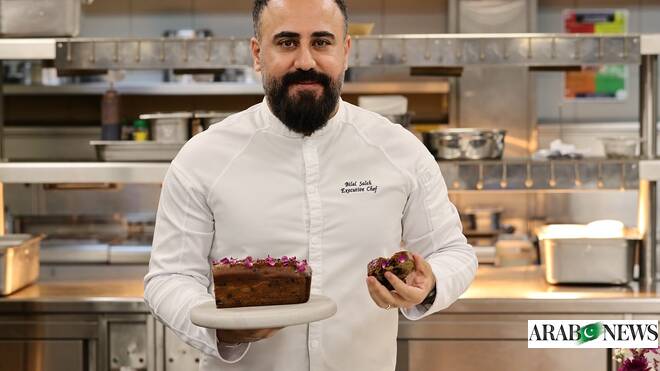
DUBAI: Bilal Saleh has been interested in food and cooking for as long as he can remember. Growing up in Baalbeck, Lebanon, he would watch his grandfather, a butcher, prepare his own meals with care and discipline.
“I was fascinated by the way he handled ingredients and respected food,” Saleh tells Arab News. “Sometimes he would call me over to teach me the basics — how to chop, how to prepare and how to be patient in the kitchen.”
That early curiosity deepened when his father opened a bakery. Saleh spent his summers and afternoons after school working there. “That’s when I realized the kitchen was not just a hobby, it was where I truly belonged,” he says.
His family farmed wheat, lentils, peas and seasonal produce. “Looking back, this was my true culinary school,” he says. Winters were marked by slow-cooked dishes simmering for hours on a wood stove, often finished with “a final touch of fried garlic and olive oil” — a moment he describes as “magic.”
More than two decades on, Saleh is now regional executive chef for Hilton in Saudi Arabia, Kuwait and Bahrain. He is based at Hilton Riyadh Hotel & Residences.
When you started out, what was the most common mistake you made?
Like many young chefs, my most common mistake was rushing, especially when I was confident or excited. I sometimes tried to move too quickly through a recipe or adjusted steps without fully understanding their purpose, particularly in pastry. Over time, I learned that discipline, precision and patience are just as important as creativity.
I also realized that recipes don’t behave the same in every kitchen. What works perfectly in a training institute doesn’t always translate directly at home or in a professional environment due to different equipment and conditions. Those early mistakes became some of my most valuable lessons and shaped the way I approach cooking today.
What’s your top tip for amateur chefs?
Cook from the heart, but keep it simple. Treat every table as if you are serving royalty, not by making it complicated, but by giving it care and attention.
Also, invest in a few essential tools like a good knife, a scale, and a thermometer. They are not only for professionals.
Most importantly of all, learn the basics. Once you master foundations like stocks, soups, or a proper roux, you can create endless variations. And one practical tip: cook with the lid on whenever possible. Preserve those flavors inside the dish.
When it comes to baking, understand ratios: fat, liquid, starch and sweetness. When you understand the science, creativity naturally follows.
What one ingredient can instantly improve any dish?
High-quality olive oil. Drizzling it over a dish just before serving adds freshness, depth and aroma. When cooked for long periods, its flavor blends into the recipe, but finishing with olive oil allows its character to truly shine.
When you go out to eat, do you find yourself critiquing the food?
When I go out, my goal is simple: to enjoy the experience and feel that it was worth it. Delicious food remains the highest score any restaurant can achieve. Service and atmosphere matter, but without memorable flavor, the experience falls short.
What’s the most common issue that you find in other restaurants?
What I value most is identity and consistency. A restaurant that knows what it is serving and delivers that every time earns my respect. If I don’t enjoy a meal, I simply don’t return. It’s that straightforward.
What’s your favorite cuisine or dish to order?
I appreciate cuisines that respect ingredients and tradition. Italian cuisine stands out for its simplicity and balance, while Lebanese and broader Middle Eastern flavors always feel close to my roots. At the same time, I enjoy a great steakhouse — sometimes excellence lies in doing the basics perfectly.
What’s your go-to dish if you have to cook something quickly at home?
Kishk — whether as a fresh salad or gently cooked with onions and olive oil, finished with dried mint. It is comforting, nutritious and deeply connected to my heritage. Whenever I visit home, I make sure to bring back a generous supply prepared by my mother.
What customer behavior most annoys you?
When guests prefer buffet options when we’re offering freshly prepared dishes at live stations. Live cooking is about quality, interaction and personalization. It elevates the experience beyond convenience. That said, our role as chefs is to adapt and ensure every guest leaves satisfied.
What’s your favorite dish to cook and why?
Sfeha baalbakieh holds a special place in my heart. It is a signature dish from my hometown, and during the nearly 10 years I worked in my father’s bakery, it was our star product. It’s a dish made for sharing, served with lemon wedges and yogurt for dipping. It brings people together around the table. Every time I prepare it, it reconnects me with my roots.
What’s the most difficult dish for you to get right?
Simplicity is often the hardest to perfect. Dishes with very few ingredients — like a perfectly smoked brisket or a classic risotto — leave no room to hide mistakes. They demand precision, timing and respect for technique. For me, dishes like these are the true test of a chef’s skill.
As a leader, what are you like?
A great kitchen team pushes you to think beyond the expected. Together, we transform even the simplest coffee break or dinner into a memorable experience by building a story, defining the theme, crafting the journey, and ensuring guests feel every detail.
After each successful event, I take a photo with the team and display it in my office under one message: “Making Moments.” It reminds us that our work goes beyond food; we create memories.
Chef Bilal’s gluten free banana tahini chocolate cake
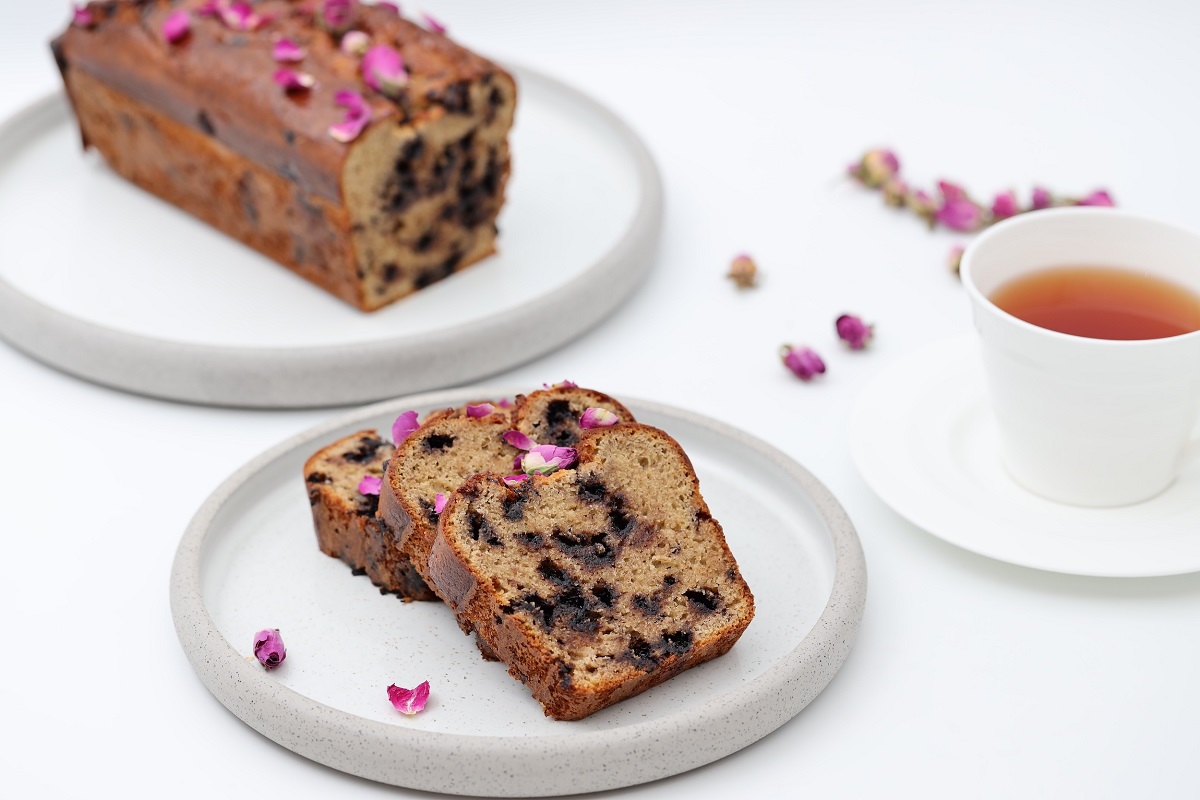
Chef Bilal’s gluten free banana tahini chocolate cake .
Preparation: 15 minutes
Baking Time: 35–45 minutes
Total Time: <60 minutes
Ingredients:
Very ripe bananas (peeled) – 300g
Eggs (room temperature) – 150g (≈ 3 large)
Tahini (well stirred) – 120g
Almond flour (fine) – 180g
Dark chocolate chips or finely chopped 70% chocolate – 120g
Light or dark brown sugar – 40g
Honey – 40g
Baking powder – 6g
Fine salt – 3g
Vanilla extract – 5g
Method:
Prepare the pan
Line a 20cm cake pan with baking paper and lightly grease the sides.
Mash the bananas
Mash the bananas until mostly smooth, leaving a slight texture. This helps retain moisture in the finished cake.
Mix the wet ingredients
Whisk together the mashed bananas, eggs, brown sugar, honey, vanilla and tahini for about 45 seconds, until the mixture looks smooth and slightly glossy.
Incorporate the dry ingredients
Gently fold in the almond flour, baking powder and salt. Mix just until combined — avoid overworking the batter.
Add the chocolate
Stir in the chocolate chips or finely chopped chocolate (no melting required). This helps the cake maintain structure and reduces the risk of collapsing.
Important: Let the batter rest for 5 minutes before baking. This allows the almond flour to hydrate and improves texture.
Bake
Bake for 38–45 minutes. The cake is ready when:
The edges are set
The center feels softly firm (not wet)
A toothpick inserted comes out with moist crumbs, not liquid batter
Pro tip: If your oven runs hot, place an empty tray on the lower rack to soften direct heat.
Cool completely
Allow the cake to cool in the pan for 30 minutes, then remove and let it cool for at least 1 hour before slicing.
Cutting too early is the most common cause of collapse.
Tahini honey glaze
Ingredients:
Tahini
Honey
(Mix equal parts tahini and honey until smooth and pourable.)
Rose syrup
Ingredients:
Sugar — 100g
Water — 60g
Rose water — 10g
Orange blossom water — 10g
Lemon juice — 5g (about 1 tsp)
Method:
Combine the sugar and water in a small saucepan.
Bring to a gentle boil, then simmer for 3–4 minutes until slightly thickened.
Remove from the heat.
Stir in the lemon juice, followed by the rose water and orange blossom water.
Allow to cool to warm or room temperature before using.
How to use:
Brush or drizzle lightly over the cake once it has completely cooled.
Garnish suggestions:
Crushed pistachios
Toasted sesame seeds
Dried rose petals
Flaked almonds
Dining and Cooking