
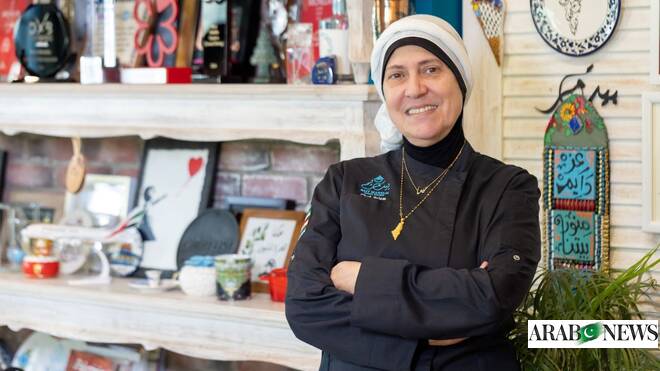
DUBAI: Salam Dakkak was born in Palestine and raised in Jordan. She later moved to Saudi Arabia, where she married, had children and began teaching Arabic cooking in a studio. Further relocations followed — to the US, then to the UAE — and with each move her dream of pursuing a professional culinary career was placed on hold, but never abandoned.
When Dubai became her family’s long-term base, Dakkak decided to pursue that ambition. In 2017, she opened Bait Maryam, naming the restaurant after her mother and the Arabic word for home. What began as a neighborhood restaurant built around family recipes and Levantine cooking has since grown into one of the city’s most respected dining destinations. Bait Maryam has been awarded a Michelin star, and its sister restaurant, Sufret Maryam, expands on the same philosophy of home-cooking-style Arabic food served in a communal setting.

Dakkak’s dishes are rooted in Palestinian cuisine, but draw from the shared food traditions of the Levant — recipes passed down through generations in homes across Palestine, Jordan, Lebanon and Syria. Alongside classic preparations, she has developed signature dishes that reinterpret these flavors, including fattet musakhan and maryam fukhara, which have become central to her menus.
In 2023, she was named Middle East & North Africa’s Best Female Chef by World’s 50 Best, recognizing her contribution to the region’s culinary landscape.
Dakkak is preparing for the launch of her first book, which documents her journey, and her recipes and the stories behind them.
When you started out, what was the most common mistake you made?
I was always in a hurry. I wanted to prove myself, to show that I was capable, and that often meant rushing through steps that deserved more attention. With time, I realized that good cooking can’t be forced; ingredients need space and patience to come together. Learning to slow down taught me how to truly listen to what a dish needs, and that shift completely changed my relationship with food.
What’s your top tip for amateur chefs?
Let go of pressure. Cooking at home should feel comforting, not intimidating. You don’t need to follow rules perfectly or stress over small mistakes. Taste often, trust yourself, and allow the process to be enjoyable. When you cook with ease, the food naturally tastes better.
What one ingredient can instantly improve any dish?
Salt. But it’s not just about seasoning, it’s about balance. Salt has the ability to bring out the natural character of ingredients and connect flavors together. When you understand how to use it gently and thoughtfully, even the simplest dish can feel complete.
When you go out to eat, do you find yourself critiquing the food?
I try to experience food as a guest, not as a chef. That said, I do notice when something feels missing.
What’s the most common issue that you find in other restaurants?
Often, the issue isn’t technique. It’s when a dish lacks soul. Food can be perfectly executed and still feel distant if there’s no emotion or story behind it.
What’s your favorite cuisine or dish to order?
I’m always drawn to simple, traditional food. Dishes that carry memory and history. They remind me of home and of why I fell in love with cooking in the first place.
What’s your go-to dish if you have to cook something quickly at home?
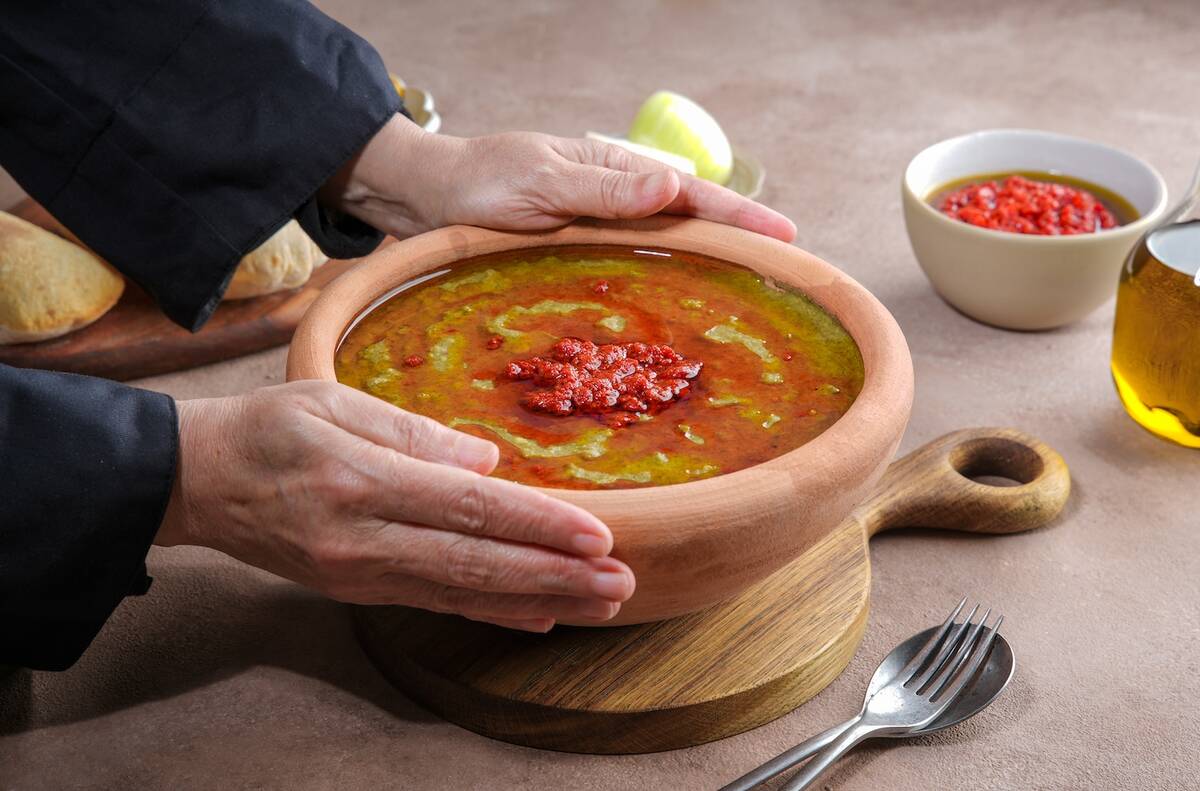
Bandora fry — sautéed tomatoes cooked gently in olive oil with garlic and warm spices. It’s simple and quick, but deeply comforting. There’s something grounding about watching the tomatoes soften and come together. It doesn’t require planning or precision, just attention. Even on the busiest days, it brings a sense of calm and familiarity into the kitchen.
What customer behavior most annoys you?
When food is treated as just a trend. Every dish carries culture, effort and intention, and that deserves respect.
What’s your favorite dish to cook ?
Fatet akoub. It’s a dish that holds deep emotional meaning for me. It connects me to my heritage, to family gatherings, and to memories that shaped who I am. Cooking it feels personal every time, as if I’m preserving a piece of my story through food.
What’s the most difficult dish for you to get right?
Traditional dishes are often the hardest — they carry expectations, memories and emotions, not just flavors. When people taste them, they’re comparing them to what they remember from childhood or home. Getting that balance right is both challenging and deeply meaningful.
As a head chef, what are you like? Are you a disciplinarian? Or are you more laid back?
I’m calm and intentional. I believe in structure and discipline, but also in kindness. Kitchens can be intense spaces, and I’ve learned that when people feel respected and supported, they cook with more confidence and care. That energy always translates onto the plate.
Chef Salam’s bandora fry (sauteed tomato) recipe
Serves: 4–6 people
Ingredients:
Bandora (tomatoes) – 4 cups
Garlic – 1 clove
Green chili pepper – 1 pepper
Olive oil – ¼ cup
Salt – 1 teaspoon
Black pepper – 1 teaspoon
Preparation method:
1. Heat the olive oil.
2. Add the sliced garlic and stir until it becomes golden.
3. Cut the hot green pepper into rings, then add it to the garlic.
4. Chop the tomatoes into slices and add them to the garlic and pepper.
5. Add the salt and black pepper, stirring well until all flavors combine. Cook for 20 minutes
over low heat.
6. When the tomatoes are cooked and the mixture is well blended, turn off the heat and stir
lightly to unify the texture.
7. Serve the sauteed bandora hot, and enjoy it with Arabic bread and hot chili pepper.
Dining and Cooking