
While I’m not always the strictest adherent, I remain a believer in Michael Pollan’s key advice on what to eat: “Eat food, mostly plants, not too much.” Taken at face value, he is advising the same strategies many nutritionists and cardiologists have espoused for years. Avoid processed food products, follow a plant-based diet whenever possible, and eat in moderation.
There are some places where we can readily see the processing that has taken place in commercially manufactured foods. For example, the individually wrapped slices of American cheese are correctly called “cheese food” because they are a pasteurized blend of cheeses and other ingredients, not 100% cheese – unlike the block of cheddar or Swiss found at the gourmet cheese counter.
What exactly are the purposes of food additives? According to the World Health Organization, food additives are substances added to foods that are produced on an industrial scale and utilized for a variety of purposes. These are not normally consumed as food nor found as ingredients in foods. Most of the time, these additives are developed to ensure safety through the manufacturing and shipping cycles as well as to enhance smell, taste or texture.
Are they safe? Risk assessments of food additives are conducted by an independent, international, expert group of scientists – the Joint FAO/WHO Expert Committee on Food Additives, aka JECFA. Only the additives that have undergone this safety check may be used on an international basis, whether they are synthetic or come from natural sources. This group establishes an acceptable Average Daily Intake that is part of the research determination for manufacturers to follow.
We can be reasonably confident that the items on a package’s list of ingredients have been properly evaluated, but what about the unintended consequences? One example is seen in many of the prepackaged, mayonnaise-based salads found at supermarket deli counters or combination food court/gas stations. If you peruse the list of what is in your plastic container of tuna salad, ham salad or seafood salad, you may be surprised.
You’ll find xanthan gum and soy lecithin, thickeners and emulsifiers designed to create a pleasant texture. These are widely used to improve the consistency of instant puddings, gelatins, sauces and salad dressings without altering any flavors. However, they do add carbohydrates since they come from highly processed corn, which may cause an unpleasant stomach reaction in some individuals.
Maltodextrin is often added to increase shelf life. Depending on what product it is processed from, common names of maltodextrin include corn syrup solids, modified corn starch, modified wheat starch, modified rice starch and modified tapioca starch. In all forms, it will elevate blood glucose. And while citric acid assists with pH and flavor in some packaged foods, in its processed form (rather than simple juice from citrus fruit), it can also be used to clean your toilet.
My biggest surprise in the list of salad ingredients was “bread crumbs” in the mixture. In all the years I have made tuna, ham or seafood salad, I have never added bread crumbs. I combine the main ingredient with mayonnaise and seasonings – that’s it! Perhaps bread crumbs “stretch” a small amount of expensive tuna or seafood to go further and reduct costs. No matter the reason for each of these additives, be sure to read the labels to be aware you are adding them to your diet.
Tuna Salad
7-oz can white albacore tuna, water packed
2/3 C finely diced celery
1/4 C minced red onion
1 t lemon juice
dash hot pepper sauce
1/4 t celery seed
1/2 t white pepper
1/4 t dill weed
1/2 C mayonnaise
salt, to taste
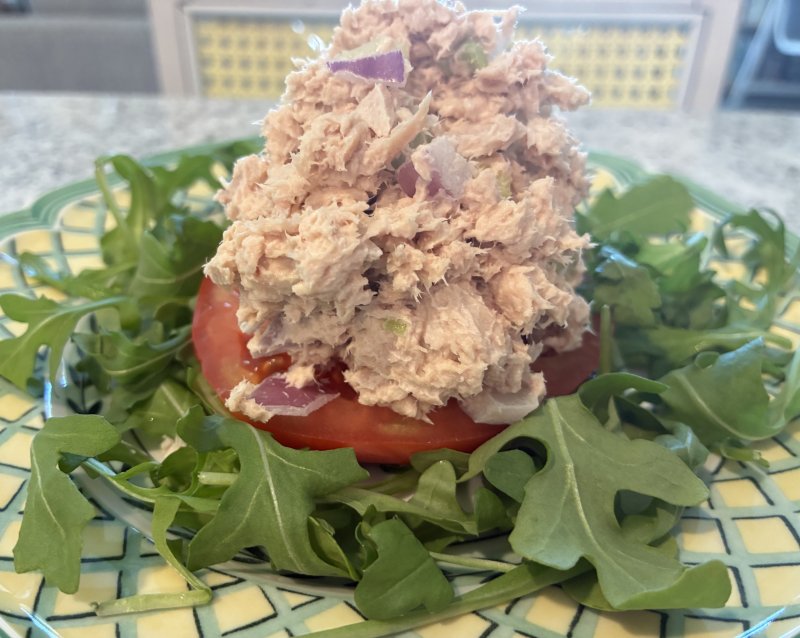
Squeeze water out of tuna. Place in a colander to drain further while you prep the celery and onion. Transfer tuna to bowl, stir in celery and onion. Mix in the seasonings; fold in the mayonnaise. Cover tightly and chill for at least 30 minutes. To serve, season to taste with salt, and plate on a bed of lettuce and sliced tomato. Yield: 4 servings.
Ham Salad
1 1/2 lbs boneless cooked ham
1 hard-boiled egg
1 chopped celery stalk
1 T chopped onion
3/4 C mayonnaise
2 t sweet pickle relish
1 T mustard
salt and pepper, to taste
Roughly chop ham and place in the bowl of a food processor. Cut hard-boiled egg into quarters and add to food processor. Add celery and onion. Pulse in quick, short bursts to a fine mince. Occasionally scrape down the sides of the bowl to incorporate; set aside. In a mixing bowl, whisk together mayonnaise, relish and mustard. Stir in ham mixture until combined. Cover and chill for at least 4 hours. Season to taste with salt and pepper. Serve plated on lettuce beds, spread on slider rolls or with crackers. Yield: 6 servings.
Dining and Cooking