
Show summary Hide summary
Sunlight, a blanket and a good book: spring is prime reading weather, and this season’s food writing delivers fresh angles on appetite, identity and the politics of what we eat. New memoirs and histories arriving now move from intimate reckonings to wider cultural snapshots — together they make a strong case for why food books matter beyond recipes.
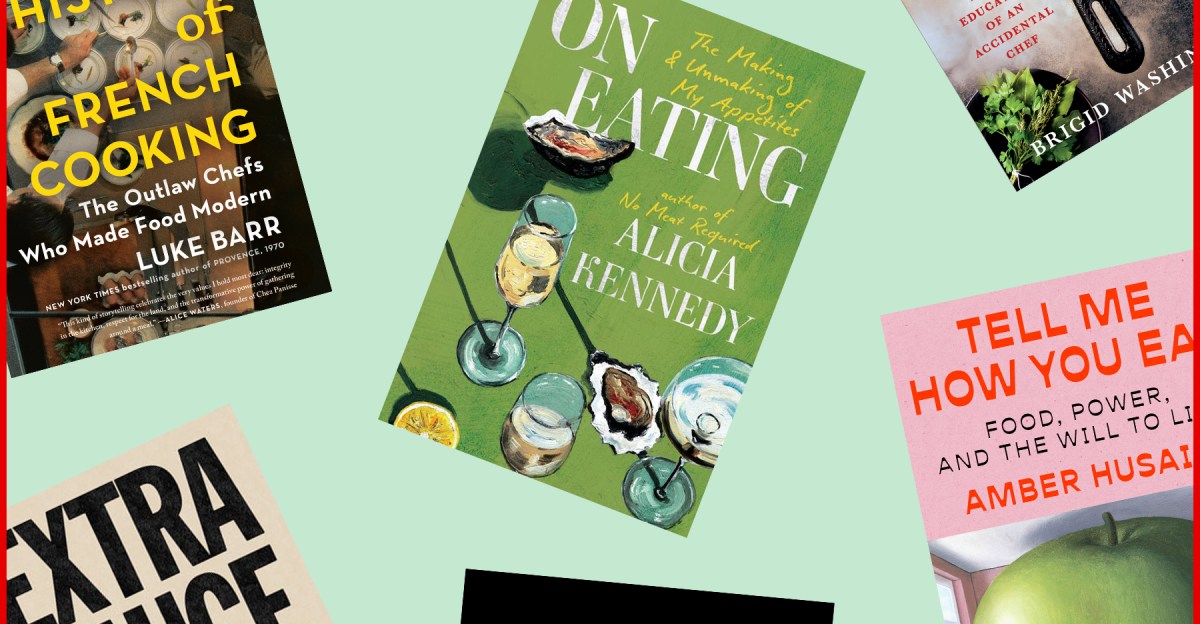
Tell Me How You Eat: Food, Power, and the Will to Live — Amber Husain
Amber Husain returns with an inquiry that treats eating as a political act. Rather than cookbooks, she offers a cross-continental investigation into the way food practices intersect with movements and resistance — from community kitchens to activists documenting scarcity under siege.
Dark and deliberately probing, the book confronts eating disorders and the long shadow of ideology, asking readers to consider food as both survival and strategy. It’s not light beach reading, but it reframes meals as resources that can redistribute power or reinforce marginalization. For readers interested in the social life of food, this one provokes more questions than answers — on purpose.
The Secret History of French Cooking: The Outlaw Chefs Who Made Food Modern — Luke Barr
Luke Barr turns his historian’s eye to France in the 1960s and 1970s, a period that remade Western restaurant culture. The book follows chefs who broke with rigid haute cuisine and explores how those revolts reshaped taste, service and celebrity in kitchens worldwide.
Barr widens the frame beyond the well-known names to include overlooked figures and dissenting critics, producing a narrative that reads like literary gossip at times and like a cultural study at others. If you want to understand how modern dining emerged — and why it still matters to menus and media today — this readable history is a solid place to start.
Why this matters now: debates about authenticity, hospitality and who gets credit in food culture remain active — Barr’s book maps their origins.
On Eating: The Making and Unmaking of My Appetites — Alicia Kennedy
Alicia Kennedy moves from reporting into personal reflection, tracing how tastes develop and change across places and life stages. Her new memoir charts a childhood of carnivorous pleasures to chosen vegetarianism in adulthood, and the ways grief, ethics and geography remold desire.
What distinguishes this volume is its balance of reportage and introspection: Kennedy brings cultural context to intimate moments, making this as much about evolving food systems as about one person’s plate.
Extra Sauce: The Good, the Bad, and the Onions — Zahra Tangorra
Zahra Tangorra’s memoir reads like a conversation over a late-night slice of lasagna: candid, funny and occasionally raw. She recounts running an indie Brooklyn restaurant and later a pandemic-era comfort-food pop-up, mapping the messy routes that led to reinvention.
A serious accident changed Tangorra’s trajectory, and the book is as much about recovery and resilience as it is about craft and community. Expect behind-the-scenes restaurant life, familial warmth and a voice that never shrinks from its own contradictions.
Salt, Sweat & Steam: The Fiery Education of an Accidental Chef — Brigid Washington
Brigid Washington’s account of culinary school is a brisk, often humorous coming-of-age story. She enrolls at a top cooking program after a personal rupture, and the narrative captures the grind, the camaraderie and the small disasters that shape a young cook.
Not a how-to for aspiring chefs, the memoir nevertheless peels back the classroom and kitchen culture of professional training in ways that feel immediate: bruises, heated service and the lessons learned at 4 a.m.
Eat Bitter: A Story About Guts, and Food — Lydia Pang
Lydia Pang brings a moodier, more literary edge to food memoir. Drawing on a transnational upbringing and subcultural aesthetics, she explores endurance — the idea that hardship precedes reward — through personal memory, recipes and creative fragments.
The book is as much about identity and art as it is about meals: expect inventive language and an insistence that food carries emotional and cultural weight long after the plate is cleared.
Quick guide — spring food memoirs to watch
Tell Me How You Eat (out now) — Politics of food, activism and bodily survival
The Secret History of French Cooking (March 17) — Roots of modern restaurant culture
On Eating (April 14) — Personal evolution of appetite and ethics
Extra Sauce (April 14) — Recovery, restaurants and resilient creativity
Salt, Sweat & Steam (April 28) — Inside culinary school, coming-of-age under heat
Eat Bitter (May 19) — A literary, transnational take on endurance and taste
Across these books you’ll notice two recurring threads: first, that food writing is increasingly a vehicle for examining power, identity and labor; second, that memoir continues to be a useful form for authors grappling with loss, reinvention and belonging. Read any of these for insight into how the meals we eat reflect larger social shifts — and for the plain pleasure of well-told stories about food.
Give your feedback
★★★★★
Be the first to rate this post
or leave a detailed review
Dining and Cooking