
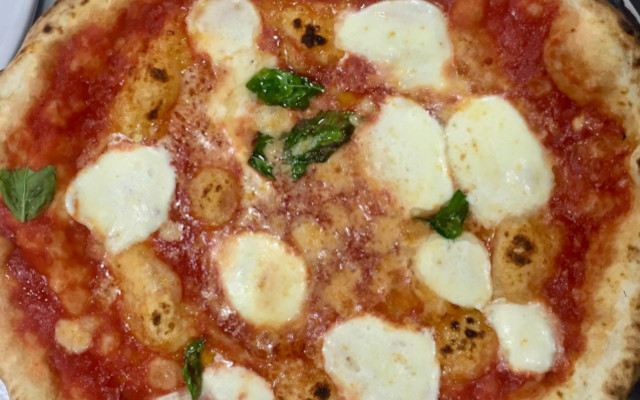
In the global gastronomic panorama, the term ‘pizza’ is often used in a generic way, but the Italian tradition expresses two profoundly different production models: the Pizza , roman pizza. The version Neapolitan, protected by UNESCO recognition, is distinguished by a soft, elastic dough and a high, soft edge (the ‘cornicione’). Pizza Romanian It is instead characterized by a thin base and a crunchy consistency, obtained thanks to longer cooking times and the addition of oil to the dough.
This diversity does not only concern the form, but involves the entire food technologyFrom oven temperatures to leavening management. Understanding these distinctions is essential for international consumers and operators to correctly assess the quality, digestibility, and nutritional value of what is, in all respects, the flagship product of Made in Italy.
Global Trends 2025: The Growth of the ‘Thin Crust’ Segment (Roman Pizza)
Il global pizza market has seen significant growth in recent years, with particular dynamism in the premium segments linked to Italian regional traditions. The global market for frozen pizza reached $18,92 billion in 2025, with projections indicating growth to $25,54 billion by 2030, recording a CAGR of the 6,19% (Mordor Intelligence, 2026).
In the 2025, the 58,3% of the frozen pizza market is dominated by the variants thin base – ‘thin crust’, ‘Roman pizza’ style – which are increasingly appreciated for their greater crispiness, lower carbohydrate content, and a perceived more balanced nutritional profile compared to pizzas with a thick crust (‘thick crust’, ‘Neapolitan pizza’ style. Future Market Insights, 2026).
The main brands answer this question with thin-crust premium pizzas, also made with wholemeal, multi-grain, and gluten-free doughs, meeting the nutritional needs of both the most nutrition-conscious consumers and those subject to dietary restrictions. This trend is in turn experiencing faster growth, especially among diet-conscious consumers (IMARC Group, 2025).
For international, exports of Italian frozen pizzas have grown significantly, with particularly significant increases in the Northern European and North American markets, where the demand for authentic products is driving the demand for Made in Italy specialties (Market.us Media, 2026).
Identity and History: Naples’ UNESCO Heritage and the Evolution of Rome
La Pizza has deep roots in the social fabric of Naples, where in the 18th-19th centuries seasoned flat bread became popular food for working classesThe transformation of pizza from street food to gastronomic symbol occurred gradually: the famous Margherita, created in 1889 in honor of Queen Margherita of Savoy by the pizza chef Raffaele Esposito, represented a crucial moment of social legitimacy (Helstosky, 2008). The variants seafaring e daisy Today they represent the essence of Neapolitan tradition and are recognized as symbols of gastronomic ‘Made in Italy’.
In 2017, precisely on December 7th, the art of the Neapolitan pizza maker was registered in the intangible heritage of humanity by UNESCO, a testament to its cultural importance and the need to preserve techniques passed down through generations. The UNESCO recognition underlined how ‘The culinary know-how related to pizza making, which includes gestures, songs, visual expressions, local slang, the ability to handle the dough, perform and share, is an indisputable cultural heritage.’ (UNESCO, 2017).
La roman pizza Instead, it has its origins in the culinary culture of Lazio, evolving as a local variant that favours a more thin e crispyHistorically, the Roman tradition of pizza al taglio developed in neighborhood bakeries during the post-World War II period, when the need to optimize space and time favored the creation of rectangular pans with more resistant doughs. This pizza became popular in urban contexts, where the quick consumption and lightness of the product played an important role in establishing its characteristic ‘crackles’.
The name ‘shovel pizza’, which has been popular since the 90s, represents a gourmet evolution of the Roman tradition, with highly hydrated doughs and prolonged leavening that enhance digestibility and aromatic complexity.
The chemistry of dough: why Roman pizza contains oil and Neapolitan pizza doesn’t.
One of the main differences between the two pizzas lies in the dough compositionBoth traditionally use type 00 soft wheat flour or type 0 – as well as semi-wholemeal, type 1 and type 2, which are increasingly popular – in addition to water, yeast and salt, but with different proportions and additions that significantly influence the rheological and sensorial properties of the final product.
In Pizza the dough is very hydrated (55-65% hydration) and without added fat, resulting soft, elastic and fluffy after cooking. The specification of the Guaranteed Traditional Specialty (TSG) It requires the exclusive use of type 0 or 00 flour, water, sea salt, and brewer’s yeast, with a leavening process that can last from 8 to 24 hours at room temperature. The dough is made strictly by hand, using the “slap” technique to roll out the dough without squashing it. air bubbles, thus preserving the honeycomb structure that characterizes the cornice.
La roman pizza It provides for a variable hydration, generally lower (around 55%), in addition to the addition of extra virgin olive oil in the dough (2-4% of the weight of the flour), to contribute to a more crumbly texture and resistant to prolonged cooking. Furthermore, the Proving is often longer (24-72 hours) and cold (4-6°C), increasing the complexity of flavour, the formation of aromatic compounds and the digestibility through the enzymatic degradation of proteins and complex starches. Recent studies have shown that prolonged fermentation improves the bioavailability of minerals such as iron, zinc and magnesium, thanks to the reduction of phytic acid (Rizzello et al., 2016; Di Cairano et al., 2020).
La weight The dough balls are another distinctive element: while Neapolitan pizza uses dough balls of around 200–280 grams, Roman pizza generally uses smaller portions (150–180 grams) that are spread over larger surfaces, obtaining a final thickness of less than a millimetre.
The secret of the oven: extreme temperatures for softness vs. moderate heat for crispiness
The drafting of the Pizza is strictly manual, emphasizing the formation of a high edge and alveolated (cornice) which traps air and gives the structure a soft texture. The Neapolitan pizza chef works the dough from the center outward, preserving the outer ring and creating a disk approximately 30-35 cm in diameter with a central thickness of 2-3 mm.
For the roman pizza, the spreading can be done with a more decisive movement and often accompanied by a rolling pin or by applying more uniform pressure, thus obtaining an extremely thin (1-2 mm) and compact base, without a pronounced crust. In the “alla pala” version, the dough is spread directly on the wooden peel, maintaining an elongated oval shape.
La baking is another key differentiator:
Neapolitan pizza is traditionally cooked in wood-fired oven at very high temperature (approx. 430–485 °C) for a very short time (60–90 seconds), allowing the crust to rise rapidly due to the expansion of the internal gases and the center to remain soft and juicy. The burning of the beech or oak wood contributes to the characteristic aromatic profile;
Roman pizza prefers lower temperatures (around 300–350 °C) and longer cooking times (often 4–6 minutes), which allow the base to gradually dry out and become crispy and crumbly (‘scrocchiarella’). In modern electric ovens, precise temperature control promotes a uniform dehydration of the base.
These techniques clearly reflect the different gastronomic philosophies: softness e softness for the Neapolitan; crunchiness e structure for the Roman one.
Nutritional Analysis: Calories, Fats, and Digestibility Compared
From the point of view nutritional, the two types of pizza have different profiles mainly linked to the different preparation and cooking methods:
a Neapolitan Margherita pizza (about 300 grams) provides on average 800-900 kcal, with a balanced intake of carbohydrates (55-60%), proteins (12-15%) and fats (25-30%), mainly deriving from mozzarella (Capozzi et al., 2021);
la roman pizza, thanks to its reduced thickness and the addition of oil in the dough, it generally has a slightly lower caloric content with the same seasonings (700-800 kcal per portion), with a higher quota of monounsaturated fatty acids derived from extra virgin olive oil, which contributes positively to the lipid profile of the product (Delcour & Hoseney, 2010).
Leavening and health: how time transforms gluten into a digestible product
La prolonged leavening – increasingly widespread in the production of frozen pizzas, which often show the number of hours on the label – favors the pre-digestion of complex proteins such as gluten and the reduction of rapidly fermentable carbohydrates (FODMAPs), improving digestive tolerability and reducing post-prandial abdominal swelling (Gobbetti et al., 2014).
A recent study on pinsa has demonstrated that the use of mother pasta (‘biga’) fermented for 48 hours with yeast and natural yeast produced the lowest index glicemico, the highest content of total peptides, free amino acids and gamma-aminobutyric acid (GABA), as well as the best protein quality indices (Costantini et al., 2023). Other studies have confirmed that fermentation with sourdough in pizza dough significantly improves the digestibility and reduces the FODMAP content, making them more suitable for people with intestinal sensitivities (Pontonio et al., 2025). Long fermentation also increases the levels of antioxidants in the dough, with increases of up to 100% in some cases, thanks to chemical reactions induced by yeasts that release antioxidant components bound in the dough (Moore et al., 2007).
Sensory Experience: How to Recognize Authenticity at First Taste
The final result of the two pizzas is immediately distinguishable to the eye and to the palate. Pizza presents a cornice pronounced and soft, with irregular air pockets and an elastic center that invites folding and sharing. Traditional toppings – such as tomato San Marzano DOP, buffalo mozzarella from Campania PDO or fiordilatte, fresh basil, and extra virgin olive oil—enhance the simplicity and freshness of the ingredients. The ideal serving temperature (60-65°C in the center) allows you to appreciate the soft texture without burning your palate.
La roman pizza, on the contrary, offers a uniform and thin base, from crunchy texture It accompanies each ingredient without weighing it down. The ‘scrocchiarella’ produces a distinctive crunch when chewed, while the flavor is more complex and structured thanks to the long fermentation process. This characteristic also makes it suitable for quick consumption. in slices or in street food contexts, maintaining their crunchiness even a few minutes after cooking.
From the point of view sensoryProfessional descriptive analyses have highlighted that Neapolitan pizza has more intense olfactory notes of yeast and buttermilk, while Roman pizza develops more toasted profiles and hazelnut notes resulting from prolonged cooking.
Conclusions
In short, the choice between Neapolitan and Roman pizza isn’t a matter of hierarchy, but of functional and sensorial preference. Neapolitan pizza is the epitome of softness and freshness thanks to DOP ingredients; Roman pizza is the modern answer for those seeking lightness and a crunchy texture. For the international market, this distinction offers extraordinary positioning opportunities: knowing how to communicate whether a pizza is “thin and crispy” (Roman style) or “soft and airy” (Napoli style) allows you to accurately meet the expectations of an increasingly informed consumer who is attentive to the quality of Made in Italy agri-food products.
Bibliography
Capuano, E., Ferrigno, A., Acampa, I., Serpen, A., Açar, Ö. Ç., Gökmen, V., & Fogliano, V. (2009). Effect of flour type on Maillard reaction and acrylamide formation during toasting of bread crisp model systems and mitigation strategies. Food Research International, 42 (9), 1295–1302. https://doi.org/10.1016/j.foodres.2009.03.018
Cesari, Luca (2023). The History of Pizza: From Naples to Hollywood. New York: Il Saggiatore. ISBN-13: 978-8842830665.
Costantini, A., Verni, M., Mastrolonardo, F., Rizzello, C. G., Di Cagno, R., Gobbetti, M., Breedveld, M., Bruggink, S., Lefever, K., & Polo, A. (2023). Sourdough “Biga” Fermentation Improves the Digestibility of Pizza Pinsa Romana: An Investigation through a Simulated Static In Vitro Model. Nutrients, 15(13), 2958. https://doi.org/10.3390/nu15132958
Delcour, J. A., & Hoseney, R. C. (2010). Principles of cereal science and technology (3rd ed.). St. Paul, MN: AACC International Press. ISBN 978-1-891127-76-3
Di Cairano, M., Condelli, N., Cela, N., Sportiello, L., Caruso, M. C., & Galgano, F. (2020). Functional properties and predicted glycemic index of gluten free cereal, pseudocereal and legume flours. LWT – Food Science and Technology, 133, 109860. https://doi.org/10.1016/j.lwt.2020.109860
Gobbetti, M., Rizzello, C. G., Di Cagno, R., & De Angelis, M. (2014). How the sourdough may affect the functional characteristics of leavened baked goods. Food Microbiology, 37, 30-40. https://doi.org/10.1016/j.fm.2013.04.012
Helstosky, C. (2008). Pizza: A global history. London: Reaction Books. ISBN 978-1-86189-391-8
Moore, M. M., Heinbockel, T., Dockery, P., Ulmer, H. M., & Arendt, E. K. (2007). Network formation in gluten-free bread with application of transglutaminase. Cereal Chemistry, 83 (1), 28-36. https://doi.org/10.1094/CC-83-0028
Pontonio, E., Di Cagno, R., Tarraf, W., Filannino, P., De Mastro, G., & Gobbetti, M. (2025). Impact of microbial leaving agents and fermentation time on the in vitro digestibility of Neapolitan pizza. Foods, 14 (8), 1418. https://doi.org/10.3390/foods14081418
Rizzello, C. G., Cassone, A., Cagno, R. D., & Gobbetti, M. (2016). Synthesis of angiotensin I-converting enzyme (ACE)-inhibitory peptides and γ-aminobutyric acid (GABA) during sourdough fermentation by selected lactic acid bacteria. Journal of Agricultural and Food Chemistry, 56 (16), 6936-6943. https://doi.org/10.1021/jf800512u

Dario Dongo, lawyer and journalist, PhD in international food law, founder of WIISE (FARE – GIFT – Food Times) and Égalité.
Dining and Cooking