
Credit: Simply Recipes / Munni Pramanik
I go through olive oil like water in my house. I grab a bottle whenever I’m at Costco, and I usually stash excess in the garage so that I never run out. Normally, in Connecticut, garage storage isn’t an issue, but after one of the coldest winters on record, my olive oil stash took a hit—a few bottles solidified, and I was worried that I may need to dispose of my liquid gold.
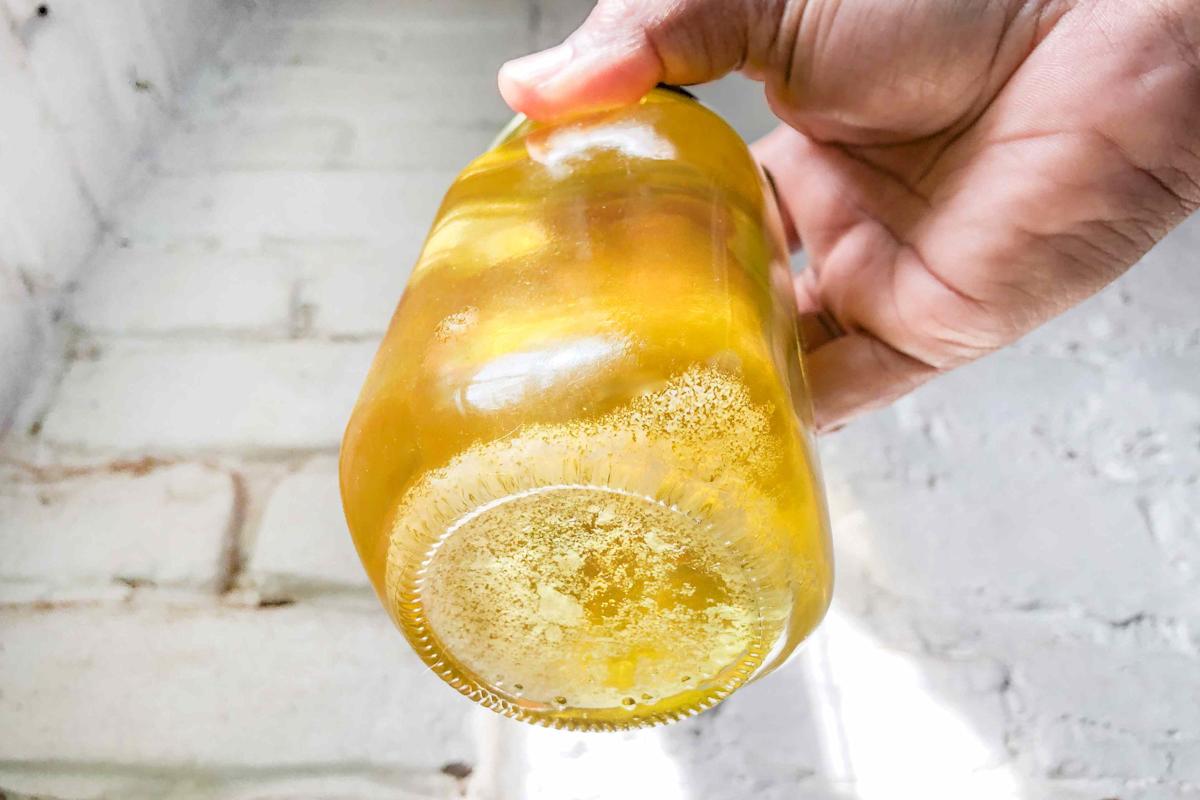
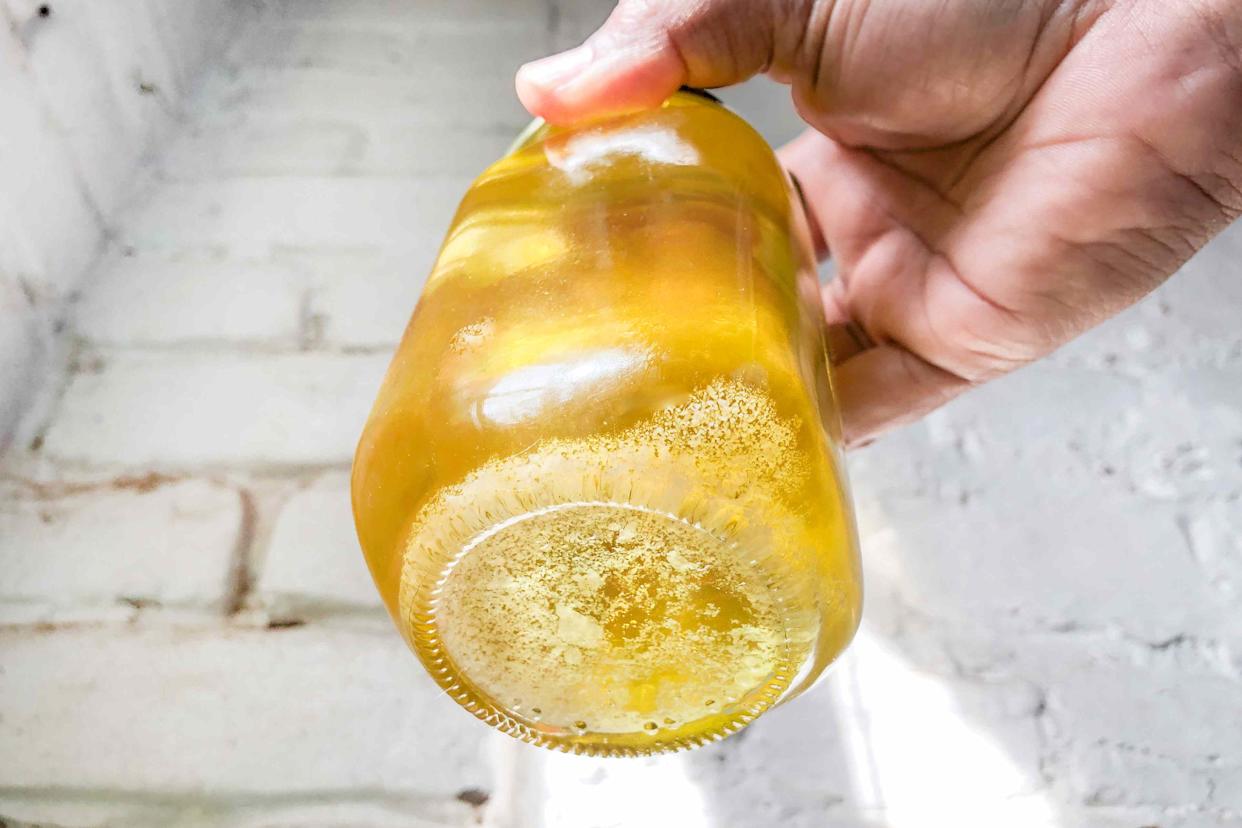
As it turns out, this same predicament happened to an editor at Simply Recipes, but in her case, the bottle also contained a white sediment at the bottom. This made me curious: Was this substance safe to eat? Does solidified olive oil taste different or lose any flavor?
What the Experts Say About Solidified Olive Oil
While I may be talented at going through a bottle of olive oil in record time, I am certainly no expert in quality control, so I decided to reach out to the authority to answer my questions. Mary Mori, the VP of Quality Control and Product at California Olive Ranch, knew all about this mysterious white substance.
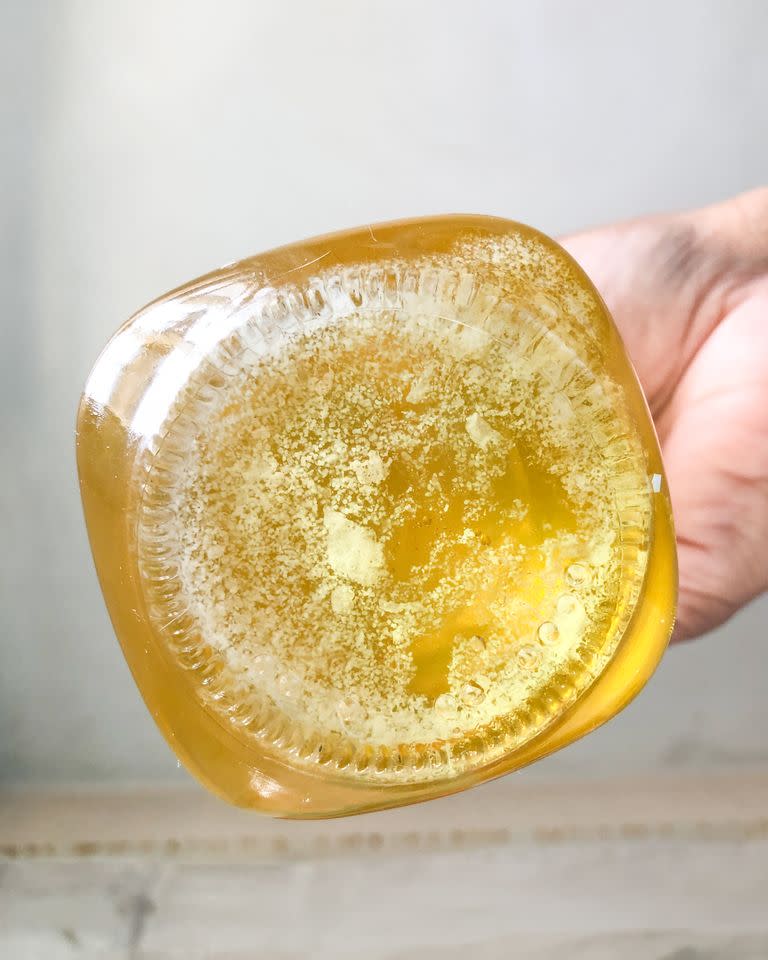
I was surprised to learn that these particles were of no concern—in fact, it was quite the opposite, as they’re a sign of very high-quality olive oil. “The white sediment you see is a natural result of the oil being exposed to cooler temperatures,” Mori explains. “When chilled, the natural waxes and triglycerides in the oil solidify and may remain visible even after the oil warms up.”
Mori notes that this is particularly common in high-quality extra-virgin olive oil because it undergoes minimal filtration to preserve its natural nutrients and flavor. This sediment will vary based on where the olives were grown and which varieties were used in the olive oil.
Credit: Simply Recipes / Munni Pramanik
“Arbequina olives grown in warmer climates like California or Argentina naturally have a higher wax content,” explains Mori. While harmless, she does recommend giving the bottle a shake every now and then to keep the olive oil well blended.
As far as garage storage goes, it seems like I don’t have to fret. “Olive oil is rich in monounsaturated fats that begin to crystallize and solidify when exposed to cold temperatures, whether during winter transit or storage in a fridge,” she notes. “While every extra-virgin olive oil has a different ‘freezing’ point based on its unique wax and fat content, most will begin to solidify after a few days below 60°F, and even faster at temperatures below 40°F.” To restore it, Mori says to simply leave the bottle at room temperature for a short time; the oil will return to its liquid state with its flavor and nutritional profile completely intact.
As it turns out, just like New Englanders (or me, at least), all olive oil needs is a few days above 60˚F to come back to life!
Read More: I Asked 6 Food Experts To Name the Best Everyday Olive Oil, They All Said the Same Brand
Signs Your Olive Oil Has Gone Bad
While I had Mori’s ear, I also wondered what, if anything, would indicate that olive oil was unsafe to consume. She explained that it would be very rare to encounter an olive oil that would make you sick, but that it can go rancid. “We often say there are four enemies of olive oil: heat, time, oxygen, and light,” she explains.
So, my dark, cold garage might be an ideal place for my stockpile after all! Mori advises home cooks to use their senses when checking for rancidity in olive oil. “You’ll recognize this by a stale, waxy smell—similar to crayons or old Play-Doh—and a flat, greasy mouthfeel,” she concludes. “If the oil lacks its signature peppery or grassy aroma and tastes off or fermented, it’s best to replace the bottle to ensure you’re getting the health benefits and flavor you expect.”
Read the original article on Simply Recipes
Dining and Cooking