
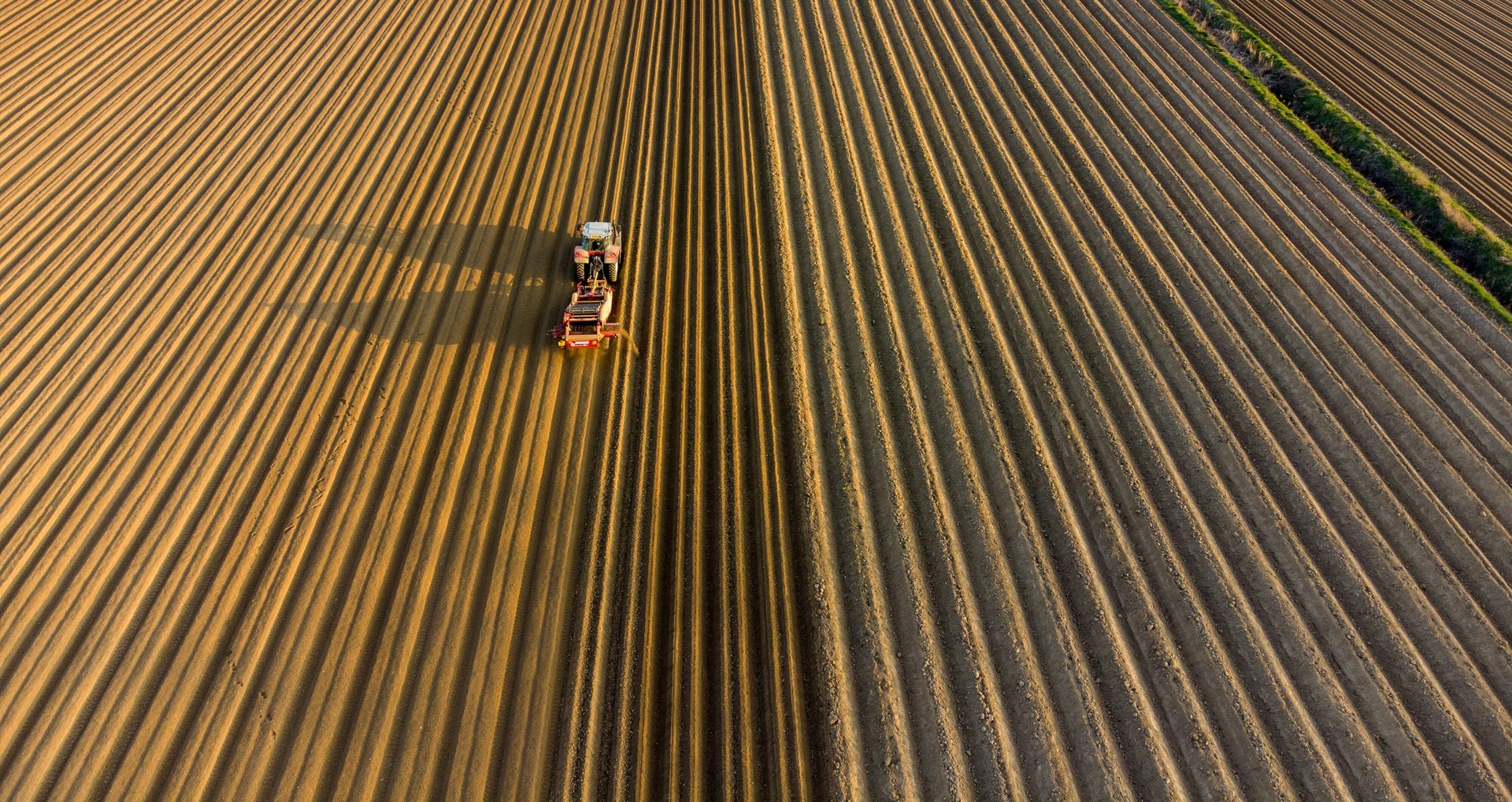
A growing body of research suggests that climate change is both intensifying and accelerating. While much of the focus remains on fossil fuel emissions and rising temperatures, far less attention has been paid to a critical system that underpins both climate stability and food production: soil.
Long treated as an agricultural resource, soil is now emerging as a central factor in the climate crisis. Its degradation is not only reducing the planet’s ability to produce food but also weakening one of its most important natural carbon sinks.
Recent findings, including a 2026 study on global temperature trends, indicate that warming has accelerated over the past decade. The rate of temperature increase is now significantly higher than in previous decades, raising concerns about the resilience of natural systems that regulate the climate.
Among those systems, soil plays a critical yet often overlooked role.
What Soil Degradation Means for the Climate
Healthy soils act as a major carbon reservoir, storing more carbon than the atmosphere and vegetation combined. Through natural processes, they absorb and retain carbon dioxide, helping to regulate global temperatures. When soil degrades, that function begins to break down.
Land clearing, over-cultivation, deforestation, and unsustainable farming practices disturb soil structure and reduce organic matter. As a result, stored carbon is released back into the atmosphere, contributing to greenhouse gas accumulation. At the same time, degraded soils lose their capacity to absorb future emissions.
This creates a feedback loop: climate change accelerates soil degradation through heat, drought, and erratic rainfall, while degraded soil, in turn, contributes to further warming.
The acceleration of global warming observed in recent studies suggests that these natural buffering systems may already be weakening.
A Growing Threat to Global Food Systems
The implications of soil degradation extend beyond the climate.
Agriculture depends directly on soil health, and declining soil quality is already affecting crop yields in many parts of the world. In regions where farming is largely rain-fed, particularly across Sub-Saharan Africa, this dependence is even more pronounced.
As soil fertility declines, farmers face lower productivity, reduced resilience to climate shocks, and increasing uncertainty around planting cycles. The result is a gradual but significant strain on food systems.
Climate change is already disrupting agricultural production through rising temperatures and shifting rainfall patterns. When combined with soil degradation, these pressures intensify, reducing food availability and contributing to rising prices. For vulnerable populations, this translates directly into food insecurity.
Why the Crisis Is Deepening
Soil degradation is driven by a combination of environmental and human pressures. Climate change is intensifying droughts and extreme weather, accelerating the loss of soil moisture and organic matter. At the same time, population growth and expanding agricultural demand are increasing pressure on land, often leading to overuse.
Unsustainable farming practices, including excessive tillage and poor land management, further degrade soil structure. Deforestation removes protective vegetation, exposing soil to erosion, while urban expansion reduces the amount of arable land available.
In many regions, these pressures are compounded by weak land governance and limited investment in sustainable agriculture. The result is a system that continues to produce food in the short term while gradually eroding its own foundation.
Why Soil Matters Beyond Agriculture
The consequences of soil degradation are not confined to farms.
Food security is among the most immediate concerns. As agricultural productivity declines, supply chains become more volatile, and food prices increase. This disproportionately affects low-income populations, where access to affordable food is already limited.
Water systems are also impacted. Healthy soils retain water and regulate its flow, reducing the risk of floods and droughts. Degraded soils, by contrast, lose this capacity, increasing vulnerability to extreme weather events.
There are also broader economic and social implications. Declining agricultural productivity can reduce incomes, drive rural migration, and increase pressure on urban areas. In some cases, competition over land and resources can contribute to instability.
As with climate change, the effects are interconnected and cumulative.
From Land Degradation to Systemic Risk
Despite its wide-ranging impacts, soil degradation remains underrepresented in global climate policy discussions. Efforts to address climate change have largely focused on reducing emissions and transitioning to renewable energy. While these are essential, they do not fully address the role of natural systems in regulating the climate.
Soil is one such system. Restoring soil health through sustainable land management, regenerative agriculture, and reforestation offers a way to address multiple challenges at once. Healthier soils can store more carbon, improve water retention, and support more stable agricultural production.
In this sense, soil is not just part of the problem but part of the solution, too.
Related Articles: To Prevent Ecological Collapse, We Must Start With the Soil | How Microplastics Are Destroying Soil and Human Health | Hands That Heal Our Soils | Soil Health, Fertiliser Use and Agricultural Sustainability | Taking Climate Action on World Soil Day
What Happens Next?
The acceleration of global warming adds urgency to an already critical issue.
As temperatures rise and weather patterns become more unpredictable, the pressure on land systems will increase. Without intervention, the combined effects of climate change and soil degradation could significantly undermine global food production. Addressing this challenge requires a shift in perspective.
Soil must be treated not only as an agricultural input but as a strategic resource linked to climate stability, food security, and economic resilience. This includes better land management practices, stronger policy frameworks, and greater investment in sustainable agriculture.
The degradation of soil is not as visible as other environmental crises, but its impacts are no less significant. What is happening beneath the surface is shaping outcomes above it — in the climate, in food systems, and in the stability of societies. And as recent research suggests, it is quite possible that warming may continue its fast pace or even accelerate further.
Dining and Cooking