
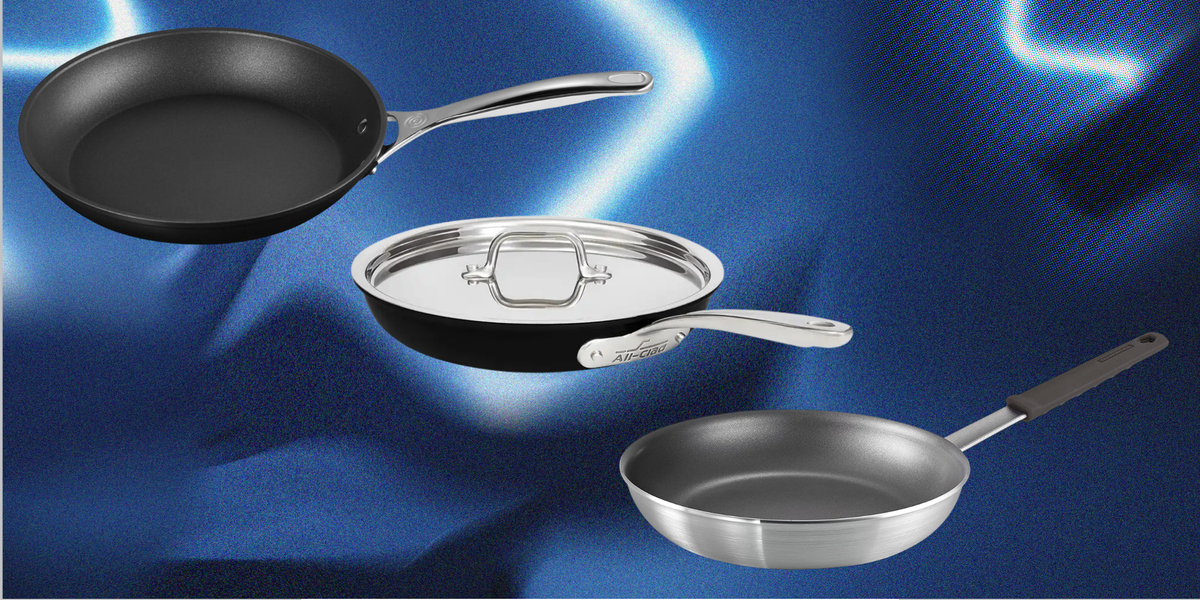
✔️ Coating: The type and feel of the nonstick coating is a good indication of a pan’s quality. There are two main types:
Traditional nonstick cookware is coated in Teflon (also known as PTFE), which maintains its nonstick quality longer than ceramic. The number of layers applied and the texture vary. The most durable coatings feel slightly gritty. Ceramic offers a more natural alternative to Teflon, but it’s less durable and more prone to chipping and scratching.
✔️ Material: The most common materials for nonstick cookware are aluminum, stainless steel, and ceramic.
Aluminum is lightweight and conducts heat well. Stainless steel is heavier and maintains heat better. Look for pans made with a combination of metals for maximum benefits. Ceramic is a smooth, sometimes colorful surface made from clay and glazed at high temperatures to become nonstick. It’s more delicate than metals.
✔️ Size: We find that 10 inches, the size we focused on for testing, is the most versatile size for skillets. It’s great for making a quick breakfast for one or a full dinner for two to three people. Opt for an 8-inch pan if you mostly cook for yourself or prefer cooking small portions. If you often cook for a crowd, go for a 12-inch pan.
✔️ Handle: Long, metal handles offer more stability and balance, and they are often a good indicator that your nonstick pan is oven-safe to the temperature indicated by the manufacturer. Thick, plastic handles are comfortable to hold and are typically found on lightweight pans; however, they shouldn’t be used above medium heat. Silicone handles offer a comfortable grip and may be more temperature-resistant than plastic.
✔️ Oven-safe temperatures: Quality nonstick pans can go straight from stovetop to oven so you can finish a dish via roasting. Check the product specifications and look for oven-safe temperatures above 350ºF to ensure the most versatility. The higher the temp, the more you can do with the pan.
Dining and Cooking