
Summary 
Italian authorities conducted a large-scale operation against mislabeled olive oil, uncovering 27% of samples failing quality tests and 2.3 million liters of oil violating laws. The operation, which involved 183 companies, resulted in fines and highlighted the importance of consumer awareness and supporting high-quality producers.
Italian authorities have completed one of the country’s most extensive operations against the sale of mislabeled olive oil.
Supported by the experts from the Ministry of Agriculture, the technical department of the Financial Police investigated 183 companies involved in olive oil imports and commercialization.
Food fraud does not only represent criminal operations which affect citizens’ health and the economy, they also represent a huge damage to the reputation of Puglia’s producers.- Gennaro Sicolo, regional director, CIA Puglia
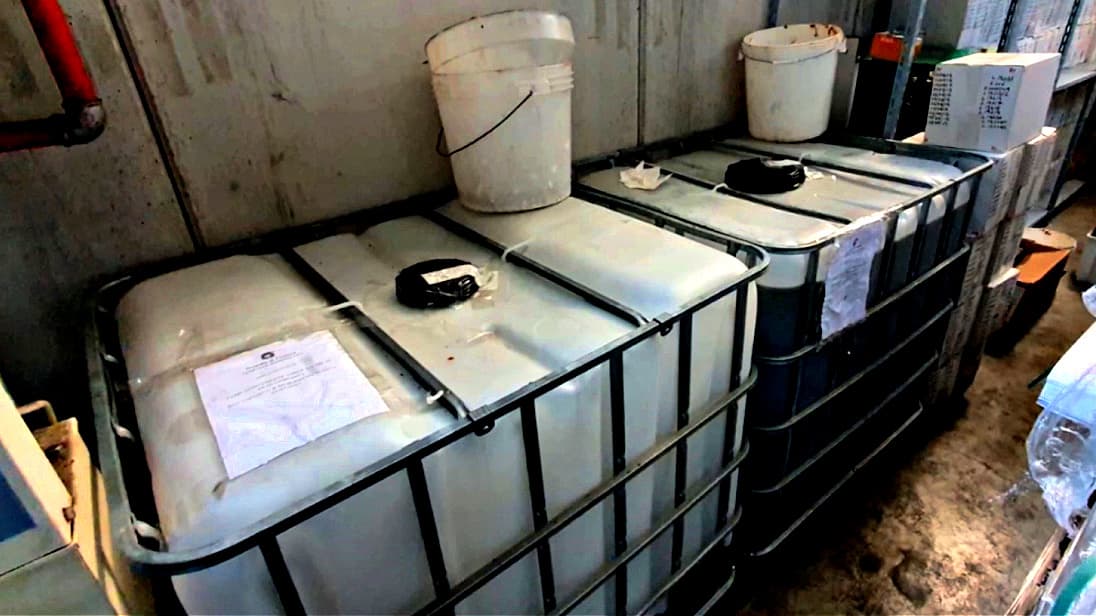
Police officers seized olive oil samples in many locations to verify that the contents matched the labels on bottles and containers.
More than 27 percent of samples failed the test. Officers said 2.3 million liters of olive oil ready to be introduced into the market violated European and Italian laws governing olive oil quality, bottling and commercialization.
See Also:Using Isotopic Footprints to Authenticate Olive Oil, Combat Fraud
According to the ministry’s Central Inspectorate for Quality Protection and Fraud Prevention of Agri-Food Products (ICQRF), 102 olive oil samples were examined during operation Verum et Oleum (Real and Oily, in Latin).
“Among those, 25 showed irregularities due to the lower quality of the olive oil, which was labeled as extra virgin olive oil but proved to be virgin olive oil,” the officers said.
According to Commission Regulation EEC No 2568/91, extra virgin olive oil must be produced solely through mechanical processes at temperatures not exceeding 27 ºC.
Furthermore, extra virgin olive oil also must bear specific chemical and organoleptic qualities, with free fatty acid content, expressed as oleic acid, never exceeding 0.8 grams per 100 grams.
Virgin olive oils – characterized by a reasonably good flavor and odor and a free fatty acid content of less than 2 grams per 100 grams – are often mixed with refined olive oils to create lower quality products to sell at considerably lower prices than extra virgin olive oil.
Olive oil counterfeiters often re-label virgin and refined olive oil products that do not classify as extra virgin to sell them at the higher prices normally commanded by extra virgin olive oil.
According to International Olive Council data, extra virgin olive oil currently sells for €430 per 100 kilograms in Bari, the benchmark Italian market, 7.5 percent lower than during the same period last year. However, extra virgin olive oil prices remain 2.5‑percent above the average of the past decade.
Coldiretti, a farmers’ association, said most of the olive oil seized in the operation was imported. In a note, the association cheered the operation which is considered essential to defend the legitimate market of the high-quality extra virgin olive oils.
“In 2021, Italy has seen the arrival from abroad of more than 540 million kilograms of olive oil, almost twice the national production,” Coldiretti said.
The fake bottles, the association added, “got into the country through operators present throughout the whole nation and through the usual access points for raw materials. Fraud does not only deceive citizens, but it also causes the prices of quality products to collapse.”
Operation Verum et Oleum also reached Puglia, the southern Italian region responsible for the largest portion of the country’s olive oil production.
The local chapter of the Italian Agricultural Confederation (CIA) warned how olive oil fraud can damage thousands of legitimate high-quality olive oil producers.
“The struggle [against counterfeiting] sees CIA and olive oil producers work side by side with the judiciary and the police department,” said Gennaro Sicolo, CIA Puglia’s regional director.
“Food fraud does not only represent criminal operations which affect citizens’ health and the economy, they also represent a huge damage to the reputation of Puglia’s producers,” he added.
At the end of the operation, 10 people were reported for possible violation of trade laws, 33 were fined for violations in accounting records and for not having maintained the traceability requirement for the handling of olive oil.
The police seizures of products worth more than €170,000 contributed to a total of €10 million in administrative fines.
In its note, Coldiretti suggested that Italian consumers always look for the national product and learn how to read the labels.
“On extra virgin olive oil bottles coming from abroad, in most cases, it is almost impossible to read the mandatory declarations such as ‘mix of E.U. olive oils,’ ‘mix of non‑E.U. olive oils or ‘mix of E.U. and non‑E.U. olive oils,’ ” the association wrote.
“[That happens] because they are written in very small characters, placed on the back of the bottle and in a position on the labels which is hard to spot,” they added.
“Moreover, consumers need to be wary of prices that are too low and possibly buy directly from the producers, from the mills or the Campagna Amica markets, where extra virgin olive oil can be tasted before buying it and its characteristics recognized,” Coldiretti concluded.
Dining and Cooking