
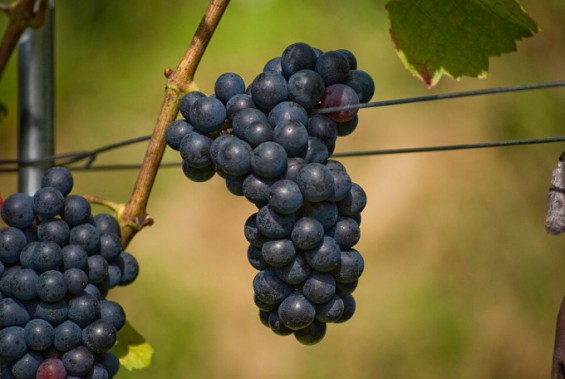
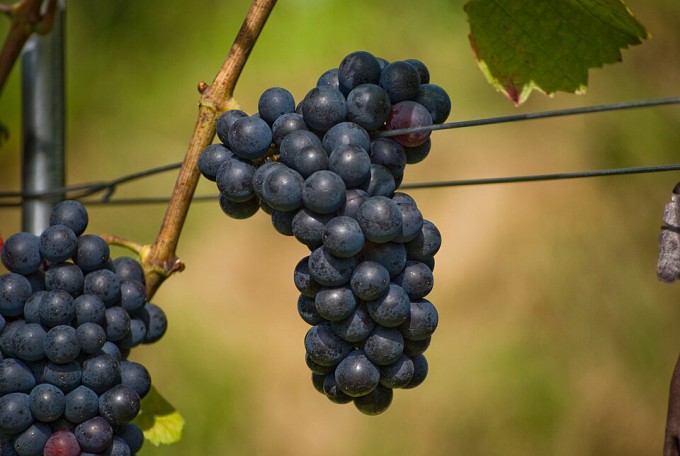
Pinot Noir grapes. Credit: Wikimedia
Ancient DNA analysis has confirmed that Pinot Noir, a key grape variety in the modern wine industry, was cultivated in a genetically identical form in medieval France 600 years ago.
A research team including Rémy Moran, a researcher at the University of Toulouse in France, and Professor Ludovic Orlando, published their findings in the international journal ‘Nature Communications’ on the 24th (local time). They analyzed the genomes of 49 grape seeds spanning approximately 4,000 years, from the Bronze Age to the Middle Ages, excavated in France and the surrounding Mediterranean region.
Because the taste and aroma of wine differ with each grape variety, growers try to preserve their favorite varieties. Knowing when a particular variety was first cultivated allows us to trace the roots of the modern wine industry and the origins of the variety. As written records have their limits, direct DNA analysis of ancient grape seeds is gaining attention.
When grapes are grown from seeds, the genes of the two parent plants mix to create a new individual, resulting in a different variety. However, using cuttings—planting a snipped branch—ensures the variety remains genetically identical. The discovery of grape seeds with the same genes at archaeological sites from different times and places serves as evidence that varieties were propagated through cuttings.
The analysis revealed that a 15th-century medieval grape seed excavated in the Valenciennes region of northern France is a perfect genetic match to modern Pinot Noir. Pinot Noir is currently the fourth most cultivated grape variety worldwide, serving as the source for some of the world’s finest wines and an ancestor to numerous modern varieties.
The research team stated that Pinot Noir has existed in its current form since at least the late 15th century. Similarly, a medieval grape seed from the Spanish island of Ibiza was genetically identical to ‘Folha de Figueira,’ a variety currently grown in Portugal.
The practice of preserving varieties through cuttings dates back to the Iron Age. In the 6th century BCE, genetically identical grape seeds were found at two sites in southern France, despite being tens of kilometers apart. During the Roman era, the same variety was confirmed over a distance of 600 km, connecting northern and southern France. In some cases, seeds with identical genes were found at different sites with a time gap of about 1,000 years.
Changes in genetic composition were also identified. While Bronze Age grape seeds only carried genes from native wild grapes of Western Europe, they began to mix with genes from cultivated varieties introduced from regions like the Iberian Peninsula, the Balkans, the Levant, and the Caucasus starting in the Iron Age. This diversity expanded further during the Roman era and continued into the Middle Ages.
The research team stated, “Through the genomic analysis of 4,000 years of grape seeds, we have traced the origin and development of French wine culture at the genetic level.” They added, “The preservation of varieties through cuttings was a widespread practice over thousands of years, and the modern wine industry is built upon this legacy.”
doi.org/10.1038/s41467-026-70166-z
Copyright ⓒ DongA Science. All rights reserved.
Dining and Cooking