
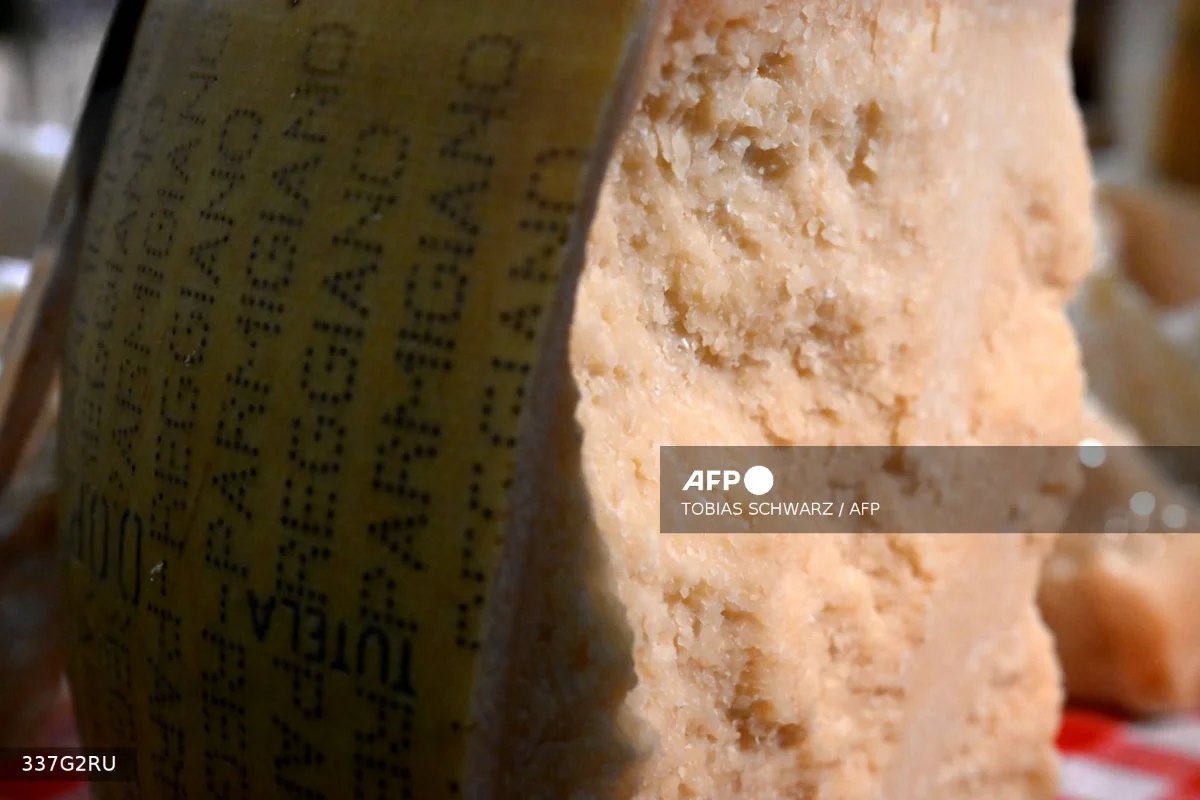
Parmesan cheese exports exceed 50% for the first time amid falling Italian consumption due to population decline and cost-of-living pressures.
MILAN: For the first time, more than half of all Parmesan cheese produced was exported last year.
This shift comes as domestic sales in Italy decline due to a falling population and consumers watching their spending, producers said.
Exports of the hard cheese rose by 2.7% to nearly 75,000 tonnes in 2025, according to the industry’s trade association.
Shipments to the United States, its top market, even increased by 2.3% despite 25% tariffs imposed by the administration of President Donald Trump.
“The big problem in the United States is uncertainty,” said the head of the Parmesan Reggiano Consortium, Nicola Bertinelli.
She noted that tariffs have slowed orders, with imports down 16% year-on-year in January.
Producers are responding with increased marketing investments to differentiate authentic Parmesan Reggiano from cheaper local imitations.
“We’re not sitting around crying about it; we’re ramping up our investments,” Bertinelli stated.
This includes high-profile sponsorships of the Utah Jazz basketball team and the ATP tennis tournament in Miami.
In Italy, however, sales volume fell by 10% last year.
While 80% of Italians still consume it, they are buying less often and in smaller quantities.
Bertinelli acknowledged competition from cheaper alternatives as households budget carefully.
“If you just need to grate some cheese over pasta, there are alternatives,” she said.
The average supermarket price has risen to 23.5 euros per kilo, widening the gap with competitors like Grana Padano.
To boost domestic appeal, producers plan to market Parmesan more as an appetiser and strengthen food tourism offerings.
Exports to France and Germany, the second and third largest markets, remained stable in 2025.
Longer-term marketing expansion is planned for Northern Europe, Latin America, and Southeast Asia.
Dining and Cooking