
Credit: miniseries / Getty Images
Conventional kitchen wisdom can offer helpful structure for cooks at any level, but it can also prevent you from questioning the why behind the what. Because many rules are meant to be broken (or at least bent), we asked professional chefs across the country for the cooking “rules” they never follow, especially when they’re off the clock. Their answers, from boiling stock to skipping preheating, might just inspire you to let loose in the kitchen.
Related: 7 Food Myths You Shouldn’t Believe
Rule #1: Don’t cook with extra-virgin olive oil
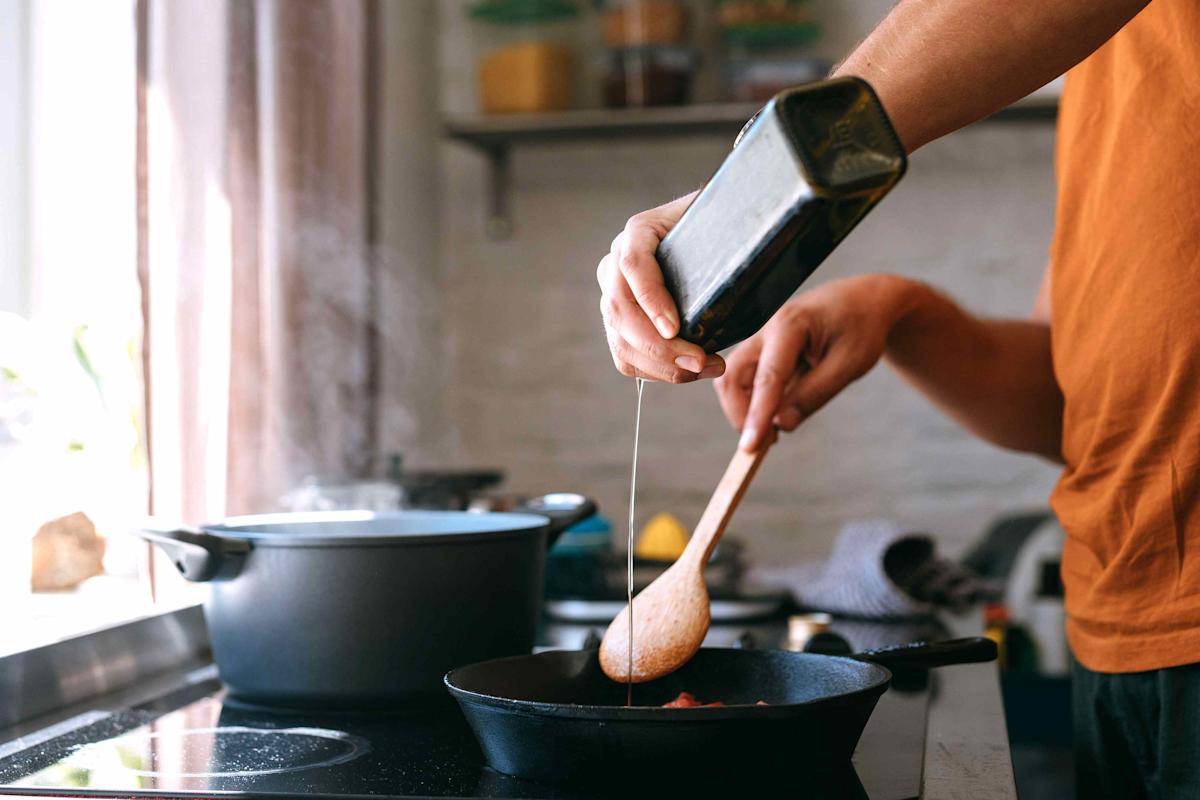
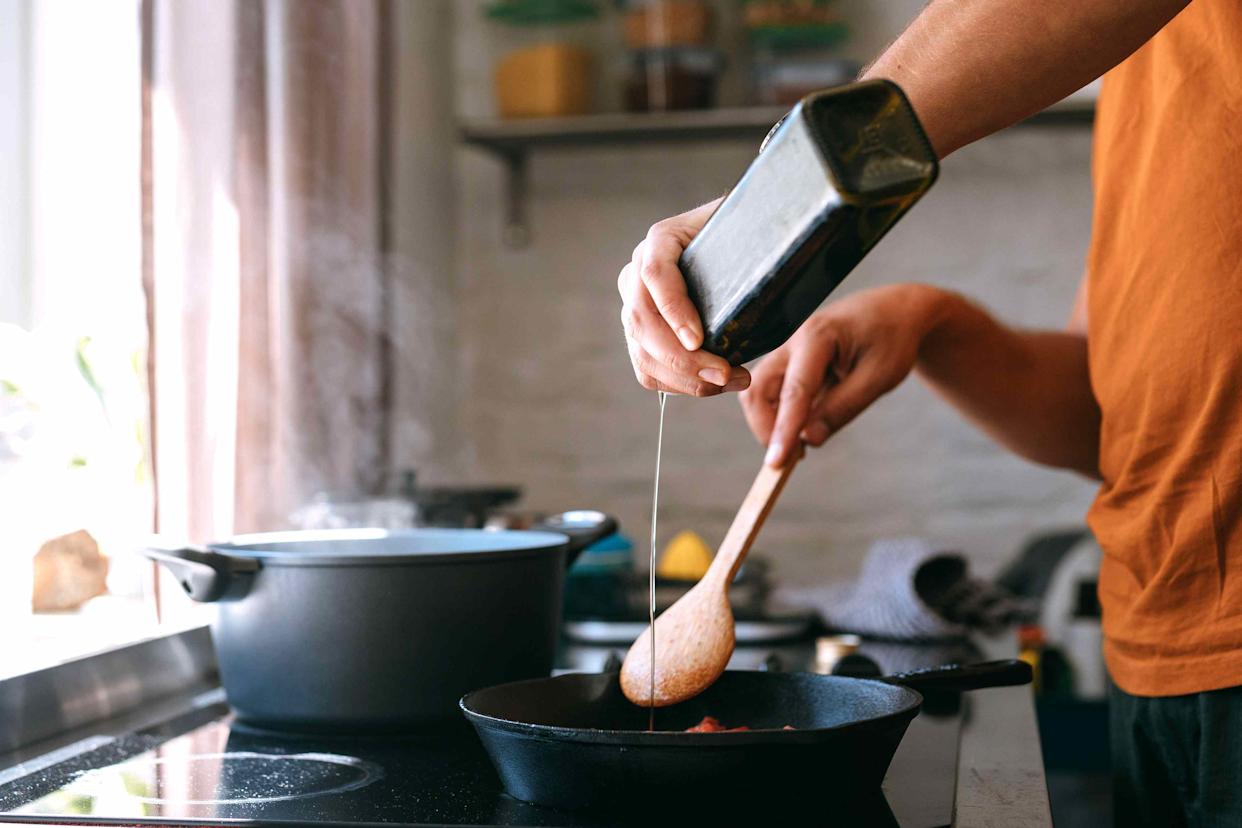
According to Lawrence Weeks, chef-owner of Murray’s Creole Pub in Louisville, Kentucky, the rule that you shouldn’t use olive oil for cooking is “outdated and only holds true for oil that isn’t fresh.” The smoke point of extra-virgin olive oil hovers between 350°F and 410°F, which means you can definitely use it for cooking (and even frying). In fact, Weeks regularly reaches for the chef-loved Corto extra-virgin olive oil for sautéing at home and reports that “the oil holds up even better to high heat than some vegetable oils.”
Ham El-Waylly, executive chef of Strange Delight in Brooklyn, is also a strong proponent of cooking with EVOO. “It tastes good, it’s already on the counter, and I don’t want to have six different oils open at once at home,” he says. There are, of course, exceptions. “If I’m trying to get a really aggressive sear on a steak, or something with sustained very high heat, I’ll switch to a neutral oil,” El-Waylly says.
Rule #2: Always preheat the oven
It might be second nature to wait for your oven to come up to temperature before sliding anything in, but it turns out that chefs sometimes bypass this step altogether.
“Unless I am broiling and attempting to achieve a quick brown on an ingredient in a short period of time, I usually skip this advice entirely,” says Noly Lopez, executive chef at Gather Restaurant in Yarmouth, Maine. Case in point: braised meats. “There is no inherent benefit [to] starting at a base temperature my product isn’t at anyways, and there is good science to suggest [a] slow buildup benefits most proteins during this cook time,” he explains.
Rule #3: Gently simmer stocks for a clear broth
Heating stocks at a simmer is a widely followed practice for achieving clarity of broth. However, Ji Hye Kim, chef-owner of Miss Kim and Little Kim in Ann Arbor, Michigan, explains that Korean cooking flips the script of this rule for certain bone broths like seolleongtang, which is boiled for hours to yield a creamy, unctuous soup.
“It has a milky color, thicker viscosity, and richer flavor with all the marrow, fat, and collagen [getting] emulsified into the stock,” says Kim, who notes that both clear and milky stocks have their place in the culinary world. “Choose your adventure with whatever dish you’d like to create, because boiling stock is not wrong, just different.”
Related: Bone Broth Is Liquid Gold — Here’s How to Make It
Credit: Taras Grebinets / Getty Images
Rule #4: Salt pasta water until it “tastes like the ocean”
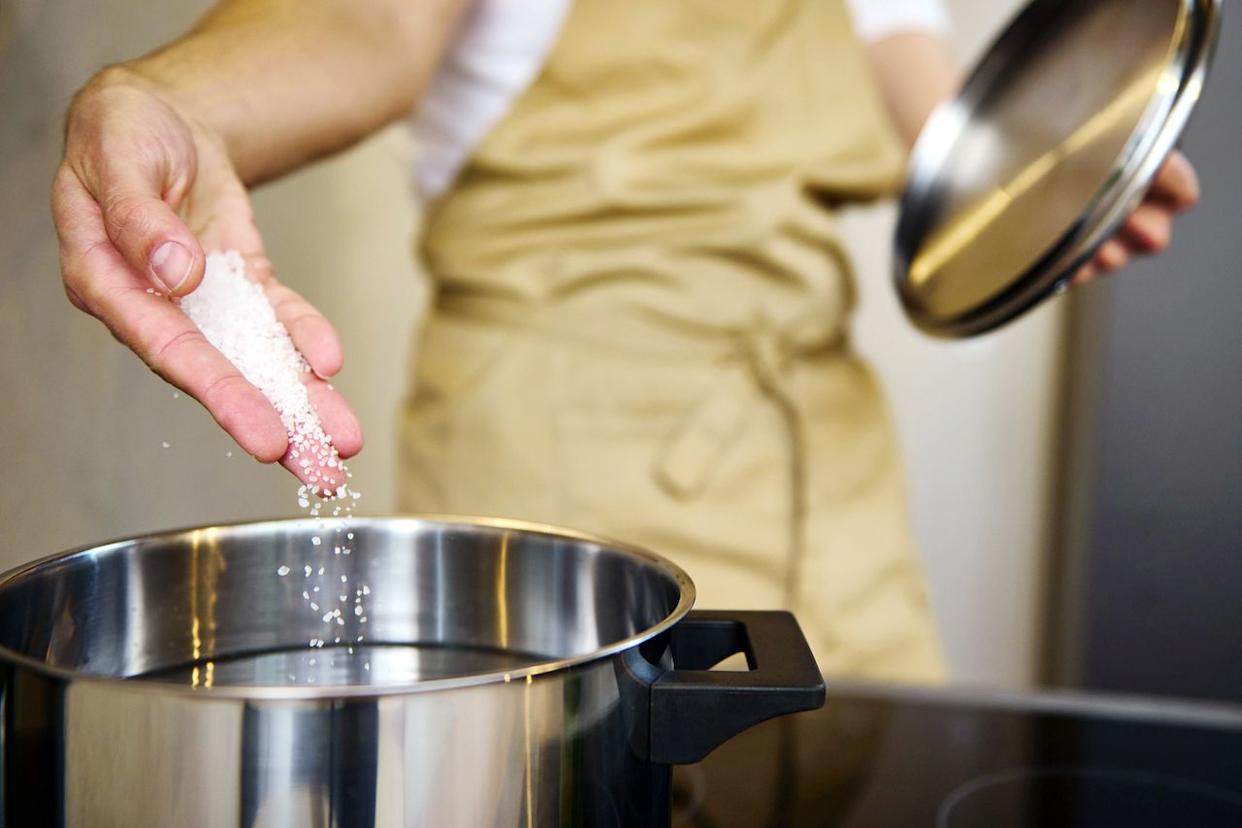
Salting your pasta water is important both for seasoning and keeping stickiness to a minimum, but taking it to oceanic levels is unnecessary, says 2022 F&W Best New Chef Rob Rubba, chef-partner at Oyster Oyster in Washington, D.C.
Instead of throwing fistfuls of salt into the pot, he suggests cooking the pasta short of al dente and cooking it the rest of the way in the sauce, letting the flavors meld as the noodles reach doneness. “As the pasta finishes, it absorbs the salinity and flavor of the sauce itself,” says Rubba. “The result is pasta that’s fully integrated with the sauce rather than salty noodles coated afterward.”
Rule #5: Follow exact measurements in recipes
Especially when they’re cooking at home, chefs prefer to use intuition and sensory guidance rather than rigid measurements or recipes. “Instead of focusing on the exact amounts, I focus on the intention of the recipe,” explains Lopez. “Ratios are important here, and a good understanding of what each ingredient is contributing allows me to adjust in real time as needed.”
In contexts that demand a higher level of consistency, however — baking or restaurant settings, for example — precision is a must. This also applies to home cooks who may need more structure to guide them. “If you can’t adjust in real time or lack the experience to understand the flavor impacts of your ingredients, it’s best to follow [measurements] as precisely as you can and note any changes you want to make for next time,” Lopez advises.
Rule #6: Season proteins at the start
It’s common to instinctively reach for salt as the first step when working with meat, but 2025 F&W Best New Chef Telly Justice, chef-owner of HAGS in New York City, prefers to season proteins only after cooking and resting them. “I love the natural texture and flavor that meat has when it hasn’t sat for a long time with salt,” she says, especially because “salt changes food at a chemical level, softening and drawing out moisture.” Justice doesn’t break this rule across the board, however. “In certain cases, like pastrami or barbecue or a Thanksgiving turkey, pre-salting is essential,” she says.
Related: Chefs Say This Is the Only Kosher Salt They Trust
Rule #7: Salt beans after cooking them
“This is an old rule that just refuses to die,” notes El-Waylly, who says that salting beans at the start — even during soaking — actually leads to better overall results. (The “rule” that you must soak your beans has also been debunked.) “It seasons them all the way through, improves their texture, and they just taste better,” he explains. “There are some rare instances where beans can toughen if you’re working with unusually hard water or older beans (which are high in lignin, so they are going to be tough as wood anyway), but in most cases, salting early is the move.”
Rule #8: Never pair shellfish with cheese
In some cases, food rules can limit chefs’ creativity in the kitchen. “When people tell me that cheese and seafood can’t mix, I shrug. There are times it doesn’t work, but there are so many times that it’s great,” says Jamie Bissonnette, chef-partner at BCB3 Hospitality, who points out that the duo can readily shine in applications like pizza, pasta, pintxos, and certain Korean dishes.
Eve Aronoff, chef-owner of Frita Batidos in Michigan and Brooklyn, agrees.
“One of the most well-received dishes I have served is a shellfish lasagna made with fresh sheets of pasta layered with sautéed shrimp, scallops, steamed clams, crisped prosciutto, summer greens, and a tomato cream, along with crumbled chevre and fresh mozzarella,” she says. “The flavors and textures [melded] together really beautifully.”
Read the original article on Food & Wine
Dining and Cooking